At Casa y Deco, we love investing in details that transform spaces, and if there’s one that makes a difference in a bathroom, it’s the mirror. But not just any mirror: we’re talking about those mirrors with integrated lighting that seem like something out of luxury hotels. I confess that for years I saw them as an unnecessary luxury until I discovered how they truly change the morning and evening experience in the bathroom. Integrated lighting is not just vanity: it affects how you see yourself, how you groom, and frankly, your mood when you enter that space.
The question we all ask is clear: is it really worth spending more money on a mirror with its own light when I can buy a normal mirror and add wall lights on the sides? The answer is more nuanced than it seems. It depends on your bathroom, your budget, and above all, how you use that space every day. It’s not a mandatory investment, but it is one that subtly changes daily life. Here’s what we’ve learned after trying several models and talking to lighting experts.
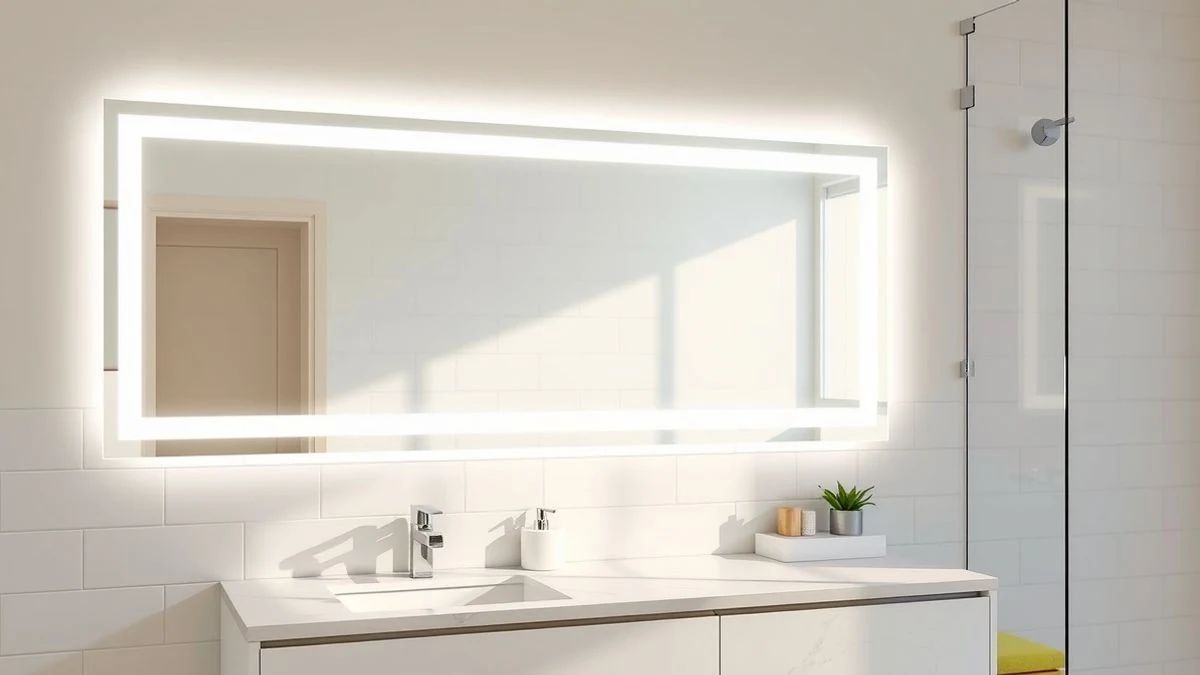
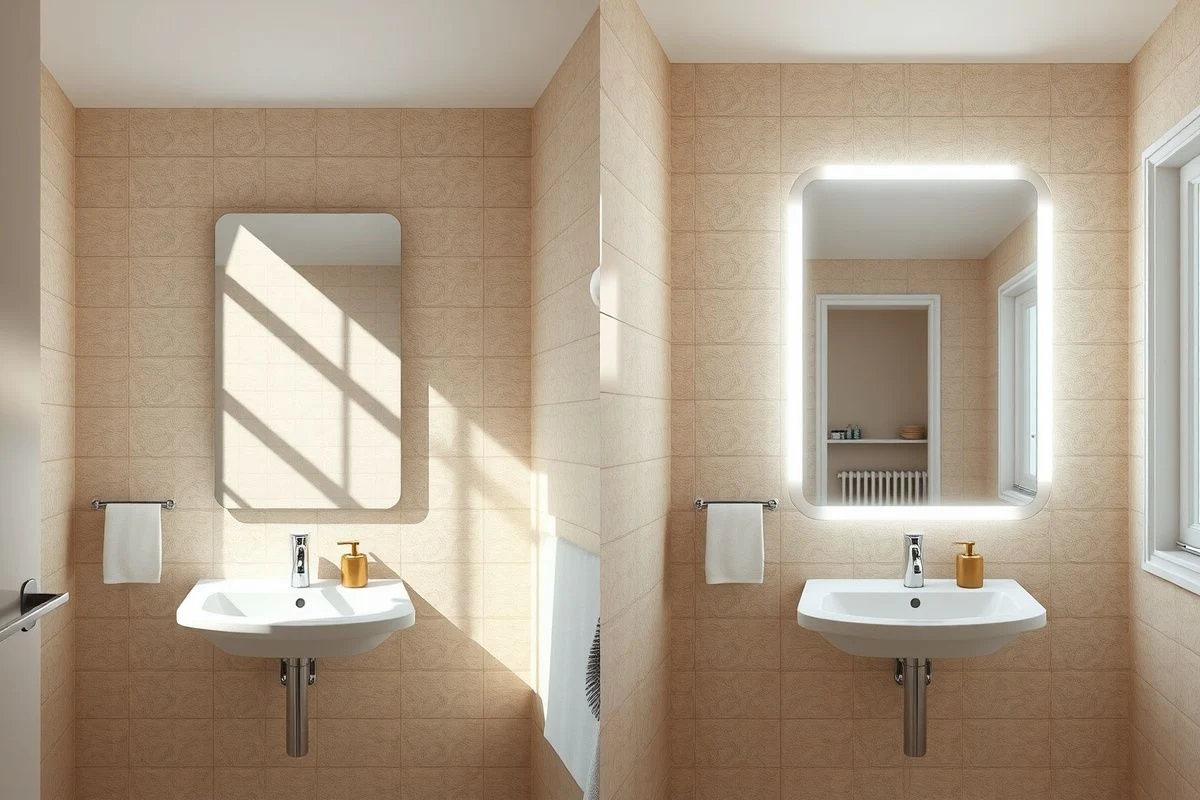
First, it’s important to understand what makes the light in a bathroom mirror special. It’s not just about illumination: it’s about how that light reaches your face. Mirrors with integrated LEDs, especially those with uniform frontal lighting, avoid the harsh shadows created by traditional wall lights. That means you see your face as it truly is, without dramatics. It’s especially useful if you’re applying makeup, shaving, or simply want to know how you look before leaving the house. Good quality LED light also simulates natural light better, something technically called high colour rendering index.
The second factor is the practicality of installation. If your bathroom is already renovated and painted, adding new wall lights means making holes, running wires, and possibly repainting. A mirror with integrated lighting comes ready to hang; it just needs to be plugged in. Of course, there needs to be a socket nearby, but that’s the only requirement. For small or already decorated bathrooms, this simplicity is pure gold. You don’t need to call an electrician for installation reinforcements.
Let’s talk about the types available on the market. The most common are rectangular mirrors with pure white LED around the perimeter, which give that Hollywood dressing room effect. There are also round ones, which work well in vintage or Nordic bathrooms. Then there are mirrors with light only at the top, which take up less space but illuminate the face less. And finally, there are smart mirrors: with dimmers, colour temperature changes (from warm to daylight), and even thermal defoggers. The latter are clearly more expensive, but if you have a very hot shower and the mirror constantly fogs up, that defogger is a lifesaver.
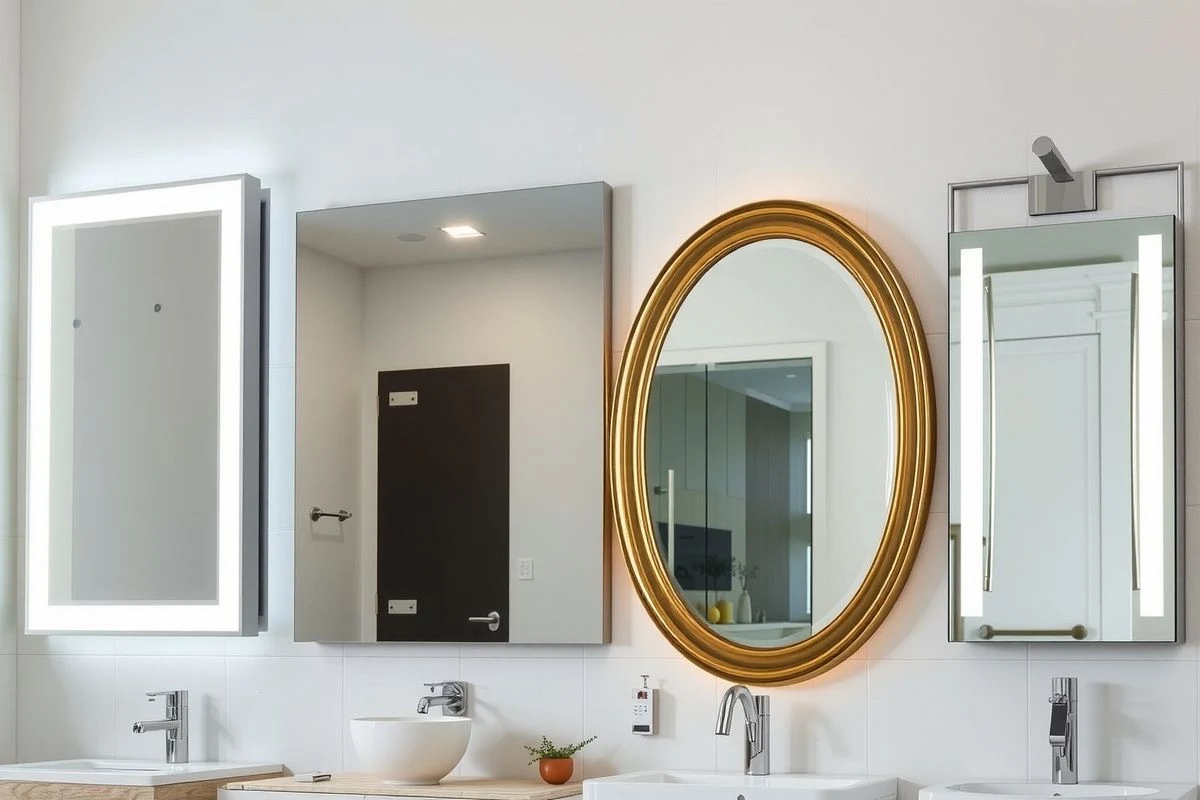
Size matters more than you think in a bathroom mirror. A mirror that is too small doesn’t make the most of the light, while one that is too large takes up the entire wall and can make the bathroom feel more claustrophobic. The general rule is that the mirror should occupy between 60% and 80% of the width of the sink and reach from about 30 centimetres above to at least shoulder level. With integrated lighting, this is even more important because the light must be well distributed around your face.
Now, the elephant in the room: the price. Basic mirrors with integrated lighting start from the price of a normal mirror plus two wall lights combined. Models with dimmers and smart technology can cost quite a bit more. This is where you need to do the math honestly: how many times a day do I use the mirror? If you’re someone who spends five minutes doing makeup every morning, the investment makes sense. If you enter the bathroom, brush your teeth, and leave, it may not justify the extra expense.
What I can guarantee is that integrated light is infinitely better than no light at all. Many bathrooms only have a central ceiling light, which creates shadows on the face. A mirror with frontal LEDs completely solves that problem. I confess I discovered this when I tried such a mirror for the first time with a client: the difference is so obvious that it cannot be ignored. You go from seeing yourself in the dark to having professional studio lighting.
The quality of the LED also makes a difference. Look for mirrors with SMD 2835 LEDs or higher, which ensure that the light is even, without bright spots or dark areas. Always check that the colour rendering index (CRI) is equal to or greater than 90. This means that the colours you see (on your skin, in your makeup, in the clothes when you try them on) are real. A cheap LED can distort tones and make you leave the bathroom convinced of a look that turns out to be different outside.
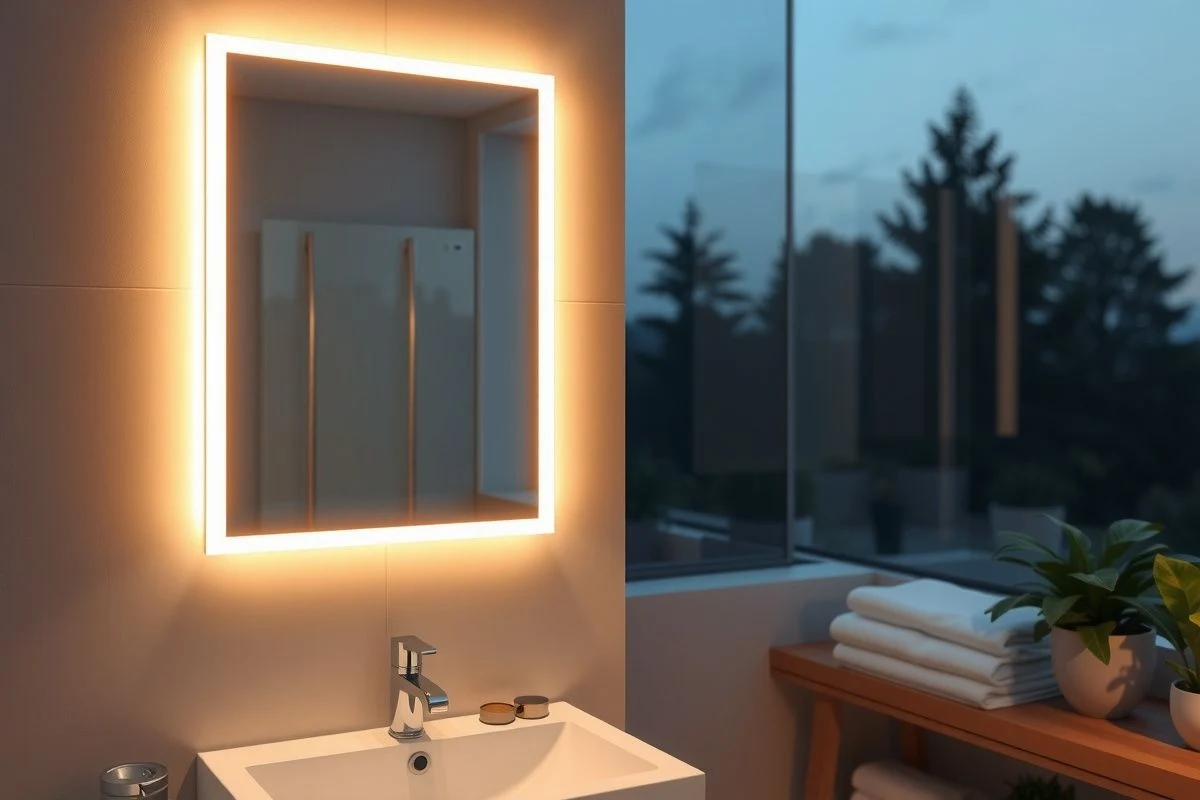
The colour of the light is also decisive. Mirrors with neutral white light (around 4000-4500K) are the most versatile for any bathroom. If you want something warmer and more relaxing, look for 3000K. Some mirrors allow you to switch between temperatures, which is useful: warmer light at night to avoid straining the eyes, more neutral or cool light in the morning to wake you up properly. It’s not essential, but it’s a luxury that works.
There’s also the issue of maintenance. A mirror with integrated lighting requires you to clean the glass regularly, obviously, but you also need to ensure that the sealing is good to prevent bathroom humidity from damaging the LEDs. Even if they are sealed, bathrooms are inherently humid. Always buy mirrors with IP44 or higher moisture resistance certification. It’s the difference between a product that lasts five years and one that lasts ten.
Here’s a practical tip: if your bathroom is very small, choose a round or square integrated light mirror with a thin frame. Thick frames take up visual space. If your bathroom is large, you can afford a more generous mirror, even an elongated rectangular one. The tone of the frame also matters: a modern black frame doesn’t fit in a rustic bathroom, and a gold art deco frame looks out of place in a minimalist bathroom. What seems obvious is sometimes forgotten when you panic buy.
The factor you probably haven’t considered: the emotional well-being of the space. A well-lit bathroom feels larger, cleaner, and more luxurious. Even if it’s just an optical illusion, it matters. We enter our bathrooms tired in the morning and stressed at night. Good lighting, warm and evenly distributed, makes that space comforting rather than functional. That has a value that doesn’t show up on the bill, but you feel it every time you wash your face.
So, is the expense worth it? If your budget allows and your bathroom is already in decent condition, yes. It’s an investment in comfort and functionality that you use every day. If you have a tight budget, invest first in fixing other issues: painting, tiles, faucet. The mirror with light can come later. But if you have to choose between an expensive wall light or an integrated light mirror, choose the mirror. It will give you more value for money and you’ll need it every morning.
What we’ve learned at Casa y Deco is that small details make the difference between a functional home and one that you truly love. An integrated light mirror is exactly that: a detail that seems small until you live with it. It’s not essential, but once you have it, you wouldn’t want to go back. And that, in the end, is what measures the true value of a purchase in decoration.

You may also like