At Casa y Deco, we love when a colour manages to dominate the decorative landscape as organically and naturally as green is doing now in bathrooms. This is not a passing trend that we will regret in two years, but a commitment to bring the serenity and quality of life that we all need to one of the most intimate spaces in the home. Green in the bathroom is a declaration of intent from someone who says: "here I breathe deeply, here I take care of myself, here is my refuge."
What makes this trend special is that it does not come from a famous designer or an influencer needing content. It arises from a real need: the visual exhaustion caused by living surrounded by absolute whites and corporate greys. After years of seeing clinical and soulless bathrooms, the answer is green: that colour which our brain recognises as synonymous with nature, rest, and balance. The good news is that creating a functional green bathroom does not require being a professional interior designer or having an infinite budget.
Why Does Green Work So Well in Bathrooms?
Let's start with the science: green reduces heart rate and lowers blood pressure. When we enter a bathroom painted in green, our body literally relaxes. I confess that when I painted my own bathroom a sage green a year ago, I did not expect the almost meditative effect it has on me every morning when I shower there. It’s like having a spa at home without anyone charging you for it. Moreover, green has a unique quality: it works with almost any type of lighting, both natural and artificial, without appearing sad or dull as can happen with other dark colours.
In terms of practical decoration, green is surprisingly versatile. It does not need to compete with other strong colours; on the contrary, it highlights details in white, cream, and light wood, creating a visual balance that psychologically expands the space. If your bathroom is small, this is vital. A 3-square-metre bathroom painted green will not feel claustrophobic if you balance the colour with enough lighting and light elements that allow the eye to rest.
Choose Your Shade of Green
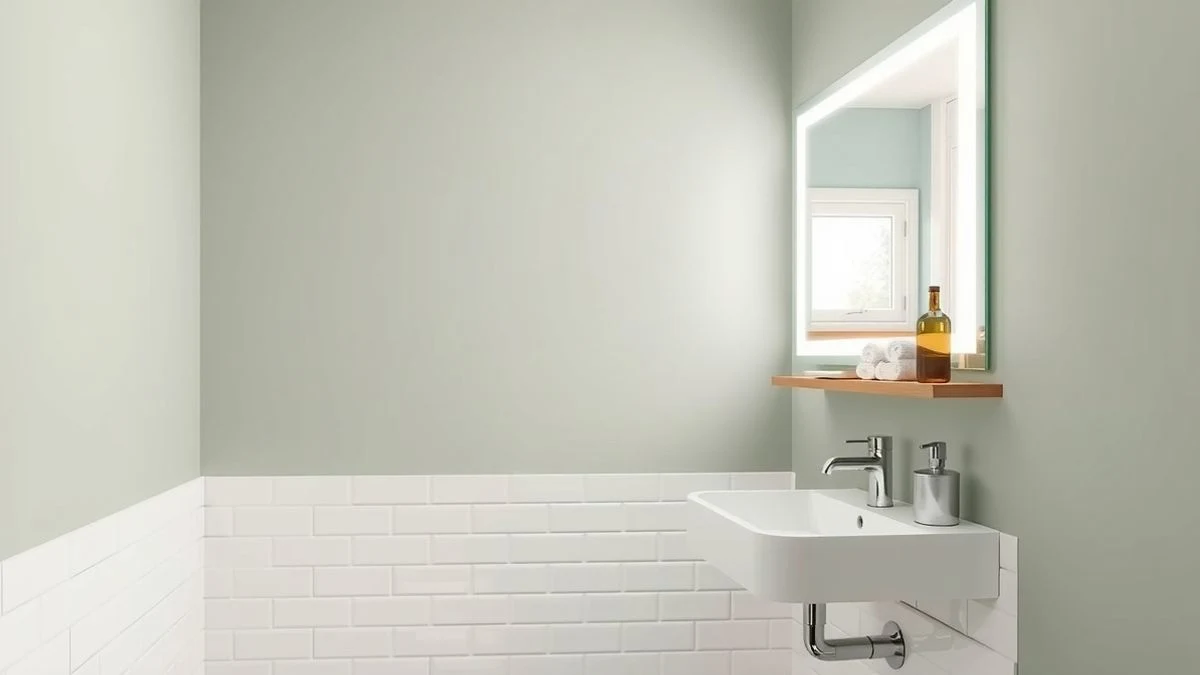
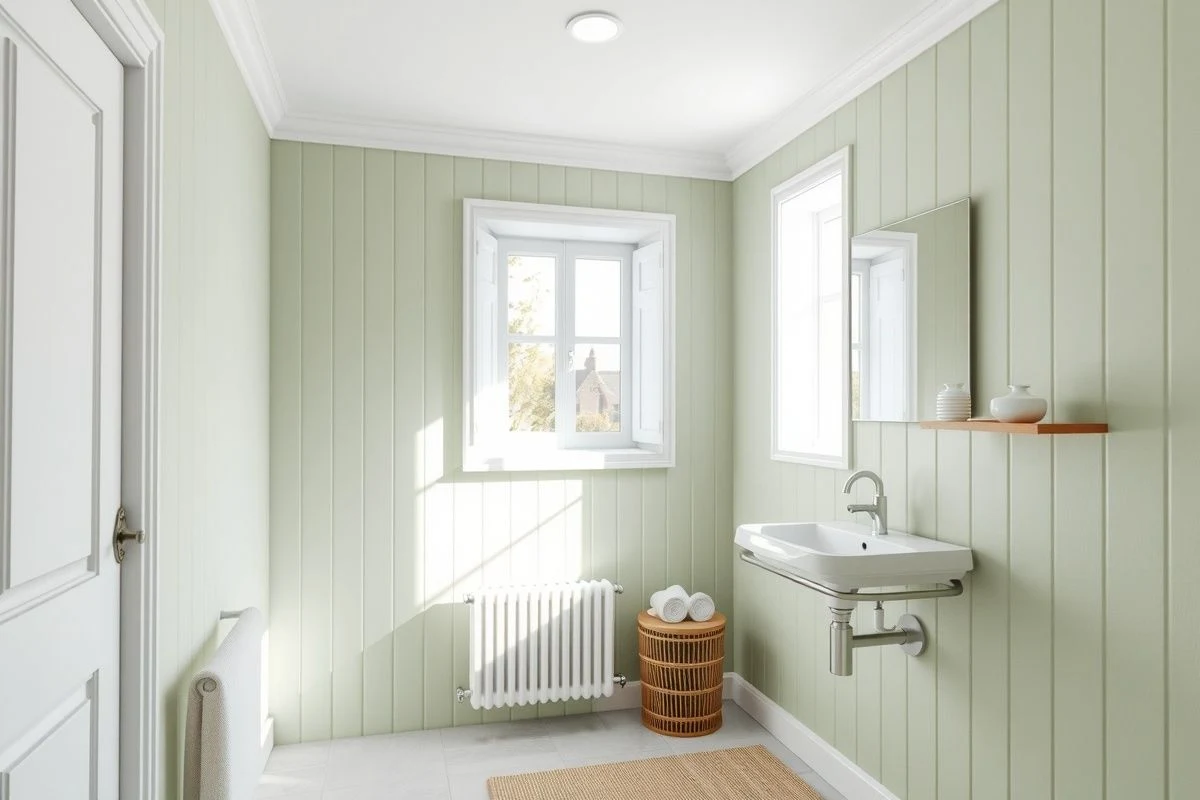
Not all greens are the same, and this is the most important decision you will make. Sage green is the absolute king of this trend: it is a greyish green, sophisticated, that works even in windowless bathrooms because it does not compete for attention with plumbing elements. If you are drawn to something fresher and cleaner, mint green is your ally, although it requires more care: it needs impeccable walls and a visual counterbalance in warmer accessories (beige towels, earthy-toned rugs) to avoid looking clinical.
Dark green, almost botanical, is for the brave. It needs a bathroom with a window or very well resolved lighting (side sconces by the mirror, LED ceiling light at a minimum of 300 lux) and a surface with enough reflection, like a large mirror or shiny tiles. Measure your bathroom before deciding: if it is less than 4 square metres and natural light is scarce, reject dark green. Moss green, warmer and earthier, is the perfect balance for medium-sized bathrooms and works in any season because it is cosy without being sad.
A practical tip: request paint samples in at least three shades of green and paint a rectangle of 60 by 60 centimetres in each on the wall you will see most frequently (usually where the mirror is). Observe how they look at different times of the day. What seems perfect in the morning with natural light may surprise you at night with artificial light.
Materials and Finishes that Enhance Green
Colour is only half the equation. The materials you choose will determine whether the result is elegant or artificial. If you are going to paint the walls (the most economical option), always use satin or matte finish paint in humid bathrooms, never glossy: it reflects too much light and looks plastic. Satin paint is also easier to clean, crucial in a space where steam is constant.
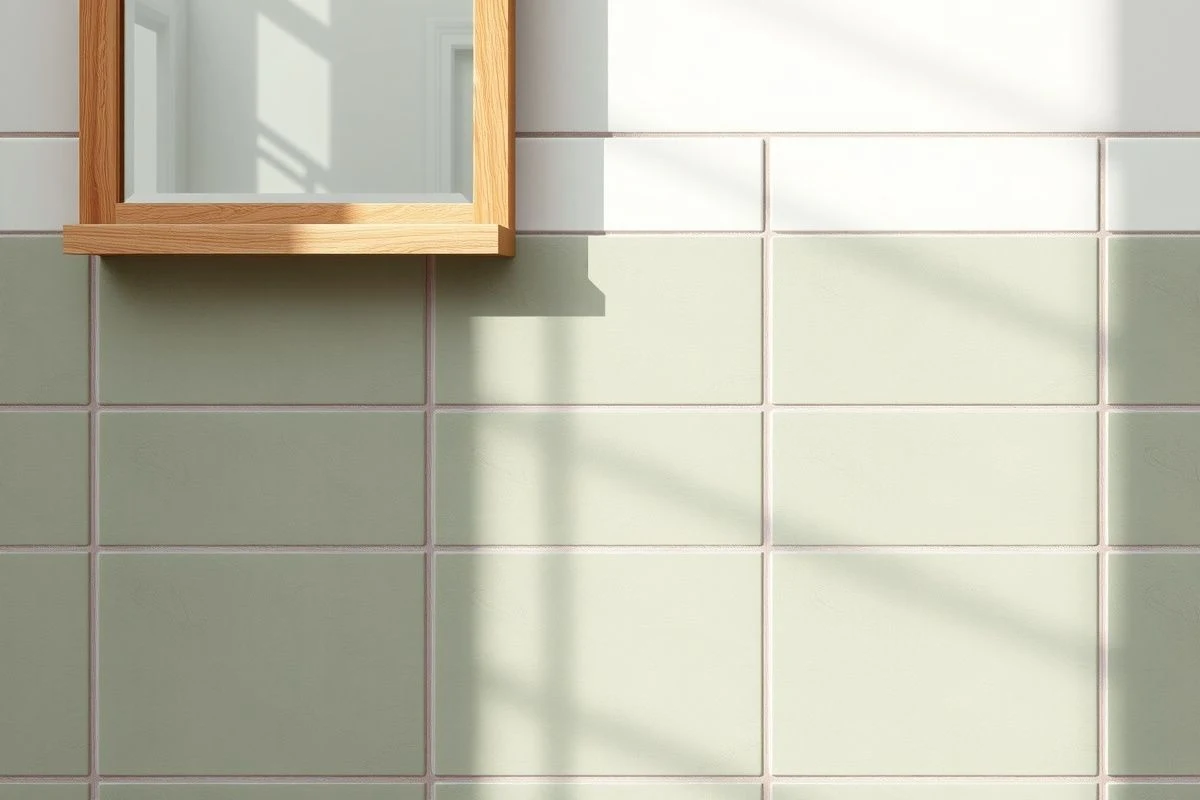
Green tiles are another story. A bathroom with partial green cladding (from the floor up to 1.20 metres, standard height) combined with white paint on the upper part visually expands the space and is easier to maintain than a full green wall. If you opt for green tiles, choose large formats (30 by 60 centimetres at a minimum) with thin joints: they are easier to clean of mould and the result is more contemporary than small tiles, which age quickly.
Wood is the natural ally of green. A mirror with a light oak frame, floating shelves in untreated pine, or a wooden tray by the sink create that visual bridge between the mineral (the tile and ceramics) and the natural (the green). Avoid very dark or stained wood, which visually competes with green instead of complementing it.
Lighting: The Decisive Factor
A green bathroom without good lighting is a failed bathroom, and this is the uncomfortable truth that many articles do not tell you. You need a minimum of 300 lux at the sink mirror (consult your installer: you can achieve this with a 600-lumen sconce or a mirror with integrated LED light). Without this, the bathroom will look dull and the green will go from elegant to melancholic in seconds.
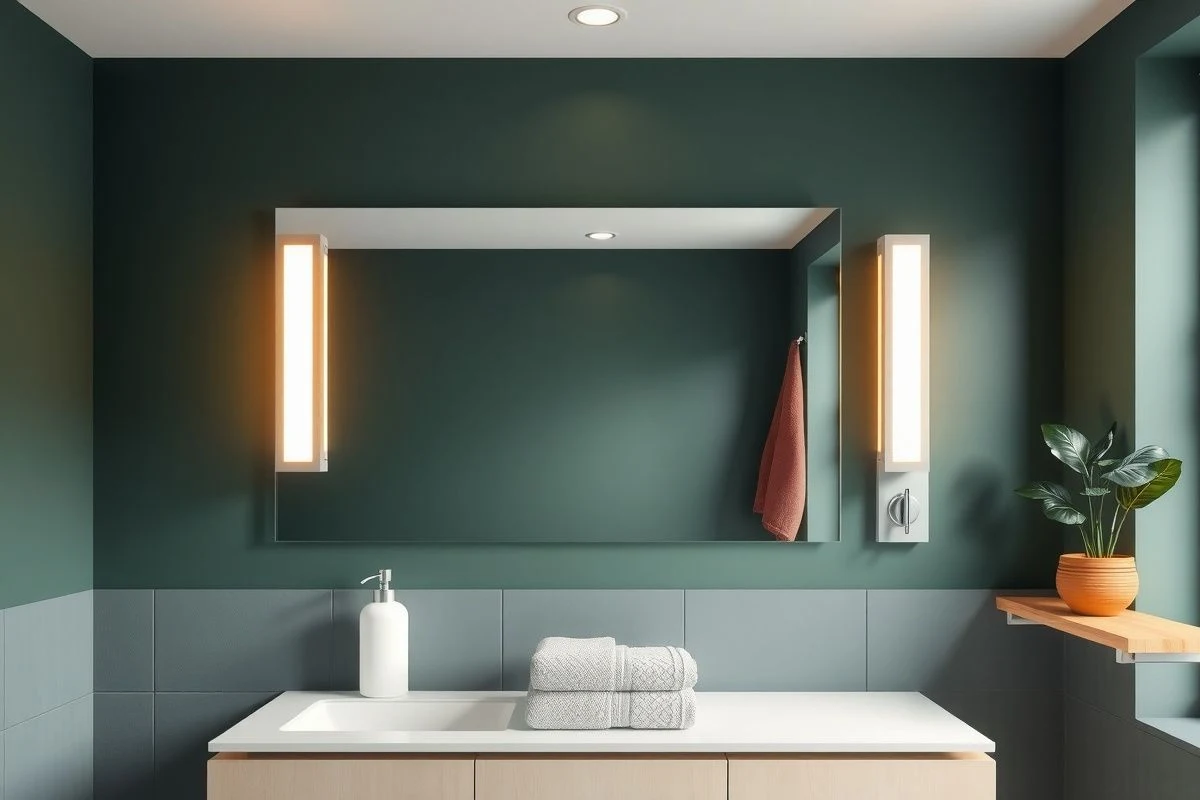
Complete the main lighting with a soft indirect light (a recessed LED panel in the ceiling or an LED strip behind a moulding) for mornings when you want something calmer, and a third source in the bathtub or shower area if it exists. This is not luxury: it is functionality. A well-lit green bathroom is a functional bathroom. A poorly lit one looks like a bunker.
Accessories and Textiles
This is where you test if you have chosen the right shade of green. Textiles are the first to absorb moisture in a bathroom, so opt for 100% cotton towels in neutral tones: off-white, light grey, beige, or cream. Yes, it is tempting to buy matching green towels, but they are harder to maintain and age worse. Neutral towels allow the wall colour to take centre stage without competing.
Bathroom accessories (soap dish, toothbrush holder, mirror) should be minimalist in shape but generous in material. White ceramics, glass, or brass are your best allies. Avoid plastic, which makes any bathroom look smaller and cheaper. A bath mat in earthy tones (ochre, toasted) catches the eye and adds warmth without breaking the visual composition.
Plants are obvious but effective: a pothos in a terracotta pot or a fiddle leaf fig in a corner are more than decoration; they are visual coherence. The green of the plants will dialogue with the green of the walls, creating a sense of continuity. Just make sure your bathroom has enough natural or artificial light for them to survive; a dead plant destroys the aesthetic intention in seconds.
Measurements and Practical Distribution
If your bathroom is less than 3 square metres, manifest green only on the walls and on the ceiling painted white or very light grey. This creates visual height. If you have between 4 and 6 square metres, you can afford green on two walls or in partial cladding. If you exceed 6 square metres, you have almost total freedom, but still do not fill all the walls with dark green: leave at least one white or very light to allow the eye to rest.
The mirror should be opposite the source of natural light (if it exists), or adjacent to the main artificial lighting. A large mirror of at least 100 by 80 centimetres multiplies the sense of space and reflects light efficiently. Small mirrors in green bathrooms (less than 60 centimetres wide) create the impression of isolation, as if you were entering a box.
If your bathroom has a window, open the light passage completely: no curtains or with vertical blinds that you can control without darkening completely. Green needs natural light to dialogue with it to show all its tonal variations. A window covered with an opaque curtain is like having a Rothko painting hanging in a room without light.
The Most Common Mistakes (and How to Avoid Them)
The number one mistake is choosing green without measuring the light in your bathroom. I know people who have painted their bathrooms botanical green without a window and without special sconces: the result is a space that looks like a cave. Measure the lux in your bathroom with an app (there are several free ones) before deciding which shade of green. If you have less than 200 natural lux, opt for lighter and warmer greens (sage or moss, not dark).
The second mistake is combining green with too many colours. The green bathroom works when it is minimalist. If you add blues, yellows, and earthy tones at the same time, instead of serenity, you get visual chaos. The rule is simple: green + white + wood + one or two earthy tones. Period. Complexity is the enemy of refuge.
The third mistake is not considering the emotional reaction of those who use it. If someone in your home suffers from anxiety or depression and for that person green evokes sadness or illness, do not do it just because it is trendy. Decoration should serve real life, not real life to Instagram decoration. We at Casa y Deco believe that the best bathroom is one where everyone in the house feels comfortable, even if it is not trending.

You may also like