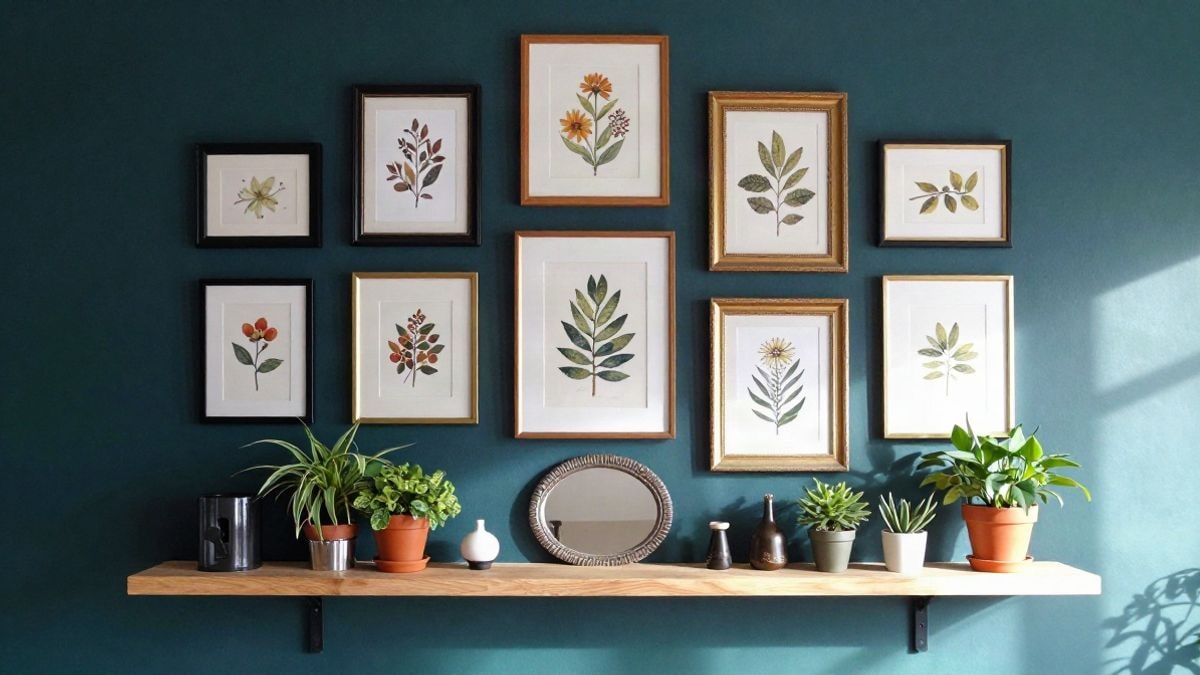
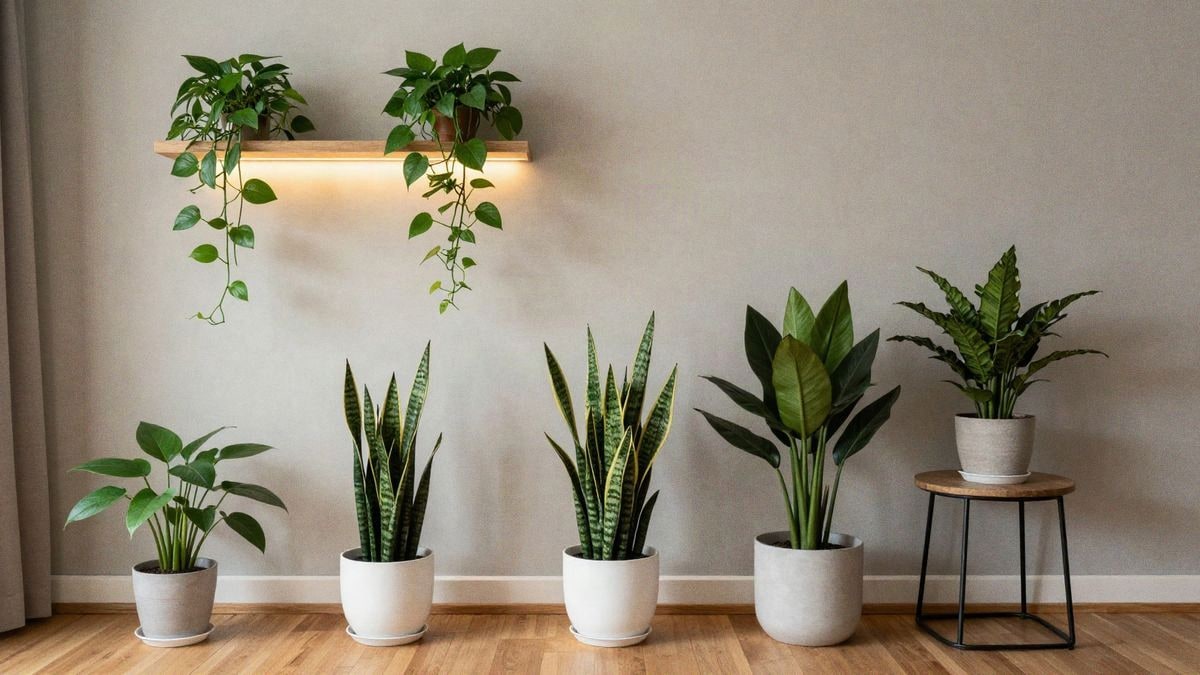
At Casa y Deco, we love surrounding our spaces with greenery, but we know firsthand that not everyone has a green thumb. Some months, my desk looks like a nature reserve, and other months, like the Atacama Desert. That's why today we want to talk about those plants that seem to have survival instructions in their DNA: the ones that forgive neglect, withstand unusual temperatures, and don’t mind if you go a week without looking at them. Because having a green corner shouldn’t be a source of stress.
I confess that my conversion to these species was almost accidental. Years ago, I placed a pothos on a dark shelf in my living room more out of aesthetic desperation than conviction. I thought it would die in two weeks. Six years later, it’s still there, now climbing halfway up the wall, without me having done anything extraordinary. That was the click: understanding that resilience is not a decorative weakness, but a superpower.
The Pothos: The Indomitable Climber
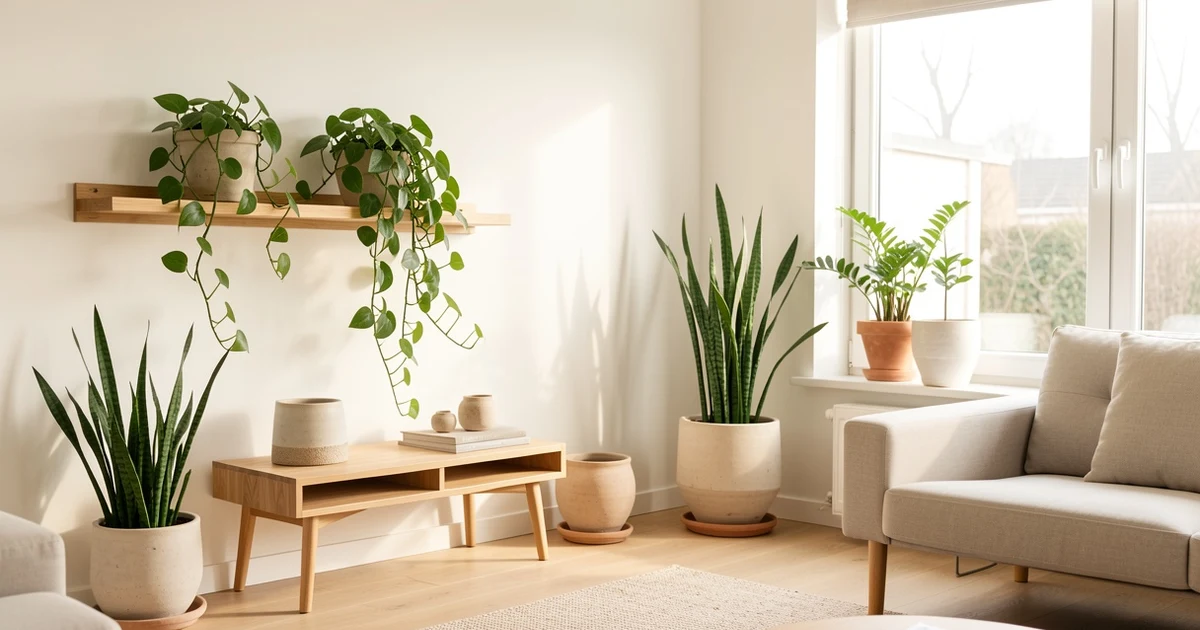
We start with the survival star: the pothos, also known as epipremnum. It is practically indestructible. It tolerates everything from low to direct light, survives weeks without water, and adapts to almost any indoor temperature. The best part is that it grows quickly, so you see results almost immediately. You can let it hang in a suspended pot, let it climb a shelf, or wrap it around a stake. In light green or yellowish tones (like the 'Golden Pothos' variety), it works in any corner. Water it when the soil feels dry to the touch, roughly every 7-10 days. If you forget for a week or two, it forgives you without drama.
What we love about the pothos is that it doesn’t need much space or attention. In small apartments or rooms with little access to natural light, it is your best ally. Moreover, studies suggest that it helps purify the air, even if discreetly.
The Snake Plant: The Steel Minimalist
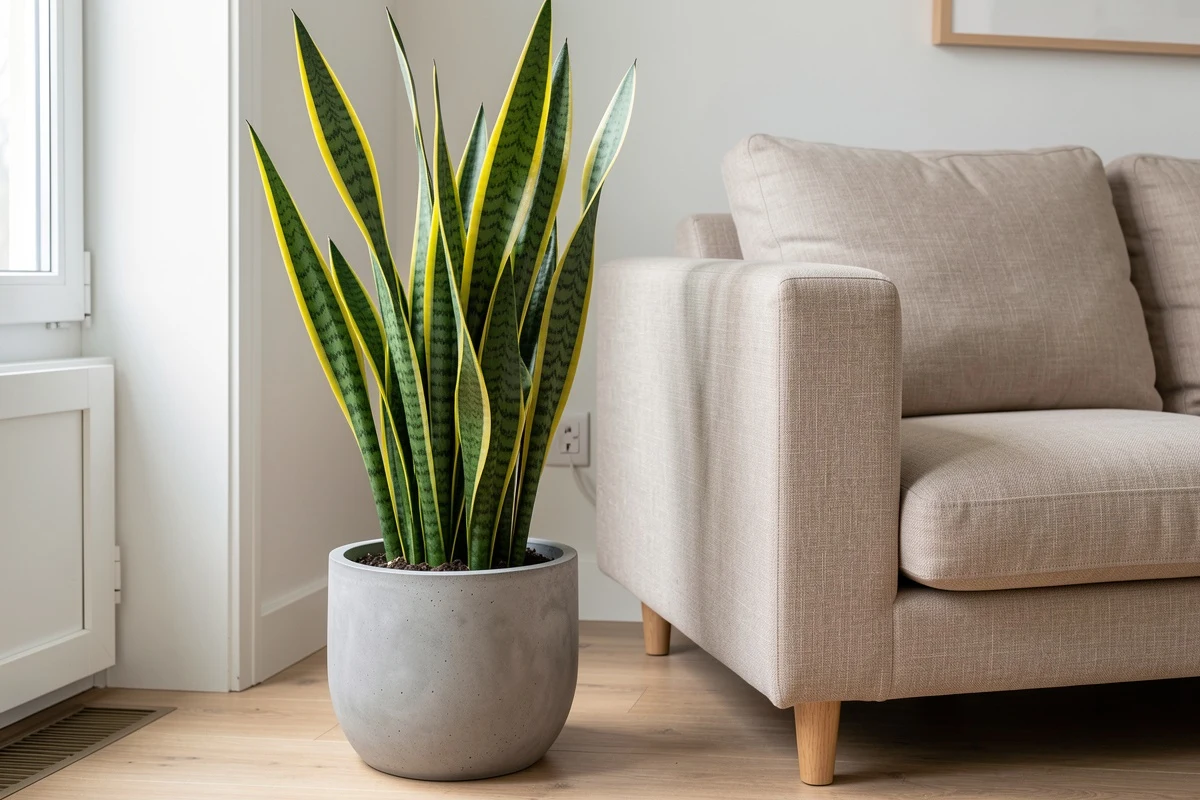
If the pothos is the friendly climber, the sansevieria (snake plant) is feng shui made plant. Long, vertical, almost architectural leaves. There are varieties in solid dark green, with yellow edges, or in grey tones. It takes up little horizontal space, grows upwards, and looks perfect in dead corners, next to an armchair, or on a side table. It withstands normal room temperature, light from moderate to very low, and requires minimal watering: every 3-4 weeks, even less in winter. This plant hates excess water more than it hates neglect, so if you go on holiday for a month without watering it, it will probably come out unscathed.
Decoratively, the sansevieria is perfect if you’re going for a Scandinavian, minimalist, or even industrial style. Its straight lines contrast well with rounded sofas, natural fibre baskets, and ceramics with pure shapes. It doesn’t shout; it simply exists, providing structure and serenity.
The ZZ Plant: Unpretentious Elegance
The zamioculcas (ZZ plant) is another one of those plants that seems like a gift from the universe for the forgetful. It grows slowly, which means it doesn’t require constant pruning or frequent repotting. Its leaves are shiny green, symmetrical, and grow in arching spikes that have a touch of natural elegance. It tolerates low light very well, variable temperatures, and infrequent watering: even every 3-4 weeks is fine. It’s almost impossible for it to complain.
We especially recommend it for bedrooms or bathrooms with little natural light, or for those corners by the entrance where dust is the enemy of beauty. Place it in a neutral ceramic pot, light wood, or even concrete to maintain that relaxed aesthetic. Its slow growth is, paradoxically, an advantage: you can enjoy it just as you bought it for months without it changing radically.
The Dracaena: Variety and Colour Without Complications
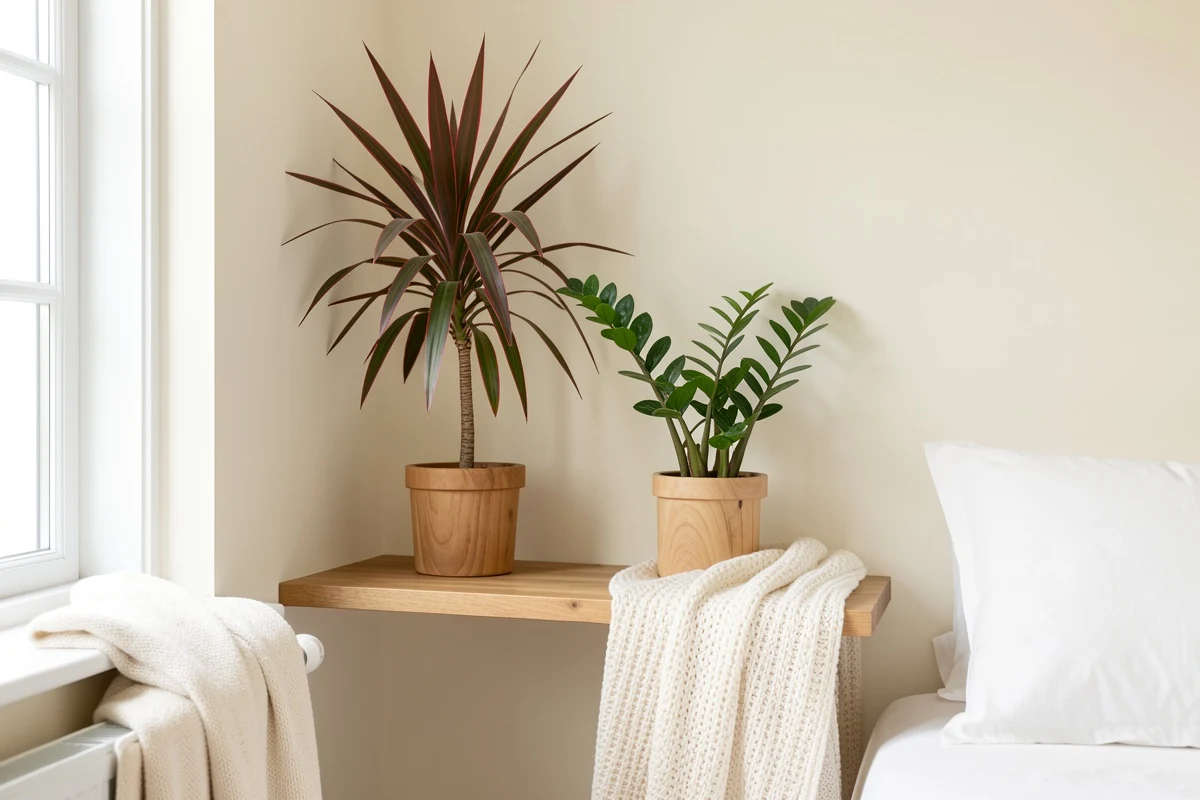
Here come several varieties: the dracaena marginata (with thin stems and red-edged leaves), the dracaena fragrans (more compact, light green), or the dracaena reflexa (small and delicate). They all share one quality: they are practically unbreakable. They tolerate moderate light, normal home temperatures, and weekly or every 10-day watering. If the soil dries out completely, it won’t die; if you water it a bit too much, it probably won’t either.
Visually, dracaenas offer a lot of play. If you’re looking for something with more chromatic personality, the marginata with its reddish touches adds warmth; if you prefer something more discreet, the fragrans is almost a living neutral. They grow vertically, making them ideal for adding height in rooms with high ceilings or in corners where you need to draw the eye upwards.
The Dwarf Fiddle Leaf Fig: Presence with Calm
We finish with a classic that, I confess, surprised us. The fiddle leaf fig (ficus lyrata) has a reputation for being temperamental, but the dwarf varieties are surprisingly tolerant. Large, characteristically shaped leaves in deep green. They grow slowly when well cared for, and with moderate or indirect light, they behave quite well. Watering should be moderate: water when the soil is dry 2-3 cm deep, roughly every 10-14 days. The trick is not to move the pot constantly; find a bright corner and leave it there.
If you have a living room or a space that needs a green focal point without being a monumental tree, the dwarf fiddle leaf fig is your solution. Its leaves naturally draw attention, provide structure, and if you treat it with patience (which is all it asks for), it will last for years.
Practical Tips for Effortless Success
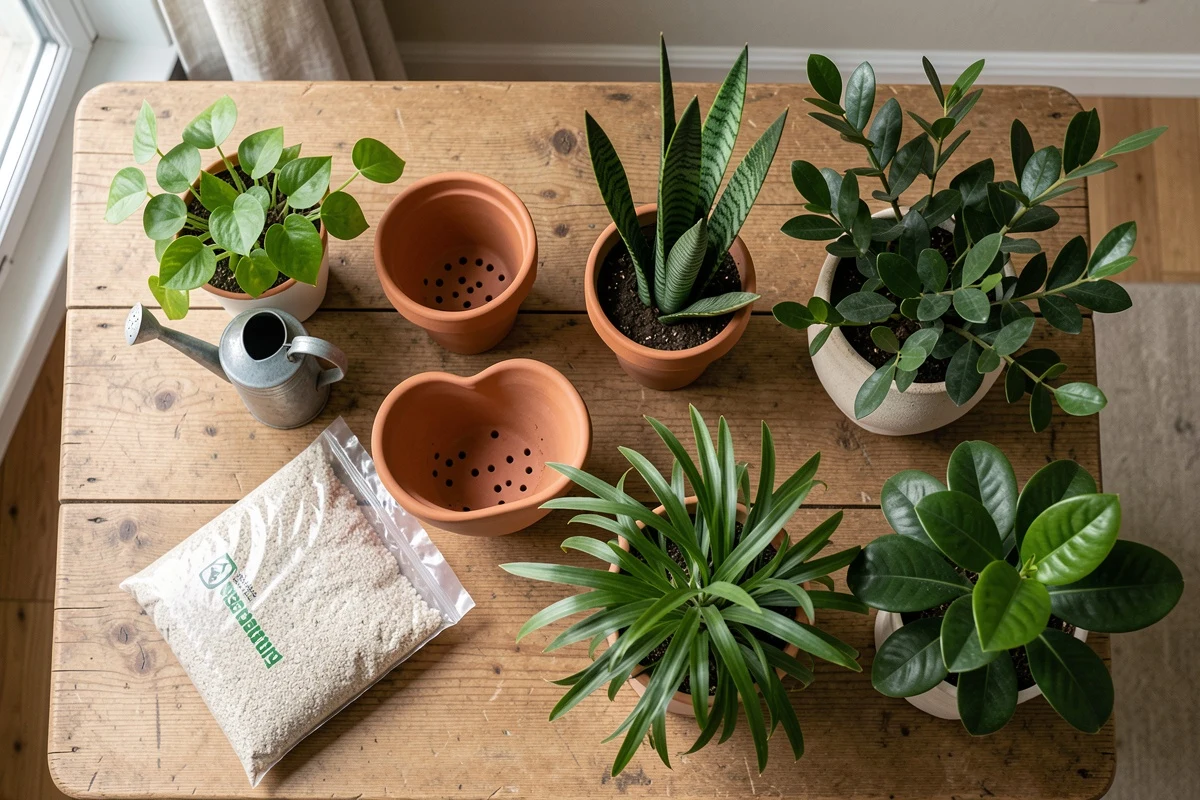
Beyond the plants themselves, there are details that make a difference. First: pots with drainage. This is non-negotiable. Even though they are tolerant plants, drainage is what prevents the roots from rotting. Choose pots with holes, preferably ceramic, unglazed clay, or even rigid plastic with a removable tray. Second: quality soil. A universal mix with perlite or coarse sand helps water drain better. Third: indirect light. You don’t need direct sun; a north-facing window or a few meters away from a south-facing window is usually sufficient.
At Casa y Deco, we’ve seen that these small details are what differentiate a ‘looks like it’s about to die’ from a ‘it’s growing slowly but surely.’ Group the plants by watering type so you don’t get confused: water all the pothos together, all the sansevierias together. Use a small bottle or a watering can with a fine spout to control the amount. And if you’re going to travel, let a friend know or place the pots on a tray with water a few days beforehand: they will absorb what they need slowly.
The truth is that having plants at home doesn’t have to be a stressful race. With these five species, a bit of indirect light, decent drainage, and occasional watering, you’ll have a livelier, prettier, and probably calmer space. Because in the end, what unites all these plants is that they understand that life at home is unpredictable, and they adapt without complaint.

You may also like