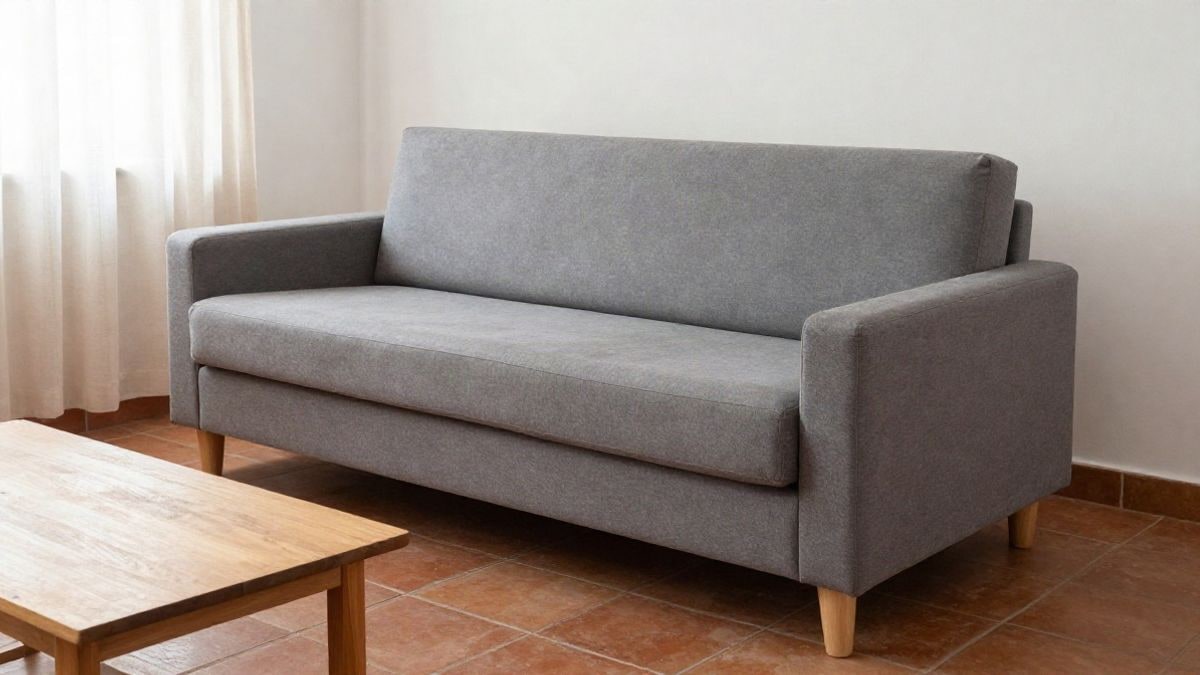
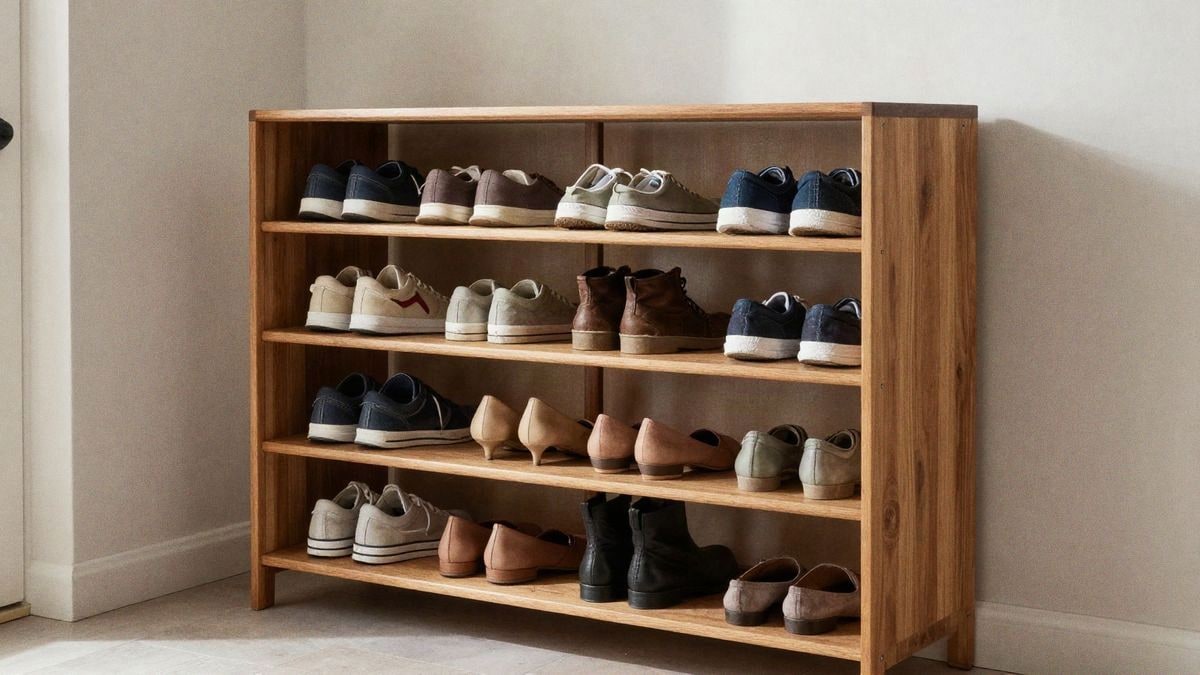
At Casa y Deco, we love tackling the challenge of small spaces because we know that with the right strategies, a small bedroom can transform into a comfortable and even cosy retreat. What many people don’t understand is that the feeling of overwhelm doesn’t solely come from size, but from how we arrange the furniture, choose colours, and play with light. Today, we are going to share with you the tricks that really work to help your bedroom breathe.
The first step is to choose a clear and coherent colour palette. We know that white seems like the obvious choice, but I confess that this approach bores me to tears. Instead, opt for neutral tones with undertones: an off-white, a warm beige, a very light grey, or even a desaturated blue. The key is that the main walls do not compete with each other. If you paint all the walls the same light colour, the space flows better and the eye doesn’t get stuck on each corner as if it were chaos.
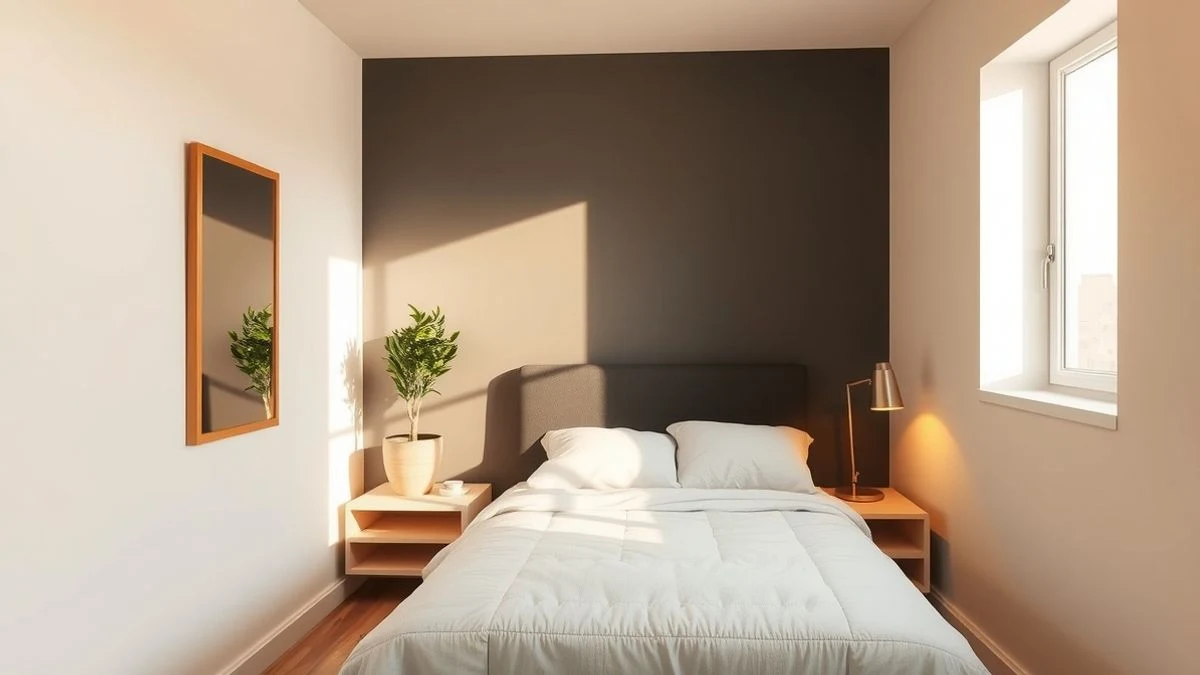
Here comes a piece of advice that changed my way of thinking about small bedrooms: the headboard wall can be darker. Although it may seem contradictory, a headboard in a deeper tone (a dark grey, a soft navy blue, or even a desaturated terracotta) acts as a focal point, and the rest of the room seems to expand around it. The other three walls remain light, creating contrast without overwhelming.
Lighting is absolutely crucial, and this is where most people fail. A single central ceiling lamp won’t do: it creates shadows that make the space feel even smaller. Layer the light: a soft general light on the ceiling, a bedside lamp on each side of the bed (articulating arm lamps save space on the bedside table), and if possible, a wall sconce at the headboard. Warm lights (between 2700K and 3000K) make everything feel more intimate and less clinical.
Now let’s talk about furniture, which is where it’s really decided whether a small bedroom feels oppressive or not. The golden rule is to choose a bed or bed frame that doesn’t take up more than 40% of the room’s width. If your bedroom is 3 metres wide, the bed shouldn’t exceed 1.2 metres. It seems obvious, but many people squeeze a 1.5-metre bed into a space where it barely fits. Opt for compact sizes: 90 or 105-centimetre beds if you sleep alone, or a 135-centimetre bed if sharing, instead of the classic 150.
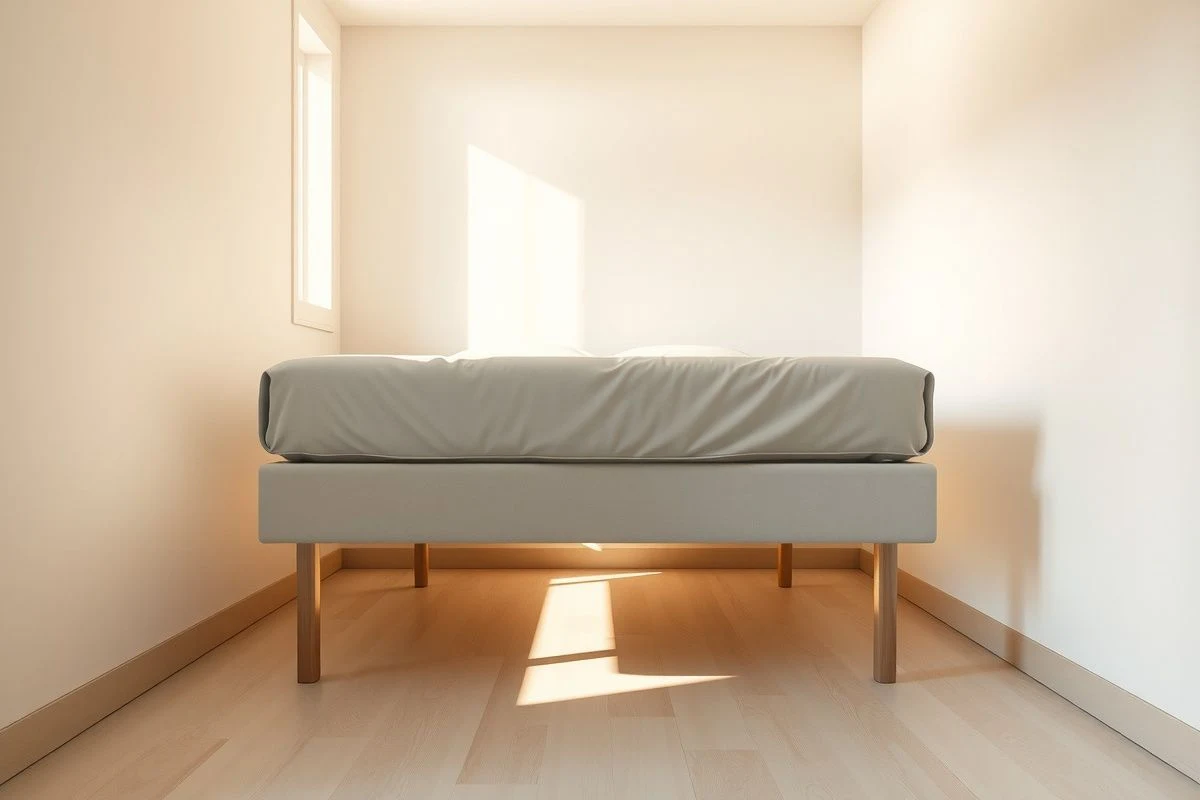
Elevated bed frames are your best ally in small spaces. A bed with legs of about 20-25 centimetres allows the eye to see underneath, giving the illusion that it occupies less space. It may seem like a silly detail, but it’s the difference between a room that breathes and one that feels like a box. Avoid low box springs or platforms that reach the floor.
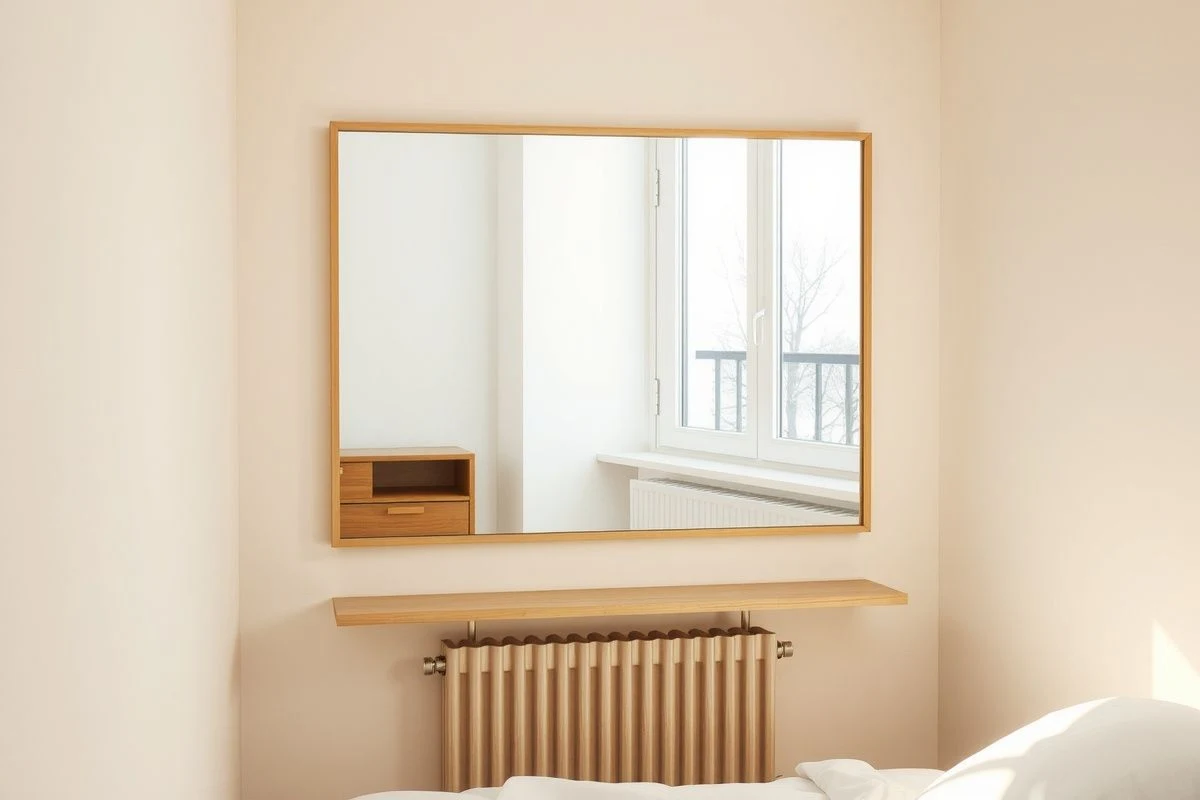
Mirrors are your best allies for visual expansion. Place a large mirror (at least 80 x 120 centimetres) on the wall opposite the window or next to it. This multiplies the entry of natural light and creates the feeling that the space continues. If your budget allows, a mirror with a thin frame in neutral tones or light wood works better than dark or overly decorative frames in small spaces.
Another common mistake is having large bedside tables on both sides of the bed. If your bedroom is really small, consider a single bedside table that is 40 centimetres wide or two very narrow ones (30 centimetres). Floating bedside tables (attached to the wall) are an excellent option because they leave the floor completely free, which psychologically enlarges the space. If you can’t fix them to the wall, wheeled bedside tables are practical and easy to move when cleaning.
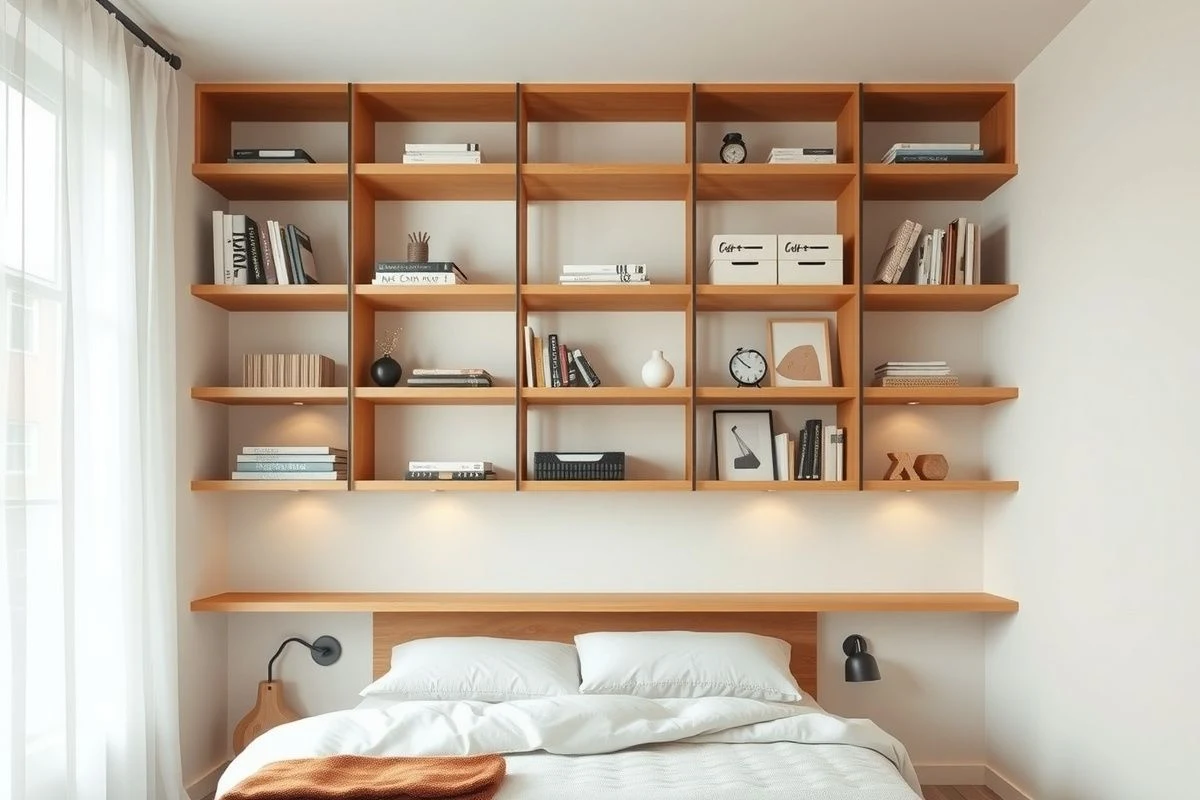
Clothing is another topic that many people don’t consider when thinking about space. A small bedroom needs an efficient wardrobe or vertical storage systems. Built-in wardrobes that reach the ceiling make the most of every centimetre and create a clean visual line. If you can’t do any renovations, an open shelf 1.8 metres high in natural tones will take up less visual weight than several scattered pieces of furniture. Keep clothes organised and accessible: if you see chaos inside a small wardrobe, the feeling of overwhelm multiplies.
Textiles play a role that is often underestimated. Opt for a bedspread and pillows in tones that match the walls, not in highly contrasting colours. A bedspread in a colour similar to the wall (or just one or two shades darker) makes the bed feel

You may also like