At Casa y Deco, we love discussing those details that make the difference between a bathroom or kitchen that ages poorly and one that still looks fresh years later. Taps are one of those elements that many ignore until the last moment, when they have already spent their budget on beautiful tiles and vanity furniture. Mistake. Taps are protagonists, last for decades, and define the character of the space just as much as any other accessory.
If there's one thing we've learned from watching renovations, it's that outdated taps stand out in seconds. A tap from the 2000s with shiny chrome finishes like a mirror, or with overly ornate silver details, now looks like it came from a bygone catalogue. And the most frustrating part is that the tap still works perfectly, so you end up renovating the entire kitchen or bathroom because of a tap that doesn't fit. This can be avoided. The key is to understand what makes a tap aesthetically age and what features ensure that your choice will look good in a decade.
Finishes That Age Better: Matte is Your Ally
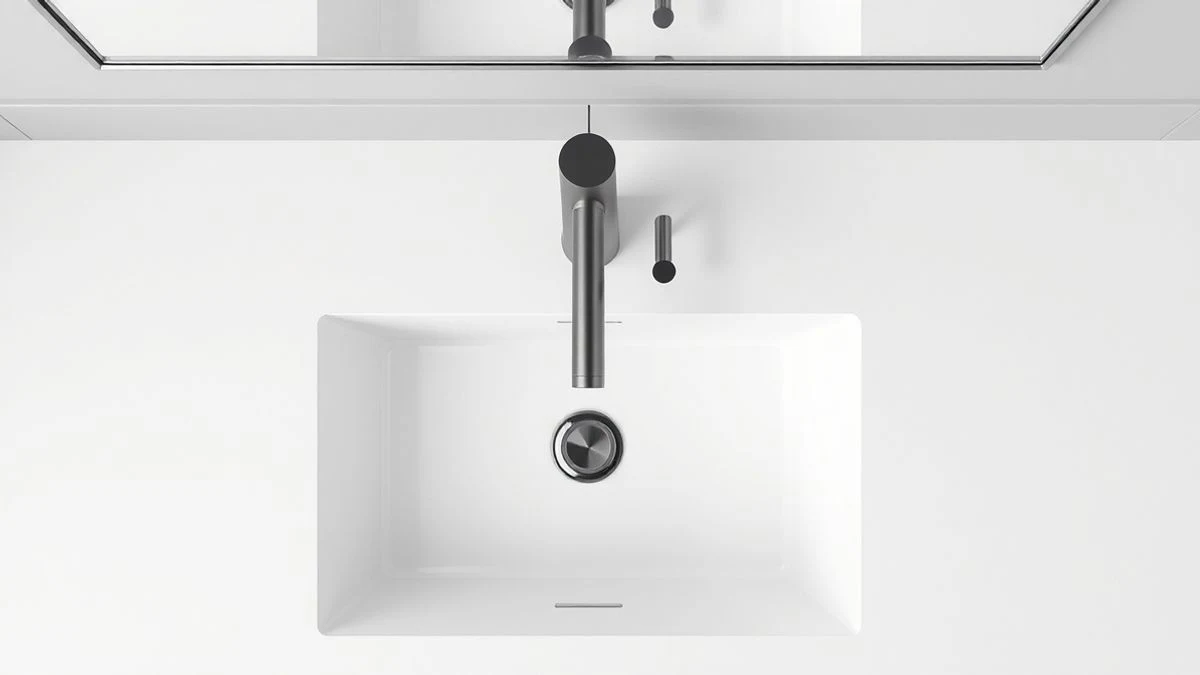
Let's start with the most visible: the finish. Shiny chrome finishes, those that sparkle like jewels, have a problem: they show every drop of water, every fingerprint, and that level of artificial shine is now associated with past eras. Matte finishes, on the other hand, age better. Matte stainless steel, brushed nickel, or matte black finishes are options that remain elegant today and will continue to be so in five years because they don't rely on a fleeting trend, but rather on a more solid aesthetic.
The matte finish is also more practical. It doesn't show fingerprints as much, is easier to clean, and visually adds a more contemporary and less cold touch than traditional shiny chrome. If you're in doubt, look for photos of bathrooms or kitchens from ten years ago with matte taps and then compare them with an updated home: the difference is staggering. Matte finishes age like wine; shiny ones, like a 90s disco.
Simple Shapes: Geometry is Eternal
This is where many people go wrong by wanting to be original. I confess that at one point I thought that very curved taps, with exaggerated swan-like spouts or overly sculptural shapes, were the height of style. Now I look at photos from six years ago with those taps and feel a bit of second-hand embarrassment. Very marked, angular, or overly elaborate shapes become outdated sooner.
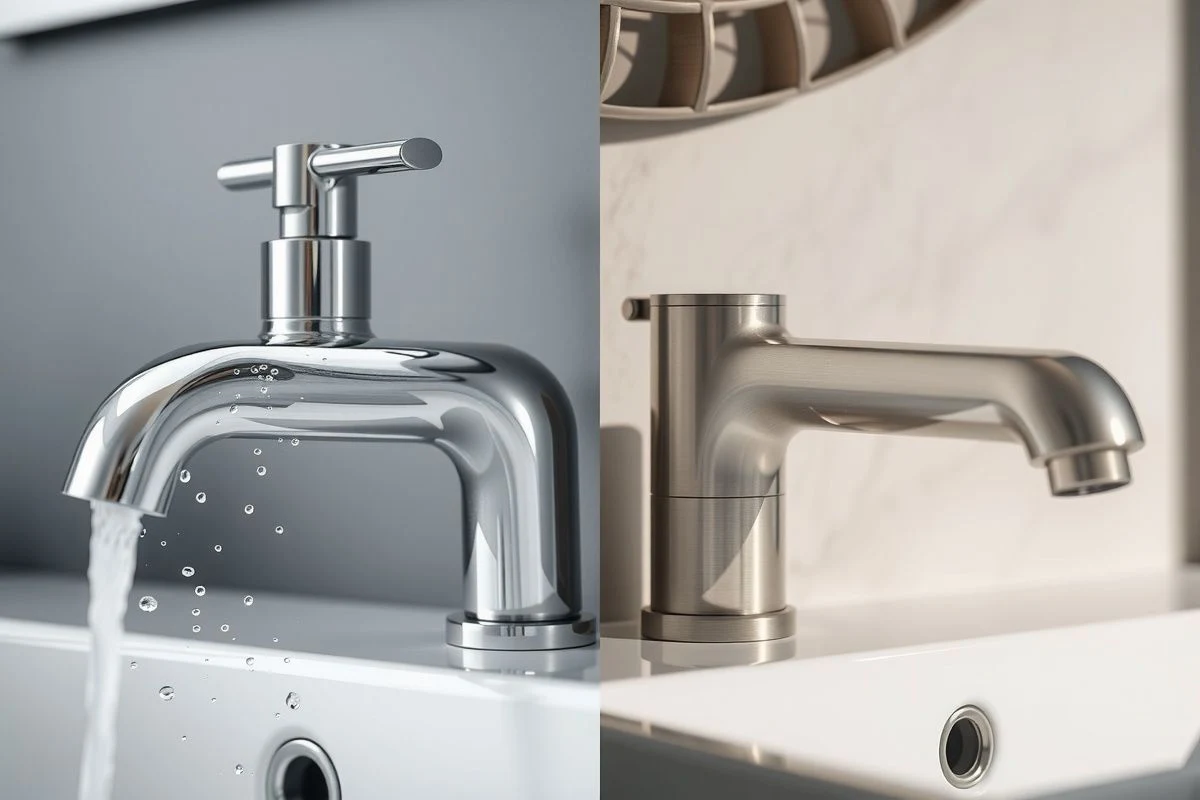
Choose clean, geometric shapes: straight lines, polished cylinders, subtle oval forms. Think of architecture rather than sculpture. Taps that stand the test of time are those with a shape you could find in a Scandinavian or minimalist design building: no frills, not trying to be decorative objects in their own right, but functional elements that are beautiful in their simplicity. A tap with a straight spout, simple handles, and clear lines remains impeccable today, tomorrow, and in twenty years.
If you're looking for something a little less austere, it's fine to add a gentle curve or a small detail, but it shouldn't be the main feature. The main focus should be the finish and construction, not an elaborate shape that someone invented three years ago to stand out.
Durable Materials: Beyond Chrome
The quality of the internal material is what really matters, even if it isn't visible. A solid brass tap with a matte finish will age better than a cheap alloy with thick chrome plating. Brass is the standard in quality taps because it is durable, doesn't rust easily, and allows for consistent finishes. Avoid very light alloys or materials that sound hollow when you tap them in the store.
Also, pay attention to the origin and the guarantees offered by the manufacturer. A tap from a recognized brand with a ten-year warranty against leaks is much safer than a pretty tap whose origin you don't know. Durability isn't glamorous, but it's what makes something age well instead of just aging.
Size and Proportions Relative to Your Space
Here comes something few consider: a tap that is beautiful in a store can look disproportionate in your kitchen. Very large, professional-style taps can look overwhelming in a small kitchen. Very small and delicate ones get lost on a large island. Proportions matter as much as aesthetics. Measure your countertop, think about the space available between the tap and the wall or window, and visualize how it will look.
In medium-sized kitchens, a spout height of between 20 and 25 centimetres (from the base to the tip of the spout) is balanced. In bathrooms, depending on the sink, between 15 and 20 centimetres is standard. These numbers matter because a tap that is too high or low in proportion to its surroundings will look odd and dated, as if it doesn't fit well.
Functionality: The Silent Enemy of Good Design
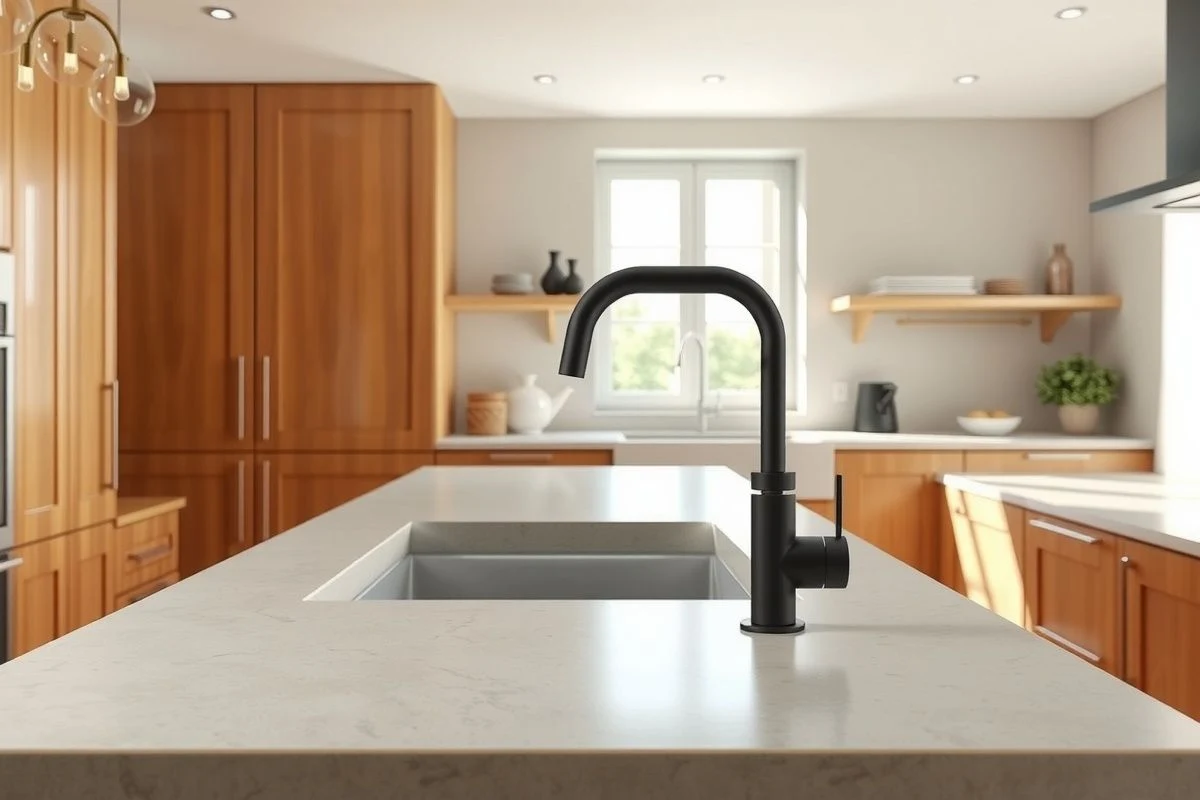
A beautiful tap that doesn't work well is a disaster that repeats itself every day. If the spout is too short and doesn't reach the work area properly, you'll end up hating it. If the controls are difficult to clean or accumulate dirt, beauty doesn't matter. Test the tap in the store if you can, or at least read specific reviews about its everyday use, not just about its appearance.
Single-lever systems usually age better than two-handle ones because they are visually cleaner, but it must be ergonomic: it should open easily, control the water flow well, and not make noise when closing. These details, invisible in pretty photos, define whether your tap will still be beautiful in five years or if you'll see it as a daily annoyance.
Neutral Colours That Don't Go Out of Style
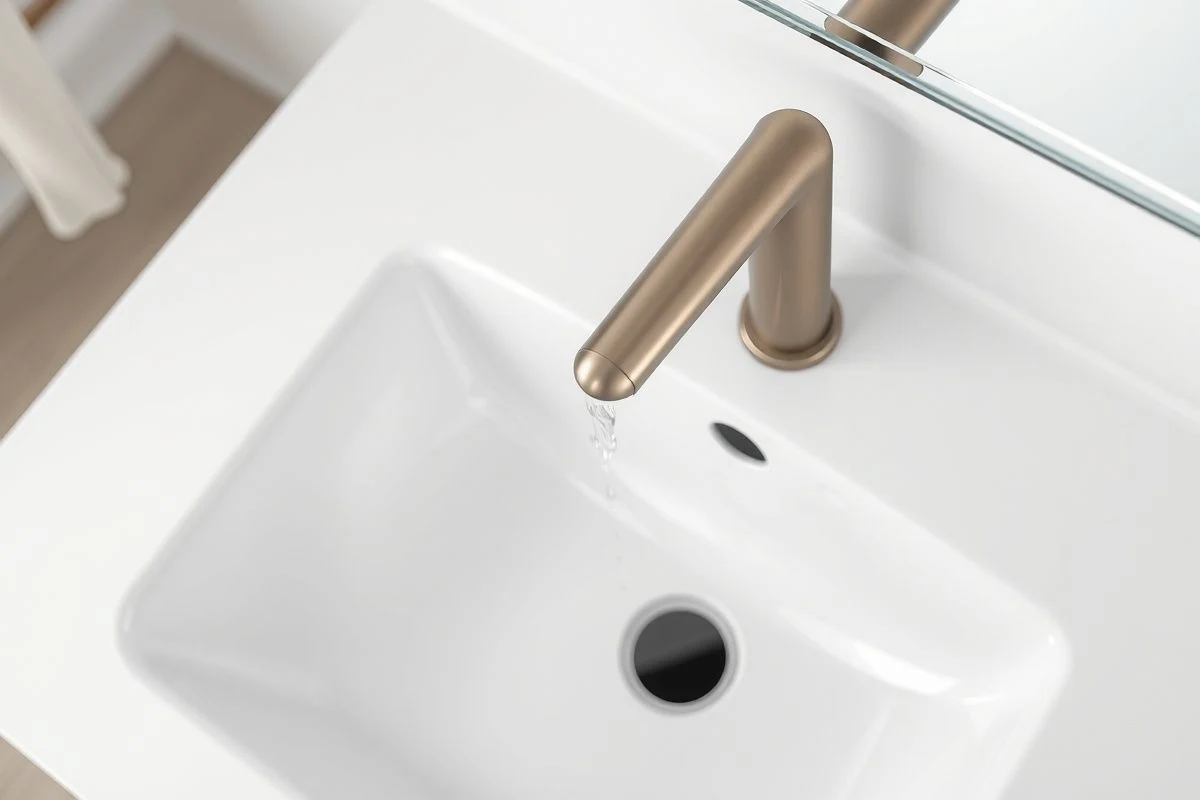
On colours, let's be clear: matte black, matte stainless steel, and brushed nickel are safe bets. Copper or aged brass are having a moment now, but they require a very specific style to avoid looking out of place. If your bathroom is white and light blue, a reddish copper tap may look odd in five years. However, those same neutral colours work with almost any palette: black and white, grey, natural wood, tiles of any shade.
If there's one thing decor has taught us, it's that minimalism in the colour palette of long-lasting accessories is wise. Leave colour experimentation for things that are changed every two years: curtains, towels, bathroom items.
The Detail You Didn't Expect: Proper Installation
One last piece of advice: also choose a tap considering the installation. If you need complicated work because your pipes don't fit with the new tap, that increases the cost and frustration. Ask your plumber before buying. A beautiful tap that requires renovating the entire plumbing system under the countertop may not be the best option, even if it's gorgeous. Practicality ages well; installation problems age poorly.
In summary, a tap that doesn't age is one that combines a durable matte finish, a simple and timeless shape, a size proportionate to your space, proven quality materials, and impeccable functionality. Don't seek it to be a work of art: seek it to be an invisible object for how well it works and how good it looks. That's what distinguishes taps that remain beautiful years after from those that scream, 'I bought this three years ago.'

You may also like