At Casa y Deco, we love discovering solutions that transform small spaces without the need for renovations or exorbitant expenses. Mirrors are probably the most effective weapon in interior design for visually enlarging a small flat. It’s not magic; it’s pure optics: a well-placed mirror reflects light and depth, breaking the feeling of enclosing walls. We have been experimenting with them in our projects for years and have learned that their success depends on where we place them, their size, and how we combine them with the rest of the decor.
The first thing we have discovered is that size does matter, and much more than one might think. A tiny mirror on the shelf won’t give you the results you expect. Truly effective mirrors occupy a good portion of the wall: we think of pieces that are at least 80 centimetres tall, although ideally, they should reach from the middle of the wall upwards. If you have a floor-to-ceiling space, even better. I confess that at first, it seemed excessive to me, but when we tried it in a bedroom of barely 10 square metres, the change was so radical that it became our favourite method.
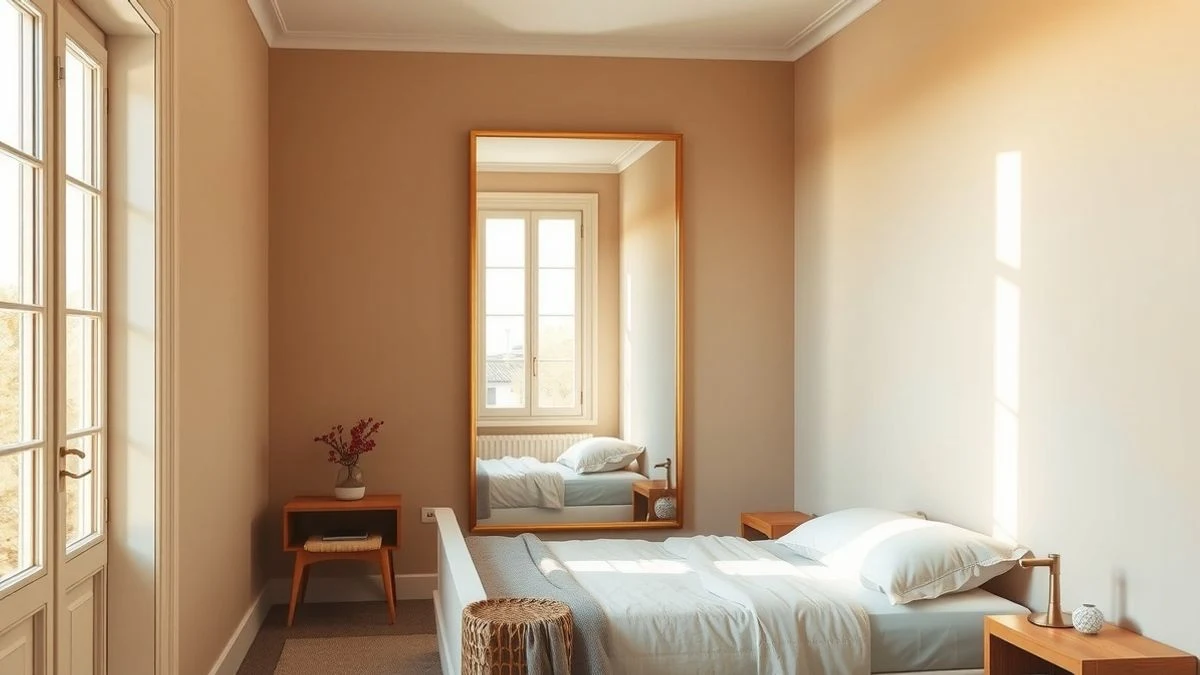
The mirror facing a window is a winning combination that everyone with a small flat should know. By reflecting natural light, it amplifies the feeling of brightness and spaciousness without you having to do anything else. In living rooms, we place the mirror on the wall opposite the main window, so it captures the most light during the day. If you live in a dark flat or one without large windows, this strategy is even more valuable because the reflection of the little light that comes in is multiplied. We measured before and after in a client’s very claustrophobic dining room: it went from having light for only one hour a day to having it reflected for double that time.
Now, be careful with mirrors facing each other: they create an infinite effect that can be more disorienting than enlarging. What works best is to place a strategic and unique mirror, reflecting an interesting focal point, not another mirror. If you have two small walls on the sides, it’s better to have one large mirror on the front wall than two small ones facing each other. We believe that the “tunnel” effect generated does not help the feeling of spaciousness; on the contrary.
The specific dimensions depend on your space: for a living room of 12 to 15 square metres, a mirror of 120 x 80 centimetres is a good starting point. For smaller bedrooms, 100 x 70 centimetres is sufficient. In bathrooms, even 80 x 60 works if you place it strategically above the sink or on the side wall. Small sizes like 60 x 40 centimetres occupy too little visual space to generate the effect you’re looking for.
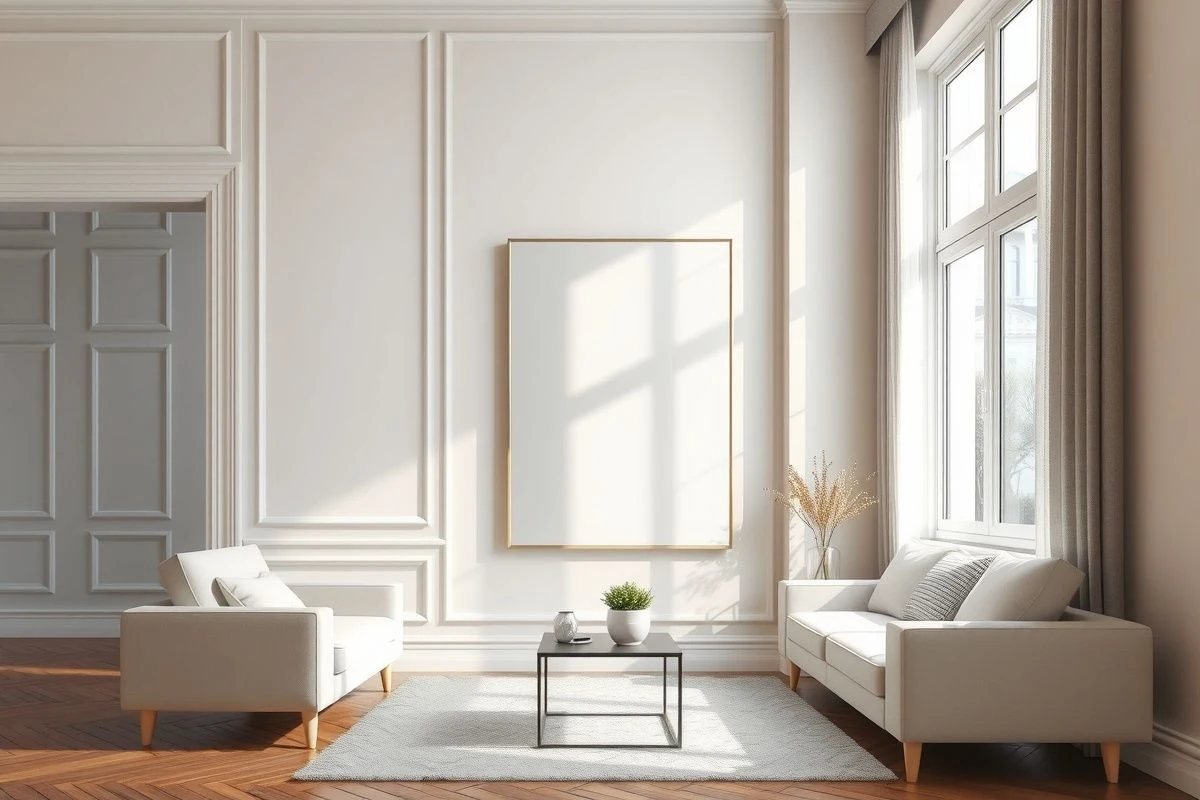
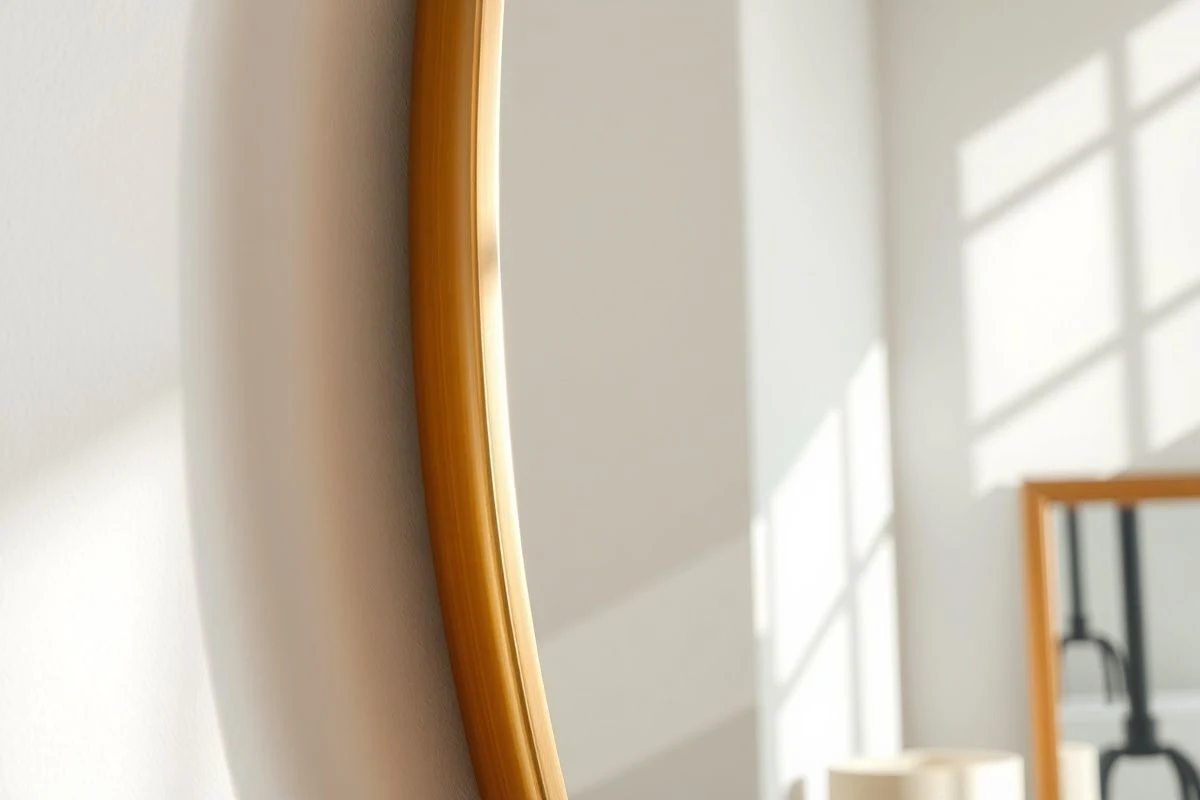
The type of frame also plays an important role in how the mirror works within your decor. Thin and discreet frames enlarge more than thick frames, because metal or wood draws less attention to itself. A frame 2 to 3 centimetres wide in a golden, silver, or light wood tone dissolves into the wall. Very pronounced rustic frames, although beautiful, detract from the lightness of small spaces. However, if your apartment has an industrial or bohemian style, a dark brass or dark wood frame of 5 centimetres still works because it is consistent with the atmosphere.
One tip that few mention: place the mirror at the correct height, which is centred at eye level of a standing person, approximately between 150 and 160 centimetres from the floor to the centre of the mirror. If you raise it too high or lower it too much, it loses effectiveness. In living rooms with sofas, we can adjust it a little higher so that it reflects the space above the furniture, creating a perspective of greater height in the room.
Another trick we love is using mirrors in corners. A corner is a visual “waste” in small flats because it’s a space that’s difficult to utilise. A medium-sized mirror in the corner between two walls creates the illusion of a window or door leading to another room. It works especially well in corners where two different wall colours converge because the reflection amplifies that transition.
Regarding coloured frames, our advice is to harmonise with your decor palette. In a bedroom with grey walls and sage green details, a soft golden brass frame works. In a Nordic white and grey living room, a silver frame is the most coherent choice. We don’t want the mirror to be an isolated element competing with the rest. That said, a mirror with a matte black frame in a room with warm tones can be an interesting focal point if well thought out.
The lighting around the mirror enhances its effect. If you have a floor lamp or a sconce next to the mirror, the light bounces and amplifies even more. In bedrooms, a warm lamp (around 2700K) next to the mirror makes it cozier. In living rooms or workspaces, a more neutral light (4000K) reflects more clearly. Some clients have even noticed that their spaces look larger simply by adding lighting next to the mirror, without changing anything else.
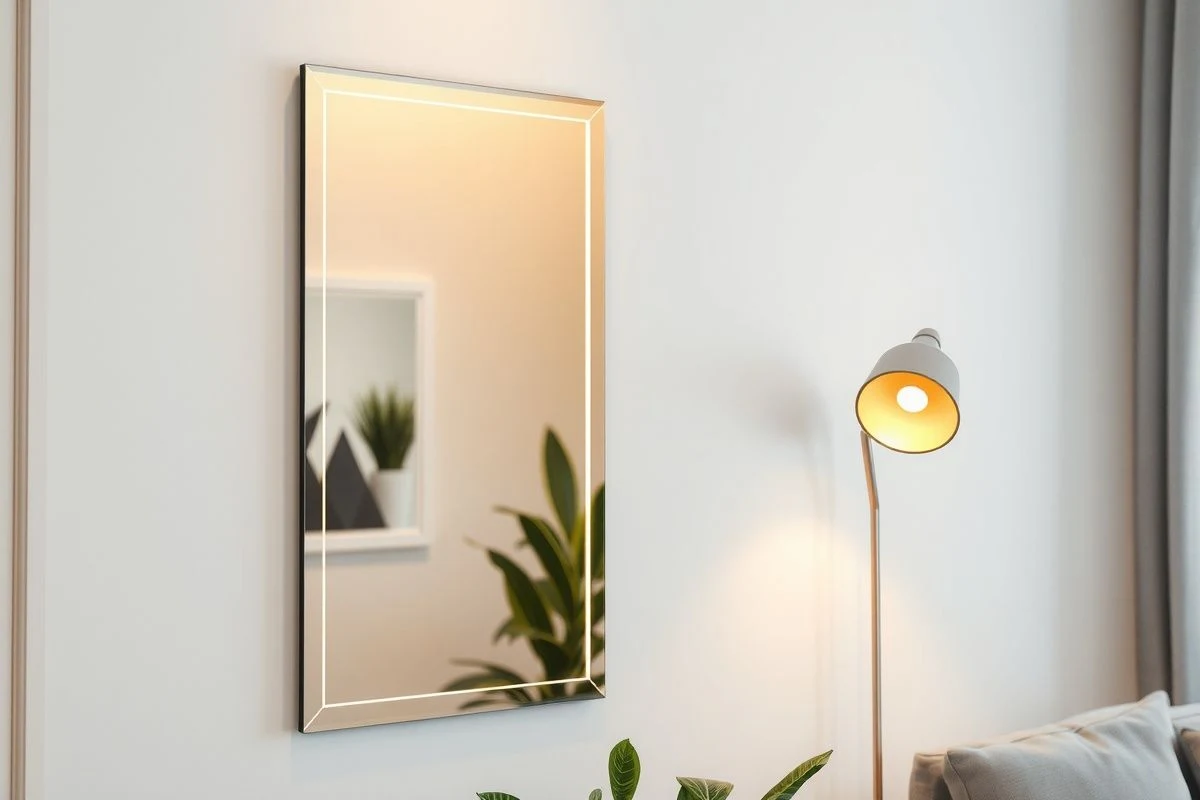
Frameless mirrors, or those with very thin frames, are the champions of visual spaciousness. They are more modern and have that “floating” touch that visually weighs less. If you live in a very small flat and want to maximise the effect, a bevelled edge mirror without a frame is your best ally. The bevelled edges also create a subtle light effect that adds depth.
For those living in very small flats, an advanced strategy is to combine several small mirrors instead of one large, but distributed coherently. We do not recommend the classic gallery of mirrors that look like they came from an 80s hotel, but rather 3 or 4 mirrors of similar size in a deliberate composition, with the same frames and evenly spaced. This multiplies the effect without looking chaotic.
Don’t make the mistake of placing a mirror in front of a door or dark hallway, as it will only reflect the darkness and make the space even more sinister. Ideally, it should reflect natural light, plants, artwork, or some decorative element that is already positive. If your only available space is in front of a hallway, make sure it at least reflects light from one end.
Another detail that we often overlook: cleaning the mirror regularly is vital for it to work its visual magic. A dirty mirror reflects nothing. In a small flat where every centimetre counts, a mirror opaque with dust or stains is literally robbing you of visual space. Wipe it with a microfiber cloth once or twice a week if it’s in an area where it accumulates dust.
If you have doubts about where to place your mirror, try first with cardboard of the approximate size taped to the wall. You’ll see how the space would look with a mirror of those dimensions without spending any money. This has saved us many times from hasty decisions. Leave it like that for a week, observe how the light behaves, how it looks from different angles, and then make the final decision.
In conclusion, mirrors are not a decorative whim in small flats: they are a smart investment in spaciousness and light. Combined with the right lighting, the right size, and a strategic location, you will achieve a depth effect that no other decorative element can offer you. If we’ve learned anything at Casa y Deco, it’s that simple tricks, when applied well, completely transform the experience of living in a small space.

You may also like