A small living room doesn't have to feel claustrophobic or sacrifice style. With the right choices in layout, colour, and light, it's possible to transform a cramped space into a bright, welcoming room that visually feels larger. It's not magic, but rather understanding how our eye perceives volume and working in favour of that perception.
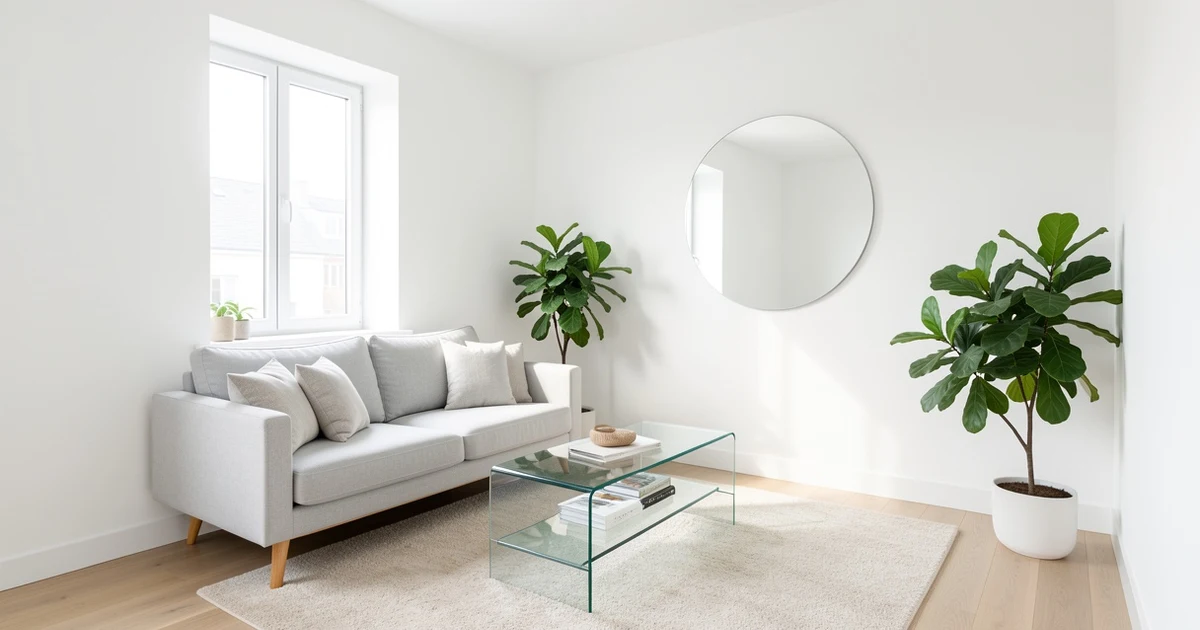
The first step is lighting, which makes the difference between a living room that breathes and one that suffocates. Natural light is your main ally: avoid heavy or very dark curtains and opt for translucent solutions that let in brightness without sacrificing intimacy. If the windows are small, place mirrors strategically opposite them so that the light bounces and spreads throughout the room. A large mirror on the main wall visually doubles the space and creates depth. For artificial lighting, choose scattered light sources instead of a single central lamp: wall sconces, a floor lamp in the corner, indirect lighting behind furniture. This eliminates dark shadows and gives a sense of spaciousness.
Colour, Your Best Visual Tool
Light colours are your great allies. White, beige, light grey, and pastel tones reflect light and visually expand the space. But this doesn't mean your living room should look like a hospital. You can maintain a neutral base on walls and main furniture, introducing colour through textiles, artwork, or plants. An accent wall in a deeper tone can work if the space allows, as long as it is the furthest background from the entrance, creating perspective towards the back.
Visual continuity also expands. If the floor of your living room matches that of the hallway or adjacent kitchen, the transition will be smooth, and the feeling of space is amplified. Apply the same principle with furniture and wall colours: avoid abrupt changes that mentally fragment the space.
Furniture: Less is More, but Smart
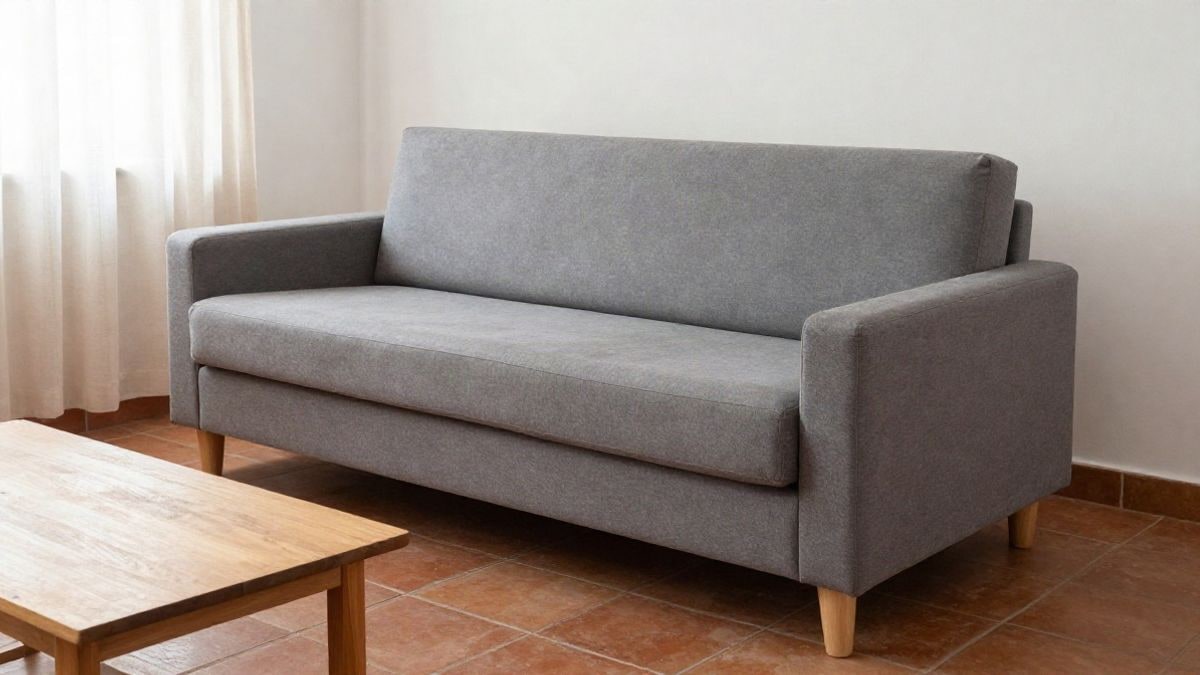
In a small living room, each piece must justify its presence. Opt for compact sofas, preferably with legs that allow you to see the floor underneath, creating visual lightness. A low sofa, without very bulky arms, is better than a deep, enveloping one that monopolises the room. Coffee tables can be round or made of glass: round ones facilitate circulation, and glass does not visually interrupt the space.
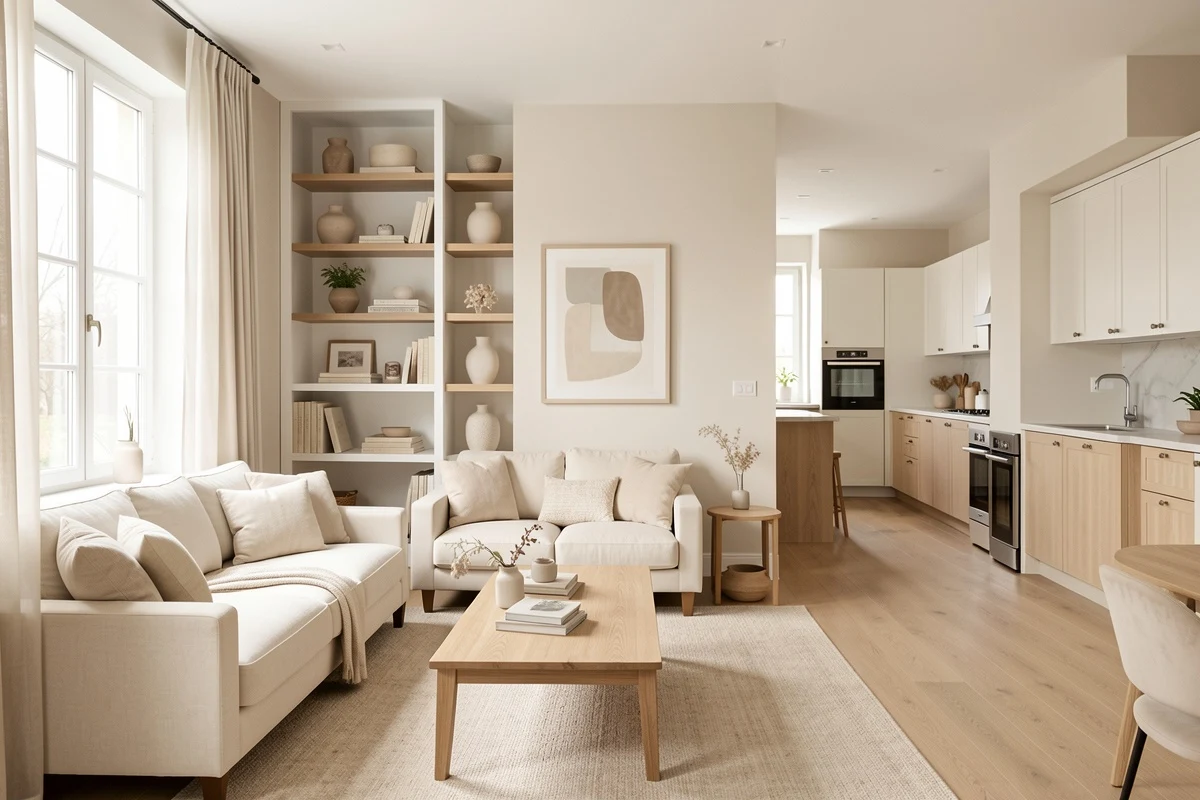
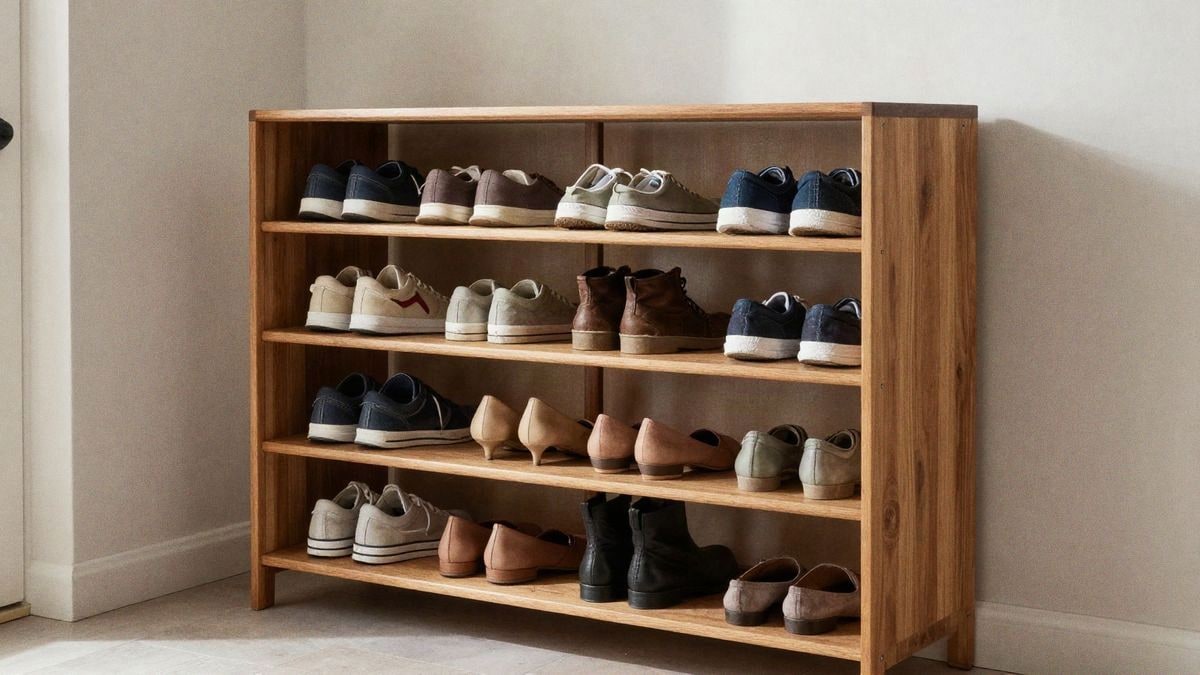
Avoid accumulating side tables. A single floating console or a small desk integrated into a corner is more practical than several scattered pieces. Tall, vertical furniture, such as wall shelves, directs the eye upwards and makes the ceiling appear higher. Open shelves also create a sense of open space, although they require some order: carefully selected objects instead of cluttered items.
The television can be a visual challenge. If you use an entire wall for a wood or stone panel, it will make the space feel more compressed. It's preferable to mount it on a wall painted in a light colour or even conceal it in a cabinet that closes to minimise its presence when not in use.
Layout: Circulation and Zones
Define functional zones without creating abrupt physical divisions. A sofa facing away from the dining area, a rug that groups the seating area, or a furniture arrangement that suggests different uses without walls or dividing furniture. Rugs are especially valuable: they create soft visual boundaries that organise the space without closing it off.
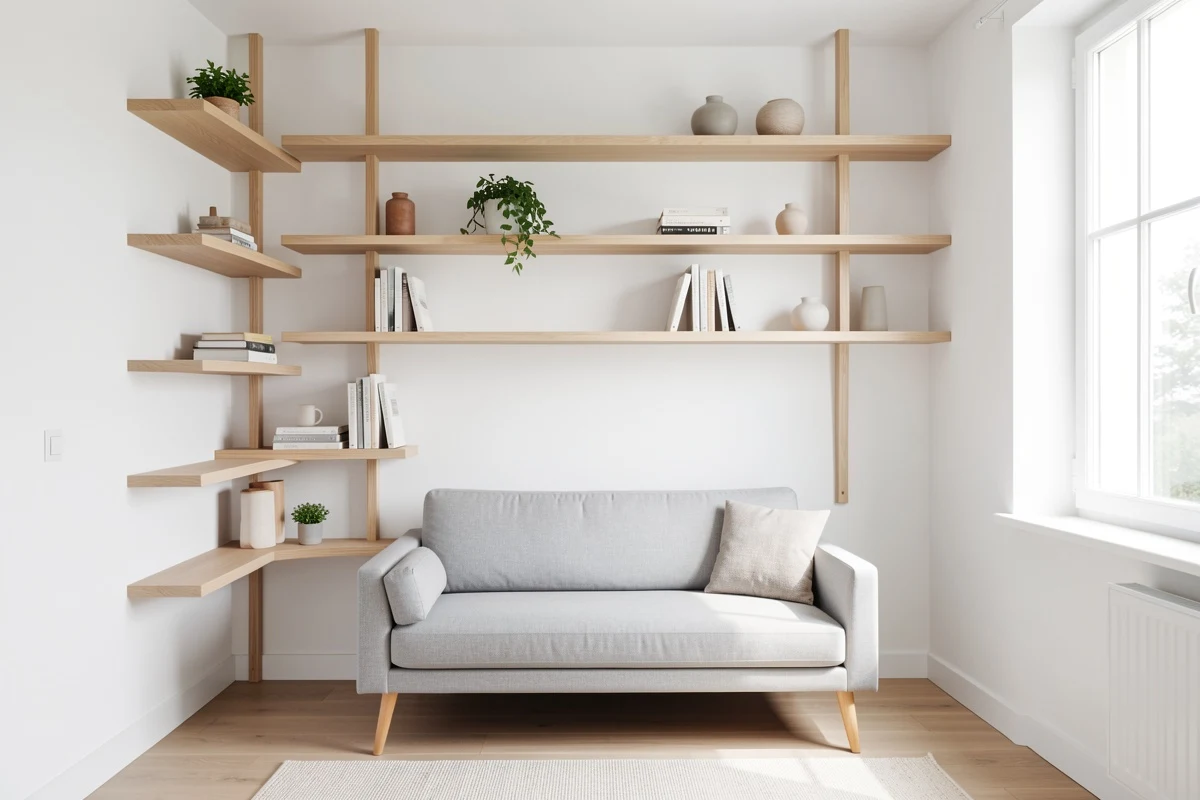
Keep hallways clear. A clear visual path from entrance to exit conveys spaciousness. Furniture against the wall is a better option than floating in a reduced space, except for the main sofa, which can move slightly forward if the layout allows.
Textiles play a decorative and acoustic role. A couple of cushions in coordinated tones, a blanket over the sofa, lightweight curtains: these elements add warmth without overwhelming. Look for proportions: a large cushion is better than three small ones on a limited surface.
Plants are living decoration that humanises without taking up much physical space. A couple of tall potted plants, placed in corners or by windows, add colour, visual movement, and oxygen. Avoid filling every corner: one or two strategically placed plants create more impact than multiple small topiaries.
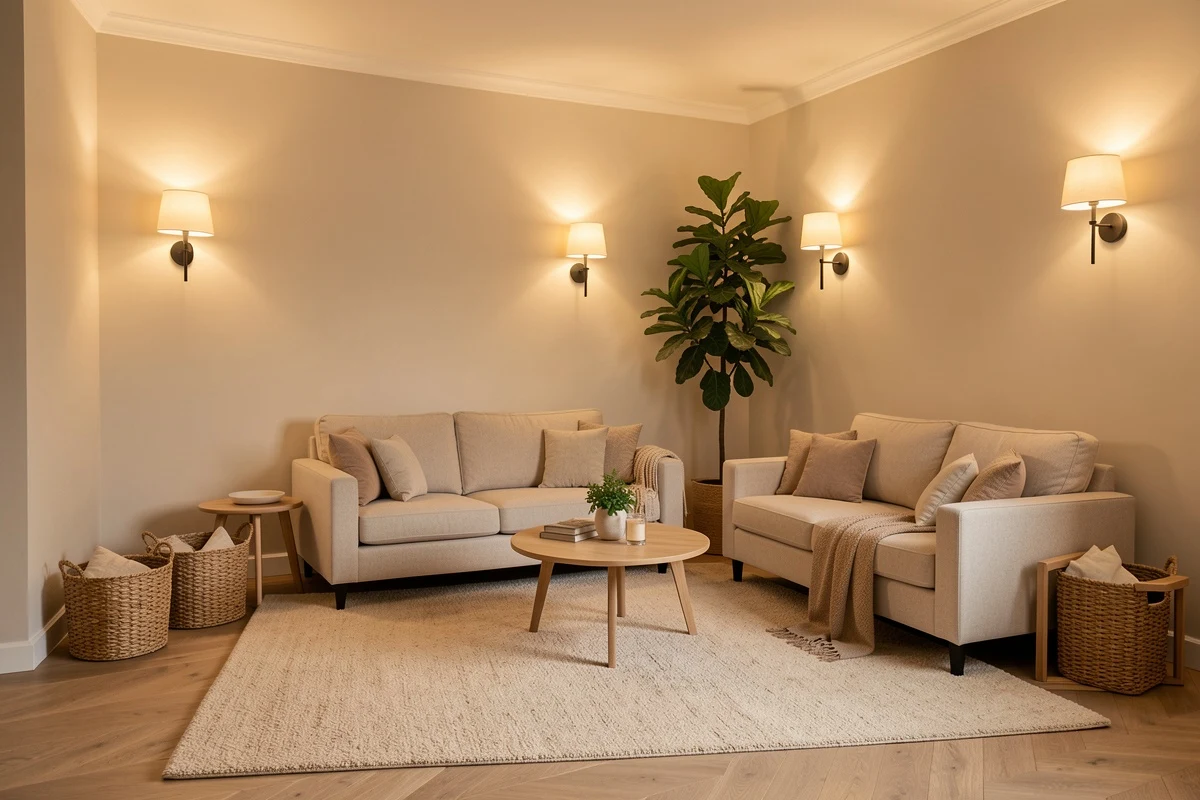
Finally, keep visual chaos under control. A cluttered small living room amplifies the feeling of claustrophobia. Integrated storage solutions, cushions stored in wicker baskets, a bookshelf with organised books: order is as important as the design itself. Decorating a small living room is not a luxury; it's a necessity that starts at home, where every detail counts.

You may also like