At Casa y Deco, we love helping you make the most important decisions for your home, and choosing a countertop is one that truly makes a difference. It's not just that you use it every day: it will live with you for years, resisting splashes, heat, cuts, and all the real life that happens in a kitchen. That's why today we compare two of the most popular and, honestly, most polarising options: quartz and granite.
The truth is that both materials have fervent devotees. Some swear by the natural elegance of granite; others can't understand how anyone would choose a porous material when quartz exists. I confess that it took me years to understand the real differences, beyond the countertop discussions. So let's break it down: durability, maintenance, aesthetics, and of course, that money topic that always lurks.
The Granite Battle: Natural Beauty with an Entry Price
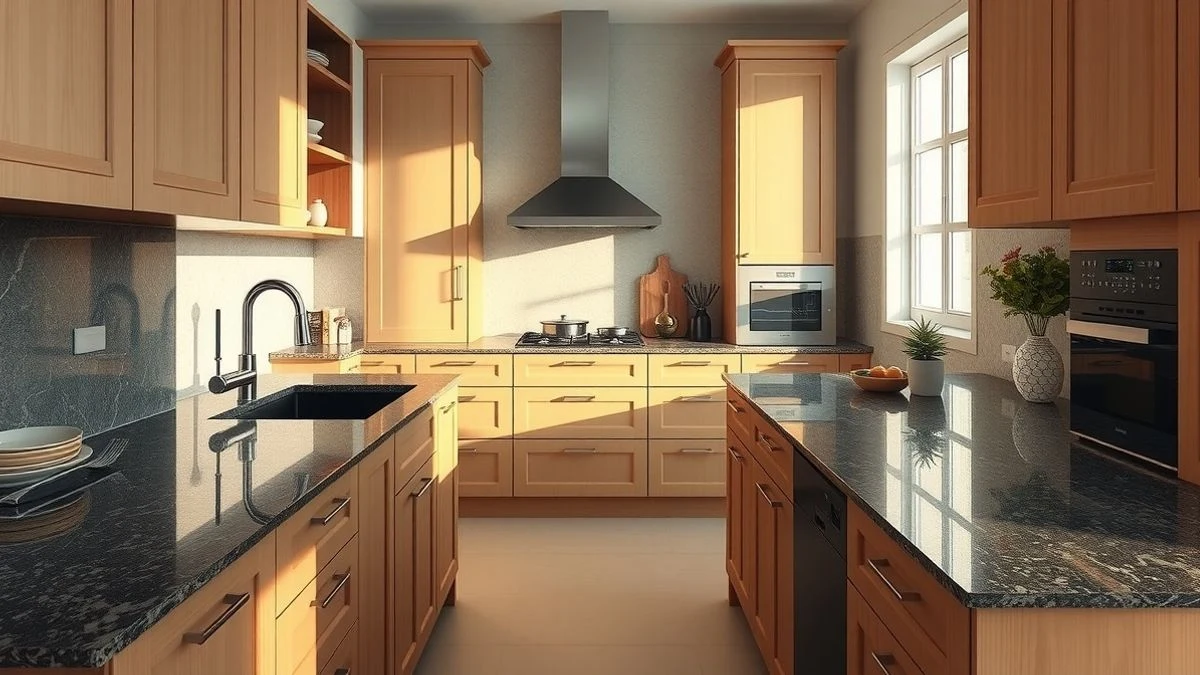
Granite is authentic stone, extracted from quarries, polished and sealed. Each slab is unique, with veins and shades that are irreplaceable, providing that character many seek. If you like interiors with a strong personality, granite has that something that industrial materials can't quite replicate. There are deep black granites, soft pinks, cloud greys, and intense reds: the range is almost infinite.
The first thing you should know is that granite is porous. Yes, even with that protective seal they apply after installation. It absorbs liquids, especially if it's dark and polished, and that means acids (red wine, vinegar, lemon juice) can leave a mark. I've seen black granite countertops where a red wine stain stays forever. It's not a catastrophe, but it's something that lives here with the cook.
Granite maintenance requires sealing every one to two years, depending on traffic and colour. Lighter granites usually need less attention than darker ones. If you use the kitchen daily (and who doesn't), this is no small matter: it's a recurring task that costs money and someone has to remember it exists. I confess this caused me quite a bit of anxiety in my previous kitchen: I was always worried about whether the seal had worn off.
Quartz: Laboratory Hardness and Guilt-Free Convenience
Quartz is a composite material, made from natural quartz crystal (90 percent) mixed with resins and pigments. It is not natural stone; it is engineered, and that is precisely its strength. It was designed with real kitchens in mind, with the real chaos that kitchens have.

The feature that interests you most is that quartz is non-porous. Period. That means you can spill red wine, oil, orange juice, and nothing happens. The countertop absorbs nothing. You clean, wipe, and that's it. There's no stain from a juice spill two years ago staring at you from the countertop. For someone who cooks for real, this is freedom.
The hardness of quartz is also superior to that of granite in many cases. It withstands cuts better if you use knives directly (though the right thing is always to use a cutting board, of course), and superficial scratches are less noticeable because the material is homogeneous. With granite, a scratch stands out much more because it breaks that natural vein that makes it beautiful.
Here comes the but: quartz does not withstand extreme heat well. If you put a pan straight from the heat onto the countertop, it can get damaged. It can lose colour, discolour, or even crack if the thermal change is too abrupt. Granite handles heat better, although it's also not a good idea to overdo it. With quartz, you need to use trivets or trays, a non-negotiable point.
Real Resistance and Durability
Here comes the question that really matters: how many years do they really last? Well-maintained granite lasts decades, easily. It's stone, which says it all. If you sealed it correctly and are careful, your granite countertop could be perfect at 20 years. Quartz also promises similar durability, but here there are nuances: serious manufacturers offer warranties of 10 to 25 years depending on the brand.
The difference lies in how each ages. Granite ages like a fine wine: it acquires patina, life, history. A 15-year-old granite countertop looks like a countertop that's 15 years old, and that can be beautiful. Quartz ages in a more anodyne way: it simply continues to look the same, for better or worse. It doesn't gain character, but it doesn't lose it either.
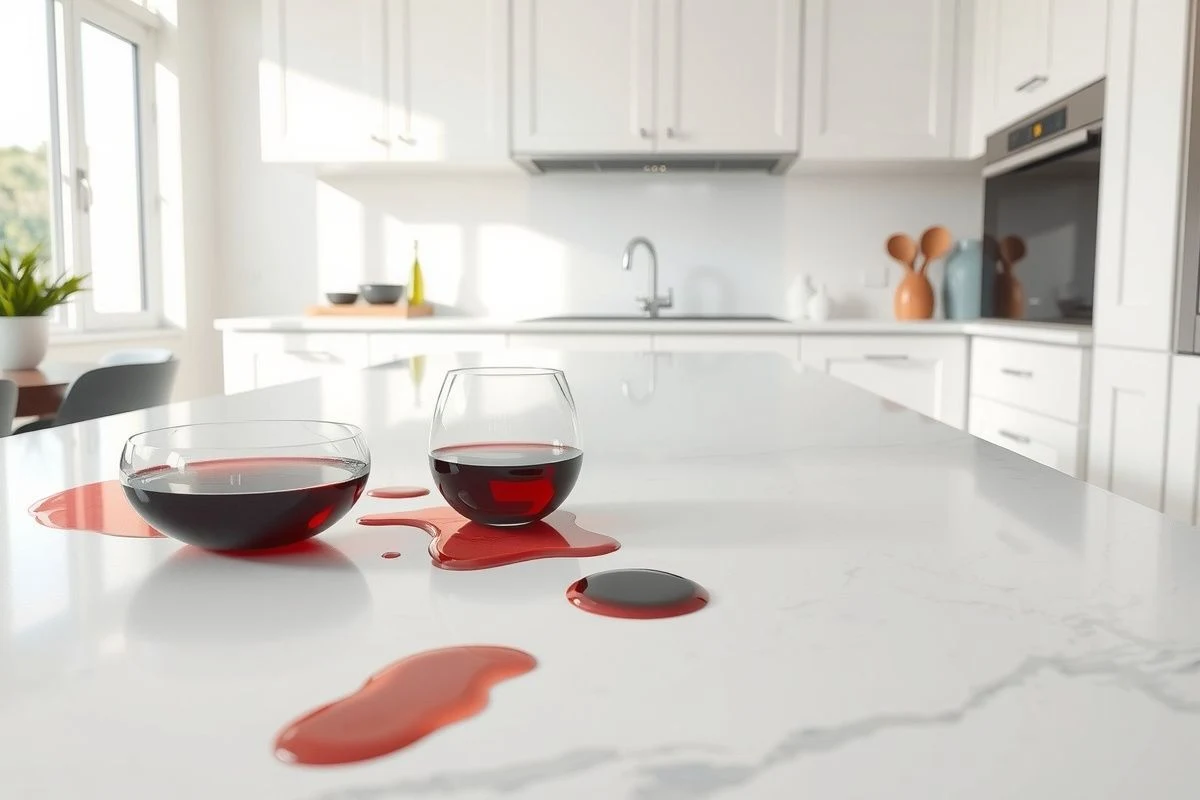
In terms of stain resistance, quartz wins without debate. You can spill oil, coffee, wine, mustard, whatever, and there's no problem. With granite, there is always that latent risk, especially in light granites where everything shows. This directly affects how you live in your kitchen: with quartz, you cook relaxed; with granite, you have to be more vigilant.
The Everyday Maintenance Issue
Let's talk about what happens every day. Quartz wins here overwhelmingly. You clean with water and mild soap, or with a gentle multi-surface cleaner, and that's it. No periodic sealing, no special products. It's truly minimal maintenance. With granite, you also need mild soap, but you also have to remember that sealing every season, avoid too much exposure to water (don't leave wet glasses for hours), and be more careful with acids.
If your kitchen is small and you use it intensively (which is the most common), quartz is more peace of mind. If your kitchen is large and you use it occasionally, granite maintenance is more manageable. The reality for most of us is that we cook daily, so think about it.
Aesthetics: Here Everyone Chooses Their Battle
Granite is undeniably beautiful. There are granites that are works of natural art: dramatic veins, rich colours, that polished shine that reflects light in a unique way. If your kitchen has a classic, rustic, or eclectic style, granite can be the focal point that ties everything together. Moreover, the uniqueness of each slab is something that quartz cannot fully replicate.
Quartz offers consistency. The colours and patterns are uniform, repeatable, predictable. This is good for minimalist, Nordic, or contemporary kitchens where you seek coherence and visual cleanliness. There are quartz options that realistically imitate granites, but you always have that feeling that it's imitation. Nothing wrong with that; it's just that you know it's not the authentic thing. Some don't mind; others do. I cared years ago, less so now.
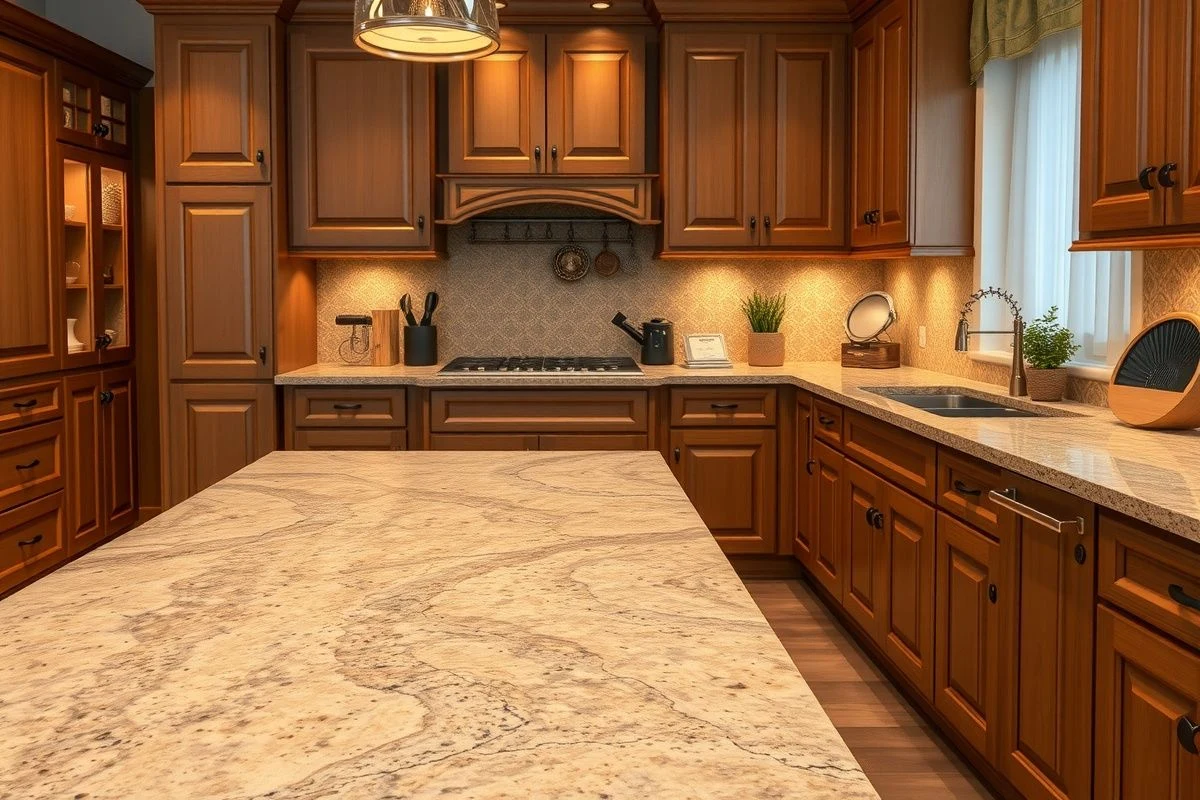
Keep in mind that granite usually shines more (if polished) than quartz, which has a flatter, matte finish. That shine is part of its charm, but it also requires maintenance to keep it up. Quartz looks good without you having to do anything special.
The Budget Factor
The price is where the comparison gets complicated because it depends on where you buy, what specific type of granite or quartz you choose, and the installation costs. In general, decent quality granite is more affordable than quartz from well-known brands. But here comes the trick: that initial saving can be diluted with the periodic maintenance of sealing, especially over 20 years.
If you add countertop + sealing over two decades, the price difference may not be as great as it seemed at first. Quartz has a higher initial investment, but practically zero maintenance. It's one of those cases where cheap can end up being expensive, or where expensive can be more cost-effective. It depends on your kitchen, your habits, and how long you plan to stay in that house.
Our Honest Conclusion
If you cook daily, want zero maintenance, and care about being able to spill anything without panic: quartz. It's the modern, hassle-free option, perfect for families with kids, people with little time, or simply people who prefer not to think about the countertop. If your kitchen is a luxury space that you use occasionally, have patience for periodic care, and value the irreplaceable beauty of natural stone: granite. Both last decades; they just live in different ways. At Casa y Deco, we believe the best countertop is the one that aligns with your way of living, not with what a salesperson tells you. That is the only countertop that truly performs in the long run.

You may also like