At Casa y Deco, we love working with hydraulic tiles. Those geometric patterns, those earthy colours that converse with blues and greens, that visual weight they have... it's easy to fall in love. But it's also easy to go wrong. Because a beautiful tile is not the same as a beautiful bathroom, and the difference often lies in knowing when to stop.
I confess that I have seen bathrooms where hydraulic tiles invaded every corner: entire walls, full floors, skirting boards, even the listels. The result was a visual chaos where your eye didn't know where to rest. So today we want to share how to truly combine them, with criteria and without it ending up looking like a Persian market.
The Balance: Less is More (Really)
The golden rule we've learned is to limit the hydraulics to one area. Better one wall than the entire bathroom. Better the floor than walls and floor together. The reason is simple: these tiles are natural protagonists, with their geometric tesserae and saturated colours. If you put them everywhere, they compete for attention.
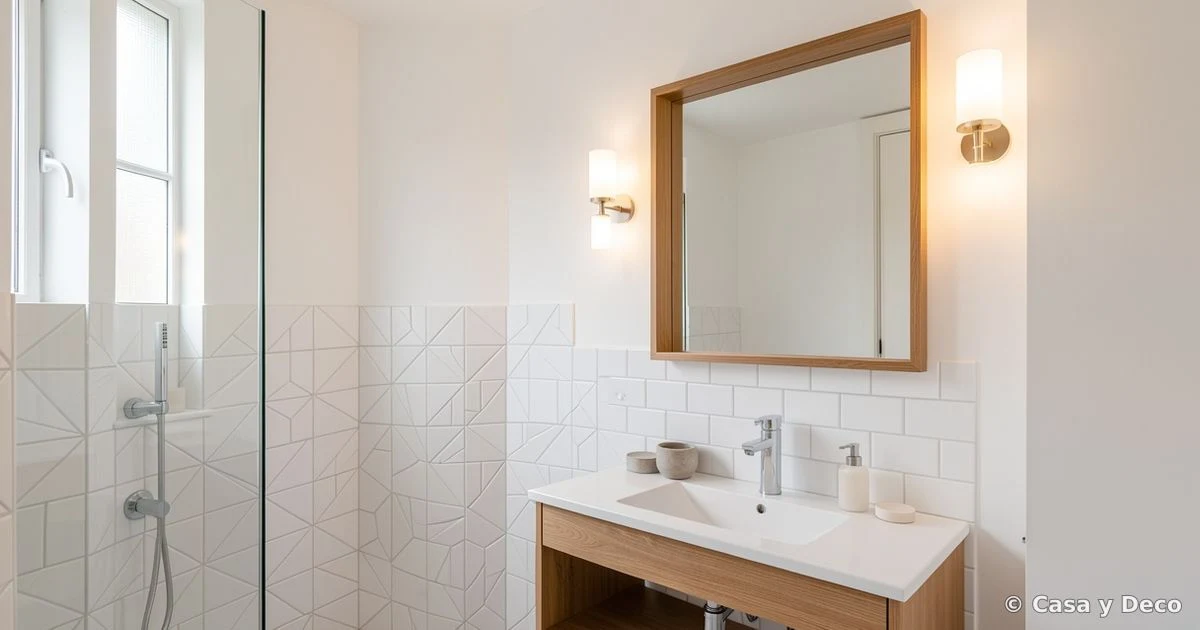
A strategy that works: hydraulic tiles on the floor, neutral white or grey on the walls. Or the reverse: one wall of hydraulics (ideally the one with the mirror or vanity) and a smooth ceramic floor. This way the bathroom breathes and the tiles shine without shouting.
If your bathroom is small, the advice is even more critical. In spaces smaller than 4 square metres, a single point of colour is sufficient. It could be the front of the bathtub, the first 80 centimetres of a wall, or a strip on the floor. The rest of the bathroom should be more subdued so it doesn't feel claustrophobic.
Where to Place Them: Strategic Areas
Not all places in the bathroom are the same. The floor is the most classic option and works well because hydraulics are hard, durable, and relatively easy to clean (yes, they have pores, but it's not the drama some believe). Here you can be bolder with the pattern because it will be underfoot, not at eye level.
If you prefer to have them on the wall, the sink area is ideal: a hydraulic tile framed by a generous mirror creates a focal point that structures the whole bathroom without overwhelming. A height of 60 to 80 centimetres is usually perfect, with neutral or white tiles above.
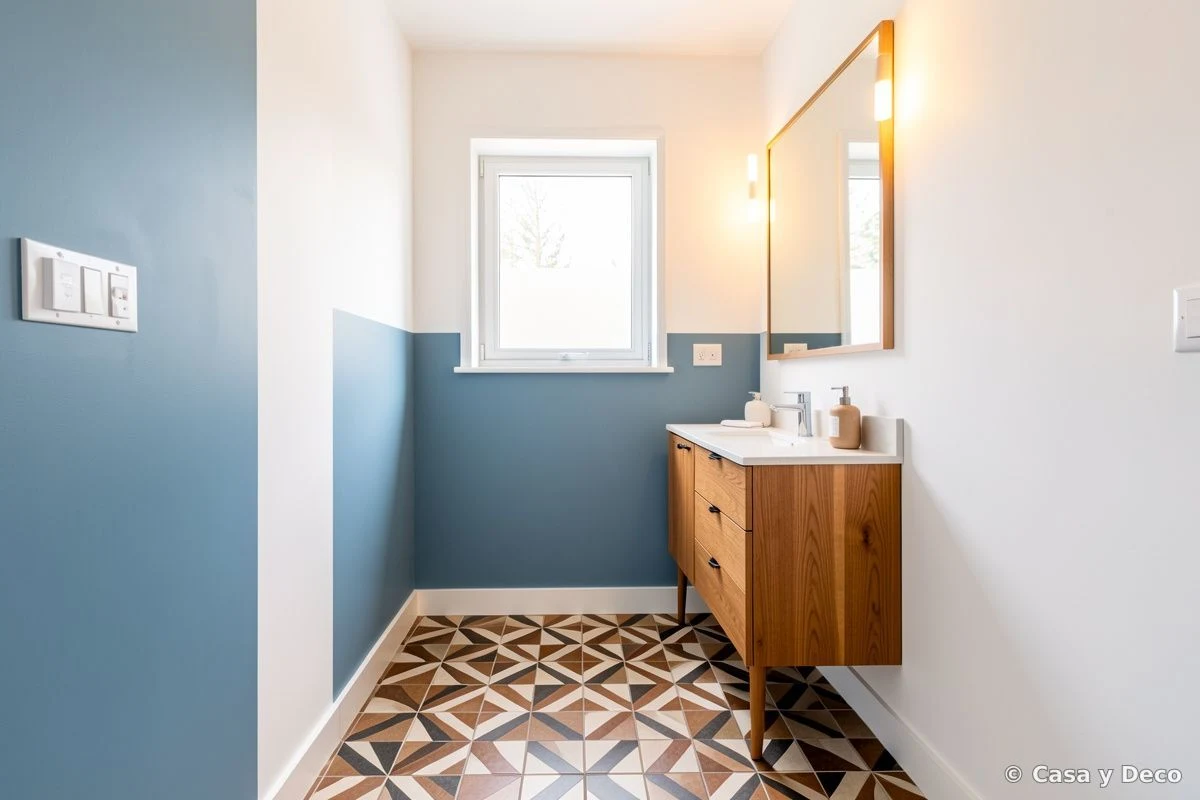
The front of the bathtub is another classic. Here the hydraulics act as a backdrop without taking up too much visual space. Just make sure to combine it with a curtain or screen in white or natural tones so the bathroom doesn't lose clarity.
Colour Palettes: Alliances that Work
Hydraulic tiles come in three main colour families. Earth-terracotta (ochres, sienna, light brown) are the most versatile; they work with almost any context. Classic blues and greens (that vintage teal that never goes out of style) need a more white bathroom or cream walls to avoid overwhelming. And the multicolour geometric ones, with red, yellow, and blue, are the most adventurous and require sober accompaniment around.
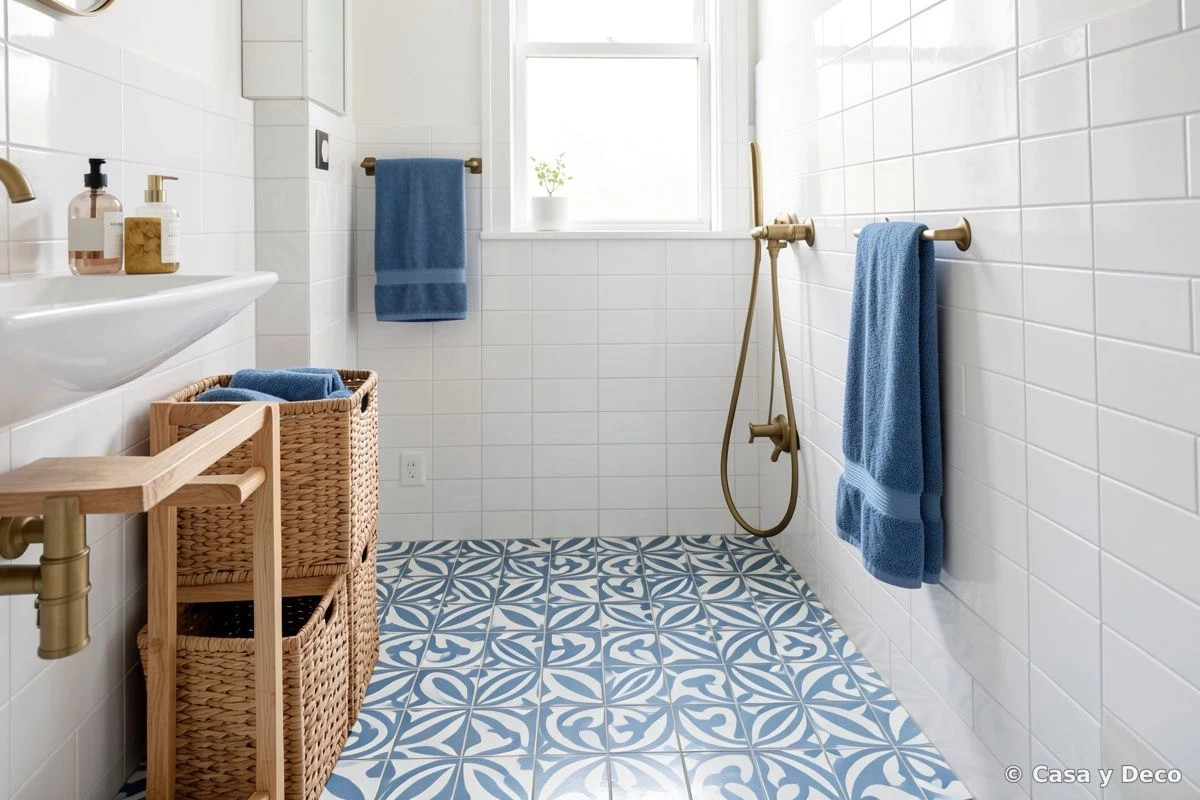
My personal recommendation: choose a range of two colours maximum for the hydraulic tile and repeat it in textiles or accessories. If your tile is blue and white, use navy towels or a striped curtain. This way the bathroom gains cohesion without seeming like each piece is singing a different song.
Avoid combining several different hydraulic patterns. Two or three geometric mosaics in the same bathroom is already too much. If you want more than one motif, do it in completely separate areas (floor in one pattern, frieze in another) and ensure they share a colour family.
Ideal Companions: What Combines Well
Hydraulic tiles need visual counterweights. White is the perfect partner: smooth white tiles, white walls, white furniture. They create a "jewel on a neutral background" effect. If everything were hydraulic, you'd see visual noise; with white, you see a luxury detail.
Light grey also works very well, especially if your hydraulics have grey tones in the pattern. And clay or polished cement bring that rustic-contemporary feel that small bathrooms appreciate. Avoid colours like black or saturated red on walls or furniture, as they will compete with the tiles.
With accessories, less is more. A natural wood framed mirror, matte brass fittings, a wicker basket. The hydraulics already provide enough pattern and colour to add more protagonists. I confess that once I included a gold mirror, round mirrors, vintage towel racks, and a patterned curtain in the same bathroom with hydraulics... it was a textbook error.
Practical Tricks to Avoid Overloading
If the space is small, use large format hydraulic tiles (20x20 centimetres or similar) instead of small mosaics. Large pieces reduce the number of joints and the visual impact of the pattern; your brain processes less "noise". The small ones magnify the decorative effect, so it's better to reserve them for larger bathrooms.
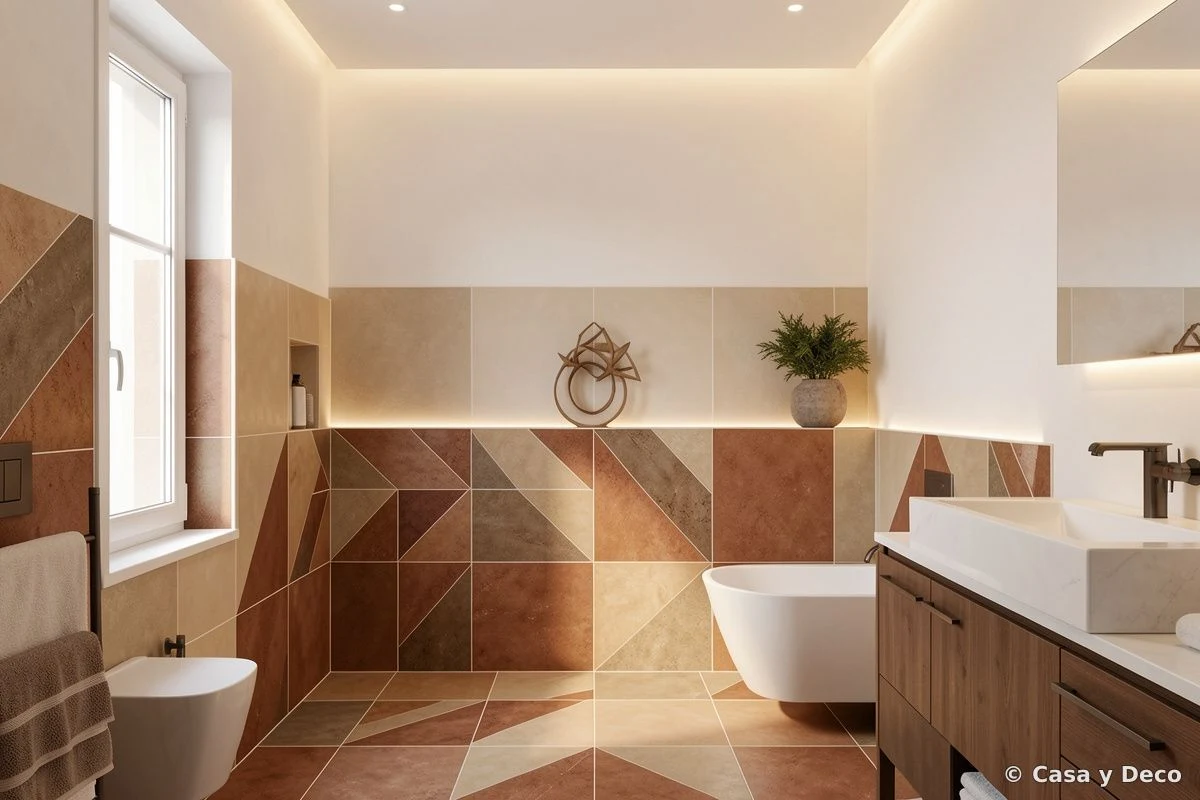
Lighting is critical. Geometric patterns can be overwhelming in cold or poor light. Ensure your bathroom has good natural light or add a warm light (around 2700K) that softens the contrasts. This completely changes how the space is perceived.
And an advice that isn't obvious: if you combine hydraulics with wood (mirror frames, shelves, vanity), choose warm wood. Light oak, walnut, and soft mahogany communicate better with hydraulics than modern greyish woods or bleached spruce.
When to Say No
There are bathrooms where hydraulics simply don't fit. If your space is tiny (less than 3 square metres), very dark, or already has other elements with a lot of pattern (a wallpaper, for example), it may be better to forgo them. Not all bathrooms need hydraulic tiles. Sometimes a smooth ceramic of good tone is smarter than forcing a trend.
Our conclusion at Casa y Deco is that hydraulic tiles are beautiful, but they are like the accent in decoration: they work when they know their place and measure. A bathroom with a well-thought-out point of hydraulics always wins over a bathroom where they dominate without criteria. And that's what we want for your home.

You may also like