At Casa y Deco, we love the idea that anyone can grow their own vegetables, herbs, or flowers in a space as accessible as a terrace. And yes, while it may sound intimidating if you've never done it, the reality is that an urban garden is much more achievable than it seems. What you need is a clear plan, not years of agricultural experience.
Let's start with the basics: before buying a single pot, you need to understand what real space you have available. Measure your terrace with a tape measure and be honest with yourself. How many hours of direct sunlight does it receive? This is the most important question. Take notes for a week: observe where the sun shines in the morning, at noon, and in the afternoon. Most vegetables need between 6 and 8 hours of direct sunlight; herbs like rosemary or thyme are more tolerant.
Also check if your terrace has weight limitations or restrictions from the community. I confess that I skipped this part on my first attempt and then had to rethink everything. A large planter filled with soil weighs much more than you imagine: a 40-litre pot weighs around 30-35 kilos with substrate included.
Choose the System That Suits You
You have three main options depending on your space and availability. Individual pots are the most flexible: you can place them wherever you want, change their position according to the season, and experiment without commitment. Ideally, use pots with a capacity of at least 20-25 litres; very small containers dry out too quickly.
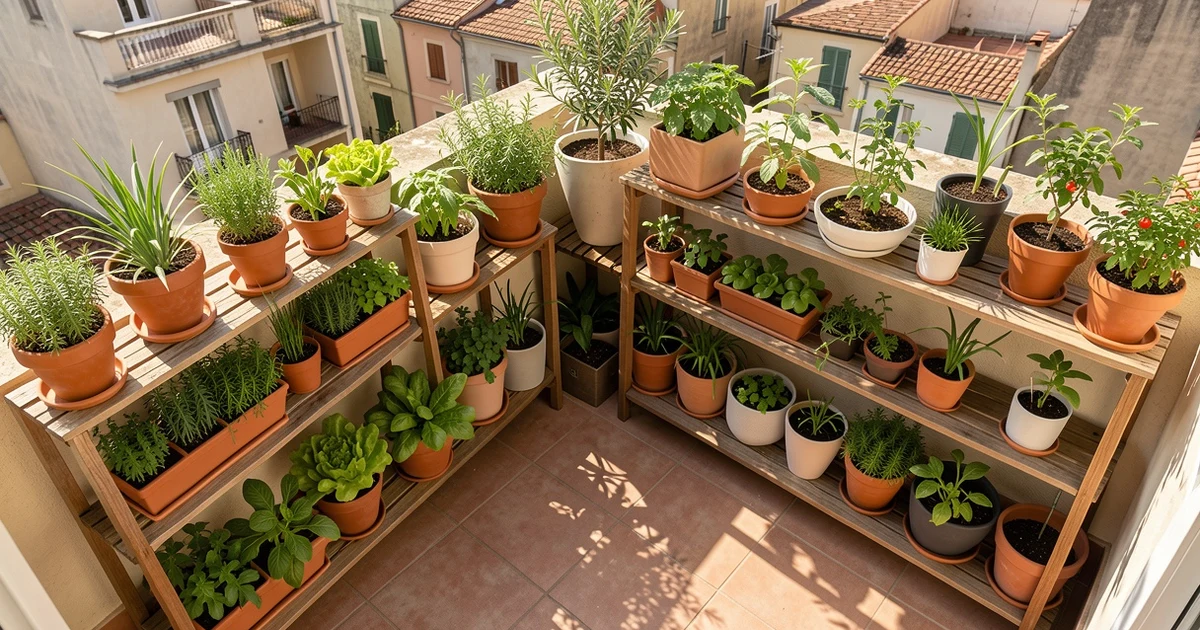
If you prefer something more organised and compact, vertical gardens are your ally. They take up little floor space, and you can hang pots on a south-facing wall or install wooden or metal shelves. Just make sure the wall can support the weight and that the system drains water well, because you don't want it dripping onto the balcony below.
The third option is raised beds or elevated planters. They are perfect if you want a more serious garden without sacrificing order. They take up more space than vertical ones, but they make maintenance much easier: you don't have to bend down as much and you can control moisture better. They typically measure around 120 × 80 × 40 centimetres and can be found in treated wood or galvanised metal.
Substrate, Drainage, and Watering: The Invisibles of Success
Here’s the secret that no one tells you: plants fail due to overwatering, not lack of it. To avoid this, you need two things: quality substrate and impeccable drainage. Forget about using pure garden soil; it’s too compact. Mix potting soil with coconut fibre and perlite in a 6:2:2 ratio. This combination drains well but retains the necessary moisture.
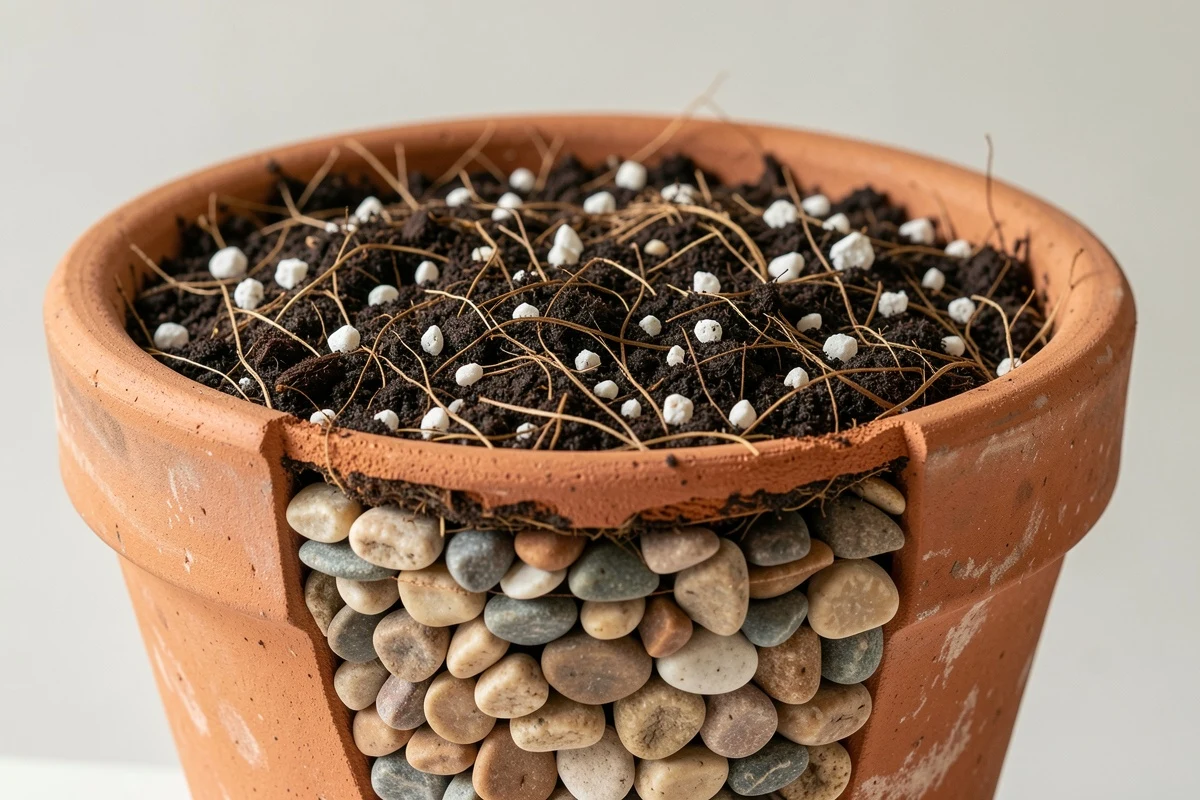
In pots, always place gravel or expanded clay pellets at the bottom (about 3-5 centimetres) to prevent water from stagnating. If your terrace doesn’t have direct drainage to the outside, use saucers under the pots, but empty them after watering; accumulated water is your number one enemy.
Regarding watering: there’s no magic formula because it depends on temperature, humidity, and the type of pot. What works is sticking your finger into the soil up to 2-3 centimetres; if it’s dry, water it. If it’s moist, wait. In summer, you’ll probably need to water almost daily; in winter, much less. And here’s a practical tip: water early in the morning, not at noon when the sun is strong.
The Easiest Plants to Start With
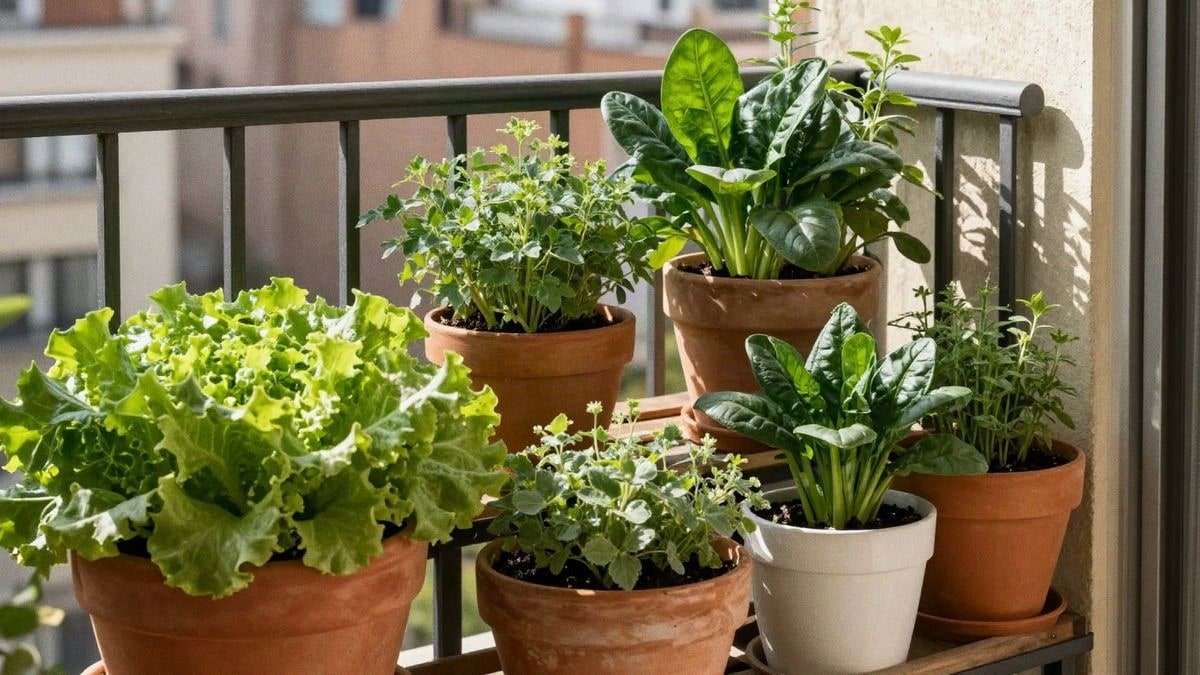
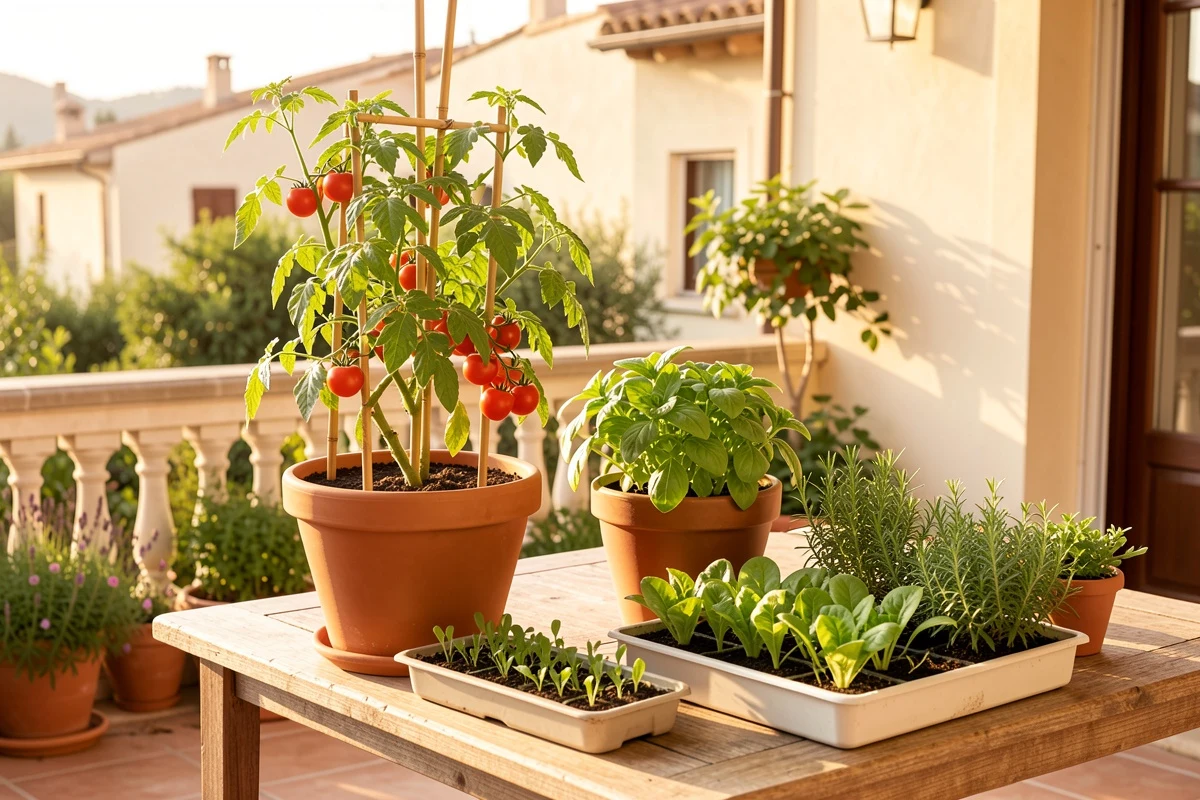
Don’t make the mistake of trying to grow everything from day one. Start with the simple: cherry tomatoes, lettuce, arugula, and herbs. They are tolerant, grow quickly, and will give you confidence. Cherry tomatoes need a pot of 25-30 litres and a stake or cage to climb. Lettuce does well in shallower pots of 15-20 centimetres deep.
Herbs are your best friends. Basil, rosemary, oregano, thyme, mint... they take up little space, need little watering, and you can use them in the kitchen. Plus, every time you cut leaves, the plant becomes bushier. A single basil plant in a 10-12 litre pot will provide fresh herbs for months.
If you want something even easier, sprouts are the option for the smart lazy. Seeds that germinate in a glass jar in 4-5 days, ready for salads. No pots, no soil, just water.
Calendar and Real First Steps
March to May is the ideal time to start in most temperate climates. It’s when you can sow the most without fear of late frosts. If we’re in another season, no worries: adapt your selection of plants to the current climate. In autumn/winter, focus on lettuces and cold-resistant plants.
Your initial shopping list is short: 3-4 pots of varying sizes (10, 20, 25 litres), quality substrate, seeds or small seedlings, a bamboo stake, and a watering can. Budget-wise, we’re talking about very little money; much less than a meal for two at a restaurant. Avoid spending on fancy gadgets at first; you can expand later if you really get hooked.
Start planting in parallel: some seed trays of lettuce, a couple of small basil plants bought from a nursery, a cherry tomato. This way, you see things grow at different times and don’t get discouraged if something takes longer. And yes, something will fail. It’s normal. We’ve killed “impossible to kill” herbs more times than we’d like to admit.
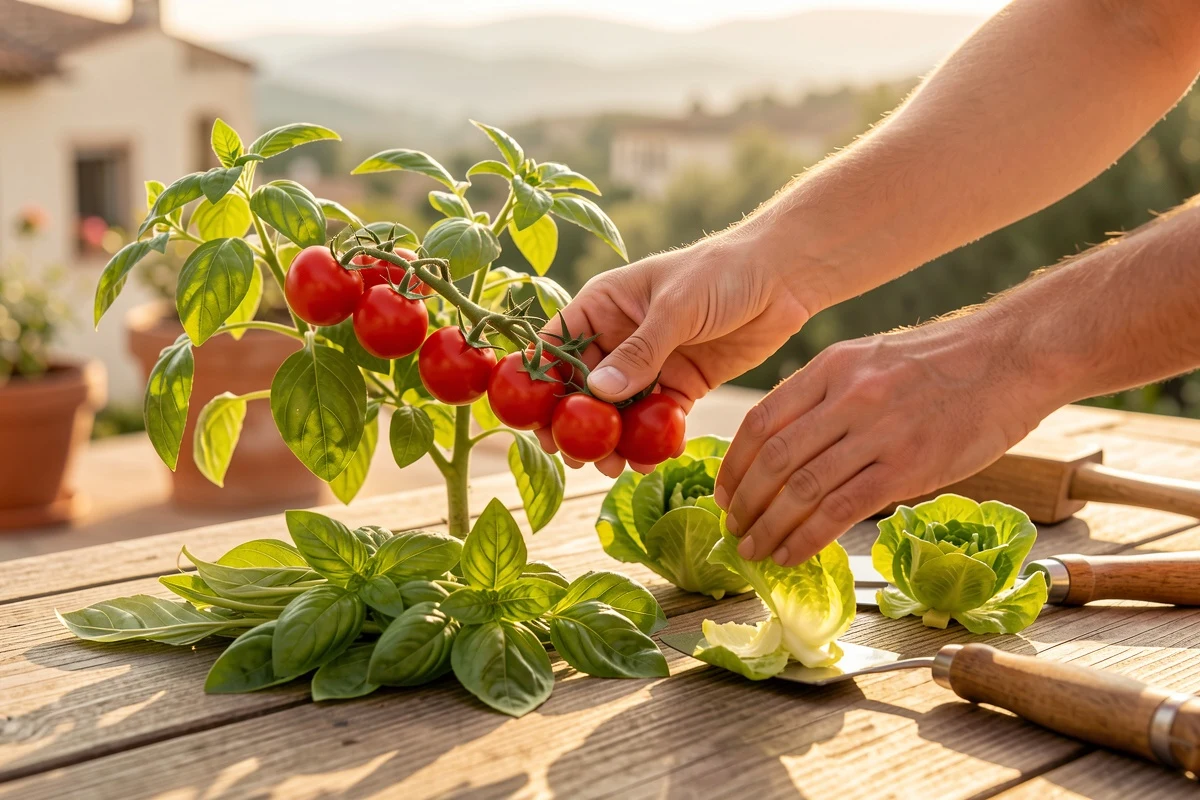
What matters is that in two or three weeks, you’ll have harvestable lettuce or the nursery basil will start to grow for real. That’s what hooks you. That cherry tomato you picked with your hands that tastes ten times better than any other you’ve eaten. That’s an urban garden on a terrace. Simple, possible, and much more accessible than it seems.

You may also like