At Casa y Deco, we love tackling the challenge of small spaces, as it is precisely where pure creativity emerges. And if there is one thing we have learned after years of decorating small flats and studios, it is that the enemy is not really the lack of square metres, but the lack of imagination to use the dimension we waste the most: height. Today we reveal how to turn those empty walls into functional storage systems and, in the process, transform your home.
First, forget the horizontal mindset. When designing a small space, we tend to think about the floor, not cramming too much furniture in, and leaving room to walk. But therein lies the mistake: from the floor to the ceiling, there are metres of potential that almost no one takes advantage of. A three-metre-high wall in a 30-square-metre studio is literally an uncharted treasure. Start training your eye to look upwards.
Vertical storage begins with a simple question: what do I need to store? Organising clothes is not the same as books, cleaning products, or hobby materials. Each type of object requires a different solution, and here lies the key to ensuring your wall doesn’t look like a jumble of knick-knacks. I confess that my first attempt was a failure: I shoved shelves in haphazardly, and it ended up looking like a second-hand shop.
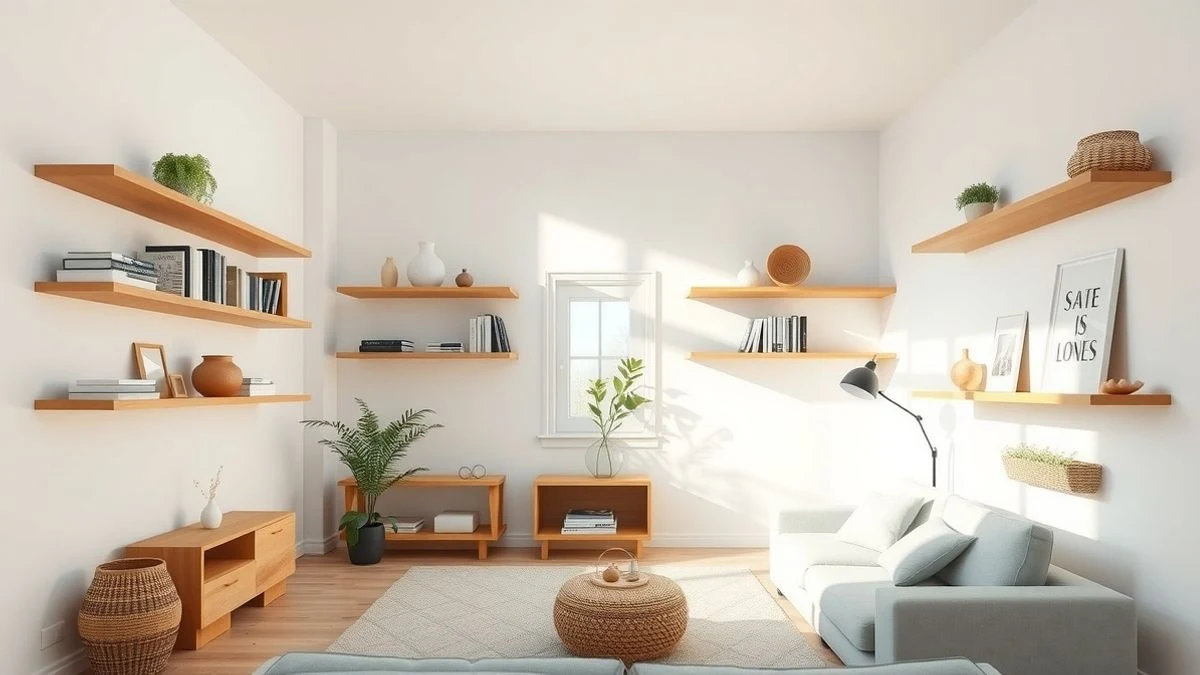
Wall shelves are the foundation, but not all are equally effective. Floating systems give a sense of lightness in small spaces, especially if you leave space between them. Choose a gap of 30 to 40 centimetres between shelves, depending on what you are storing. If you are putting heavy books, the distance can be smaller; if you are storing decorative objects or textiles, allow for more vertical generosity. Materials matter: lacquered steel against a white background almost disappears visually, while warm wood adds character.
Now comes the detail that differentiates pretty storage from aggressive storage: balanced distribution. Alternate filled areas with empty ones, intersperse large objects with small ones, and play with depth. If you fill a shelf from top to bottom without a break, the effect is claustrophobic. In contrast, if you leave strategic negative spaces, the eye rests and the wall breathes. Use natural fibre baskets for items you need to hide, and display what you truly enjoy seeing.
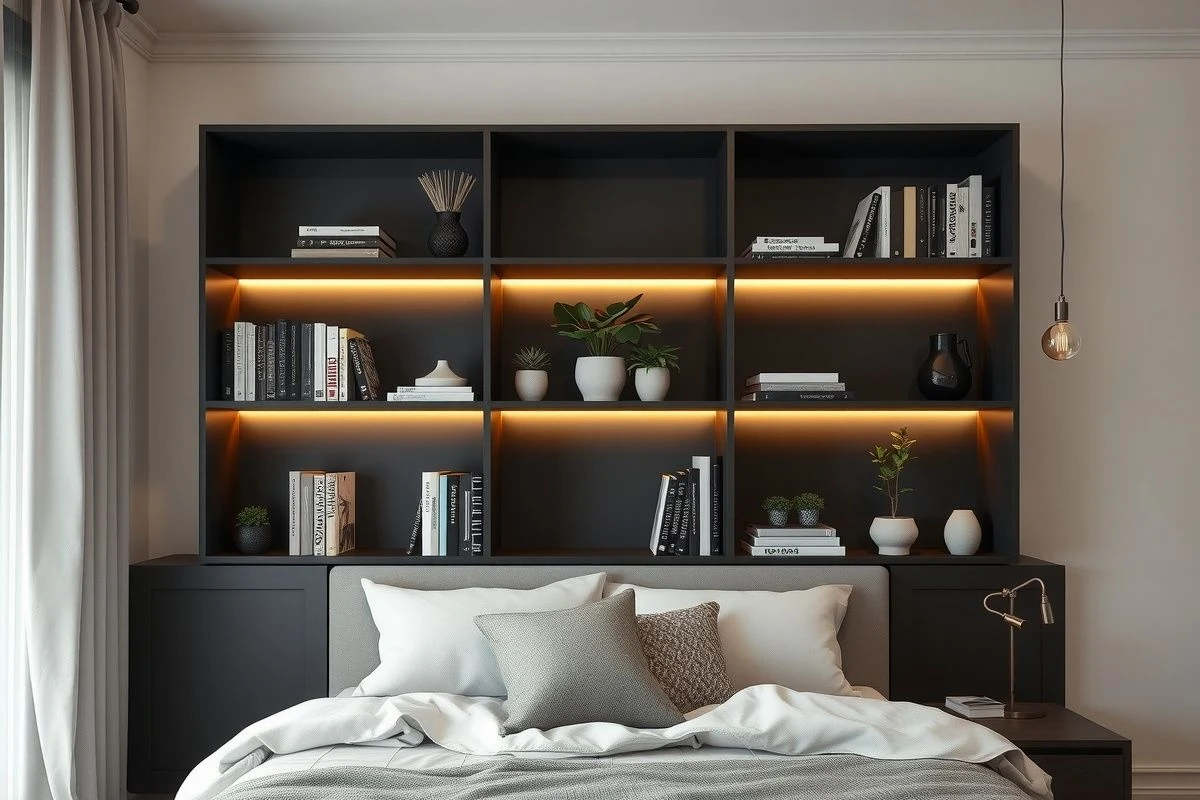
The exact measurements depend on your space, but here’s a practical tip: start 15-20 centimetres from the ceiling if your room has ceilings of 2.5 metres or more. This way, you make the most of the height without it feeling like things are falling on you. In rooms with low ceilings, it’s better to start higher up to avoid overwhelming the view. The first shelf should be at a height where you can comfortably access it, ideally between 120 and 150 centimetres from the floor.
Colour is your silent ally in this strategy. Shelves the same colour as the wall blend into the space, creating an optical illusion of greater width. If your wall is white, opt for white or very light grey shelves. But if you dare with a darker or more saturated tone, you can create an accent wall that visually organises the room and adds personality. I know living rooms where a wall with black shelves becomes the focal point of the entire decor.
Beyond shelves, explore innovative vertical storage systems. Perforated wall panels allow you to hang baskets, hooks, and modular boxes. Ceiling rails with hanging baskets work well in kitchens and home offices. Curtain rods adapted as coat racks for bags, backpacks, or clothes are surprisingly versatile. Even boards with clip and pin systems can be used to organise papers, small plants, or keepsakes.
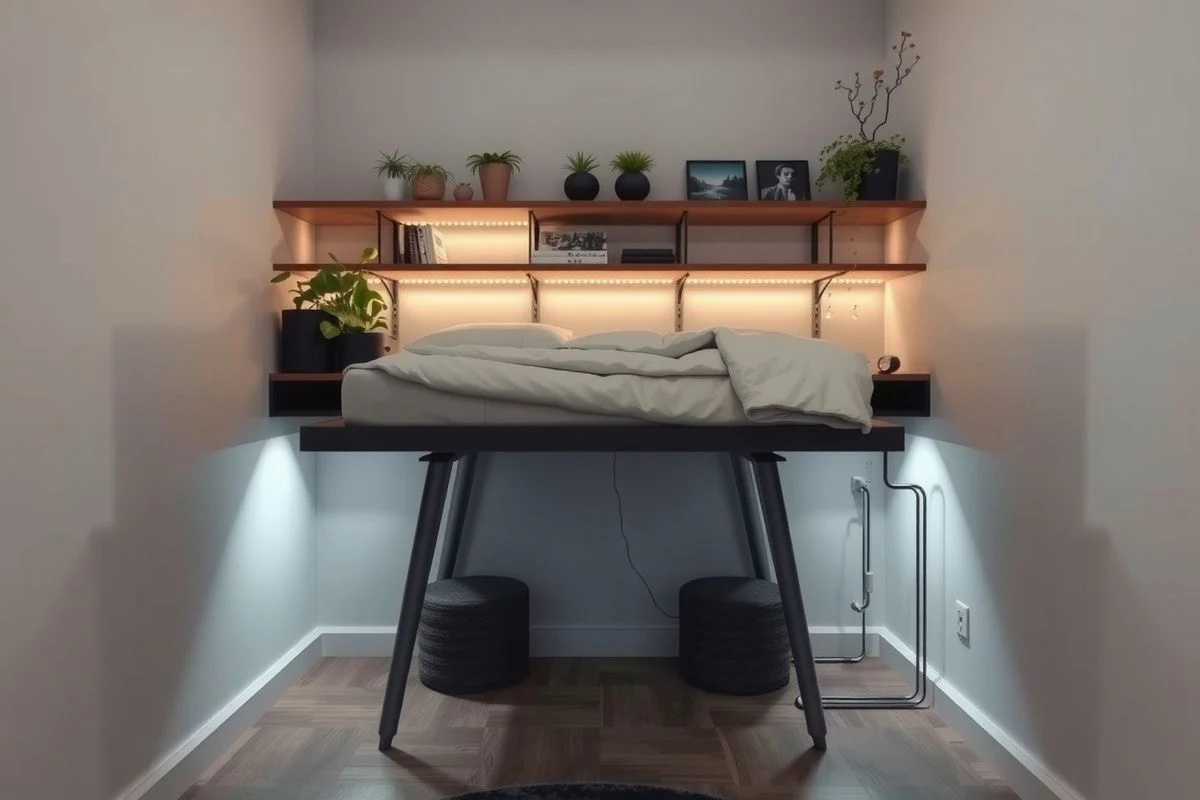
A trick that will save your bedroom or living room: invest in furniture with high legs instead of the typical low-rolling ones. An elevated bed or sofa offers hidden storage space underneath that goes completely unnoticed. Combine this with shelves above the headboard or sofa, and you will have tripled your storage capacity without spending an extra square metre.
Lighting plays a fundamental role that almost no one considers. A suitable LED under each shelf not only illuminates what you store but also visually amplifies the space. Warm light at 3000K generates warmth and coziness; white light at 4000K gives a sense of spaciousness. These small details transform a utilitarian storage wall into a truly decorative element.
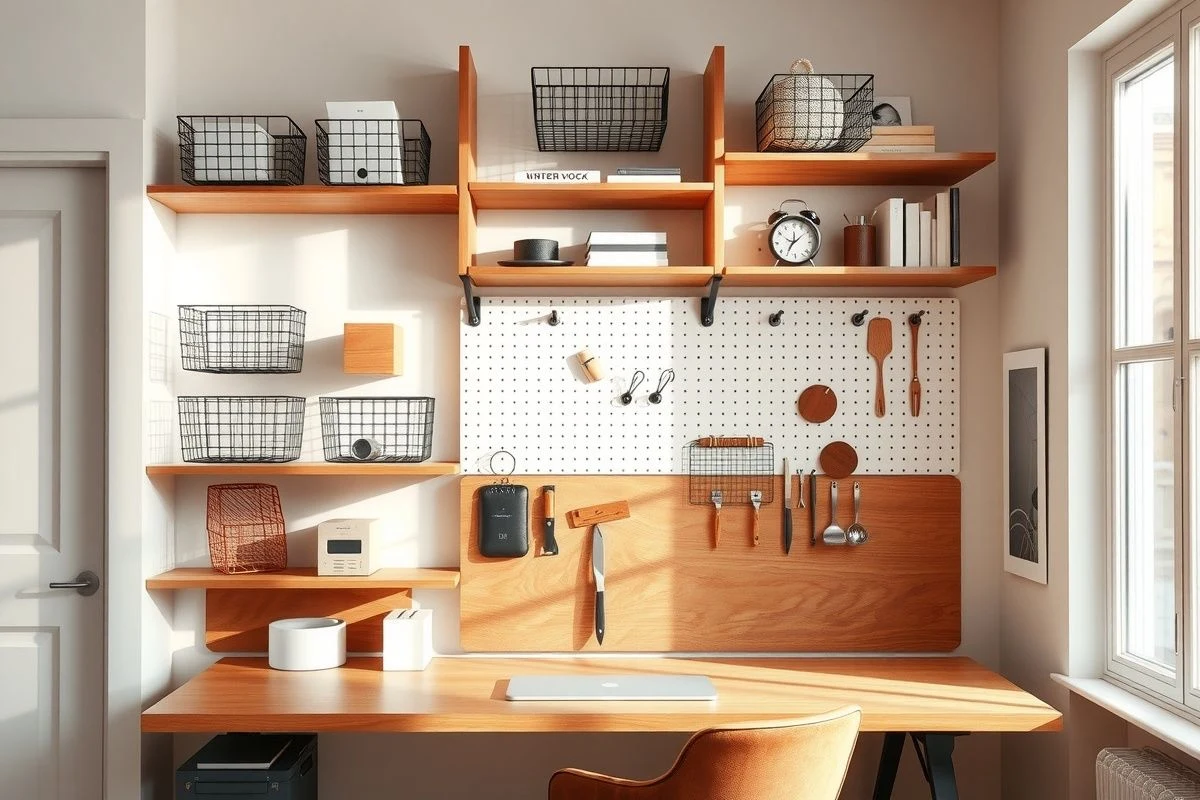
Don’t neglect structural safety. Before installing loaded shelves, locate the anchoring points in your wall. If it’s drywall, you will need special anchors; if it’s brick or concrete, expansion anchors. Well-anchored 60-centimetre-long shelves can hold between 20 and 30 kilograms without problems. Distribute the weight evenly and do not concentrate everything on a single shelf.
In final decoration, less is more. Eight out of ten small spaces fail due to an excess of elements, not due to a lack of storage. Choose carefully what you display and what you hide. The books you love, those plants that make you happy, the objects that tell your story: those deserve to be visible. The rest, put in opaque boxes or in the highest area where they won’t draw too much attention.
Finally, remember that vertical storage is a living system that evolves. What works now may need adjusting in six months. Leave room to experiment, to fail, to change your mind. I confess that my living room has moved its shelves three times in two years, and each reinvention has been a lesson about what I really need and what I simply thought I needed. That is the beauty of good design: it is never final, it is always growing with you.

You may also like