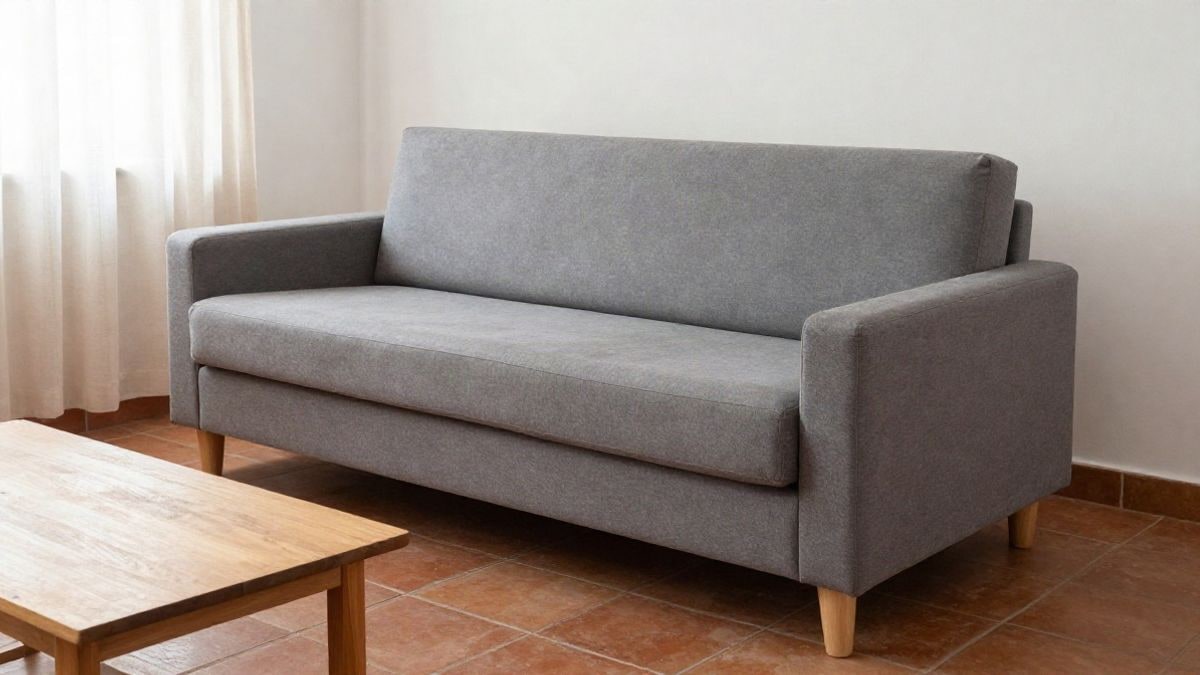
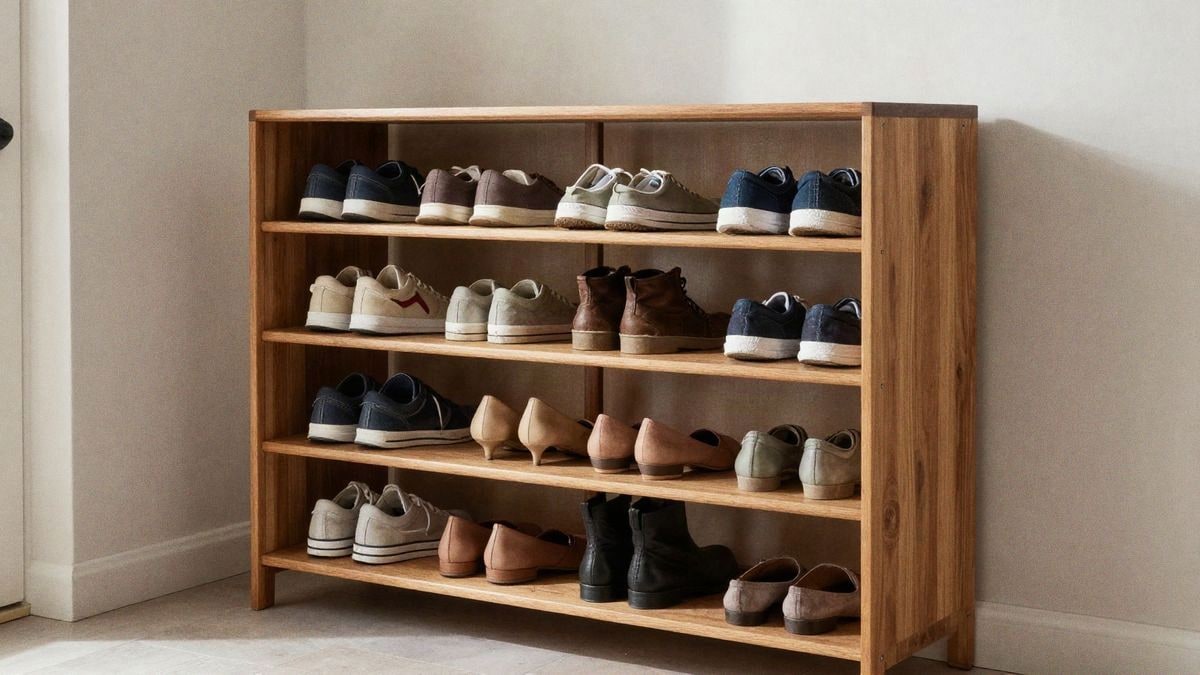
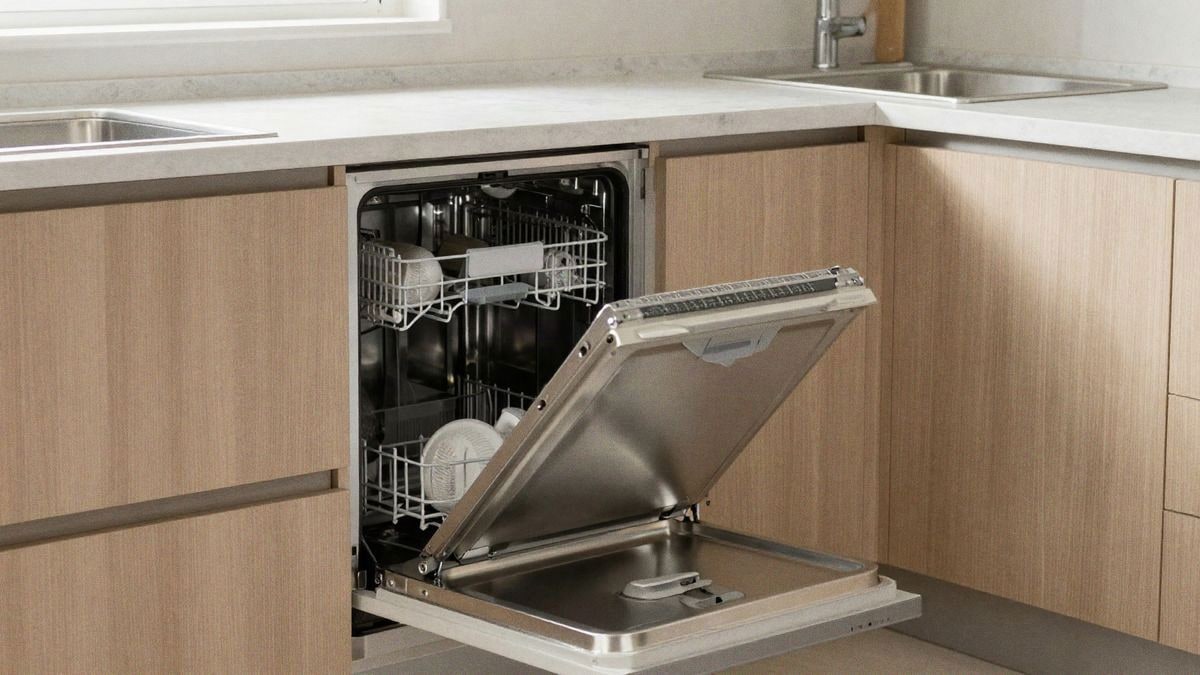
At Casa y Deco, we love the challenge of small spaces, and believe me, furnishing a 30 square metre studio has taught us more decorating lessons than any other project. It’s not about being pretentious with big chains: when you’re working with limited square metres, every piece of furniture, every colour, and every decision counts double. An incorrect sofa isn’t just an incorrect sofa; it’s 40% of your living room gone. That’s the starting point: in a small studio, decoration isn’t a luxury, it’s a spatial survival strategy.
The first thing we’ll do is measure and draw your studio to scale, no exceptions. It sounds tedious, but it’s the difference between a space that works and one that suffocates you. Take the actual measurements from wall to wall, including doors and windows, and draw it on paper or use a floor plan app (there are free ones that work very well). With that in hand, cut out cardboard representing each piece of furniture you plan: sofa, bed, desk, shelves. Move them around in the drawing before buying anything. This saved me from buying a 2-metre sofa that wouldn’t fit even sideways.
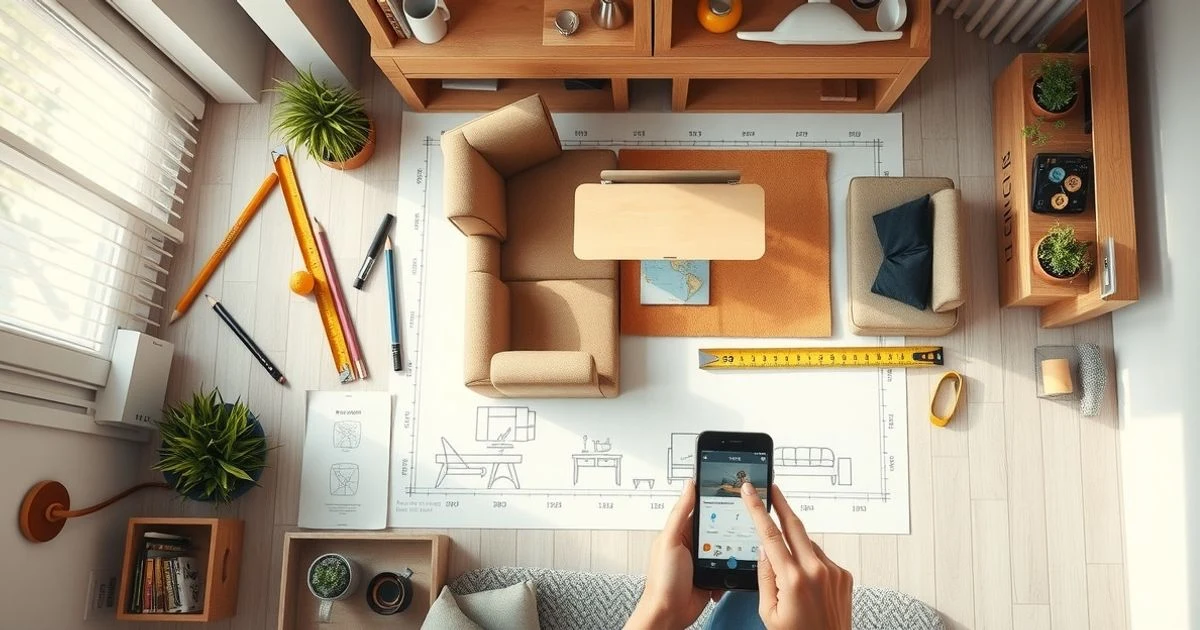
The second step is to choose a type of multifunctional furniture as the central axis. In a 30 square metre studio, there’s no room for pieces that only do one thing. A sofa bed with a storage compartment underneath is much smarter than a rigid sofa: it gives you seating during the day, a bed at night, and hidden storage. A wall-mounted folding desk takes up 20 centimetres when closed and opens up a workspace when you need it. A bed with an integrated drawer doubles the storage without taking up an extra metre. These pieces of furniture are the backbone of the project.
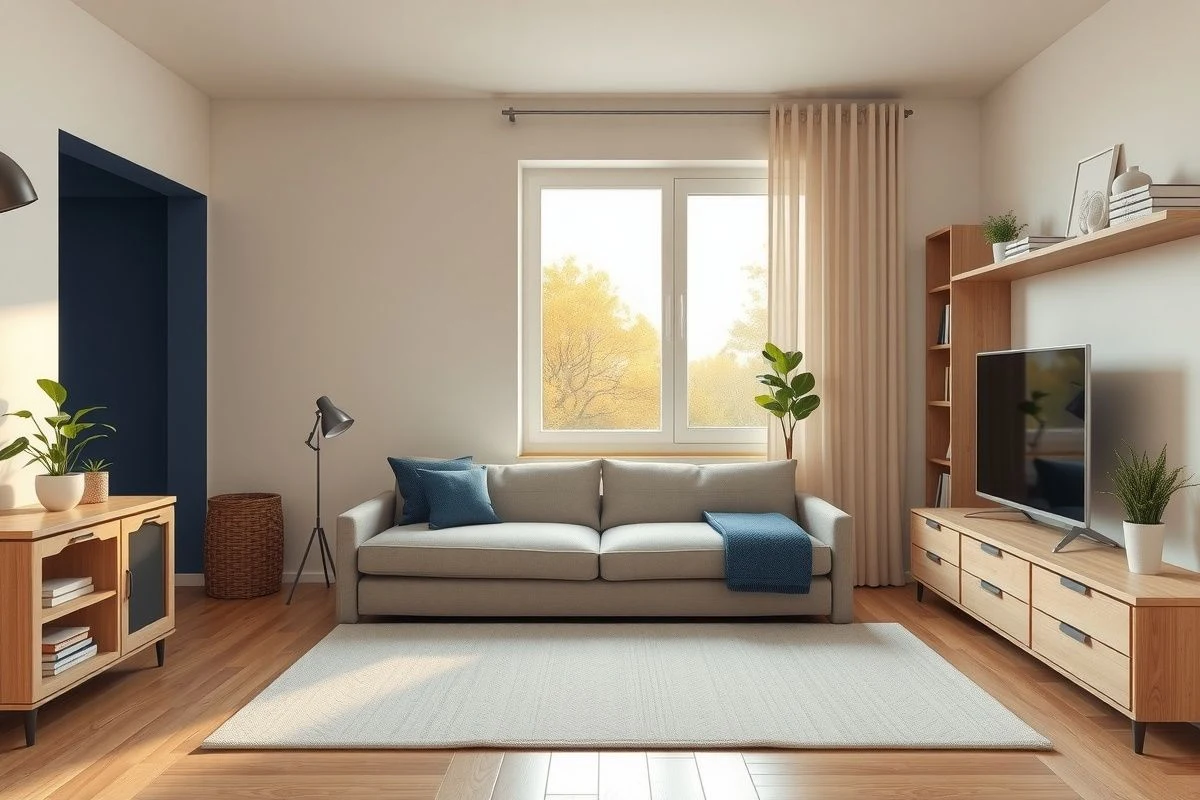
Now it’s time for the aesthetic axis: define a coherent colour palette that makes the space feel larger. I confess that for years I thought studios should be white and neutral: how boring. The truth is you can use colour, but you have to be strategic. Choose a base colour (off-white, warm beige, soft grey) for the walls and large furniture. Then introduce a vibrant secondary colour in textiles and details: cushions, throws, curtains. This adds personality without overwhelming. An all-white studio looks like a hospital; a studio with a deep blue wall and raw white accessories is sophisticated. Light also matters: if your studio is dark, use light and warm tones; if it has plenty of natural light, you can be bolder.
Visual order is critical. Keep surfaces clean and uncluttered: every object you leave in sight subtracts from the space. An open shelf filled with knick-knacks makes the space feel smaller; a shelf with 5-6 books, a plant, and an empty vase makes it larger. That’s the game. Daily use items (documents, remotes, personal items) go in closed drawers, not on display. Open shelves are for the pretty stuff: nothing more.
Zones without making zones: intelligent division
In a studio, you don’t have separate rooms, so you have to fake it intelligently. The rug is your best ally for defining areas without building walls. A 2 x 1.5 metre rug under the sofa says: here’s the living room. Choose natural materials (wool, cotton) in neutral tones: they last for years, age well, and never make the area look like a catalogue. Avoid busy patterned rugs; a subtle texture is more elegant and sophisticated.
If you need to separate the sleeping area from the living area, a heavy vertical curtain or a screen works better than a wardrobe. It doesn’t block completely, maintains the sense of spaciousness, and you can open it when you need to. Look for fabrics in colours similar to the walls: the goal is for the division to be subtle, not to draw attention shouting “here starts the bedroom”.
Light is your second best ally. Install layered lighting: general, functional, and ambient. A decent general light (not a blinding spotlight), a desk lamp in the work area, and a floor lamp or wall sconces in the reading area. This allows each zone to have its own atmosphere without needing to physically separate them. At night, with spotlights, a 30 square metre studio feels much larger because not everything is lit the same.
Furniture and materials with personality
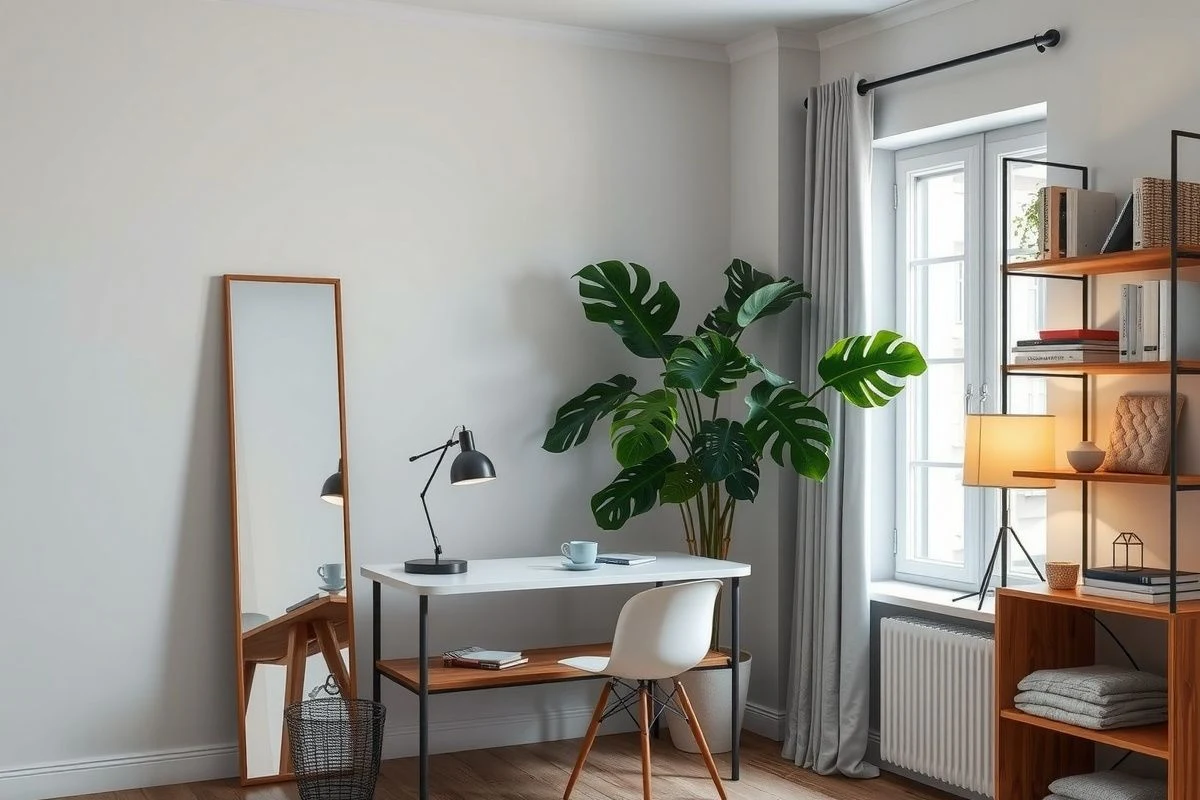
This is where the difference between an impersonal studio and one that reflects who you are comes into play. Mix materials: medium-tone wood, metal (hardware, furniture legs), natural textiles. A light wood console with steel legs, combined with linen cushions in earthy tones, has more character than any white and grey mass-produced furniture. Noble materials age better and carry less of a “temporary studio” label.
Opt for pieces with a small but lasting visual impact. A large mirror (at least 1 x 1.5 metres) expands the space and reflects light: place it opposite the window if possible. Real plants (no dried flowers, no synthetic plants): a hanging pothos, a monstera in a corner, a tall rubber tree. Plants consume visual metres but compensate because the space feels more alive, less provisional. I would say they are the touch that differentiates a real studio from a place where someone just sleeps.
As for unavoidable appliances and objects (television, fridge, microwave), integrate them as much as possible: a wall-mounted TV instead of on a stand, a coffee maker inside a cupboard, a shelf that hides the cables. Visible cables mentally fragment the space. Discreet conduits or running everything behind the furniture changes the entire perception of order and spaciousness.
Details that make a real difference
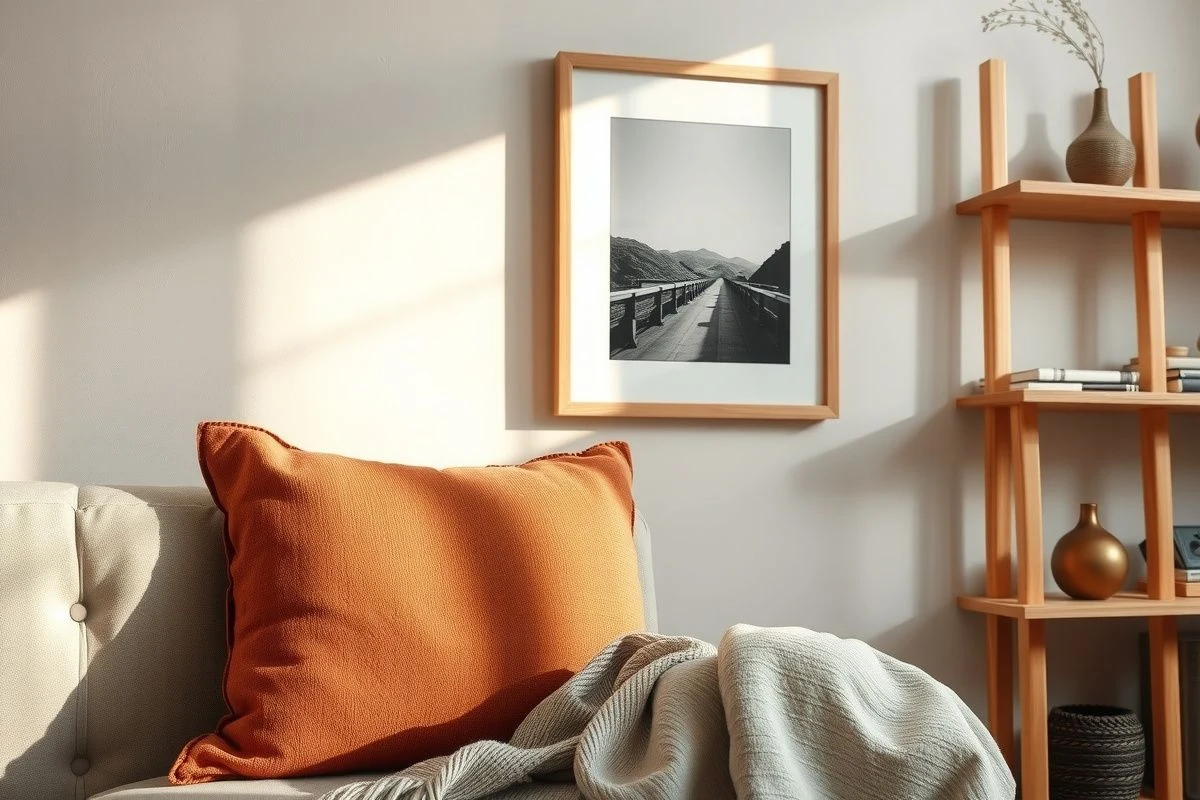
I confess that we are not convinced by generic paintings at all. Invest in 2-3 strong visual pieces: it could be a painting that speaks to you, a small work by a local artist, black and white photographs in different frames. This isn’t vanity; in a small space, every element that hangs on the wall is part of the decoration. Choose intentionally, not just to fill. An empty wall is better than a wall full of casual things.
Textiles are where you can afford to experiment with colour and pattern without compromising the sense of spaciousness. A patterned cushion in blue and white, a thick terracotta wool throw, natural linen curtains: these elements are movable, cheap to change, and make the space feel inhabited and thought out. Use a maximum of 2-3 patterns throughout the studio that share a common colour palette.
Finally, the budget. It’s smarter to spend well on 5 good pieces of furniture than to spend little on 20 mediocre pieces. A specialised store sofa that lasts 10 years is worth more than three mass-produced sofas that last 2. The same goes for beds, desks, and storage. If your budget is limited, buy good quality wood or metal furniture from second-hand stores or refurbishers: they age well and have character that no new furniture can match. Time is your ally in this.
A 30 square metre studio is not a limitation; it’s an opportunity to be smart, selective, and intentional with every decision. It’s not from IKEA because every piece of furniture is chosen, every colour is thought out, and every corner has a purpose. That’s what differentiates a real space from one you just threw together because you needed to fill square metres quickly.

You may also like