At Casa y Deco, we love it when our readers write to us with questions about sunny terraces, as it is one of the most real challenges of outdoor decoration. Having a south-facing terrace is a luxury, but also a challenge: the intense sun for hours can wilt any delicate plant in two weeks. The good news is that there are many plant options that not only survive but thrive under that relentless heat.
The key is to choose species that have evolved to grow in arid or very sunny climates. These plants have natural adaptations such as thicker leaves, deep root systems, and an extraordinary ability to retain water. If we plant them in suitable soil and give them the correct watering, the results can be spectacular: terraces overflowing with colour and life all year round.
I confess that for years I made the mistake of putting indoor plants on my south-facing terrace simply because they looked pretty. The result: a plant graveyard by the end of June. The lesson learned was that orientation and the number of hours of direct sunlight are non-negotiable conditions. Now I am much more strategic in my choices.
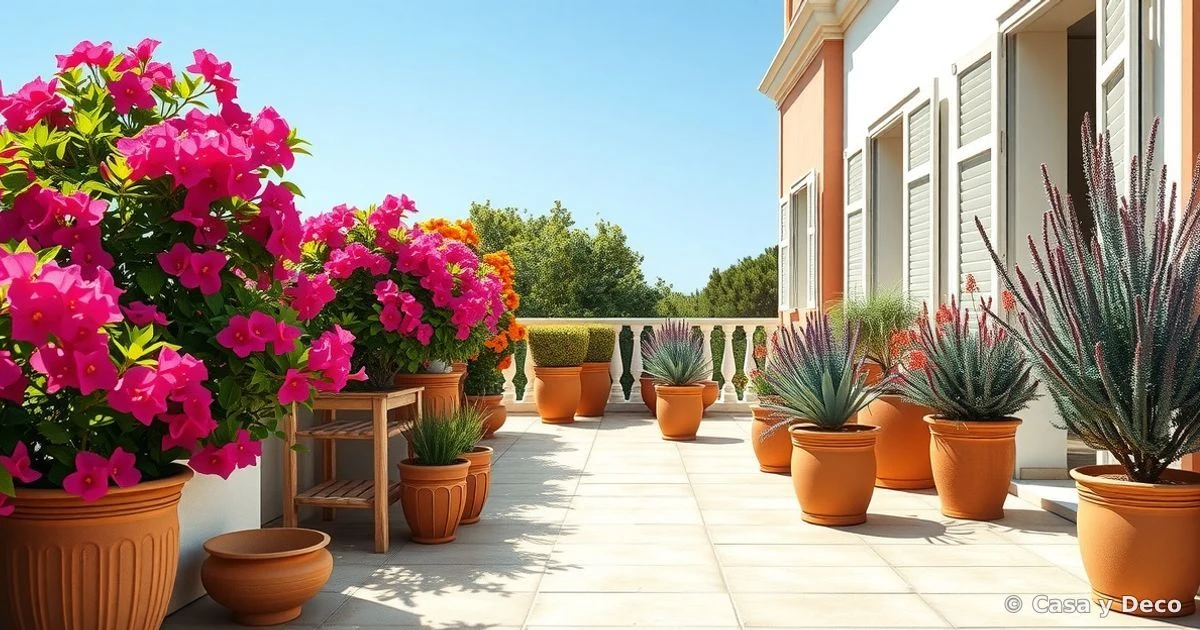
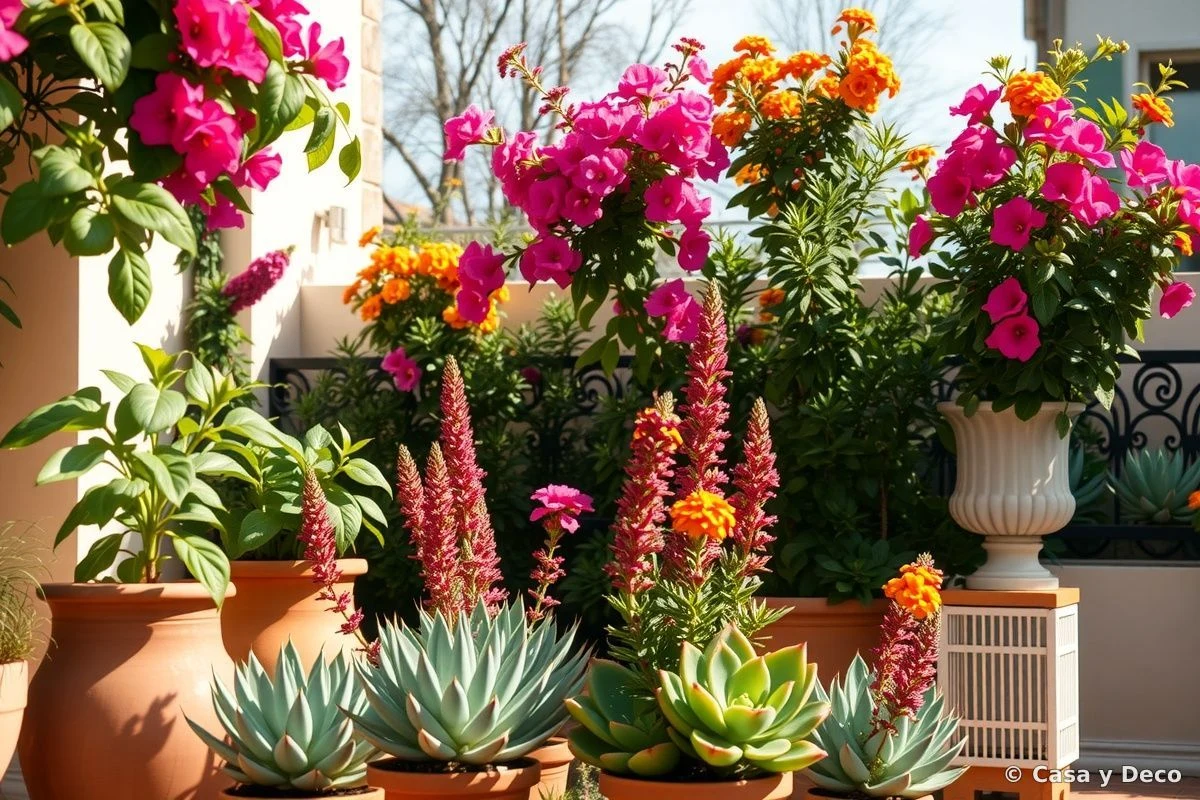
Let’s start with the true champions of solar resistance. The bougainvillea is practically indestructible on south-facing terraces: it produces flowers for months in fuchsia, orange, red, or white, and withstands six, seven, or eight hours of direct sunlight without complaint. Its leaves are leathery and its stem woody, meaning it is prepared for water stress. It requires little watering once established, although in summer it’s good to keep the soil slightly moist. It grows between 1.5 and 3 metres depending on the variety, so plan your space well before planting.
Another must-have is lantana, which produces small clusters of flowers that change colour during blooming: orange, red, white, or bicolour. It tolerates extreme heat and irregular watering perfectly, making it ideal if you have a very sunny terrace but little time for care. It grows compactly, between 60 centimetres and 1.5 metres, and can be easily pruned to shape it. The warm orange tone of its flowers pairs especially well with light ceramic pots or natural wood tones.
If you’re looking for something with decorative leaves as well as flowers, don’t miss red sage. This plant produces spikes of tubular flowers in intense red that attract hummingbirds and butterflies, creating a very natural effect on the terrace. It withstands full sun without problems and is very drought-resistant. The grey-green of its leaves blends wonderfully with any colour scheme, from the most classic to the most modern. It reaches about 90 centimetres in height and spreads easily if you want to fill spaces.
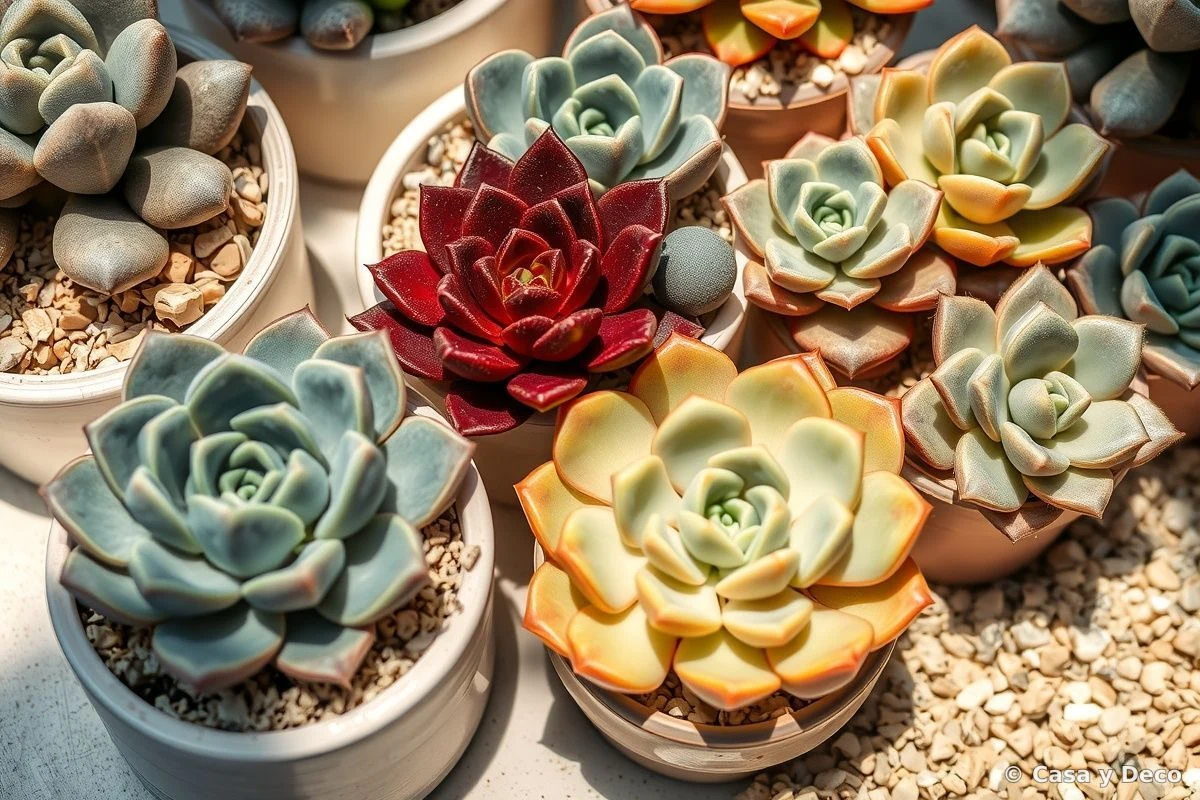
For something more contained and discreet, consider sedums and other succulents. They have fleshy leaves that store water, making them champions of drought resistance. They come in shades of blue-green, deep red, silver-grey, and even almost white. You can combine them in a wide planter creating a xeric garden composition, or distribute them in small containers along the railing. A practical tip: they need excellent drainage, so use specific soil for cacti with at least 30 percent perlite or coarse sand in the mix.
Rosemary is another classic that combines utility and beauty. Besides being an aromatic herb for cooking, it produces small flowers in blue, pink, or white depending on the variety. Light blue rosemary, for example, is especially elegant on a minimalist terrace. It grows slowly but steadily, can reach one and a half metres over the years, and requires little intervention beyond occasional watering. The leaves have that unmistakable aroma that turns the terrace into an additional aromatic space.
For those who prefer something truly exotic, pink mandevilla is a worthwhile option. Although it needs support (a trellis or vertical support), it produces spectacular flowers in intense pink throughout the warm season. It withstands heat well and spreads quickly if cared for properly, offering privacy and flowers simultaneously. In winter in temperate climates, it needs pruning and rest; in warm climates, it can behave almost like a perennial.
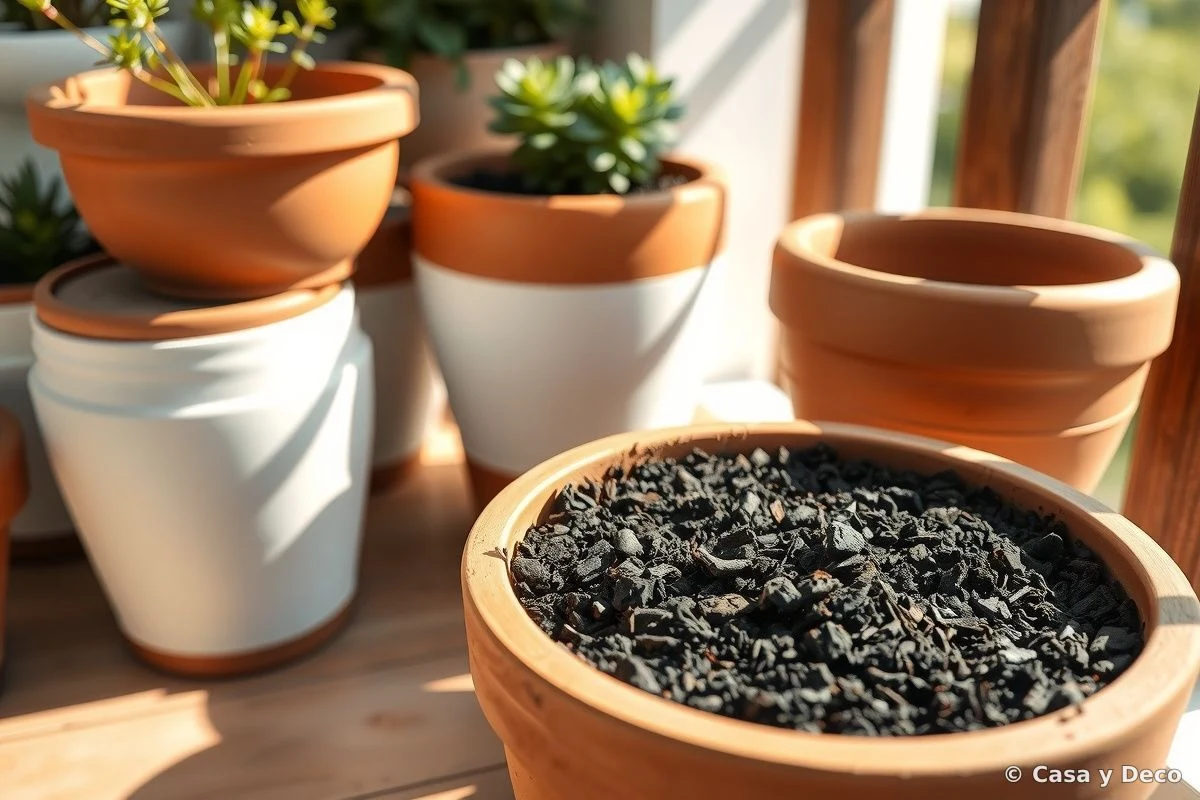
Now, beyond which plants you choose, there are certain practices that make a difference on a south-facing terrace. The soil is fundamental: use quality soil with organic matter (compost or humus) at 40 percent, and incorporate bark compost or coconut fibre to improve moisture retention without waterlogging. The pots also matter. Light materials like white or beige ceramic reflect heat, while dark plastic absorbs it, which can overheat the roots in summer. Consider generous sizes: a small pot dries out three times faster than a large one.
Watering is where many of us fail. We tend to think that direct sunlight requires daily watering, but most of these plants prefer deeper but less frequent watering. Water very early in the morning or at dusk, never during the hottest hours of the day. Stick your finger in the soil: if the top two centimetres are dry, water; if you feel moisture, wait. In summer you may need to do this every two or three days; in spring and autumn, once or twice a week may be sufficient.
The combination of plants also creates a much more interesting visual effect than having everything scattered randomly. Group plants of different heights: a bougainvillea at the back (taller), lantana in the middle, and sedums in the front. Repeat shapes and colours in small groups to create visual coherence. If your terrace has a modern style, opt for more subdued tones: white, soft pink, light blue. If you have a more bohemian or rustic style, strong warm colours like orange, red, and fuchsia work perfectly.
One last tip that really works: install a light mulch at the base of the plants with shredded bark or light gravel. This keeps the roots cooler, reduces soil evaporation, and improves the overall appearance. Moreover, over time, the bark decomposes and enriches the soil naturally. I discovered this a few years ago and it completely changed the health of my sunny terraces.
Don’t wait for the plants to become completely dehydrated to act. Continuous water stress reduces flowering and weakens the plant. If you see the leaves starting to wilt during the hottest hours, increase the watering frequency. Conversely, if you overwater your plants or the drainage is poor, you’ll see rotten roots and leaf drop within weeks. Balance is key, and that balance depends on your local climate, the size of the pot, and the type of soil you use.
South-facing terraces are a perfect canvas to create spaces that are not only beautiful but also resilient and low-maintenance. With these plants and basic care, your terrace can become a colourful and aromatic refuge where you can spend entire afternoons. We at Casa y Deco love to see how a completely underutilised outdoor space transforms into a little green paradise thanks to the right choices.

You may also like