At Casa y Deco, we love the decorating challenges that real life presents, and one of the most common in recent years is this: having a living room that is also an office. It’s not easy to combine the sofa where you relax in the afternoon with a work area where you spend eight hours a day in front of the computer. But believe me, it is entirely possible if you approach it thoughtfully and don’t let just any sofa invade your workspace.
The first thing to be clear about is that the sofa is the star piece of this dual space, and its choice will determine whether the living room remains airy and functional or ends up looking chaotic. It’s not just about being comfortable to sit on, but also about not visually dominating the office or interrupting the lines of sight towards the work area.
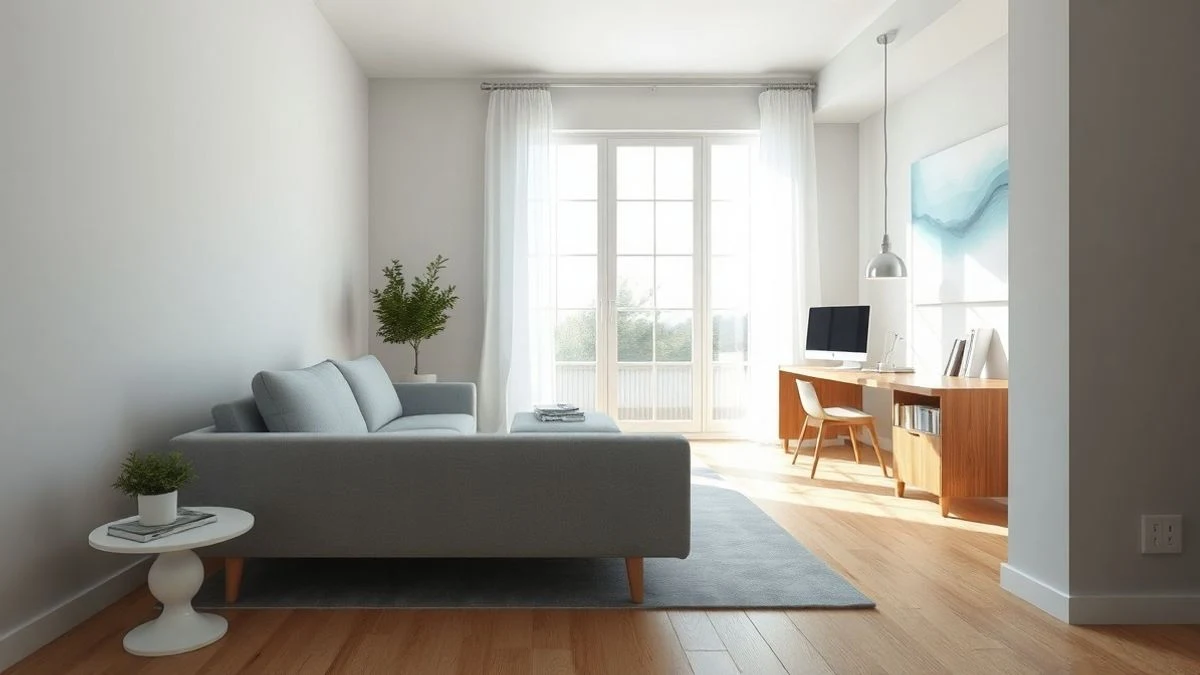
Measure your space accurately before anything else. It seems obvious, but I confess I have seen living room offices where the sofa occupies three-quarters of the room simply because no one took out the tape measure. Consider the actual dimensions: width, depth, and height. A 2.5-metre sofa may be perfect for a large living room, but in a mixed space of 20 square metres, it’s simply too much. Consider models between 1.8 and 2.2 metres if you have limited space, or 2.3 to 2.5 if the room allows it.
Depth also matters greatly. A very deep sofa (more than 95 centimetres) can visually close off the room and make the office feel suffocating. Look for pieces with a depth between 80 and 90 centimetres: they are comfortable but not overwhelming. The height of the backrest is another determining factor; a low sofa, between 80 and 85 centimetres, allows the view to pass over it and keeps the space visually and psychologically more open.
The colour of the sofa is an architectural decision. If you opt for neutral tones like light grey, beige, or off-white, you will ensure that the furniture blends into the background and allows other elements to stand out. This is especially important if your office area has work furniture that already occupies visual space. If you prefer something more colourful, consider a sage green or a muted blue that isn’t too saturated; these tones work well in dual spaces because they maintain a certain elegance without being overwhelming.

The shape of the sofa is also crucial. A straight sofa is your best ally in shared spaces. Corner sofas, while very comfortable, take up too much ground and can literally enclose your work area. If the office needs a desk and an ergonomic chair, a linear sofa leaves much more freedom of movement and layout. Place it parallel to the window or a long wall, not facing the work area.
The upholstery material deserves a separate paragraph. If you work from home, the sofa is likely to see quite a bit of traffic: coffee crumbs, dust from the environment, perhaps an accident or two. Choose easy-to-clean fabrics like heavy linen, treated cotton, or microfiber. Beautiful velvets are tempting, but they stain just by breathing near them. Treated natural materials with stain protectors are your best investment; they last for years and maintain that clean look you need when you have both spaces in one.
The level of comfort has nuances. A very soft sofa, made of low-density foam, is pleasant for lounging after work, but it can be problematic if you sit down to work: you tend to sink in and adopt awkward postures that end up harming your back. Look for sofas with good quality foam (minimum 35 kilos of density) or with pocket spring systems. You should be able to sit upright and support your back well without feeling like you’re sinking.
Now, the layout in the space is where the magic happens. The sofa should be away from the work area; it’s not just an aesthetic issue, but one of concentration. If someone sits on the sofa while you work, you need enough distance to not feel observed. Maintain at least two metres between the sofa and the desk. If your room is rectangular, place the sofa against a side wall or at the back, leaving the other side or a corner for the work area.
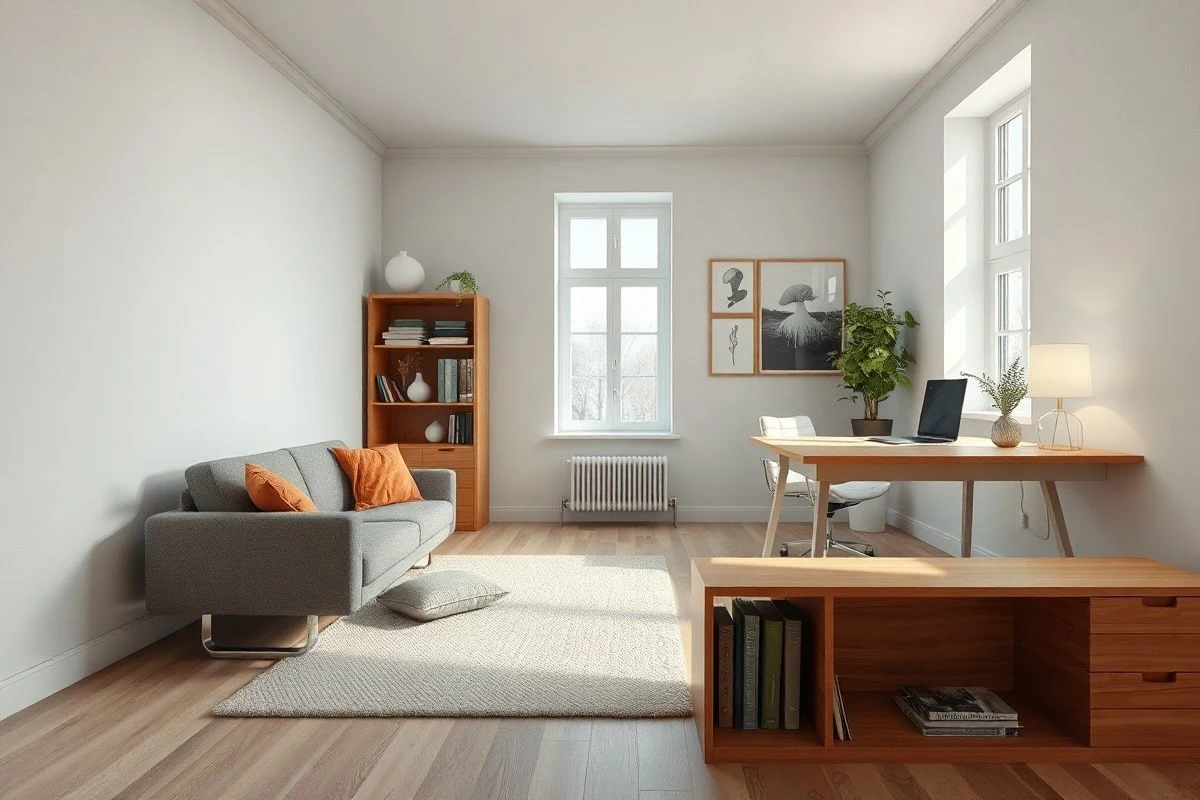
The height of the sofa in relation to side tables and shelves also matters. A low sofa allows you to stack decorative elements on the back wall without everything looking cluttered. If you need shelves behind the sofa to store books or work materials, choose open but clean shelves, without too many objects. This creates a neutral background that doesn’t visually compete with any area.
The lighting around the sofa should serve both purposes. A sofa next to a window is ideal because it receives natural light during the day, and in the afternoons you’ll need a floor lamp that doesn’t glare but illuminates well. If the office area is nearby, make sure that the light from the sofa lamp doesn’t interfere with the computer screen; reflections are productivity’s enemies.
Cushions are silent allies. Cushions in tones that repeat the sofa colour or neutral shades maintain sobriety, while cushions with small patterns or harmonious colours can add personality without distracting. Avoid very large or abundant cushions; they reduce sitting comfort and make the space look messy. Keep between two and four cushions, well placed.
A sofa bed is a temptation you should evaluate honestly. Do you really need your sofa to convert into a bed? Because a sofa bed, no matter how good it is, always has a bulkier appearance, its mechanisms take up internal space that is noticeable when you sit, and the truth is that not everyone feels comfortable on a sofa bed even if it’s new. If you don’t have a guest bedroom, a sofa bed may be justified, but make sure that the resulting bed is truly usable.
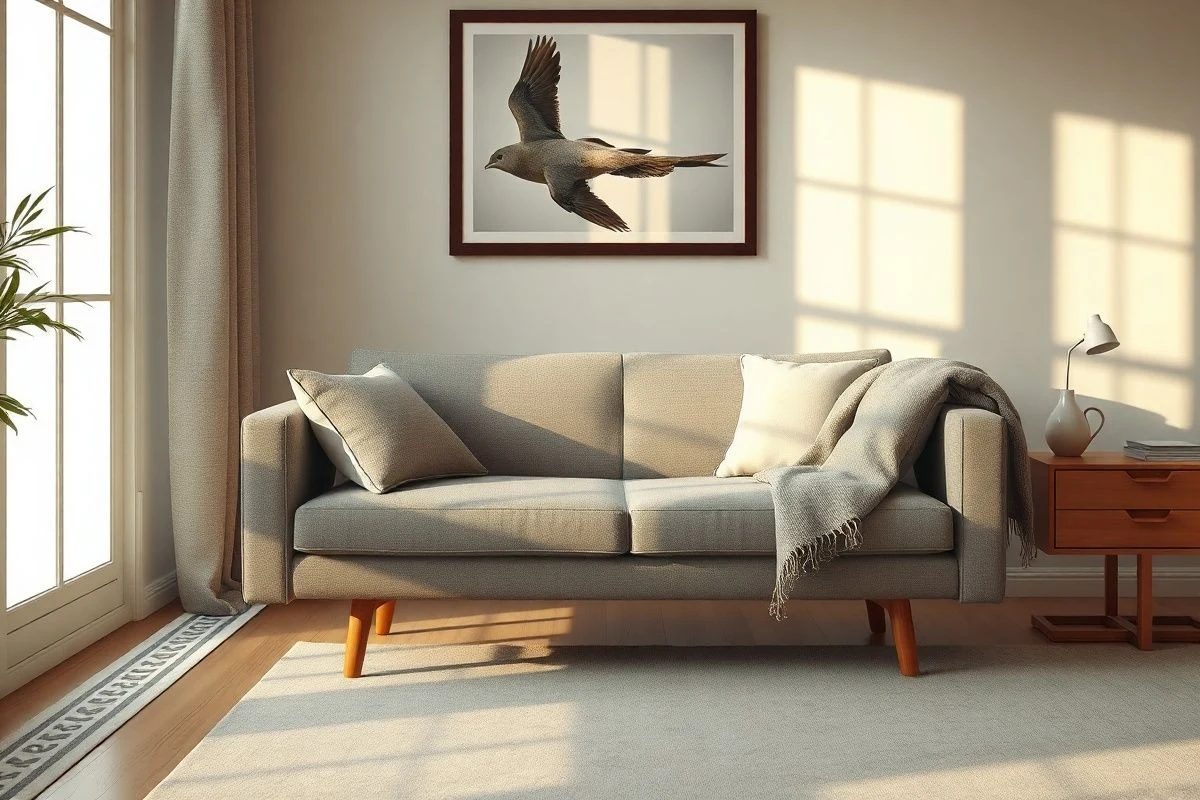
Now, the legs of the sofa also matter. Elevated wooden or metal legs create visual lightness; the sofa appears to float and allows you to see the floor beneath it, which psychologically enlarges the space. Sofas without legs or with a fabric skirt give a heavier feel and darken the floor. In shared spaces, elevated legs are generally better.
The budget is realistic: a good sofa in terms of durability, that withstands years of mixed use (sofa and adjacent work area), is in a mid-range. You don’t need to invest in ultra-premium brand sofas, but neither in those bargain sofas that promise the impossible. Look for pieces with a solid wood frame, quality foam, and durable upholstery. This ensures that your sofa still looks good after three years of morning coffee, video calls, and relaxing afternoons. At Casa y Deco, we believe it’s worth investing in that sustainable comfort.
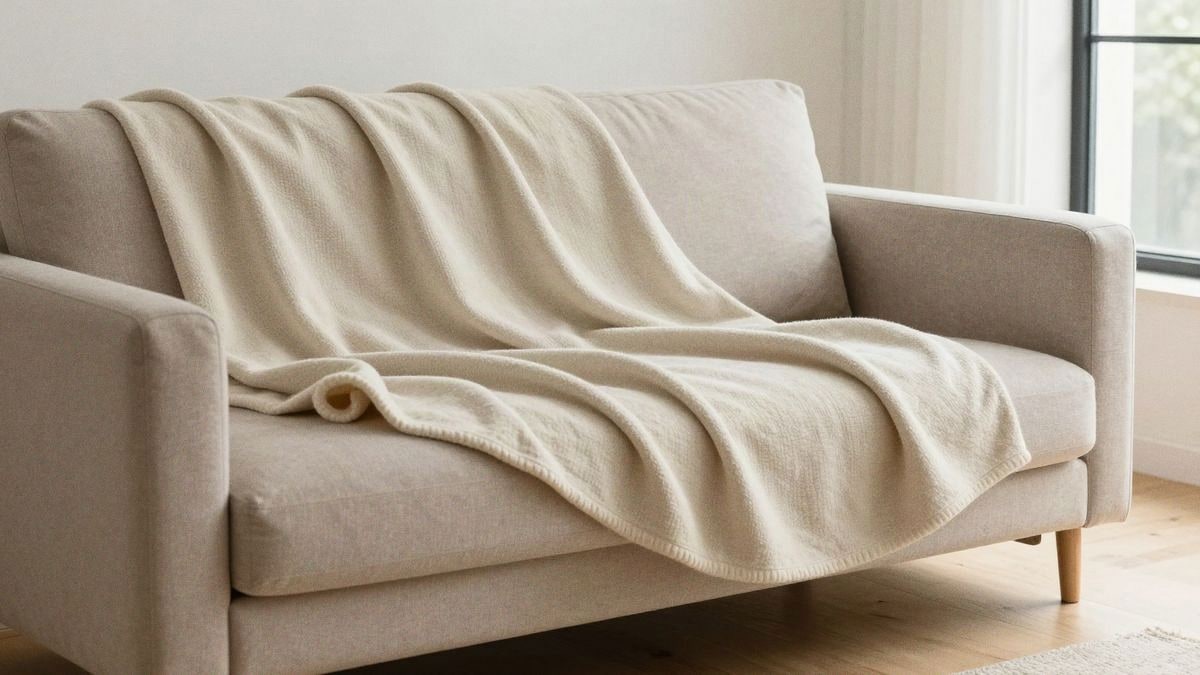
Finally, don’t be afraid to experiment with the decor around the sofa. A small side table for your coffee or tablet, a carefully folded blanket on the backrest, and a curated wall space behind keep the living room office cohesive. Accessories are what tell the story that this is a lived-in space, not an empty showcase. So choose your sofa, place it with intention, and turn that dual living room into the most functional and pleasant place in your home.

You may also like