At Casa y Deco, we love that moment when you discover that what you needed to transform your home was already tucked away in a corner. Decorative pots are one of those great allies of interior design that don't require a budget: just creativity and a willingness to experiment. If you have plants at home, you know that the container is almost as important as the plant itself, as it defines the style of the entire room. Today we want to show you how to create unique and personalised pots using everyday materials that you probably have at home.
The first thing you should know is that any container that can hold water and soil can be transformed into a decorative pot with a little ingenuity. You don't need to buy anything from specialised stores or spend a fortune on ceramic containers. From tin cans to glass jars, from aged clay pots to old wooden boxes, everything has potential. The important thing is to respect two basic rules: the container must have drainage or allow you to create it at the bottom, and it must be deep enough for your plant's roots.
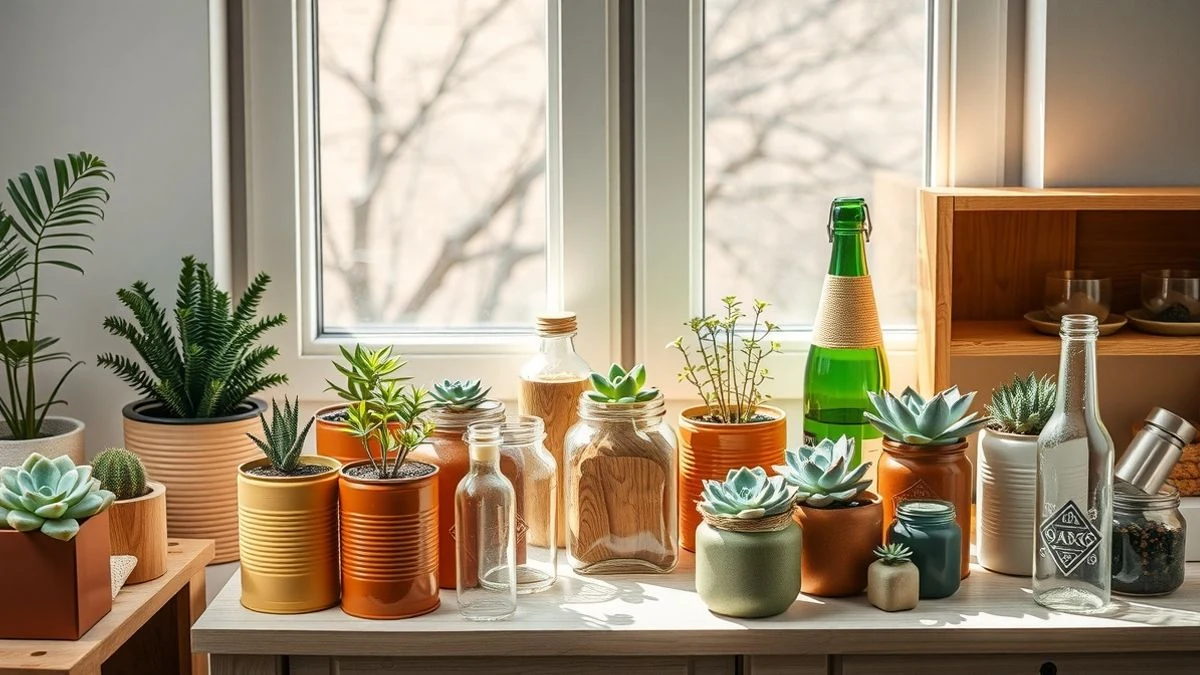
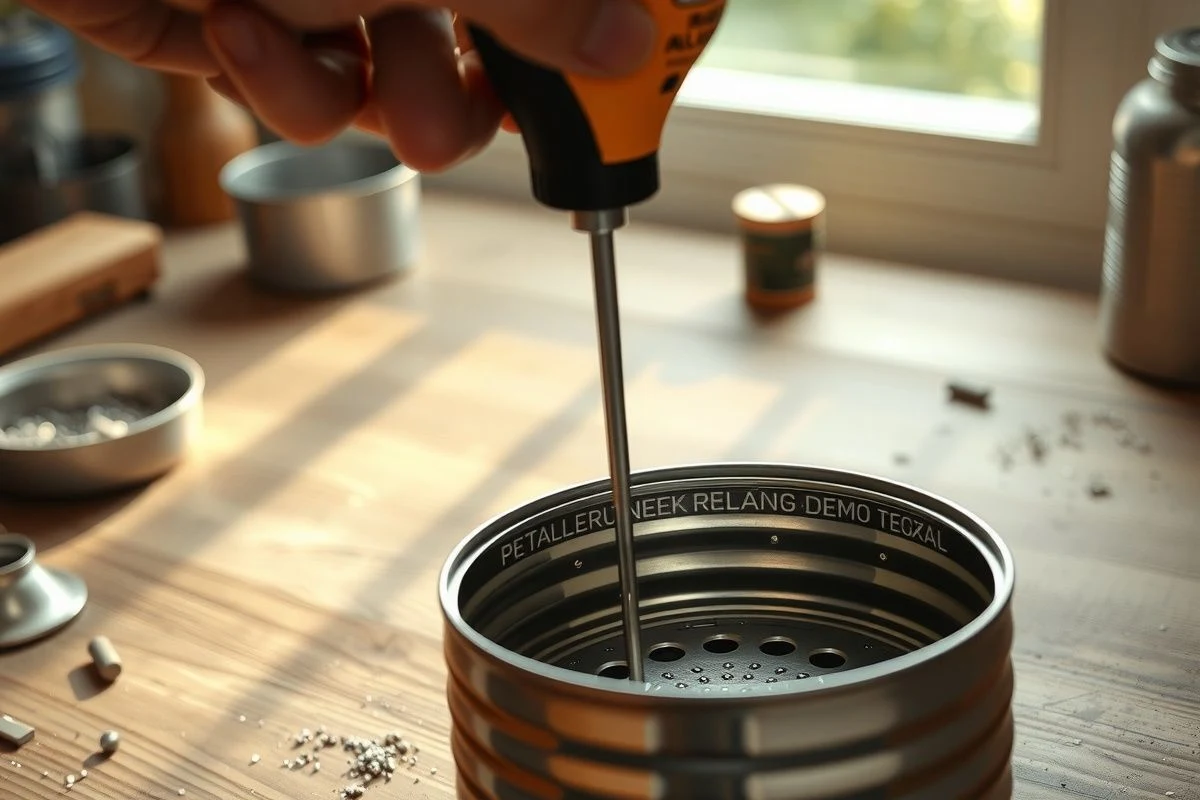
Let's start with tin cans, those metal containers we just emptied of tomatoes or tuna. They are perfect for creating a coherent set of small pots because you have total control over the size. Completely remove the labels and wash them well with soap and water. To eliminate that characteristic metallic smell, let them air dry for a couple of days. The next step is to create drainage at the bottom with a drill or a thick nail: make three or four evenly spaced holes. If you don't have a drill, a hammer and a long nail will also work; place the can on a wooden board and hit from the inside out.
Now comes the most creative part: the visual finish. Here are several options depending on your decorative style. If you're looking for a modern industrial look, leave the can with its natural metallic colour or sand down just a few areas with fine sandpaper for an uneven shine. For a rustic or vintage style, apply acrylic paint in earthy tones: ochres, bluish greys, or aged whites look spectacular. We use foam brushes for an even coverage and let dry between layers. If the finish is too clean, lightly sand it dry with very fine sandpaper to give it texture and the character of an antique object.
Medium cans, about 10 centimetres tall, work best for small short-stem plants or succulents. Larger ones, 15 to 20 centimetres, are perfect for a medium-sized plant. Group cans of different sizes on shelves or on the floor to create a more dynamic visual effect: the variation in heights makes any composition look deliberate and sophisticated. If you paint them all the same colour, that effect is further enhanced.
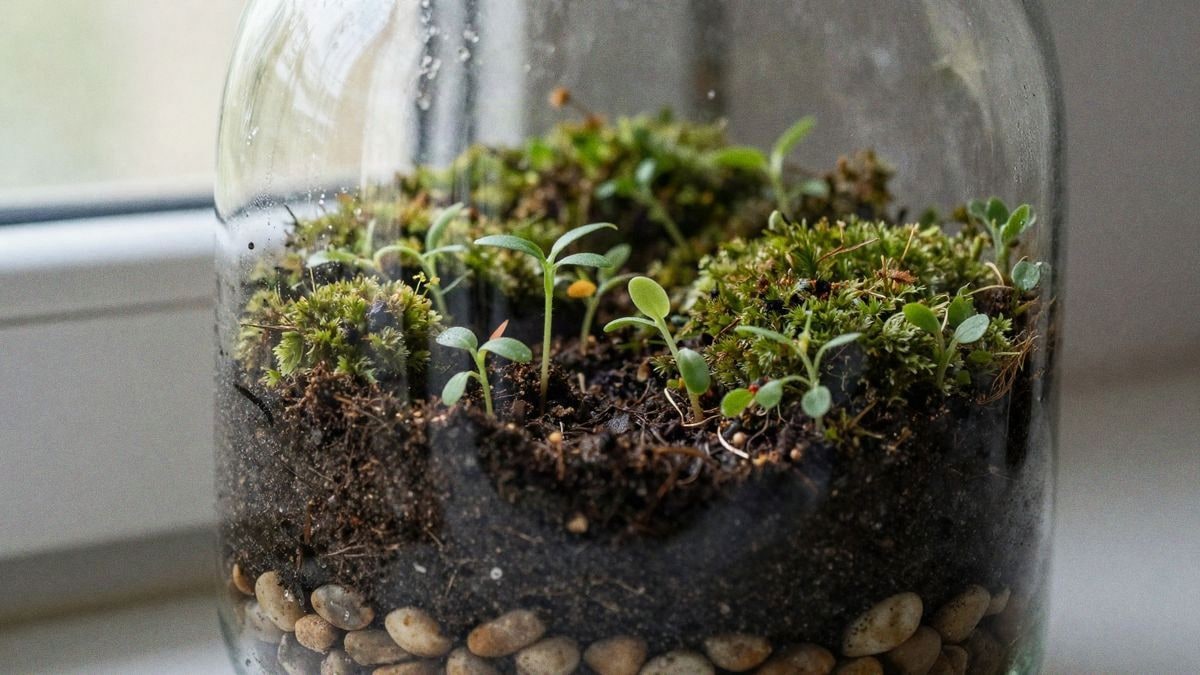
Glass jars from jam, preserves, or food are another goldmine. These translucent containers have their own charm because they allow you to see the soil, and if you include decorative stones or charcoal in layers, they create a very interesting visual effect. Glass works especially well with plants that have visible roots, like pothos or philodendrons that grow in water. To make them opaque and give them a more decorative touch, you can paint them on the outside with acrylic paint or even with matte acrylic that dries translucent. I confess that I once tried to stick decorative papers to the inside of the jars with spray glue: the result was like having miniaturised paintings behind the glass.
If your glass jar doesn't have a drainage hole, don't despair. Create a drainage system using layers: place coarse gravel at the bottom, then activated charcoal to prevent bad odours, and finally the soil. With this layering technique, the plant can live perfectly well. Just be careful with watering: it shouldn't be excessive because the water doesn't drain down. One way to know if you've watered correctly is to check for moisture in the soil at a depth of 3 centimetres.
Old wooden boxes are perhaps the most versatile containers you can reuse. A wine box, an old market fruit box, or even a small toolbox can become wonderful pots. The best thing is to line the inside with a thick plastic bag or waterproof fabric before adding soil, so you avoid the wood rotting slowly. Wooden boxes work especially well for medium-sized plants or groups of small plants together. They measure approximately 35 by 25 centimetres, perfect for a windowsill or to place on the floor next to a wall.
To personalise these boxes, you can leave the wood natural with a rustic matte finish, paint them in colours that match your decor palette, or even dye them with natural dyes. If you're feeling adventurous, paint one box off-white and another a warm grey, place them together on the floor, and you'll have a small indoor garden that looks like it came straight out of a decor magazine. Hanging plants like ivy or string of hearts work well in elevated boxes because they create a natural cascade of foliage.
Ceramic or clay jars that you no longer use in the kitchen also deserve a second life as pots. A canning jar or even a large cracked ceramic mug can house a small succulent plant. Drill a small hole in the bottom if possible, or use the layering method mentioned earlier. These containers have a natural rustic charm that doesn't need additional decoration; the patina of time and earthy colour are enough.
Recycled glass bottles deserve a special mention because they are literally art in potential. A dark wine bottle, a damajagua, or a clear glass bottle can be cut in half to create two short pots. If you don't have specialised tools, there are techniques using string and hot water that work well. Bottles cut at the neck create a very chic bell-shaped container that works well with dense foliage plants. Just be sure to sand the edges well after cutting to avoid accidents.
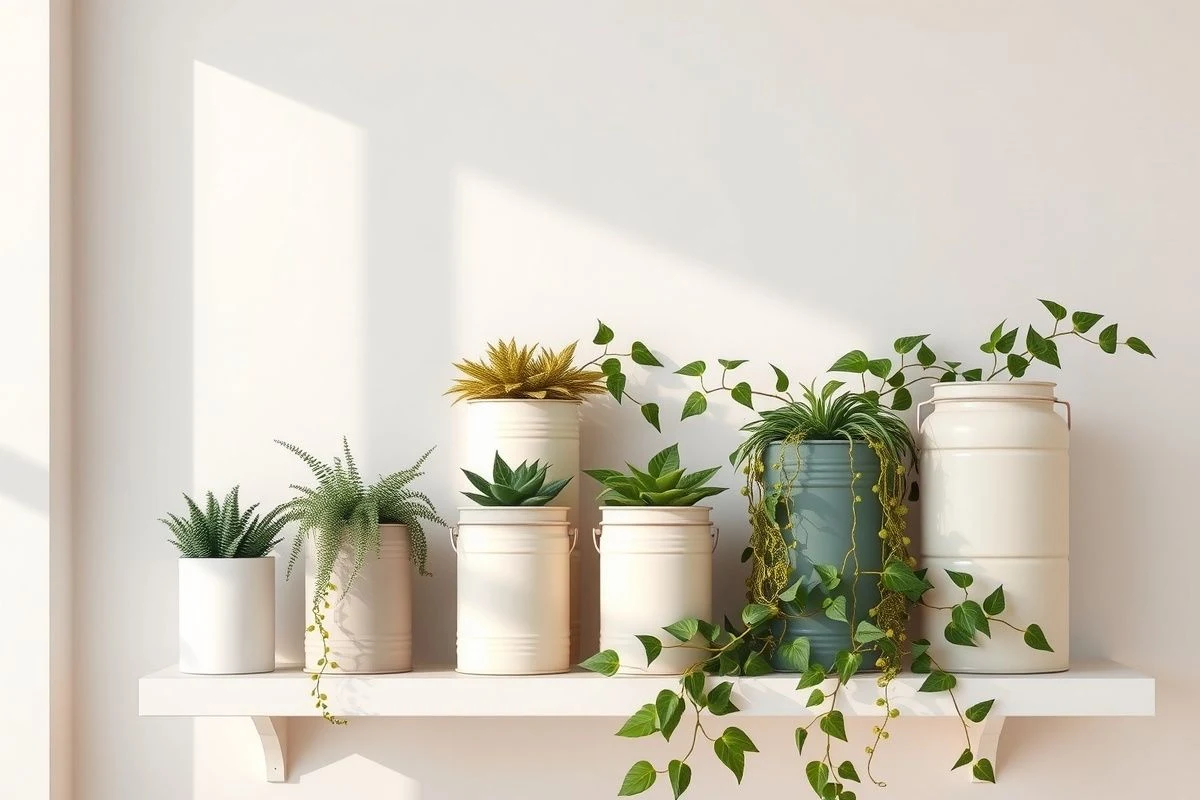
If your style is more minimalist or Nordic, we recommend painting all your recycled containers white, cream, or light grey. These neutral shades make the plants the main focus, and the visual effect is clean and orderly. Colour consistency is key: if all your pots are the same colour, even if they are made of different materials, you will create a very powerful sense of visual unity. On a shelf or in a corner of the living room, you'll see how the whole becomes a focal point.
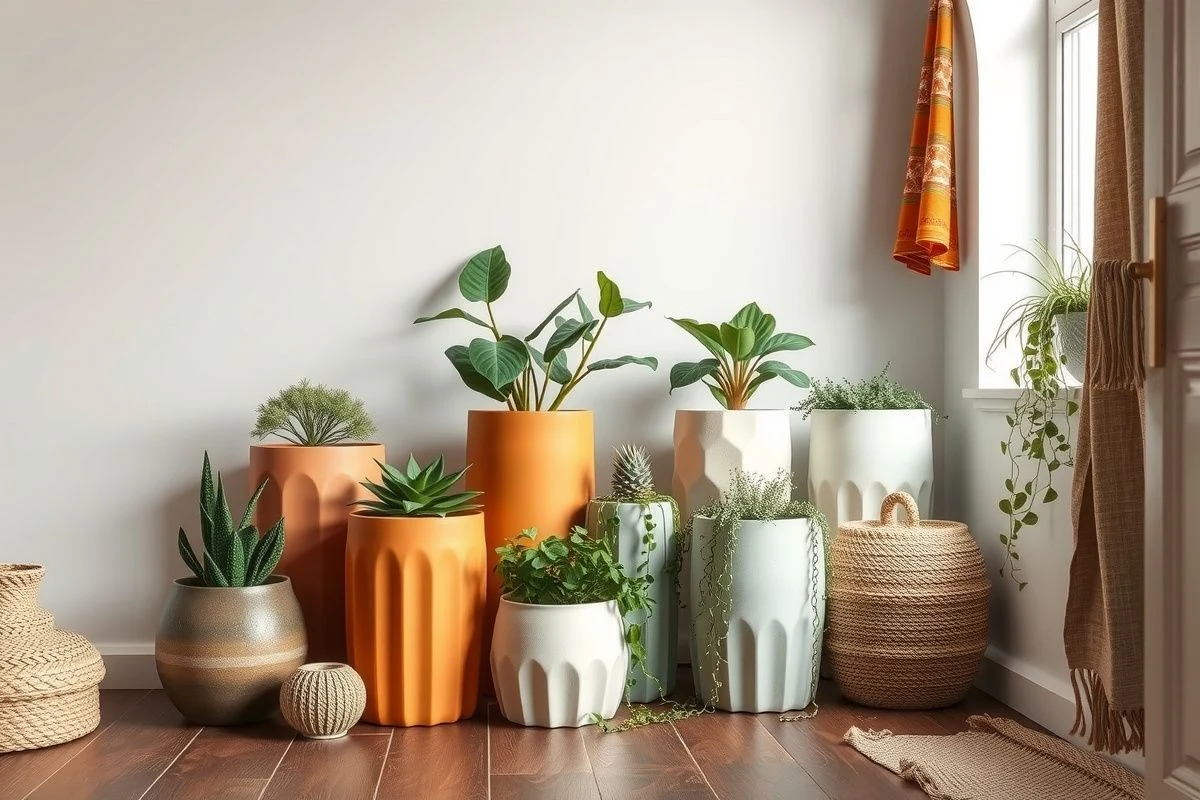
For lovers of colour and bohemian style, combine materials: pair painted ochre cans with mint green bottles and white wooden boxes. Place plants of different heights and shades of green. This type of arrangement works especially well in rooms with abundant natural light and neutral walls that serve as a canvas. If your wall is white or cream, this contrast of colours and textures will shine without competition.
A practical tip for any material you reuse: always seal the bottom with silicone or waterproof resin after drilling the drainage holes. This prolongs the life of the container by preventing water from dripping and damaging furniture or floors. Place a tray or plate under each pot if you are putting it on a delicate surface. Trays can be anything from ceramic saucers to cork discs that you buy for little money at craft stores.
The current trend in interior design celebrates precisely this: imperfect, recycled objects with history. If there's one thing we've learned at Casa y Deco, it's that beauty lies not in perfection but in the intention and care with which we decorate. A pot handmade by you, with materials you had at home, tells a story: yours. And that, my friend, is worth much more than any container bought in a store.
So the next time you have an empty jar, an old box, or a can you no longer use, don't throw it away. Visualise how it could look painted, drained, and filled with fresh soil and a plant that brightens your day. Believe me, those small acts of sustainable and economical creativity are what truly transform a house into a home.

You may also like