At Casa y Deco, we know that an empty wall in the living room is like having a blank canvas: it can be liberating or distressing, depending on how you look at it. That wall with nothing on it, with no apparent purpose, is an invitation to creativity, but also a source of indecision. The good news is that how to decorate an empty living room wall has more solutions than you might think, and not all require renovations or exorbitant investments.
I confess that for years I had a wall like that in my own home. I walked past it every day thinking about what to do, and in the meantime, it remained bare and boring. Then I discovered that the key is not to find the perfect solution, but to understand what type of decoration fits your space, your budget, and your lifestyle.
The first thing you need to do is observe your living room honestly. Ask yourself what that wall receives: natural light, artificial light, a lot of traffic. A wall next to a large window calls for colours that play with the light. A dark and tucked-away wall might need something more striking. If your living room is small, an empty wall is an opportunity to visually expand the space. If it’s large, it’s a chance to create a focal point that organizes the entire room.
Paint and Colour: The Most Transformative Option
Painting it is the most obvious solution, but also the most powerful. This is where many people get scared. Painting an entire wall a different colour from the rest can change the entire atmosphere of the living room. Dark tones (navy blue, charcoal grey, deep green) have gained ground in recent years and work well in living rooms with good natural lighting. Warm neutrals (beige, light grey, taupe) are safer if you have doubts.
But you don’t need to go to extremes. Colour can also come in the form of wallpaper or murals. Textured or geometric patterned wallpaper can bring movement to a wall without overwhelming it. If you want something more reversible (in case you’re renting), there are adhesive paper options that peel off without damage.
My advice: don’t be seduced by a pretty colour in a small sample. Buy a small pot of paint and paint a rectangle of at least 60 centimetres on that wall. Observe how it looks at different times of the day. At noon, in the afternoon, and at night. Only then decide.
Frames and Prints: Personality Without Big Expenses
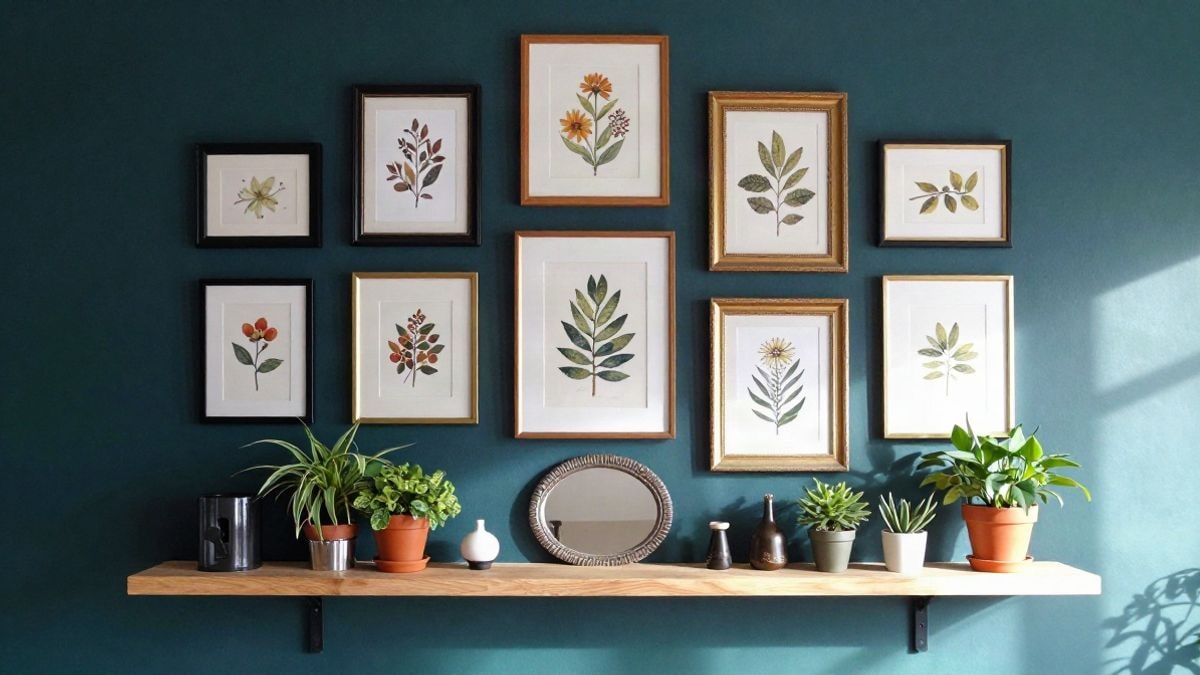
The gallery wall is the classic that never fails. It can be a single large picture that is the star, or a composition of several smaller frames creating a visual narrative. Asymmetrical compositions are winning over perfect grids, which are now too predictable.
You don’t need to spend a fortune. There are specialty stores with affordable prints, and what matters is the frame. A good quality frame can transform a cheap print into something that looks professional. Black, natural wood, or white frames are the most versatile options. If you dare, try bolder tones: a weathered gold frame adds warmth, while a bright red or green frame adds attitude.
For a composition of several pictures, first draw on the wall with painter's tape to see how it looks. Many people make the mistake of hanging pictures too high. The correct height is for the centre of the artwork to be approximately 1.50 metres from the floor, which is called eye level.
Plants: Living Nature on the Wall
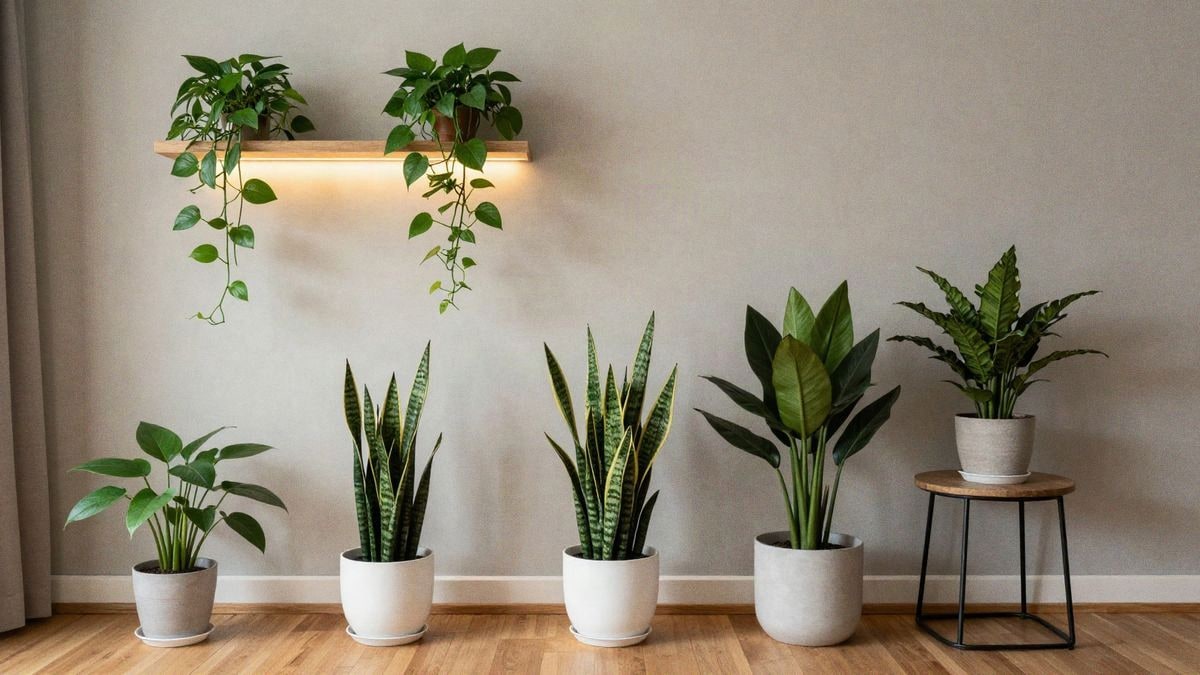
Hanging plants or those on floating shelves turn an empty wall into a vertical garden. It’s not just decoration; they purify the air and bring well-being. Pothos, philodendrons, succulents: there are options for all levels of light and plant expertise.
If you have little natural light, opt for hardy plants like sansevieria or zamioculcas. If the space receives good indirect light, ferns and monsteras are spectacular. Floating shelves allow you to play with different heights and create dynamic compositions.
The only thing we really don’t agree with is pretending that you will keep 15 plants perfect if you usually kill cacti. Better to have three healthy plants than ten in agony. Honesty is key here.
Floating Shelves: Decoration and Functionality
Open shelves are the answer for those who want to combine storage with style. You can mix books, decorative objects, plants, and framed photos. The secret is not to overcrowd them: leave blank spaces. The 60-40 ratio (60% full, 40% air) works better than filling every inch.
Choose shelves in materials that match your living room. Wood for a warm atmosphere, metal for something more modern, white for minimalism. The thickness of the wood also matters: a solid wood shelf of 3 centimetres thick always looks sturdier than a thin one.
Mirror or Decorative Mirror: Space and Light
A large mirror is your best ally if the living room is small. It reflects light, visually expands the space, and adds a point of interest. A round mirror is trendy, a rectangular mirror is classic, and a rustic wooden framed mirror is cozy.
Position it opposite a window or light source to multiply brightness. It’s not just functional: it can also be decorative if you choose the frame well. Mirrors with brass or gold frames are trendy and work in more sophisticated living room aesthetics.
Wallpaper and Textures: Guaranteed Visual Impact
Wallpaper has evolved a lot. It’s no longer just outdated florals. Today there are options with 3D textures, geometric patterns, and minimalist photographic murals. Applying wallpaper on a single wall (what’s called an accent) is a sure way to refresh without overwhelming.
If you don’t want permanent wallpaper, there are adhesive vinyls that peel off easily. Some mimic natural textures: brick, wood, stone. This saved my living room a few years ago when I needed a change without committing long-term.
Sculptures and Artistic Objects
If you have artistic pieces (small sculptures, ceramics, vintage objects), a bare wall is the perfect stage. A narrow floating shelf running along the wall creates an improvised museum. Light is crucial here: recessed lighting in the shelf or a directed downlight enhances each piece.
They don’t need to be expensive pieces. Flea markets and second-hand platforms have hidden gems at a fraction of the price. What matters is that they mean something to you.
Lighting: The Great Forgotten
A well-lit wall always looks better. Wall sconces, recessed lights, or a simple floor lamp strategically placed can change everything. Indirect lighting (that doesn’t shine directly into the eyes) creates ambiance. Directional spotlights highlight pictures or sculptures.
If you’re going to hang pictures or a mirror, consider installing a spotlight right above. No need for construction: there are adhesive light options powered by batteries that simulate a professional finish.
Combinations That Work
The magic is in mixing. A neutral background colour with two or three large pictures. Soft patterned wallpaper with a floating shelf of plants. A decorative mirror flanked by two wall sconces. A minimal mural with a bench or stool underneath to create a reading nook.
The important thing is that the wall tells a story about you, about what you like, about how you want to live in that space. An empty wall is not a problem. It’s an invitation to be intentional with your decoration. So observe, plan, and when in doubt, remember that you can always change. The beauty of decorating is that nothing is permanent.

You may also like