At Casa y Deco, we love a good carpet, but I confess that for years we made the same mistake you see in almost every home: placing it too small or in the wrong position. It’s one of those details that seems secondary until you see it done right and the living room changes completely. Today we want to tell you exactly what goes wrong and how to fix it.
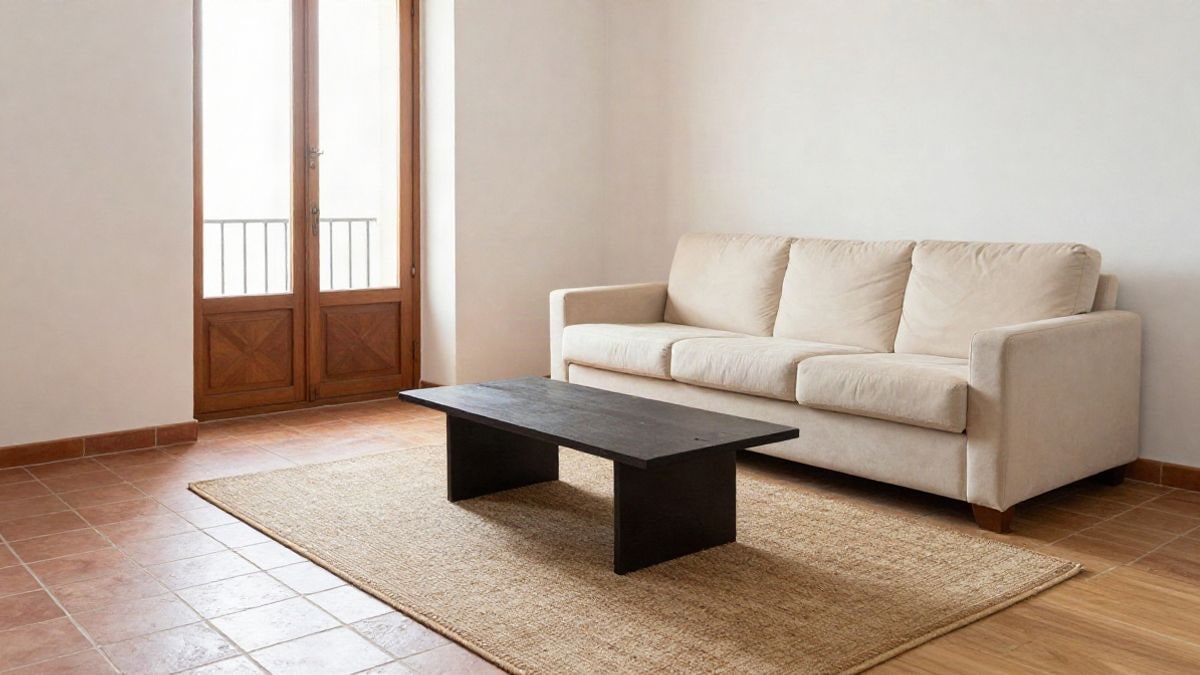
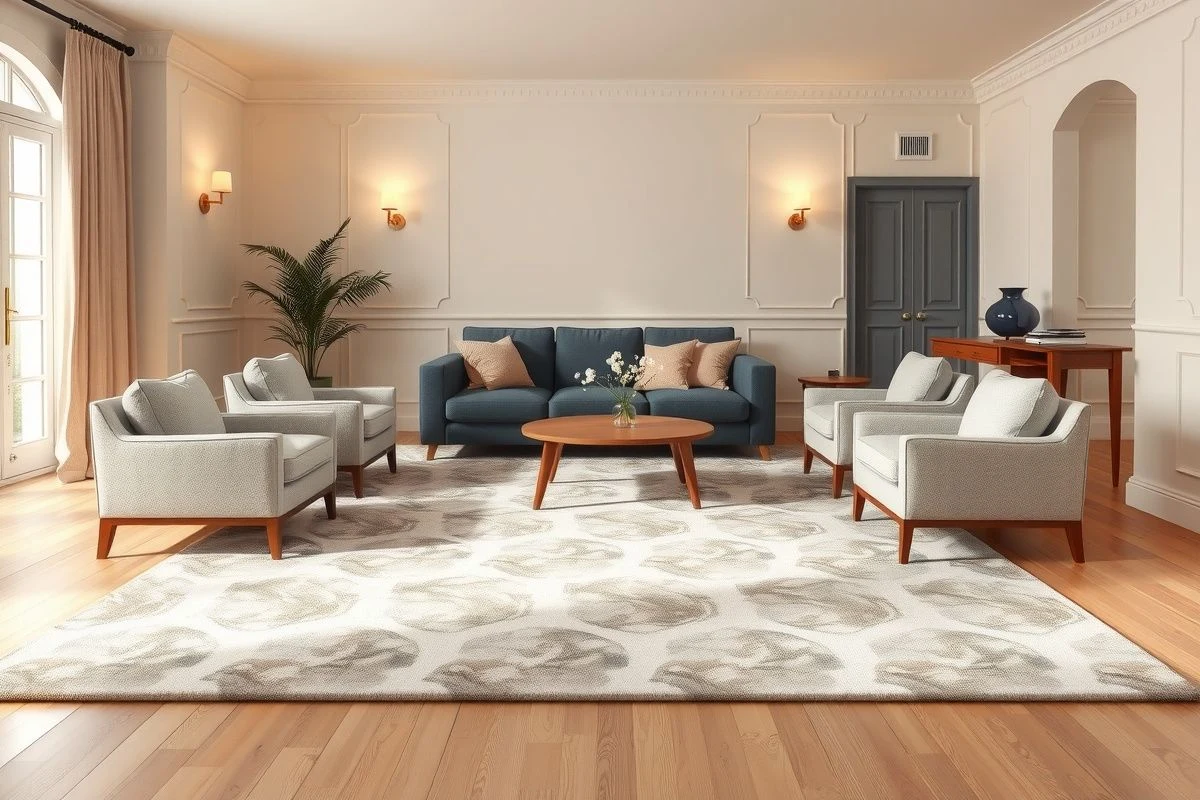
The most common mistake is leaving the front legs of the sofa off the carpet while the rest of the furniture floats without anchorage. It seems like a minor detail, but visually it crumbles the composition of the living room. When the sofa's legs are hanging in the air (literally, off the carpet), the seating area loses cohesion and the space looks fragmented, as if each piece of furniture lives in its own world.
The general rule that works: the carpet should be large enough for the front legs of the sofa (or ideally the whole sofa) to rest on it. If you have a room that is 4 by 5 meters, you should consider a carpet of at least 2 x 3 meters. It seems huge, right? But I guarantee that when we place it correctly, the effect will be the opposite: it will visually amplify the space.
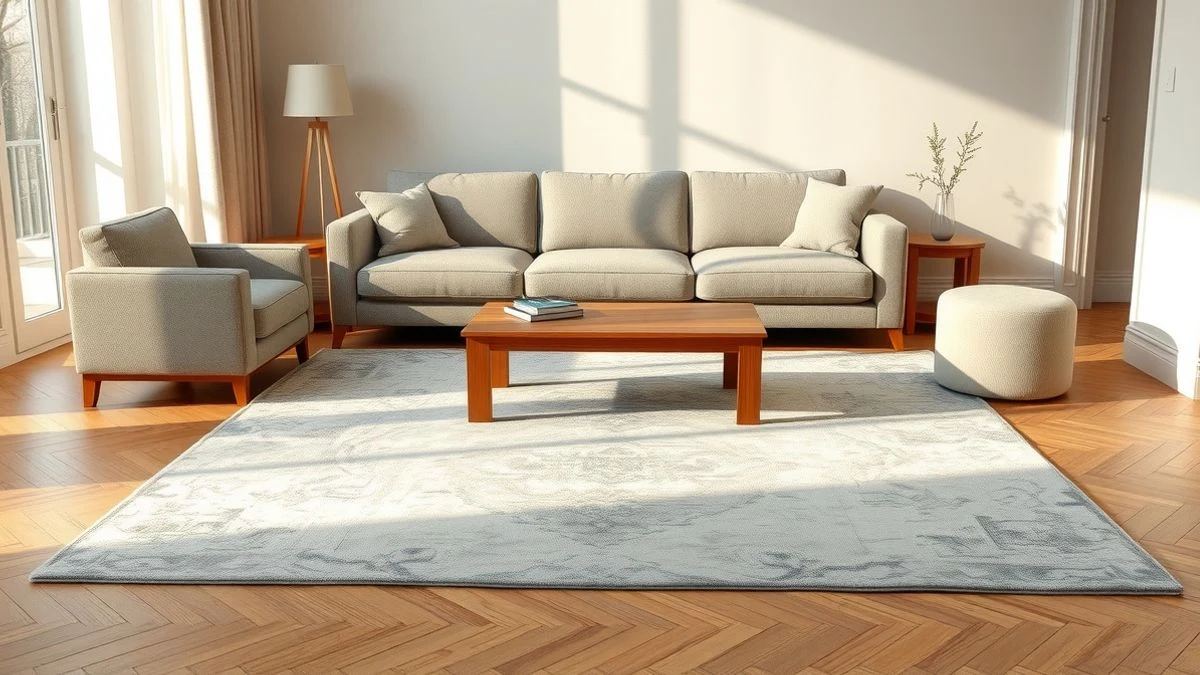
There is another important variable that we sometimes overlook: the depth of the carpet in relation to the furniture. If you place a small carpet just under the sofa, without it extending far enough forward, you create a sense of isolation. The area should unify at least the sofa and the coffee table, ideally also the side chairs. This means the carpet needs to extend quite a bit towards the television or fireplace area.
Another common trap: choosing a square carpet for a rectangular space. Living rooms tend to be more elongated, so a rectangular or landscape-format carpet (even slightly elongated) works better than a perfect square. A square makes everything feel compressed and unbalanced, as if there is a lack of space on the sides.
Specific Measurements for Success
Let’s get to the practical details. For a sofa measuring 2.5 to 3 meters in an average living room, you need a carpet of 200 x 300 centimeters minimum. If your sofa is smaller (2 meters), one of 160 x 230 centimeters can work, but only if the front legs are completely on it. Measure before you buy: place painter's tape on the floor marking the approximate perimeter of the carpet you have in mind. This way, you can see how it will look without commitment.
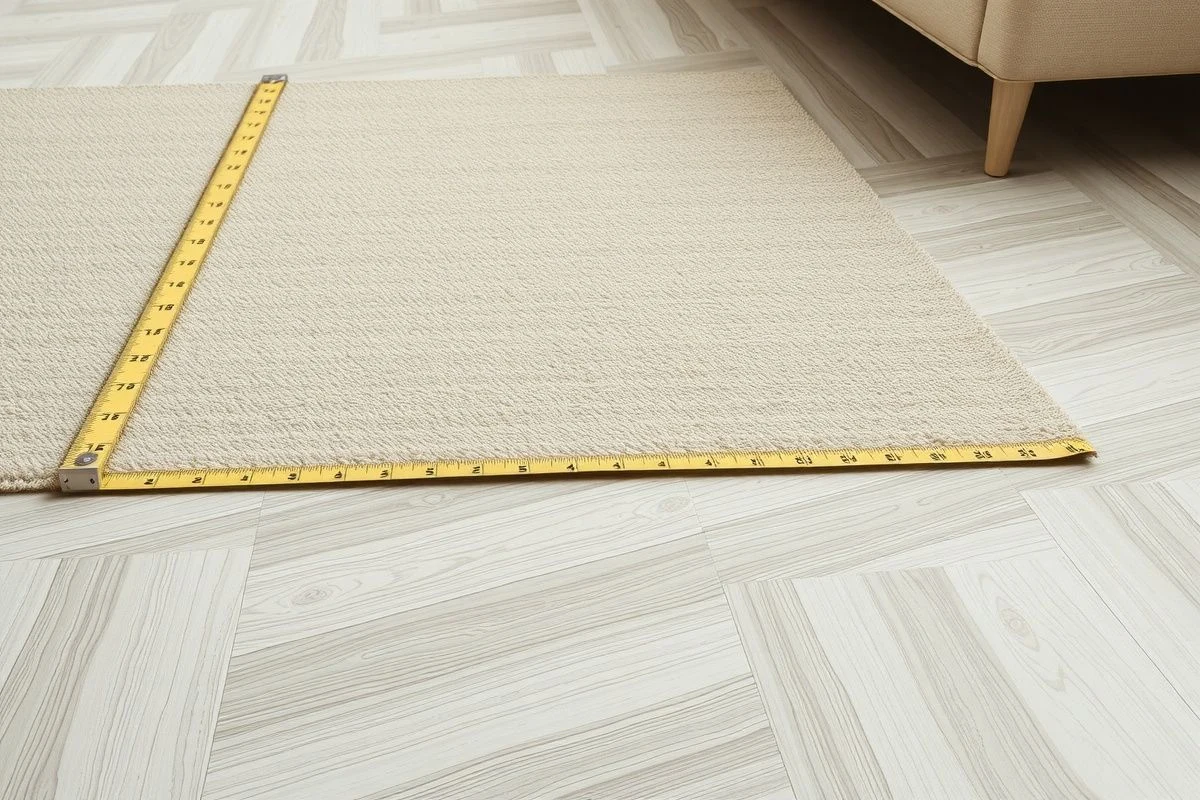
The thickness also matters more than you think. A very thin carpet (less than 1 centimeter) will get crushed under the weight of the furniture and lose volume. We’re looking for something between 1.5 and 2.5 centimeters thick if you have carpet or parquet. If your living room has tiled or polished concrete flooring, you can afford something thicker without the height difference being too noticeable compared to the rest of the house.
Colour and Pattern: More Important Than It Seems
This is where many go wrong: a carpet that is too dark or heavily patterned competes with the furniture instead of anchoring it. If your sofa is already dark (anthracite grey, black, dark brown), a light grey, beige, or cream carpet creates contrast without taking away from the focus. The space breathes.
Patterns work well if they are subtle: a speckled fabric in neutral tones, a texture with light variation, or even a very discreet geometric pattern. But those huge carpets with very bold motifs (large prints, bright colours that don’t match anything) tend to visually consume the living room. We prefer pieces that integrate into the overall palette and let the furniture and decor take centre stage.
The material also changes the perception of colour. A natural wool carpet in beige looks warmer and cozier than a synthetic one in the same shade. If you’re looking for durability in homes with children or pets, quality synthetic materials (good quality polypropylene, for example) offer resilience without losing that natural look we seek. Wash and brush regularly to prevent it from flattening or dulling.
Position: Centered vs. Off-Centered
Most living rooms work better with the carpet slightly centered, not perfectly centered in the room. That is, in relation to the outer walls it can be a bit displaced, but in relation to the seating area (sofa, table, chairs) it should be clearly centered. This is different: we prioritise the furniture arrangement over the geometry of the room.
If your living room has an irregular shape or has a corner with a chair or a shelf, adjust the carpet to include the main furniture. It’s better for a few centimeters of wall to be left out than to leave one leg of the sofa floating. Visual balance matters more than mathematical perfection.
A tip that saved our living room: if you’re torn between two sizes, choose the larger one. A large carpet defines the space as elegant and generous, while a small one conveys fragility and indecision. Budget is a factor, of course, but if you can invest in a good size, it’s worth it.
Finally, don’t forget to check the carpet every three to four months. Rotate it if possible so that the wear is evenly distributed. High-traffic areas (entrance to the room, in front of the sofa) wear out faster. Vacuum regularly and, if you have stains, act quickly: an absorbent paper and warm water solve almost everything if you address the issue the same day.
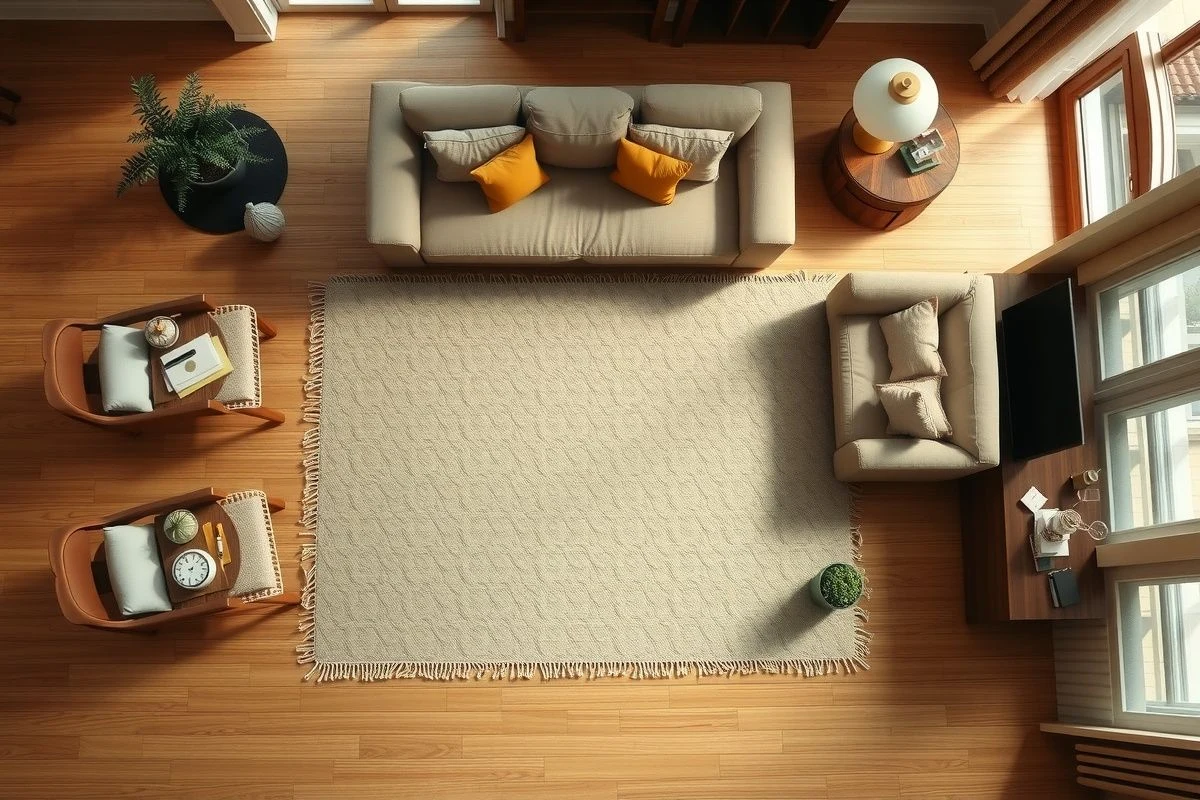
The carpet is not just a decorative object: it is the floor of the living room, the element that visually warms the space and defines where the seating area begins. Placing it correctly is laying the foundations for a cozy, coherent, and well-thought-out space. Now that you know where the mistake lies, you’ll be able to see it in other homes and, most importantly, avoid it in yours.

You may also like