At Casa y Deco, we love to repeat that a home is not defined by its walls, and we know this well because a good portion of our readers live in rentals and write to us with the same complaint: the flat is bright, but the living room looks like a waiting room. So today we get straight to the point and tell you how to decorate a rental flat without renovations without risking your deposit.
The starting point is to accept that many rented homes come with wall colours you would never have chosen, outdated floors, and furniture that doesn't represent you at all. None of that can be fixed by knocking down a wall, and it’s not necessary either. With textiles, light, plants, and a few adhesive tricks, a huge change can be achieved. What is important to clarify from the beginning is what you can change and what you cannot, because that’s where the money is at stake.
Before Touching Anything, Talk to the Landlord
The Urban Leasing Law (LAU) is quite clear in its article 23: if the landlord has not authorised the renovations, they can demand at the end of the contract that the tenant restore things to their previous state. Translated to real life, this means that painting the living room green without notifying can end up costing you part of your deposit.
Our advice is simple: if you want to paint, change a piece of furniture, or put up wallpaper, send a message to the landlord and keep the response. An email saying “okay, paint the bedroom any colour you want” is worth more than any verbal explanation. We confess we learned this the hard way after painting a petrol blue corner without asking. The flat looked beautiful, but the conversation with the owner was quite awkward.
Walls Without Holes: Hooks, Vinyls, and Removable Wallpaper
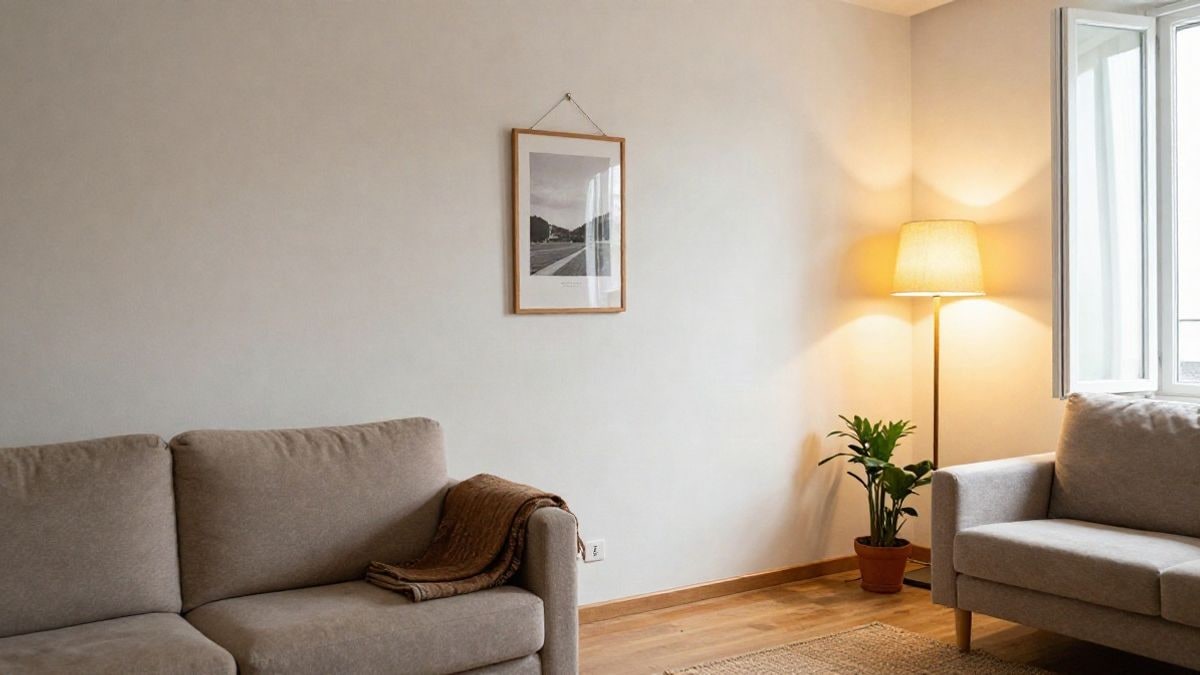
For the walls, there are solutions that leave no marks. Adhesive hooks are great for hanging lightweight pictures, prints, or mirrors, as long as you respect the maximum weight indicated by the manufacturer. If the piece weighs more than two or three kilos, it’s better to lean it against a shelf or sideboard, slightly tilted towards the wall, which gives a very nice informal look.
If the flat has textured walls, don’t complicate things with wallpaper, as the relief prevents it from adhering well. Here, adhesive vinyls are much more forgiving. They can be applied to uneven surfaces, removed without leaving a trace, and come in floral designs, polka dots, or geometric patterns for a child’s room or a hallway that needs character. If your wall is smooth, pre-pasted wallpaper is a great option: it’s applied with water and no tools, and can be removed easily when you leave.
Textiles and Floors: The Cheapest Change in the World
If you could only do one thing, change the textiles. A vinyl or short-pile rug can disguise an old floor and delineate the sofa area in a small living room. As a reference, for a living room of about 20 square metres, a rug measuring 160 by 230 centimetres is usually the most balanced size: ideally, the front legs of the sofa should be on the rug.
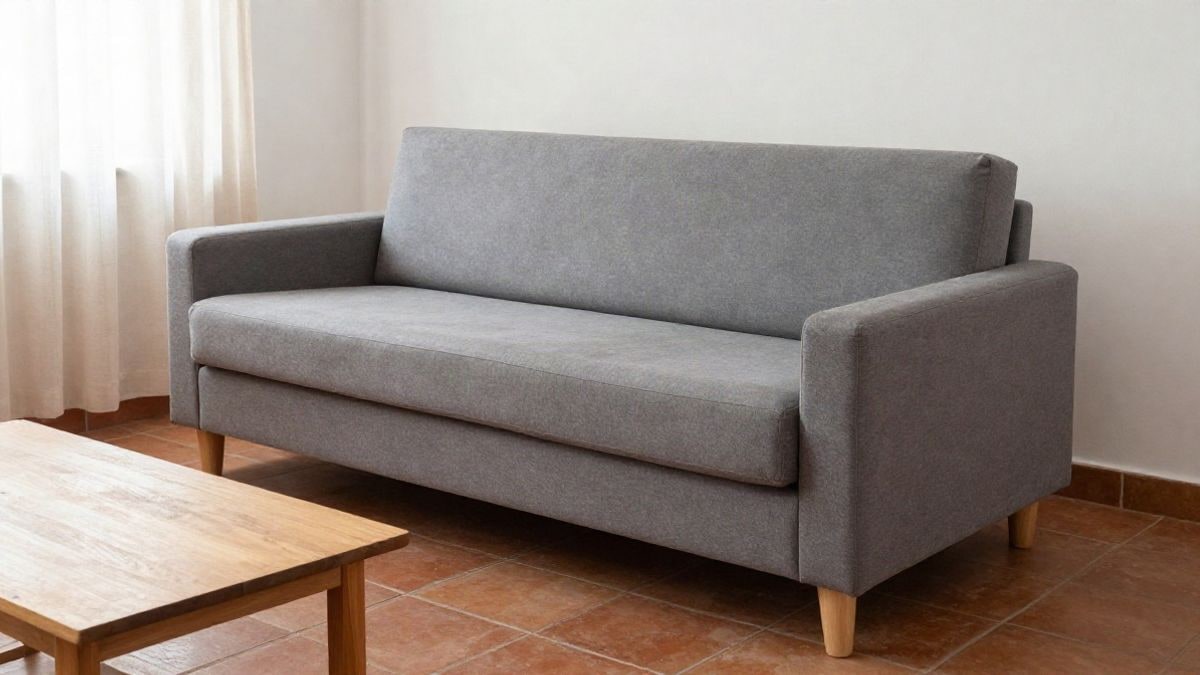
The same goes for sofas. A well-fitted cover and two or three cushions in colours that complement the rug can change the overall aesthetic without touching the furniture. And if the bed is uncomfortable, a topper can solve the problem for less than you might think. Another source of significant change is curtains. Place the rail 10 to 15 centimetres above the window frame to make the room appear taller. It’s an age-old trick that always works.
Here we have to make a small confession: for years we thought the rug was the most important thing, only to discover that the curtains did more for the room. We were wrong, and that mistake cost us much less than a renovation.
Warm Light, the Great Overlooked
Lighting is probably the most underestimated resource when decorating a home that isn’t yours. A ceiling with a cold white spotlight dulls any room. Changing the bulbs to warm light ones, around 2700 kelvins, makes the living room and bedroom feel much cozier at night. It’s a two-minute change and costs just a few euros.
Moreover, floor and table lamps require no installation. If you place one in the corner of the sofa and turn off the ceiling light, the space gains depth immediately. In winter, that low light saved our living room. And if you want a more informal touch, warm light garlands placed on a shelf or headboard look great without nailing anything, using suction cups or clips.
Plants, Details, and a Bit of Order
Plants bring life to any home, but it’s wise to choose species that can survive a busy lifestyle. Pothos, snake plants, and spider plants are very resilient and need no more attention than occasional watering and some indirect light. Place a large one on the floor in a corner and several small ones on a shelf, and the house will look completely different. That said, the plants we’ve killed in our homes are the best argument for not buying ten at once.
For details, the key is not to overload. Books, candles, vases, and travel photos tell who you are. But if each shelf has five objects, the result is visual noise. It’s better to group in odd numbers, leave space between pieces, and rotate what’s visible from time to time. Open shelves and wicker baskets also help to organise without buying new furniture.
Keep the Originals and Take Photos Before You Leave
This is the step that most people skip and the one that saves the most deposits. Everything you replace, keep it: the wardrobe handles, the ceiling lamp, the curtains you didn’t like. Put it in a labelled box and store it in a cupboard or the storage room. When the time comes to leave, putting the originals back will only take you an afternoon.
Also, take photos of the current state of the flat, with the date visible if possible. They are your best proof if any dispute arises about the condition in which you returned it. We’ve seen someone recover part of their deposit thanks to a photo album from the day of handover, and we thought it was a perfect example that prevention is always cheaper.
Furniture You Can Take With You
If you’re going to invest in decorating a rental flat, also think about the next one. A dining table, a sideboard, or a quality lamp can accompany you on your next move. A small side table, for example, can serve as a nightstand in another home, which doesn’t happen with a custom-made piece designed for a specific space.
In summary, decorating without renovations is more a matter of method than budget. Ask before changing anything, choose reversible solutions, take care of the light, invest in textiles, and keep what you remove. A well-decorated flat leaves in the same way it came: with a box of original elements, a roll of tape, and a photo album of the handover.

You may also like