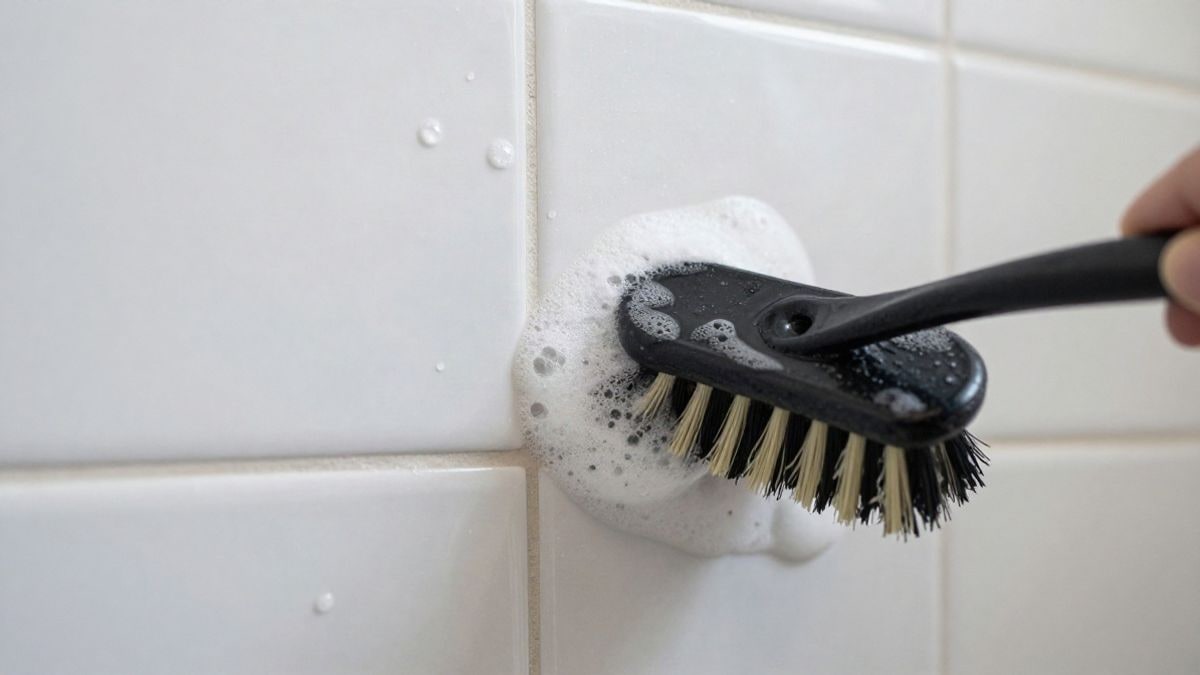
At Casa y Deco, we know that tiles can look immaculate while their grout tells a very different story. These are the spaces we forget in our daily cleaning, but over time, they accumulate dirt, stains, and even mould. The good news is that cleaning tile grout is not complicated if you know the right methods and apply them regularly.
The grout is the vulnerable part of any flooring. While tiles have smooth and compact surfaces, grout is porous, rough, and tends to absorb moisture. This makes it the perfect refuge for dirt, grease, limescale, and microorganisms. In areas like the kitchen, bathroom, and entrance—where there is more foot traffic and exposure to liquids—the problem is even more evident.
The good news is that if maintained regularly, the grout can regain its original appearance. Here we show you how to do it effectively, combining natural remedies and more potent solutions depending on your needs.
The Natural Methods That Really Work
If the grout is not too dark or stained, homemade remedies are your best allies. Baking soda, vinegar, and lemon are inexpensive, safe, and environmentally friendly. I confess that this combination saved my bathroom after several months of neglect.
The most effective formula is to mix three tablespoons of baking soda with two of vinegar and half a glass of warm water. This paste has mild abrasive, degreasing, and disinfecting properties. Baking soda acts without scratching, vinegar removes limescale and leaves a hygienic effect, while lemon (if added at the end) degreases and leaves a fresh scent.
Apply the mixture with a soft-bristled brush, gently scrub in the direction of the grout, and let it sit for about 15 to 20 minutes. Then rinse well with clean water. This method is not aggressive, but it is not the solution for very dark or deeply stained grout. If you see that the dirt does not completely go away, it’s time to move on to more robust options.
When Homemade Remedies Are Not Enough
For stubborn stains, yellowing, or very dark grout, you will need a professional detergent with neutral pH specifically for stoneware and cementitious grouts. These products are formulated to tackle deep dirt without corroding the material.
The important thing is to dilute them exactly according to the manufacturer's instructions and apply them with a microfiber cloth or a soft sponge. Here’s a tip that not everyone follows: avoid hard brushes. Abrasive tools scratch the sealant and can permanently damage the uniformity of the grout. Apply the product, let it sit for the recommended time, and rinse with plenty of clean water.
To keep floors in excellent condition, perform regular cleaning with neutral detergent every two weeks in low-traffic areas. In higher traffic areas like the kitchen and entrance, increase the frequency to once a week to avoid accumulation.
Steam Cleaning: The Most Powerful Solution
If you want more drastic results, steam cleaning is your option. This method uses a combination of heat and pressurised injection to dissolve dirt deposited even in the deepest layers of the grout. The steam reaches up to 170 km/h and a pressure of approximately 4.2 bars, penetrating the pores of the cementitious material without the need for chemicals.
It is especially useful for removing deep grease residues, limescale deposits, and mould. The heat also has a sanitising effect: it kills bacteria and microorganisms. Use a concentrated jet nozzle and a suitable round brush to follow the line of the grout precisely. The movement should be quick and controlled to avoid damaging more delicate seals.
However, adjust the pressure and temperature carefully. A jet that is too powerful or hot can damage the grout, especially if it is new or already weakened. In the case of porcelain stoneware—a resistant and non-porous material—steam cleaning offers excellent results, but always with caution.
Restoring the White Colour of Grout
When the grout has yellowed or has black stains that do not disappear with normal cleaning, there are specific solutions. A paste of baking soda and hydrogen peroxide (3%) is a classic that works. Apply it directly to the grout, let it sit for 15 to 20 minutes, gently scrub with a soft-bristled brush, and rinse well.
Another natural option is a mixture of lemon and salt. Citric acid has natural whitening properties, and salt adds a mild abrasive effect that removes surface stains. For very stubborn dirt, professional whitening products work quickly, but use them exactly according to the manufacturer's instructions.
Special Care with Mould
Mould is a common problem in bathrooms and damp spaces. It is not only unsightly: it can affect the health of people with allergies or weakened immune systems. To eliminate mould, you can apply cleaning alcohol (isopropyl) with a brush or cloth and let it evaporate. If you prefer to bleach while eliminating the fungus, 3% hydrogen peroxide is effective.
Soak a paper towel in the solution, place it over the grout, and let it sit for half an hour. Then rinse with plenty of water. If the mould has penetrated deeply into the material, unfortunately, the only solution is to replace the grout.
To prevent: ventilate regularly, dry wet surfaces after showering, and keep humidity under control. An air extraction system also helps a lot.
What to Avoid When Cleaning Grout
Not all mistakes are the same, but some cause more damage than help. Avoid aggressive products unless absolutely necessary: they can corrode the material and permanently alter the colour. Hard brushes and abrasive tools scratch the sealant. Also, do not clean too frequently using inappropriate detergents: chemical residues tend to attract even more dirt over time, worsening the overall appearance of the floor.
If you have silicone grout (typical between the sink and the tiled wall), treat it with special care. They are much more sensitive than mortar grout. With steam, just steam without scrubbing, because mechanical movements can easily damage the surface. If mould has penetrated a silicone grout, it is often more economical to replace it than to try to clean it thoroughly.
Keep Up the Routine to Avoid Problems
The key is prevention. Regular ordinary cleaning with mild detergents and microfiber cloths keeps the grout in good condition and prevents the accumulation of dirt that later becomes difficult to remove. If you dry fresh spills immediately—whether they are water splashes, food remnants, or dust—you prevent them from settling into the grout and creating permanent stains.
At Casa y Deco, we have found that dedicating 10 minutes to preventive cleaning each week is much easier than tackling blackened grout after months of neglect. This way, your floor maintains that bright and cared-for look from day one, and your tiles always look as you wanted.

You may also like