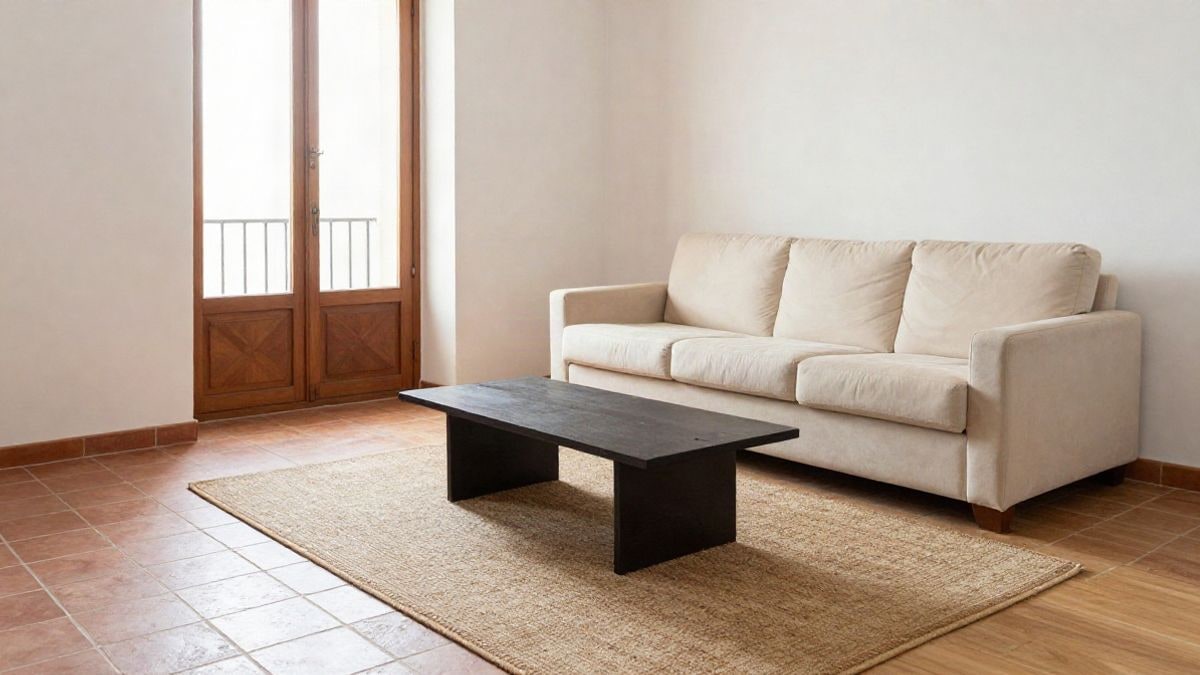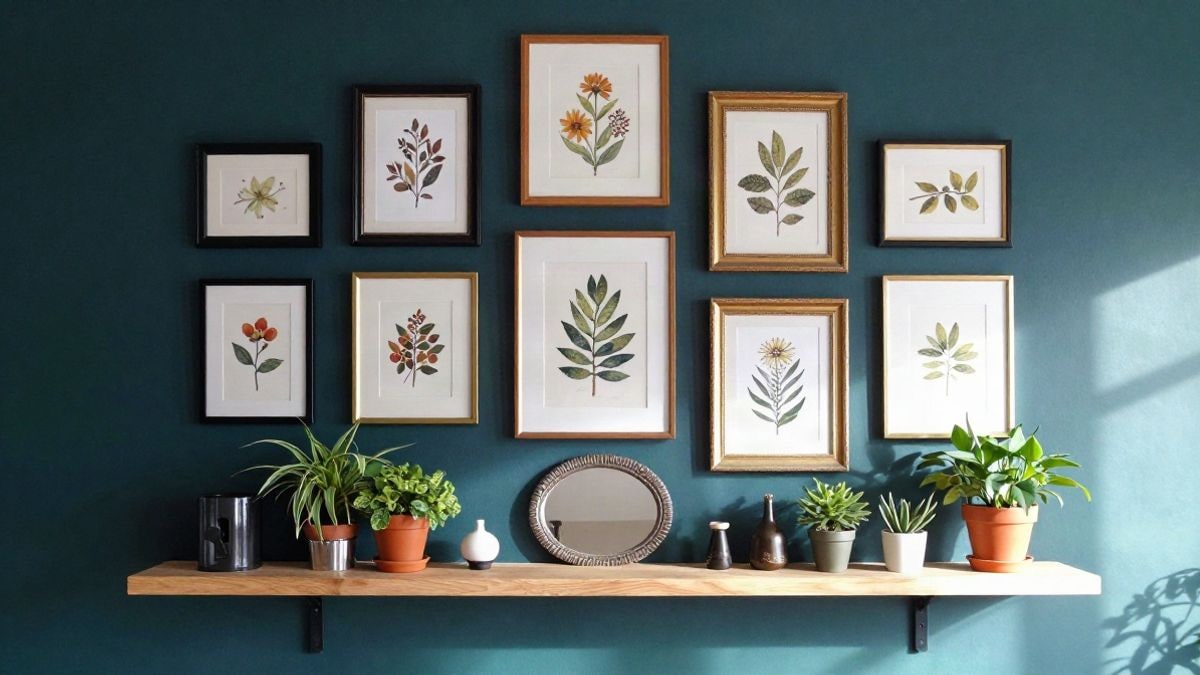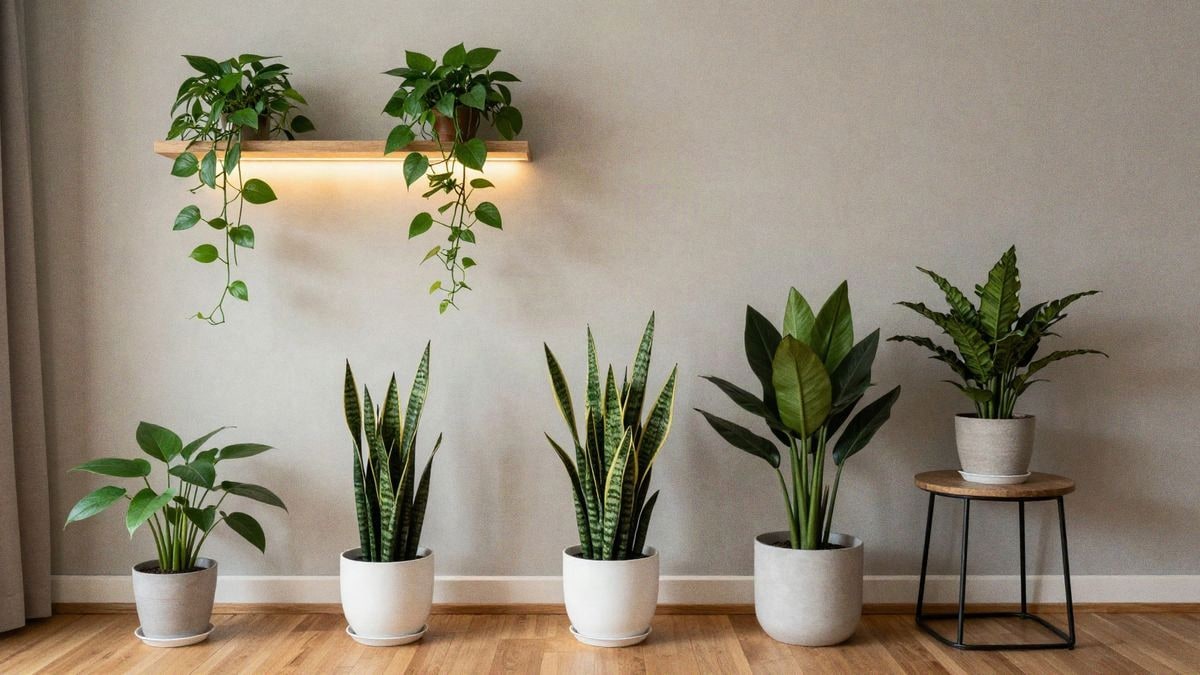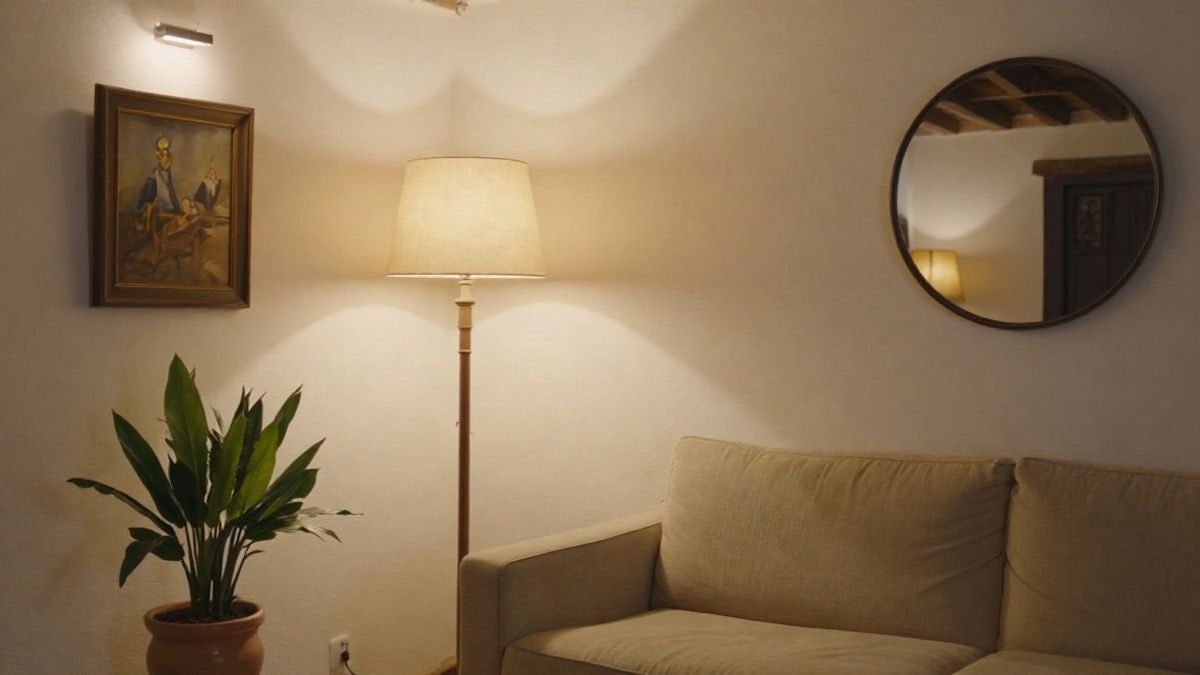
How to light a living room without natural light is one of the most common queries we receive at Casa y Deco, and it makes sense: when the sun doesn’t shine in anywhere, the space becomes flat, cold, and a bit sad, even if you have a great sofa and a rug you love. The good news is that you don’t need a renovation to change it. With a good lighting strategy, a few well-placed light sources, and some attention to colours, a dark living room can feel cosy, spacious, and even more beautiful than one with huge windows.
Why a Windowless Living Room Looks So Dull
Natural light does two things at once: it illuminates and brings materials to life, as it changes throughout the day and highlights textures. When it’s missing, the eye seeks contrast and finds it in the wrong places. A ceiling with a single central light leaves the corners in shadow, the walls appear grey, and the furniture seems to float without identity. Many people believe the problem is the amount of light, but it’s almost always about its distribution.
Before buying anything, it’s wise to do a little diagnosis. Turn on the main lamp, turn off the rest, and observe which areas remain dark. Then, count how many light points you have and at what height they are. In most small or medium-sized living rooms, having two or three well-distributed light sources achieves more than a huge ceiling fixture in the centre. That exercise saved us more than one disappointment, as we once bought such a beautiful ceiling lamp that it covered half of a wall lamp and left the sofa in shadow.
The Three Layers of Light Every Living Room Needs
Lighting professionals work with three layers: general or ambient light, task light, and accent light. When a living room lacks natural light, this combination stops being a luxury and becomes the foundation of everything.
The general light is what fills the space evenly. It can come from a ceiling with recessed spotlights, from a diffuse ceiling fixture, or from several floor lamps directed towards the ceiling. For a living room, a reasonable reference is around 100 to 150 lux of general lighting, enough to move around comfortably without it feeling like an office.
The task light is used for reading, working, or doing crafts. A floor lamp next to a reading chair or a table lamp on the desk covers this need. Here, it’s advisable to raise the level a bit, to around 300 lux on the work surface, and place the light source at shoulder height to avoid shadows on the paper or screen.
The accent light is what shapes the space. A spotlight directed at a painting, an LED strip under a shelf, or a lamp illuminating a plant create depth. This layer is what a dark living room misses the most, because without it, everything has the same visual weight and the room seems smaller.
Colour Temperature: The Detail That Changes Everything
If there’s one decision that influences the atmosphere more than any other, it’s the colour temperature. It’s measured in kelvin and ranges from very warm tones, around 2700 K, to cool lights exceeding 5000 K. In a living room without natural light, the rule that has worked best for us is simple: between 2700 K and 3000 K for resting areas, and if you need more clarity, go up to 3500 K only in the work area.
A very common mistake is mixing bulbs of different tones. A floor lamp with cool white light next to a spotlight with yellowish light creates a sense of disorder, even when there’s enough light. Check the packaging or the technical sheet of each bulb and ensure they match in kelvin. It also helps to choose a colour rendering index (CRI) of 90 or higher, especially if you have textiles or wood with shades, because this way the colours appear as they truly are.
Intensity also matters. Installing a dimmer switch on the main circuit is one of the cheapest and most effective improvements. With the light at 60 or 70 percent at night, the living room gains warmth without needing to change anything else.
Colours and Finishes That Work in Your Favour
Without natural light, paint becomes an ally. Very dark colours absorb light and make the space smaller, so it’s not advisable to paint a windowless living room black or anthracite grey on all walls. Warm tones with a hint of brightness, such as sandy beiges, off-whites with a yellow undertone, or very pale greens work well. If you want something more intense, paint just one wall, usually the one at the back, and leave the rest in a light tone.
The finish also influences. A matte paint absorbs light and distributes it softly, but reflects little. A satin or eggshell finish reflects more, thus improving brightness without dazzling. For the ceiling, a matte white is recommended, so it doesn’t compete with the lamps.
Reflective materials are another great resource. A large mirror facing a light source multiplies the effect of the lamp, as long as it doesn’t reflect a messy corner. Shiny finishes on hardware, polished metal lamps, or clear glass also distribute light. However, don’t overdo it: three or four well-chosen shiny surfaces are worth more than a scattered dozen.
Common Mistakes to Avoid
We readily admit that we’ve made almost all these mistakes, so we share them so you don’t fall into the same traps. The first is placing the sofa with its back to the only lamp, which leaves the reader in their own shadow. If the sofa is against the wall farthest from the light, move the floor lamp to its side, about 40 centimetres from the backrest, and you’ll see the difference immediately.
The second is using opaque or very dark shades on floor lamps. A beige fabric shade lets warm, diffuse light through, while a black one concentrates the light downwards and leaves the ceiling in shadow. If your goal is to illuminate the whole, choose light and translucent shades.
The third is filling the walls with solid shelves or tall furniture without leaving gaps for light. A wall completely occupied by a floor-to-ceiling piece absorbs a lot of brightness. If possible, leave an open shelf or install an LED strip at the bottom of the modules to illuminate from below.
Plants, Textiles, and Small Details
Plants not only bring life; they also visually brighten a dark space. However, they need light to survive, and in a windowless living room, the key is to choose shade species like pothos, sansevieria, or aspidistra, and water them moderately. If you want a larger plant, place it next to an accent light that illuminates it for a few hours a day, even if it’s artificial.
Textiles also count. Light linen curtains, cream-coloured cushions, or a short-pile rug in soft colours bring warmth back to the space. One detail we love is placing a table lamp on a dresser or sideboard, at eye level when seated, as it creates an intimate light point that invites you to linger.
Finally, don’t forget about tidiness. A living room with tables full of papers and visible cables appears darker than it is. Tidying up, hiding cables behind furniture, and keeping surfaces clear allows light to circulate better and gives the eye a rest.
A Simple Plan to Start This Month
If you have to choose where to start, our recommendation is clear: add a floor lamp with a light shade next to the sofa, change all the bulbs to 2700 K with a high CRI, and install a dimmer on the main switch. With these three actions, most windowless living rooms go from feeling cold to looking like another room, and the cost is around one hundred to two hundred euros depending on the lamps you choose.
After that, you can add layers, a well-placed mirror, or an accent light over a painting. Lighting a living room is a process of small adjustments, and each change is noticeable. Start with what bothers you the most today and observe how the space responds at night, when the results are most appreciated.

You may also like