At Casa y Deco, we love talking about sofas because, let's be honest, it's the piece of furniture we spend the most time looking at before buying and the one we want to get right the least. Yet, time and again, we see people making the same mistakes that later sour their living room for years. So today, we are going to lay out those silent errors that almost no one acknowledges but that we end up paying for dearly.
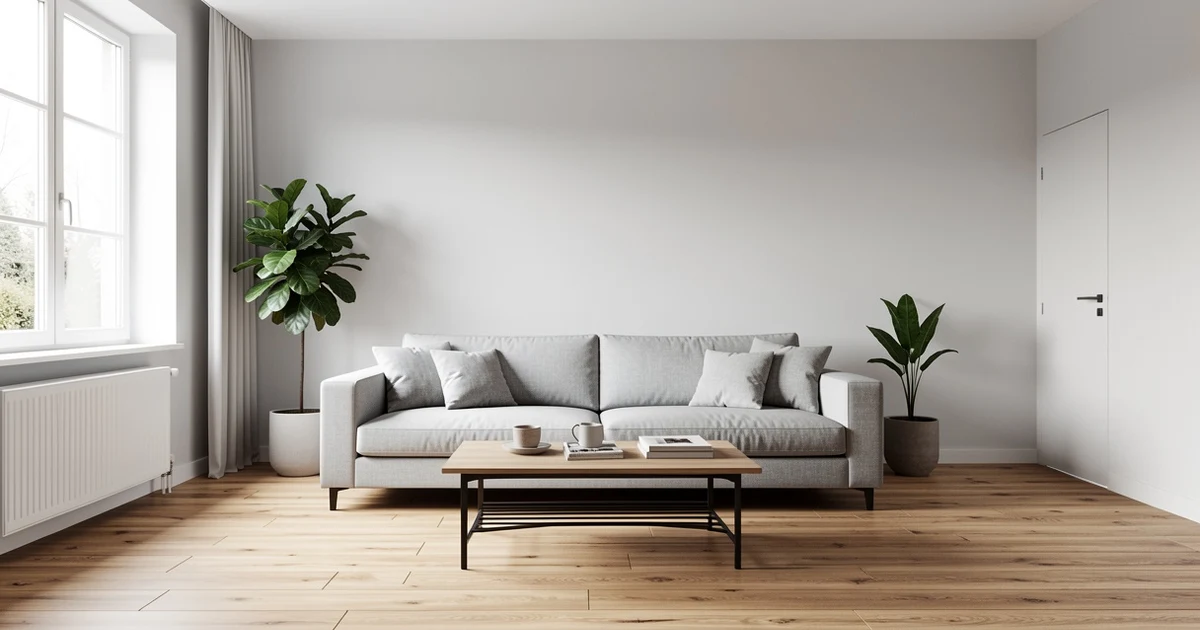
The first mistake is not measuring the space correctly. I confess that this happened to me recently: I walked into a store, saw a beautiful sofa, checked that it fit through the door of my house and... I didn't even bother to verify if it left space for the coffee table or if it blocked the way to the kitchen. The sofa arrived, and I discovered that it was too close to the window, blocking natural light, and that to get to the kitchen we had to navigate around the cushions. The lesson is brutal: before buying, measure three times. The width, the depth (this is critical: many sofas take up more space than they seem), the height of the arm, and of course, how much space is left free in all directions. About 80 centimetres from the sofa to the coffee table is ideal; from the sofa to the opposite wall, at least one and a half metres so you don't feel like you're in a box.
Ignoring the Height of the Backrest and Arms
Here comes another classic: choosing a sofa without considering how it visually integrates with the rest of the room. A backrest that is too high can block the view from other areas of the house, make the living room darker, and create an unnecessary feeling of weight. The arms also matter more than they seem. If they are too high and bulky, they reduce functionality (how do you place a tray? A cat?) and can unbalance a small space. We prefer backrests between 75 and 85 centimetres for standard sofas, and medium arms that allow you to rest your arms without sacrificing practicality.
Colour is another minefield. It's not that dark tones are bad, but many people choose them thinking about cleanliness and then discover that the living room looks like a cave. Neutral greys look good in the store, but under your home lighting they can seem cold or depressing. We recommend taking fabric samples home, leaving them for a few days under your actual lighting (both day and night), and seeing how they behave with the rest of your walls and furniture. A warm beige sofa can be your best ally if you have a bright living room; that same beige in a small, dark room becomes a visual disaster.
Forgetting About Materials and Maintenance
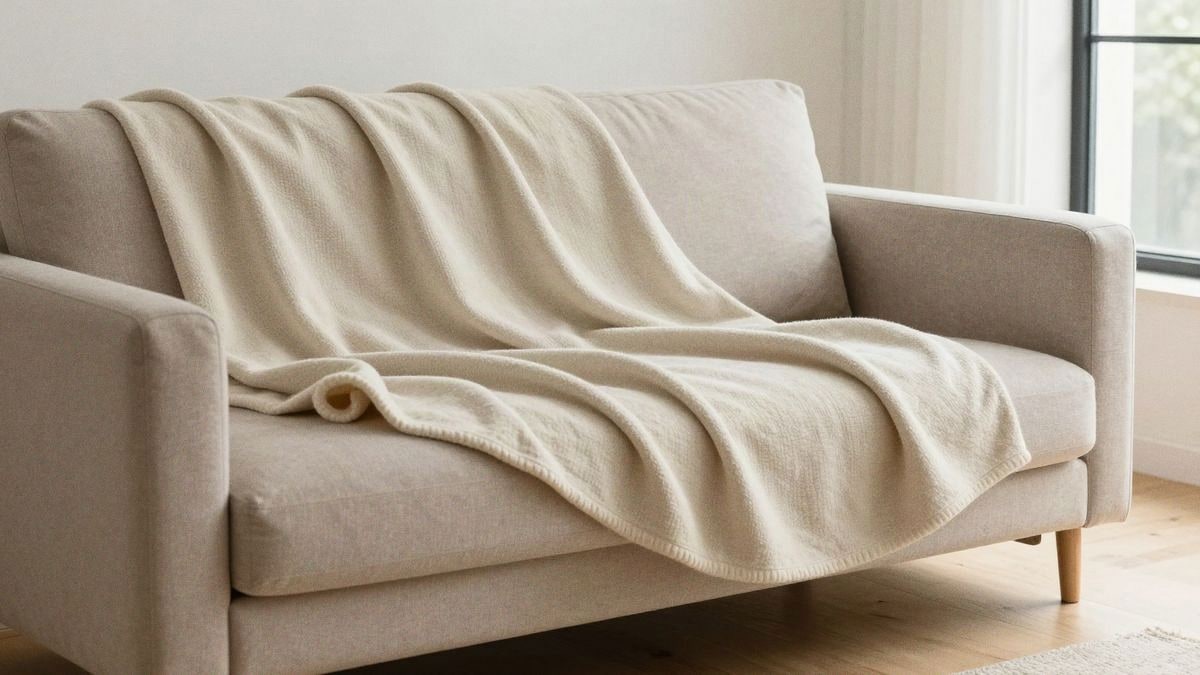
This is where the reality of day-to-day life comes into play. Many people choose fabric because "it looks nicer" without asking themselves if they will be constantly washing cushions or if children and pets will turn it into a battlefield. Leather requires specific care. Synthetic fabrics trap dust. Velvets are beautiful but impractical if you have two dogs. We always say that the best sofa is the one you can maintain without stress. If your life is chaotic (and whose isn't?), a durable, machine-washable fabric in colours that disguise dirt is your best friend. Look for certifications like Sunbrella if you have pets or small children; those fabrics really hold up.
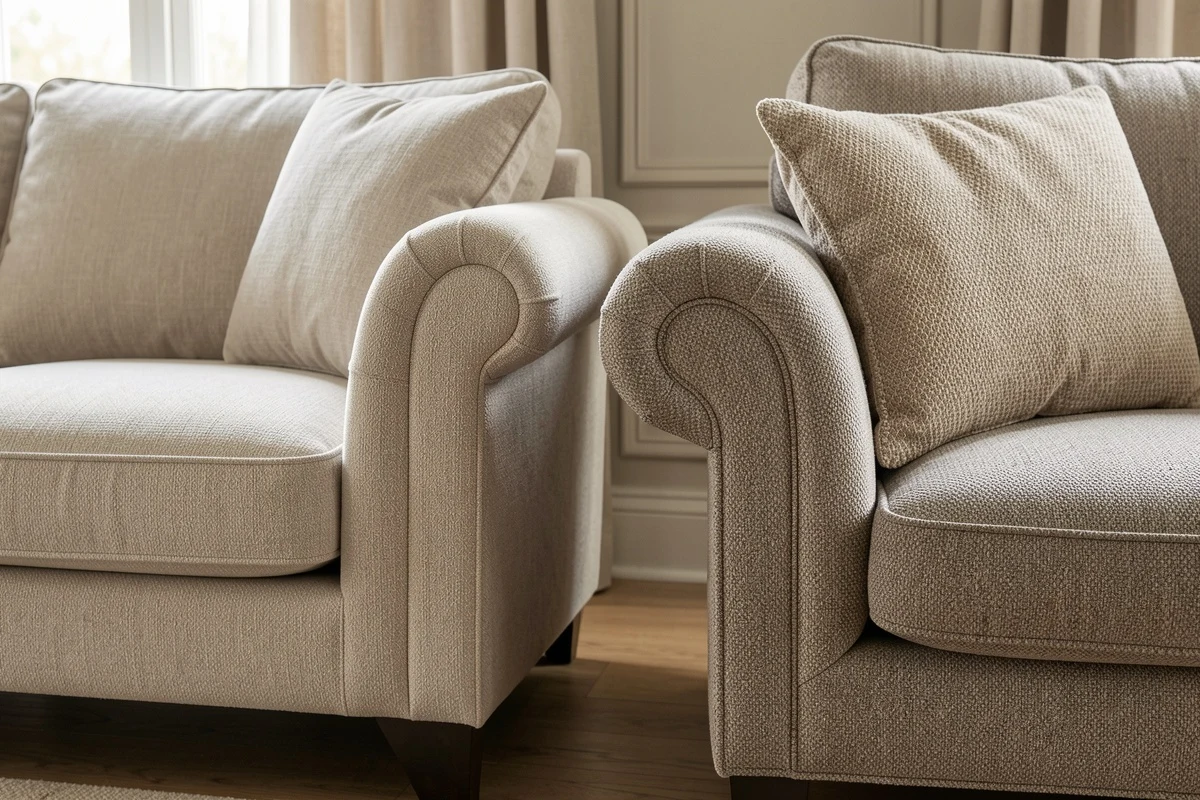
The matching armchair issue is another classic mistake. You don't need everything to match perfectly. A grey sofa with an armchair in another tone, texture, or even style can be much more interesting and personal than the flat set solution sold together. Sometimes it is more expensive to buy separately, yes, but you end up with a living room that feels much more "you" and less like a catalogue.
Not Considering the Seat Composition
This is what no one sees but everyone feels. A beautiful sofa that is uncomfortable is a failure. The height of the seat cushion (between 40 and 45 centimetres is standard), the firmness of the filling, and the depth matter a lot. If you are short, a very deep sofa will force you to stretch your legs without support. If you are tall, you need more depth to avoid being on your knees. Memory foam fillings age better than pure polystyrene, which flattens in months. And here comes what they don't tell you in the store: sit on the sofa in person for as long as possible before buying it. Not for two minutes; change positions, lie down if you can, see if the arms allow you to place a cushion behind you to read comfortably.
Another mistake that deserves its own paragraph: not checking the dimensions of modular pieces or chaise longues. Many people buy a modular corner sofa and later regret it because, once assembled at home, the passage is blocked or the layout doesn't work as they imagined. Measure the available space, draw a scale diagram, and be honest with yourself about whether you really need that chaise or if a straight sofa with a pouf next to it would be better.
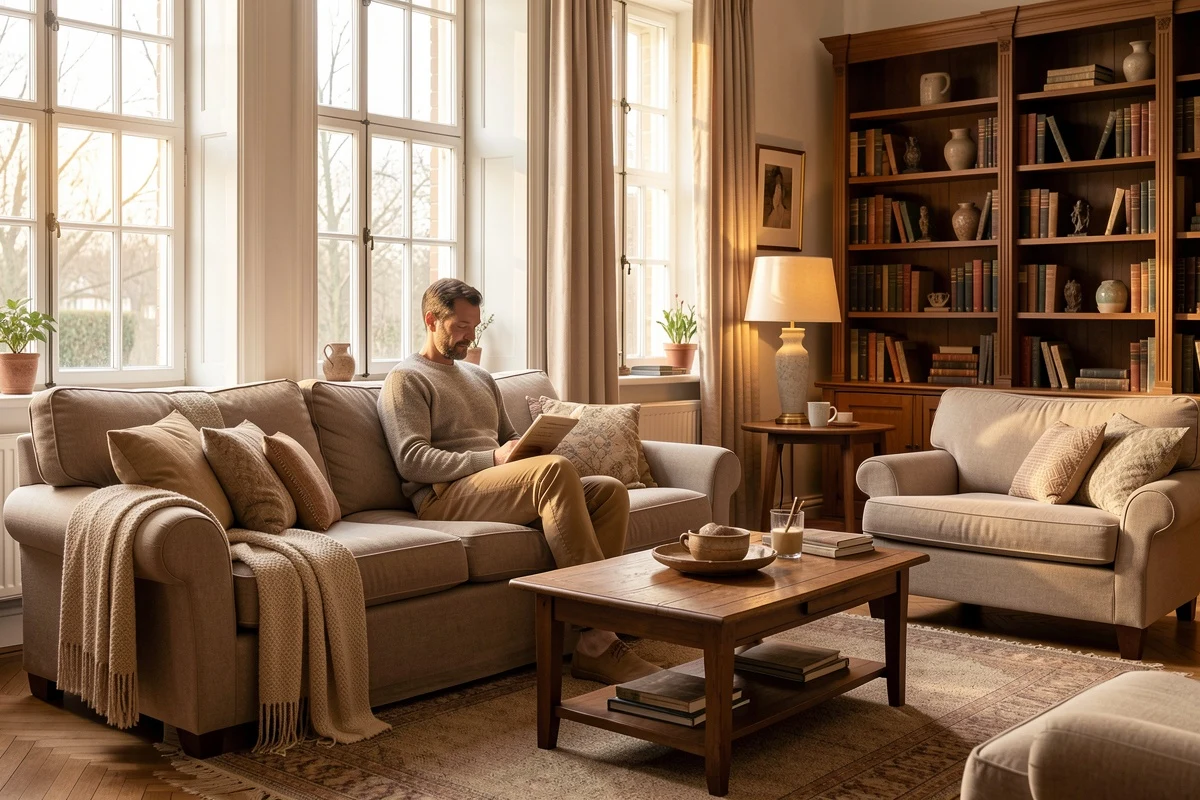
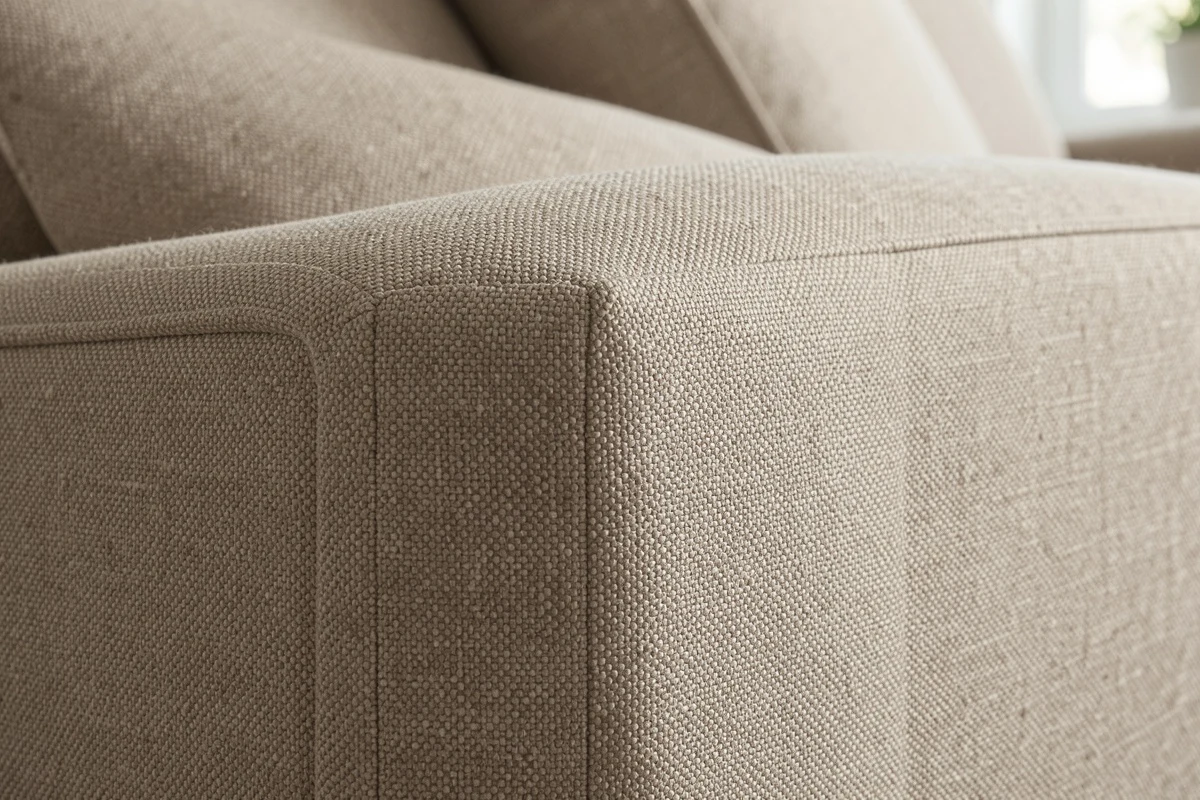
Finally, the temporal error: not thinking about the lifespan. We are used to changing furniture every five to ten years, but a quality sofa should last you between 10 and 15. That means choosing a colour and style that won't cause you visual fatigue in two years, a material that can be cleaned without degrading, and a structure that withstands the test of time. Yes, it costs more money. But it's money you invest in making your living room comfortable, beautiful, and functional for years, not an expense that haunts you with regret every time you sit on it.

You may also like