At Casa y Deco, we love a good headboard. Not only because it serves a practical function (protecting the wall and creating a cozy resting area), but because it is that element that transforms a bedroom from "bed against the wall" to "bedroom with character." And here’s the good news: you don’t need to be handy to get one that looks really cool.
What we’ve discovered is that the best headboards are often the simplest, and half of them don’t even require a drill, nails, or a welder. Just a bit of creativity, accessible materials, and DIY labour. I confess that years ago I made the mistake of thinking that a good headboard had to cost a fortune or require a professional carpenter. Spoiler: I was very wrong.
Fabrics and upholstery: the most accessible solution
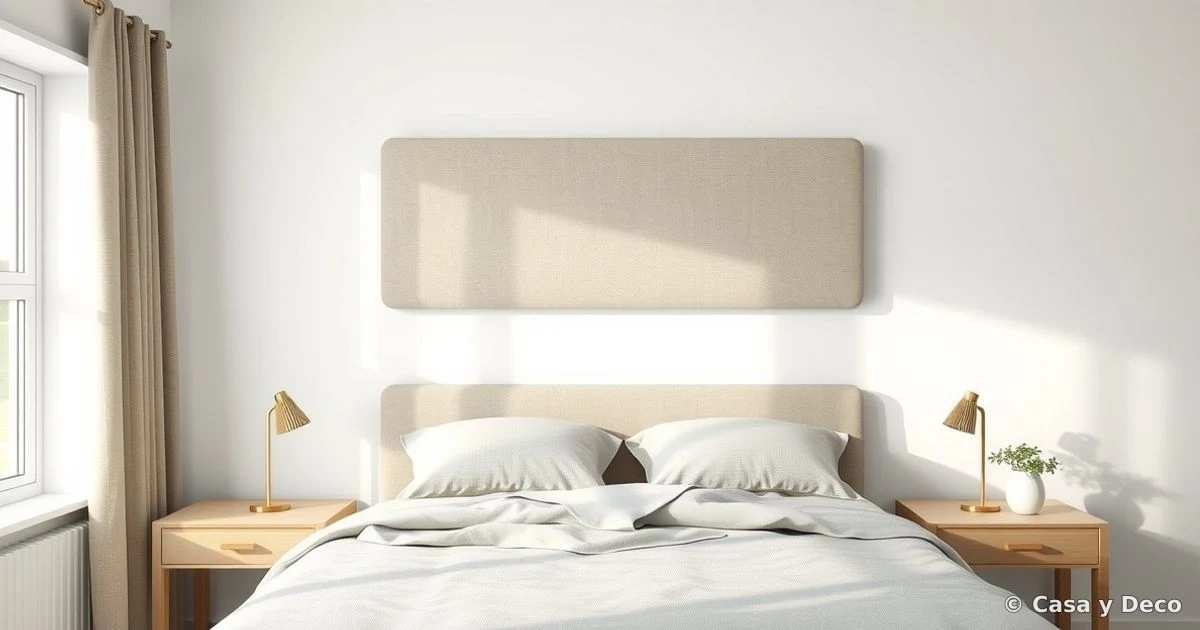
If there’s one thing that always works, it’s a fabric headboard. Look for a wooden frame (these can be old picture frames, discarded interior doors, or thin plywood sheets) measuring between 150 and 180 centimeters wide by 120 high. Cover the inside with foam of 5 to 10 centimeters of medium density, which you can find at upholstery shops or online at very accessible prices.
The fabric is what makes the difference: choose one that holds up well (linen, thick cotton, or blends with polyester work well) and that matches your colour palette. We are fans of neutral tones for headboards (beige, light grey, off-white) because they last for years without looking outdated. Secure the fabric with an upholstery stapler: it’s easier than it sounds, and anyone can do it without prior experience.
To mount it on the wall, two sturdy anchors are enough. If your bedroom has a lot of emotional weight in the headboard (let’s say, a prominent headboard wall), invest in good quality plugs that can hold between 50 and 80 kilos. The result is clean, elegant, and completely customisable.
Panels and cladding: without a screw
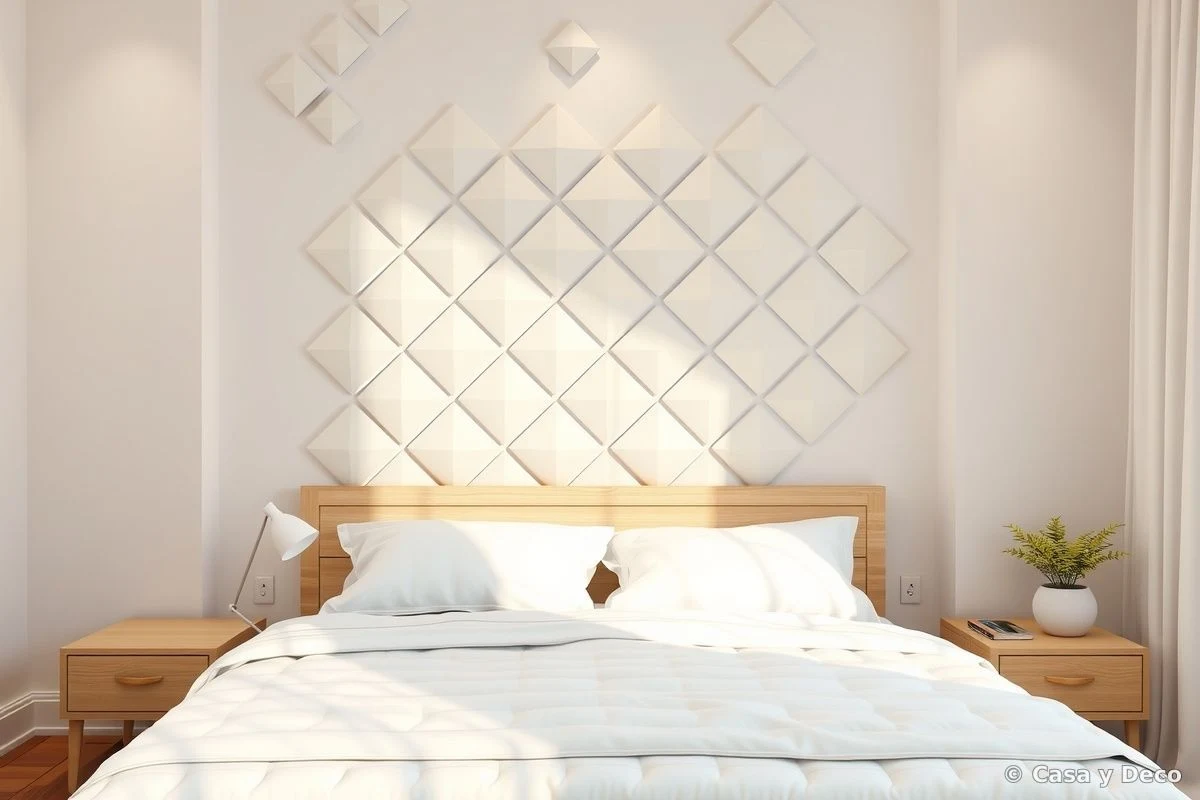
Here comes one of our favourite tricks: polystyrene or MDF panels. There are adhesive panels that stick directly to the wall, without the need for power tools. Choose a geometric pattern (diamonds, hexagons, lines) and cover the area where the headboard would go, or the entire headboard wall if you want something more enveloping.
The panels come in white or grey, but you can paint them with a roller any colour you like. From a deep blue to a warm terracotta, everything works. Installation takes a couple of hours in a standard room, and the result looks magazine-worthy without having broken a wall.
A sincere tip: measure well before buying. It’s easy to get proportions wrong and end up with a headboard that looks smaller than it is. We recommend that the headboard occupies at least from the middle of the bedside table upwards, ideally up to the ceiling or close to it, to create height and visual spaciousness.
Wood and reclaimed wood
If you prefer a more natural and warm look, wood is your ally. You can use solid pine boards (cheap and very versatile), reclaimed wood from old doors or furniture, or even scaffolding planks that are now sold in stores. Place the boards vertically, create a pattern (all the same, or mix thicknesses and tones), and secure them to the wall with anchor plugs.
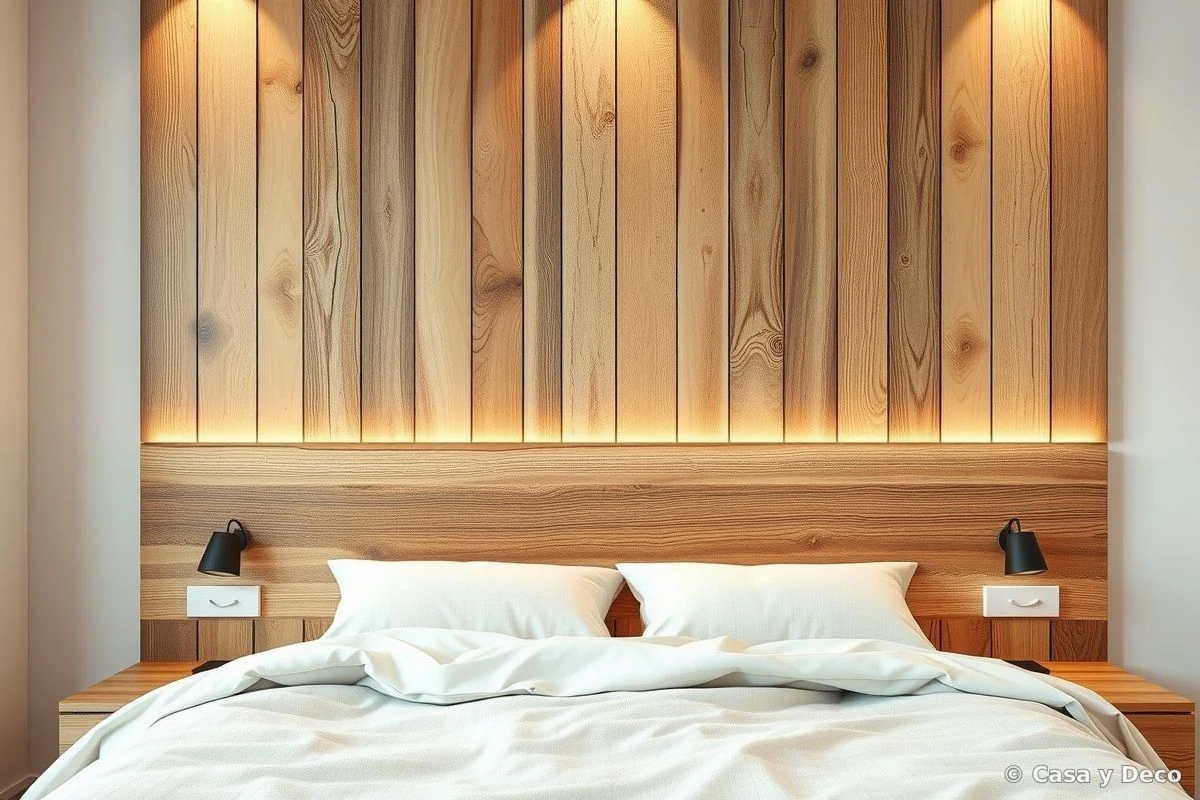
The beauty here is the variety of finishes you can achieve: untreated natural wood for a rustic look, painted white for a Nordic style, or stained grey for something more contemporary. Measure the total width of your bed (a 140-centimeter bed will need a headboard of at least 150-160 to look proportional) and the height according to your taste: we believe that 120-140 centimeters high is the sweet spot.
Mirrors and reflective elements
Here comes one of our coolest tricks: using mirrors as a headboard. They not only decorate but also visually expand the space and reflect natural light. You can mount a large bevelled mirror panel or create a mosaic with mirrors of different sizes and shapes.
The advantage is that it doesn’t require upholstery, painting, or structural complications. Wall mirrors adhere with quality silicone glue or are fixed with discreet metal brackets. That said, choose mirrors of decent thickness (6-8 millimeters) to avoid breaking due to bed movement or temperature changes.
A warning: not everyone loves waking up looking at their dishevelled face in a large mirror. I confess I don’t either. But if you think it’s magnificent, go ahead. The visual effect is spectacular in small bedrooms.
Wallpaper and decorative vinyls
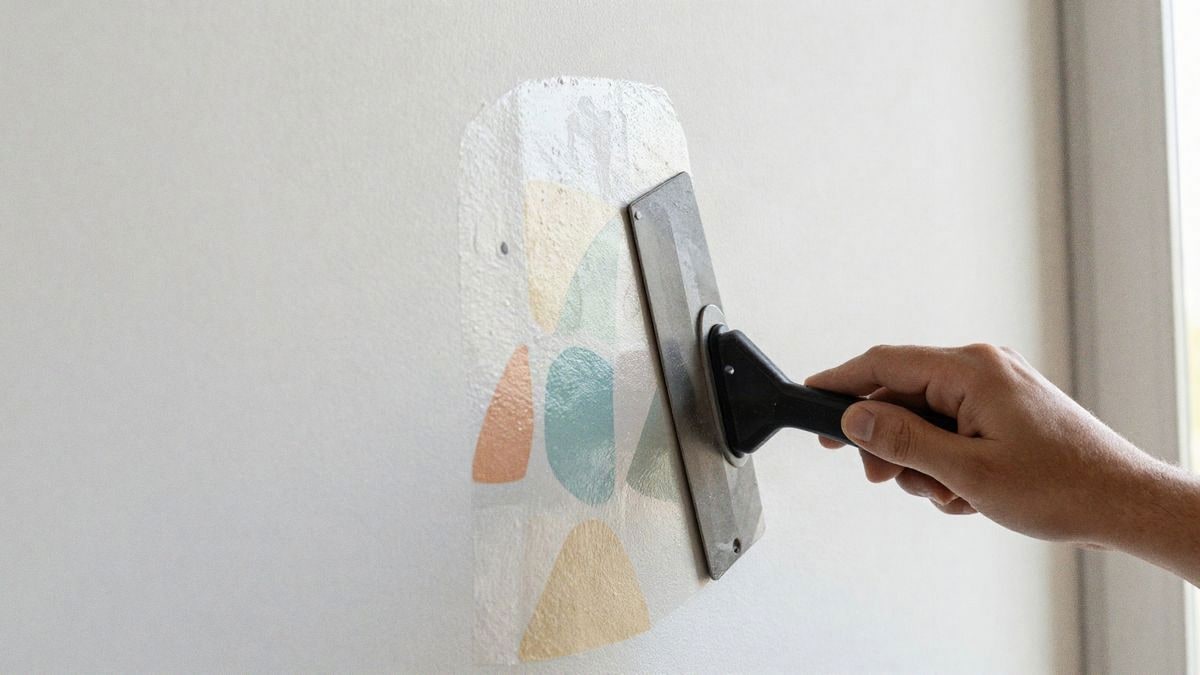
The quickest and most reversible solution is wallpaper or vinyls. Apply textured wallpaper, with a geometric or botanical pattern right in the headboard area, and create a headboard effect without touching wood or making holes (well, almost). The paper sticks directly to the wall with standard adhesive.
We are fans of wallpapers with a soft relief or satin finish: they attract different light and create visual depth. A pattern of large leaves in sage green, geometric lines in ochre, or a classic damask in grey: each style has its paper. The advantage is that changing is a matter of peeling and reapplying.
Measure from the bed upwards: a height of 100 to 120 centimeters of wallpaper just behind the headboard is usually proportional. If you want to take a risk, apply it all the way up to the ceiling.
Hanging textiles: curtains and blankets
Here comes something you might not expect as a "headboard," but it works. Hang a thick curtain, a tapestry, or a large blanket from an iron or wooden rod installed on the wall. Linen canopies, woven tapestries, or even thick cotton blankets create a soft and very cozy headboard effect.
It’s perfect for boho, rustic, or transitional bedrooms. The rod is fixed with two sturdy brackets (at least 20 kilos of load each to be safe), and you just have to hang the textile. Plus, you can change the fabric according to the season without touching any part of the structure.
A small bedroom will appreciate this solution because it is visual without taking up physical space. And if your rental doesn’t allow large holes, this is pure gold: just two 8-millimeter plugs and you’re done.
Plants and nature
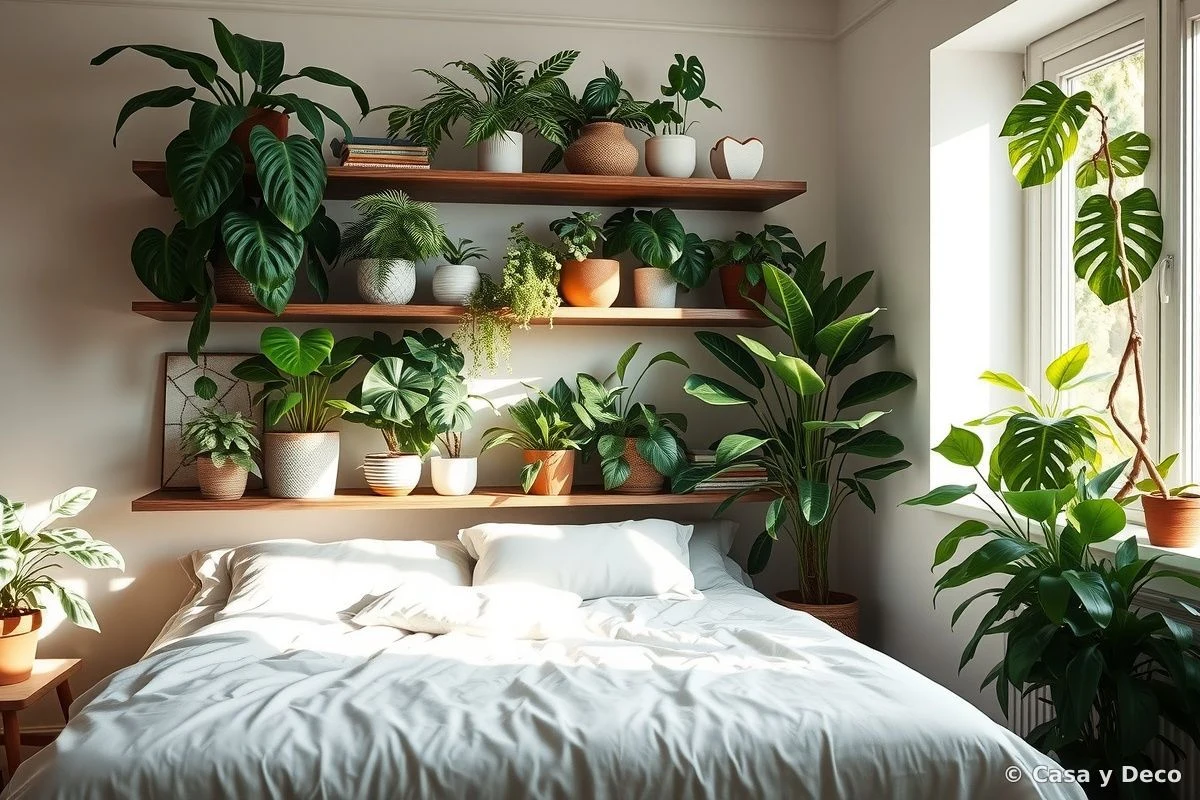
The trend of green headboards is real, and it’s well thought out. Mount floating shelves or wooden supports in the headboard area and fill them with large-leaved plants (monstera, philodendron, pothos). The effect is natural, refreshing, and much easier than it seems.
The shelves are fixed with anchors to the wall (nothing complex), and the plants just need watering and some light. We’d say it’s one of the most lively headboards out there, literally. Just keep in mind that you’ll need a wall with decent natural light or be willing to set up some ambient lighting.
Three 60-centimeter-wide shelves arranged vertically is a winning configuration. Combine plants of different heights, textures, and shades of green to create visual movement. Maintenance is minimal if you choose resilient species.
What really matters
In the end, the magic of a good headboard isn’t about how much it costs or how much skill you need. It’s about making you feel good every time you enter your bedroom. We’ve seen headboards for 50 euros that look magazine-worthy, and expensive headboards that are as boring as a math class. The difference is the thought behind it.
Choose materials that speak to you, colours that calm you, and a scale that respects your space. If you have doubts, start with the most reversible options: wallpaper, hanging textiles, or adhesive panels. That way, if you change your mind (and trust me, sometimes you do), neither your heart nor your wallet will cry. And if it goes well, you’ll have your movie headboard. Without being handy, without drama, and with all the pride in the world.

You may also like