At Casa y Deco, we love observing how decorative styles evolve and transform according to our emotional needs. A few years ago, perfection was the goal: impeccable furniture, spotless walls, everything must shine and look new. Today, however, we see our readers gravitating towards something completely opposite: the beauty of the imperfect, the worn, the authentic. Wabi Sabi, an ancient aesthetic philosophy of Japanese origin, is gaining ground in Spain by leaps and bounds.
What does Wabi Sabi actually mean? It is, in essence, finding beauty in imperfection, in the ephemeral, in the marks of time. Wabi evokes solitude, austerity, stillness; Sabi, on the other hand, refers to the charm of old age, to the patina of time passing. Together, they form a philosophy that celebrates the natural, the humble, and the incomplete. It is not, by any means, a dirty or careless style, but quite the opposite: it is an invitation to live with fewer things, but for those things to be deeply meaningful.
I confess that when I started studying Wabi Sabi, it seemed almost contradictory at first. How can an old sofa be beautiful? That uneven walls are desirable? But once you understand the philosophy behind it, everything makes sense. It is a conscious rejection of consumerism and a celebration of sustainability. In a country where we increasingly want to live better and without so much material pressure, Wabi Sabi comes as a genuine relief.
Why Spain is Embracing This Aesthetic
The Spanish society is tired. Tired of trends that change every six months, of the pressure to have the perfect home from social media, of accumulating objects that do not truly make us happy. Wabi Sabi offers an escape: permission for your home to be imperfect and, at the same time, deeply beautiful. Moreover, it fits perfectly with our natural tastes. Spaniards have always had a particular relationship with the old, the inherited, things with history.Another important factor is sustainability. Wabi Sabi is not just an aesthetic; it is a way of life that prioritises longevity over novelty. Instead of constantly replacing objects, we maintain them, we repair them, we revalue them. This resonates deeply with a generation that wants to decorate responsibly. It is not about settling, but about deliberately choosing quality over quantity.
Key Elements of Wabi Sabi You Can Apply Today
To bring Wabi Sabi into your home, you need to think about unprocessed natural materials: wood with visible knots, handmade ceramics with irregularities, unpolished stone, textiles made from natural fibres. If you are looking for a shelf, for example, choose solid pine or oak wood with visible imperfections, rather than those laminated MDF that hide the entire structure. The budget does not have to be higher; many times it is more accessible to buy authentic wood than lacquered pieces.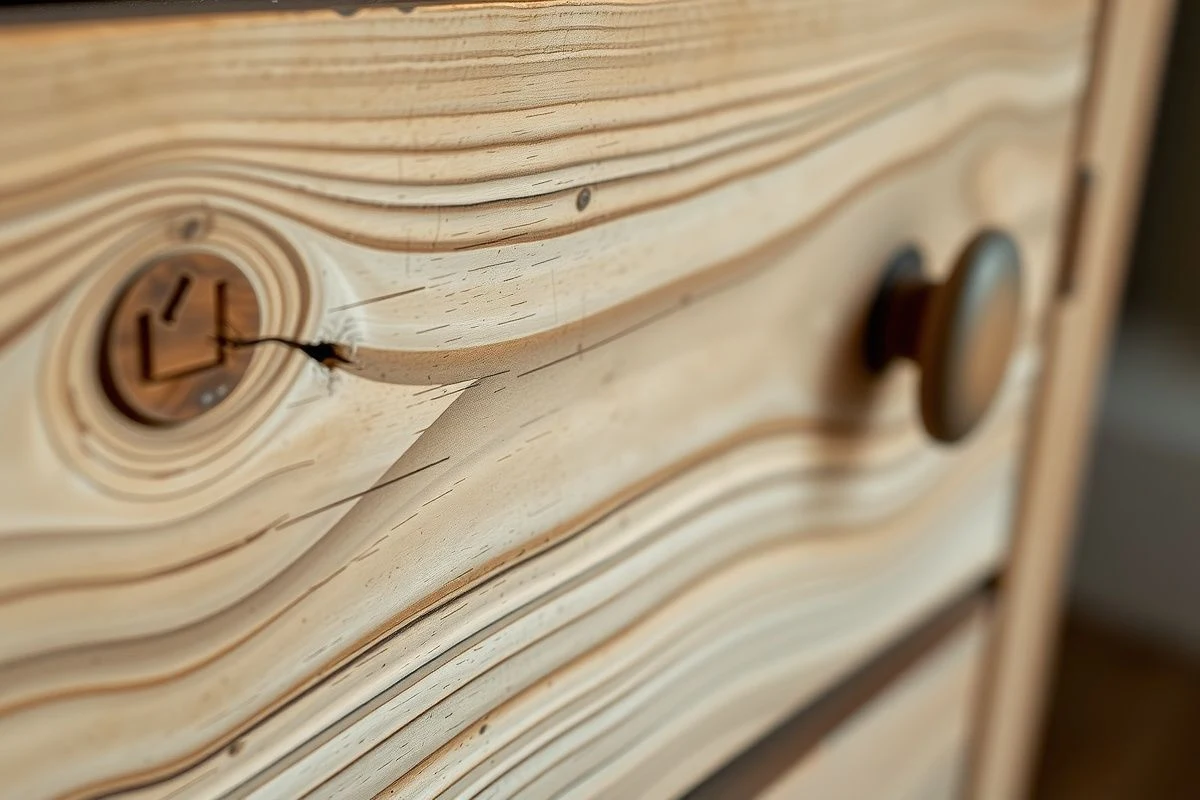
The colours in Wabi Sabi are neutral and muted: deep greys, beige, off-white, natural blacks, soft ochres. I confess that at first, they seemed pale to me, almost sad. But when I started using these tones —especially in combinations like warm grey with soft ochre— I discovered the quiet sophistication they generate. An off-white wall (with a touch of beige or grey) with a wooden floor with visible knots creates a perfect base for any room. Avoid trendy, saturated, or artificial colours.
Lighting is crucial. Instead of bright white LED lights, look for warm tones (2700 Kelvin) that recreate the feeling of candles or natural light. Crumpled paper lamps, unglazed ceramic sconces, discreet spotlights that integrate into the architecture: all these details transform the atmosphere. A 40-watt bulb in a beige linen lamp with a patina on the iron base is pure Wabi Sabi.
Furniture should be functional but authentic. A chair with chipped paint from the seventies is Wabi Sabi; a new chair imitating that is not. If you have inherited pieces, that is your treasure. If not, look in second-hand shops, antique stores, craft fairs. An oak wood desk with scuff marks and small scratches tells stories.
How to Avoid Falling into Neglect
There is a thin line between authentic Wabi Sabi and a space that simply looks abandoned. The difference lies in intention and care. An antique piece of furniture should be clean, even if it has patina. A chipped wall is Wabi Sabi; a dirty and neglected wall is not. Cleanliness is essential. Use natural products: water with vinegar, neutral soap, soft brushes that do not damage original surfaces.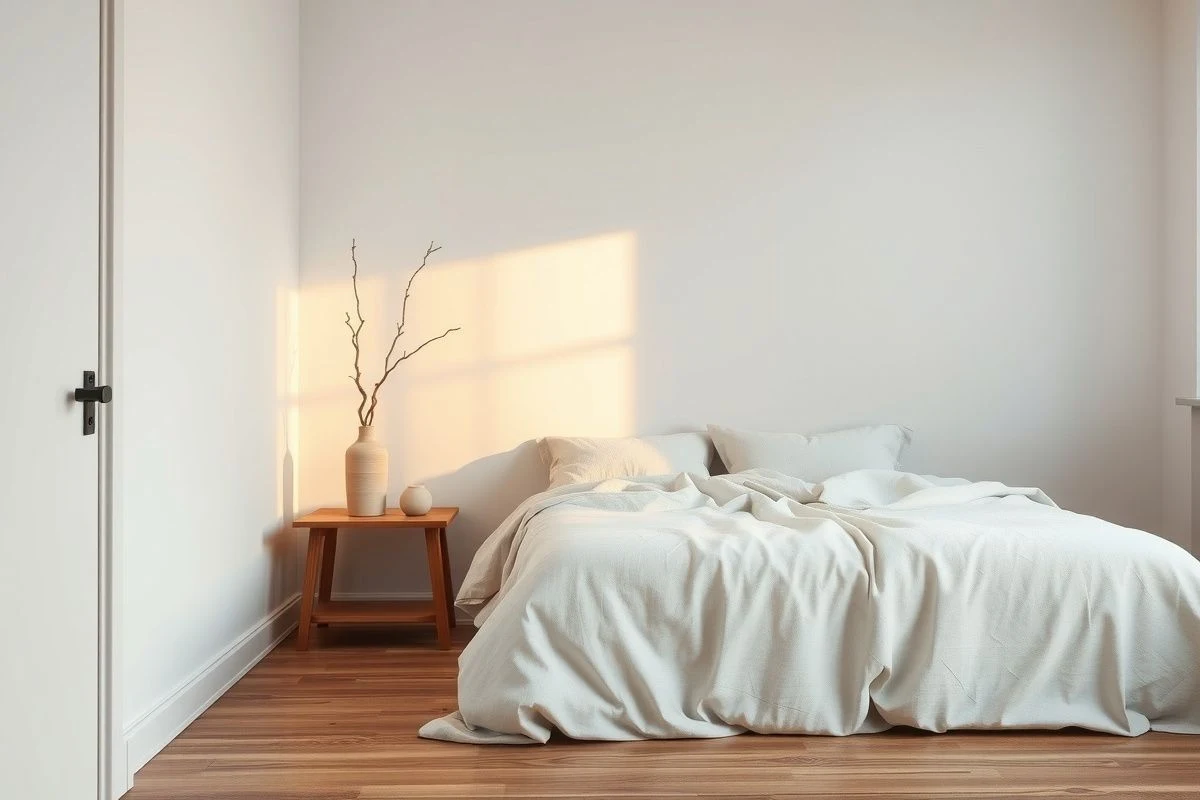
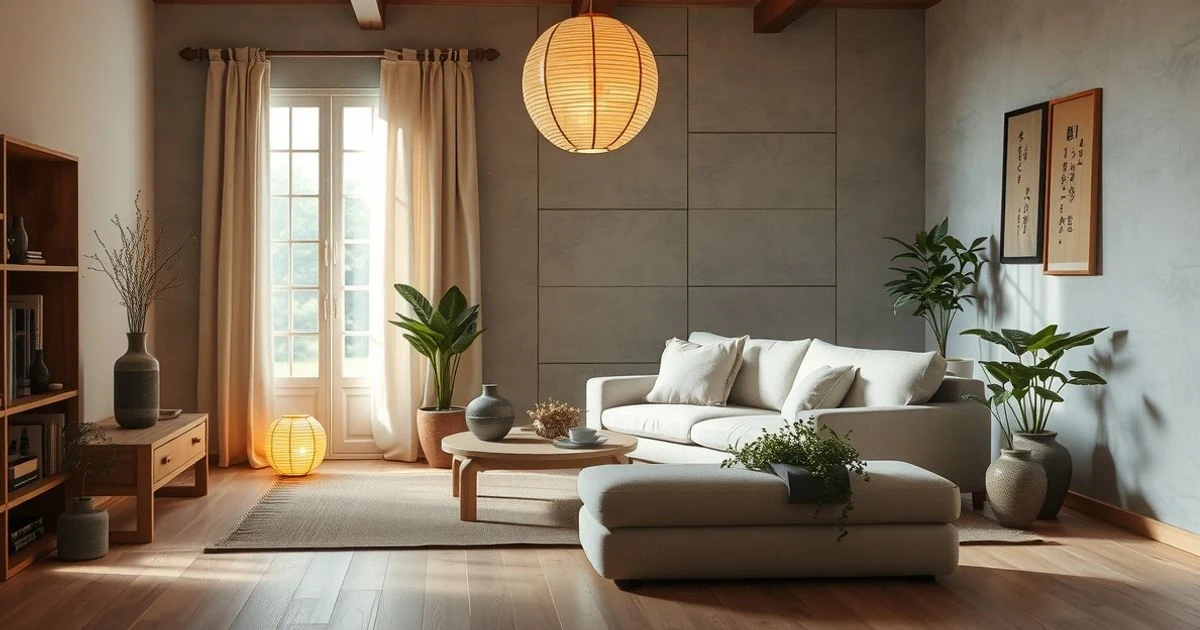
Order also matters, but in a way different from what we are used to. It is not about having every object in its perfect place, but about avoiding chaos. Fewer things, better cared for. In a typical Wabi Sabi living room, you will find an unpretentious fabric sofa, a wooden shelf with books, plants in unglazed ceramic pots, perhaps an antique mirror. There is nothing more, but what is there breathes meaning.
Visible repairs are welcome. If a vase breaks, repairing it with the kintsugi technique (covering the cracks with gold) is the ultimate expression of Wabi Sabi. But even a simple repair, invisible but known, has its beauty. A sofa with a patched cushion, a picture frame of chipped wood that you do not repaint: these details are authentic.
Starting Your Wabi Sabi Transformation
You do not need a complete renovation. Start little by little: choose a room, perhaps the bedroom, as your laboratory. Remove what you do not deeply love. Paint the walls in an off-white or warm grey (look for references on Pinterest, because Wabi Sabi greys are very specific, they are not cold greys). Invest in quality textiles: linen, organic cotton, unbleached wool. A wrinkled linen blanket in beige tones is infinitely more Wabi Sabi than a perfect synthetic throw.Plants are essential allies. They do not need to be exotic; in fact, Wabi Sabi prefers the simple ones. Moss, ferns, bamboo plants in unglazed ceramic pots. The visual effect is one of naturalness, that slow and discreet growth is part of your home. Keep the pots simple, without decorations.
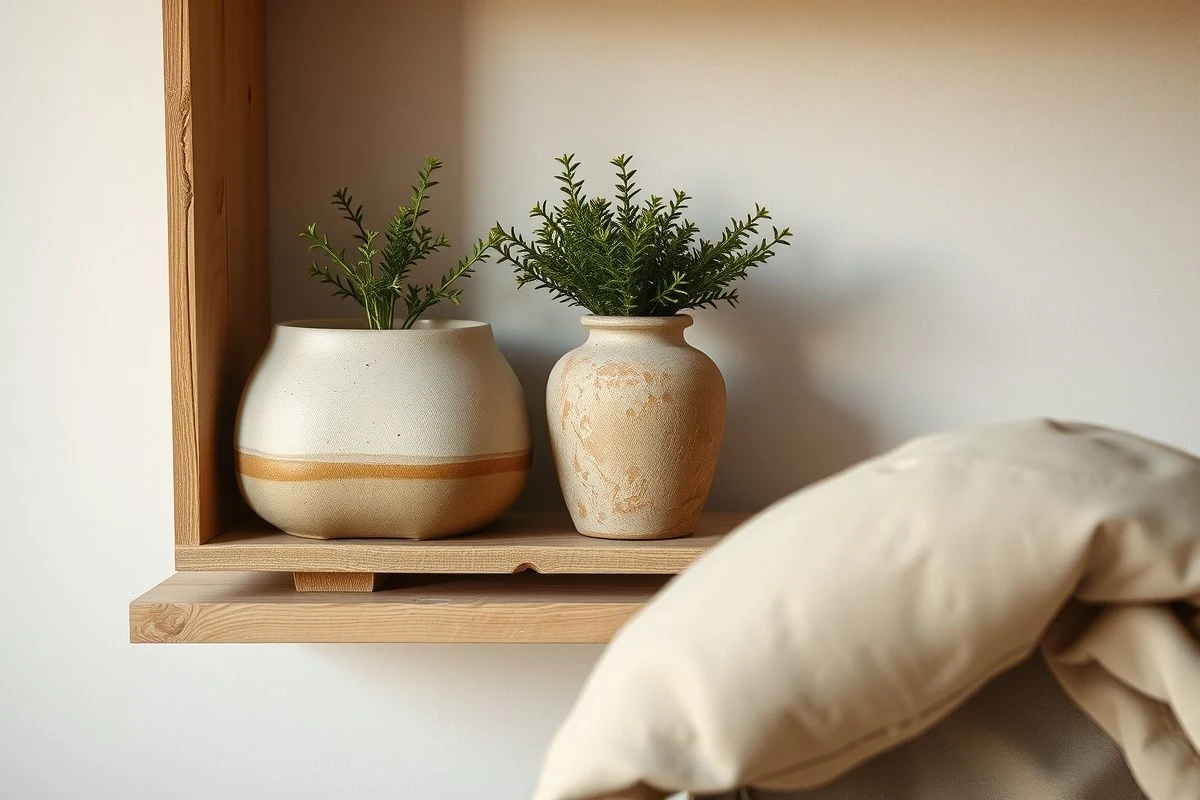
Also consider textures. A brick wall, a thick wool blanket, a linen cushion with visible seams, a baked clay floor: the beauty of Wabi Sabi lies in how things feel under your hand. Let your spaces age naturally, without obsessing over keeping everything new. A wooden floor that wears down with time is beautiful; it tells the story of a lived-in home.
At Casa y Deco, we believe that Wabi Sabi is not a passing trend, but a genuine change in how we want to live. It is an honest response to the saturation of visual stimuli and accelerated consumption. Start today: look at an object in your home that you have always criticised for being imperfect. Now look at it as if it were authentic, with history, with meaning. That is the gateway to Wabi Sabi. And once you open it, there is no turning back: your home becomes a refuge, not a showcase.

You may also like