At Casa y Deco, we love that moment when you can truly enjoy your terrace or garden without feeling like your neighbours are dining with you. Privacy in outdoor spaces is that little freedom we all desire, but here comes the tricky part: achieving it without creating a dark bunker where hardly any light enters. Because yes, there exists that false dilemma of choosing between an exposed garden or one that feels like a cave.
The good news is that there are real solutions that balance both. You don’t need a solid two-metre fence to have privacy on your terrace. In fact, the most effective ones play with height, translucent materials, orientation, and some design tricks that seem simple but make all the difference. I confess it took me years to understand this: I thought more square metres of wood = more privacy. Monumental error.
The first step is to analyse your space and the position of the sun. Before buying anything, spend an afternoon in your garden or terrace observing where the light comes from at each hour of the day. Does it come from the south? Do you have shade in the afternoons? Is your neighbour to the east or west? This isn’t decorator paranoia; it’s the foundation for making the right choice. If you place a dense fence right where your only winter light comes in, you’ll end up using more heating and the atmosphere will feel grey even at noon.
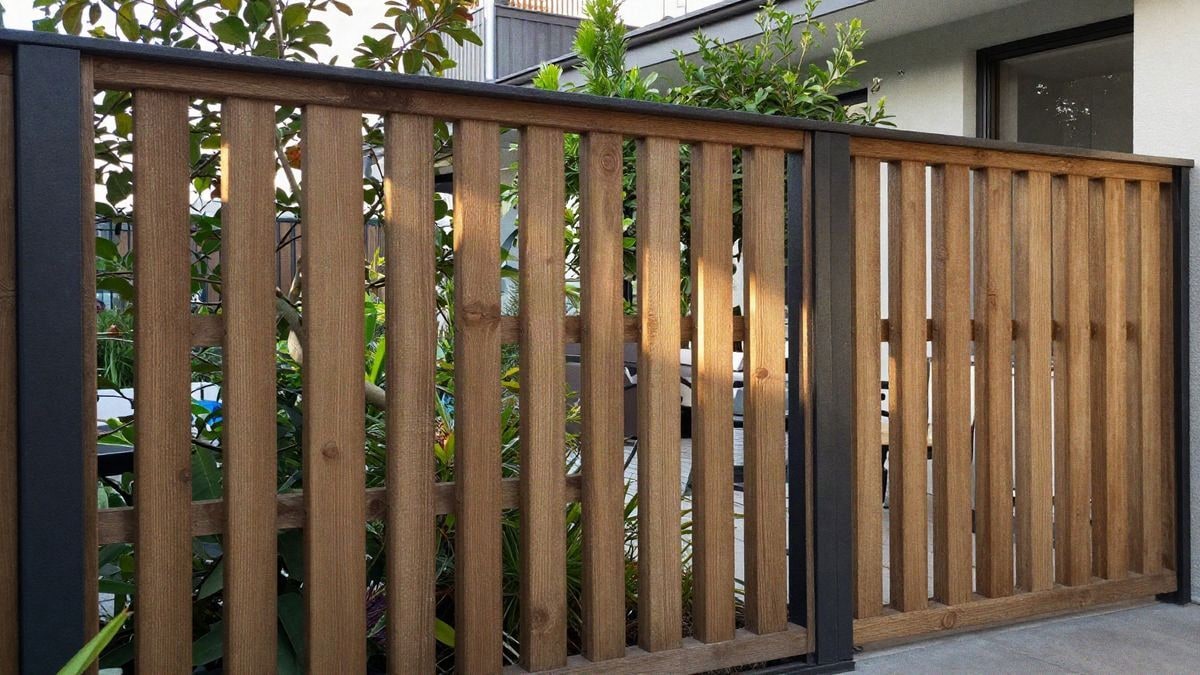
Vertical slatted fences with spaces between them are the most versatile option available. A gap of 5 to 10 centimetres between slats allows light to pass through while blocking direct sight lines. It works because the human eye needs continuity to see through: by fragmenting the view, although the light physically passes, privacy significantly improves. Materials matter here: solid wood stained in grey or anthracite tones, anodised aluminium, or even corten steel create different effects, but all maintain that logic of spaces.
If your garden receives a lot of direct light, trellis panels are your ally. These create a filtered shade, almost as if you were placing a filter between the space and the outside world. Light comes in, but softened. In summer, they lighten the feeling of oppression, and in winter, they allow more brightness. You can find them in wood, aluminium, or composite materials. Some have geometric patterns that add a design touch without being pretentious.
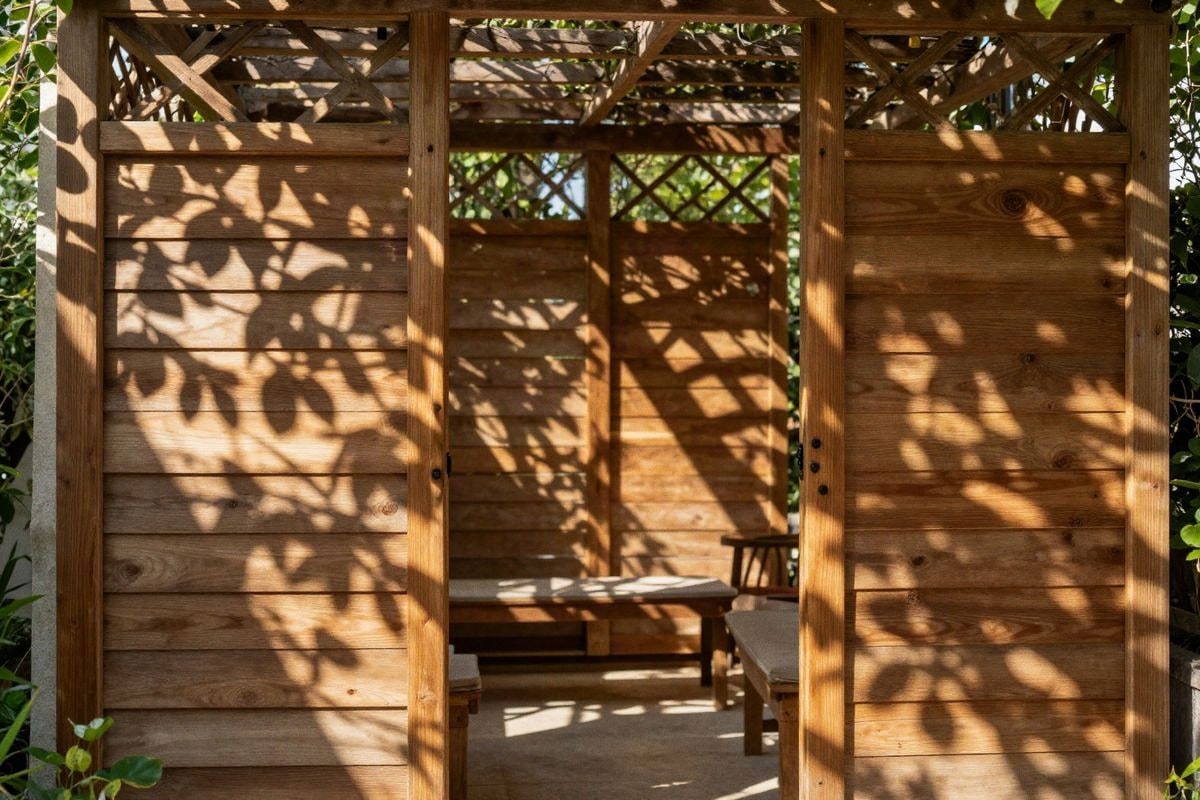
Bamboo panels are another alternative that many overlook. Bamboo is surprisingly flexible: it lets in light, reduces noise, and ages beautifully with a lovely patina. However, it requires maintenance every 1-2 years with protective oil, but for those who enjoy that, the result is totally worth it. Don’t confuse natural bamboo with synthetic imitations: they last less and look fake from miles away.
Then there are systems that combine fencing and vegetation, which are honestly my favourite. A base structure in metal or wood 1.20 to 1.50 metres high, on which you hang fast-growing climbing plants like jasmine, clematis, or ivy. Light filters through the leaves, grows year after year, and provides an organic result that no manufactured material can achieve. That said, it requires watering and pruning, but it’s living privacy.
For those who want guaranteed speed, there are modular systems made of corten steel or lacquered aluminium that can be installed in hours. Standard dimensions are around 1.80 metres high by 2 metres wide per panel. They are modular: combine as many as you need. The advantage is precision; the disadvantage is that they lose warmth if not well integrated with the rest of the garden. A common mistake is to place them misaligned thinking it adds character: generally, it just gives a sense of shoddiness.
If your space is small or your budget tight, consider variable height fences. You don’t need to hide everything: place opaque panels where you are really being looked at (the sitting area), and open ones where you can allow visibility (towards a tree or a lower area). This reduces costs and creates visual dynamism instead of a boring wall.
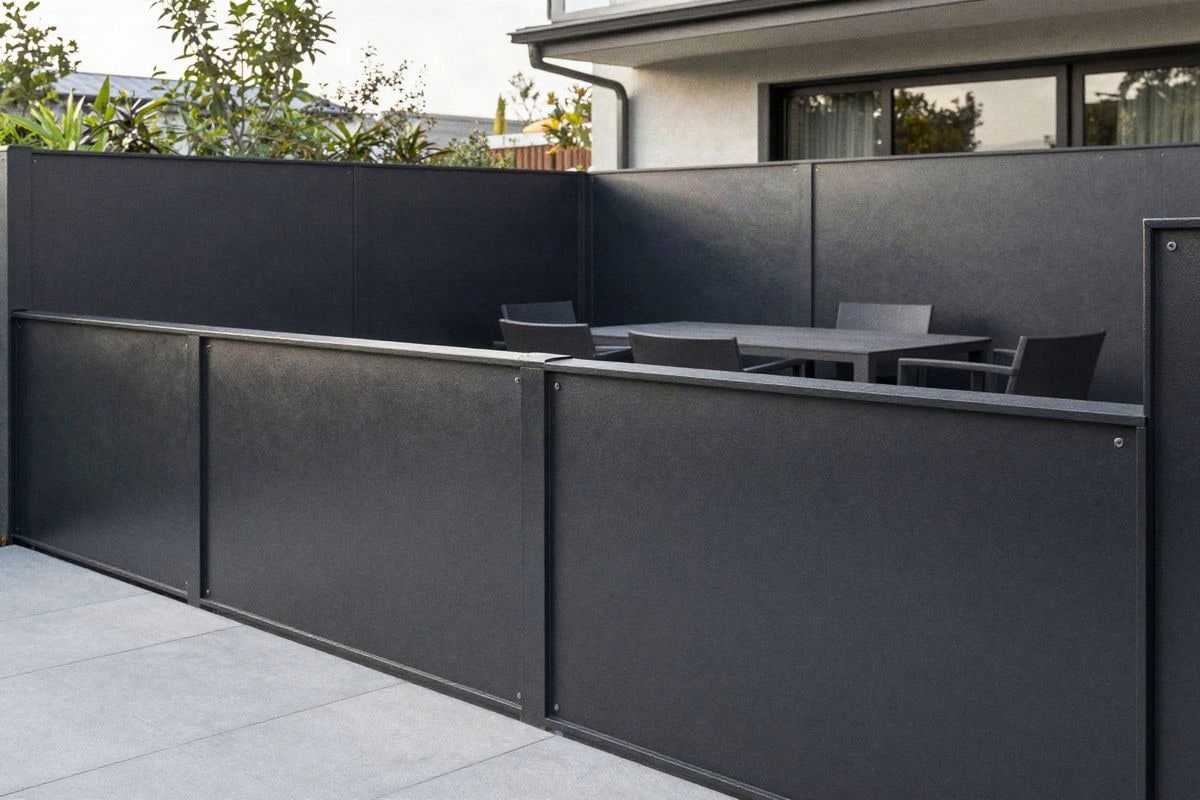
Colour is crucial but often overlooked. A grey or anthracite fence blends with the atmosphere and doesn’t steal the spotlight. A warm honey wood fence creates intimacy without aggression. Pure black can be very modern, but it requires the rest of the garden to be well-defined: structured plants, coordinated furniture. A traditional reddish-brown fence can become outdated if not updated with minimalist plants. Choose the tone considering what else is around you.
Backrests, retractable pergolas, or awnings are intermediates between fence and umbrella. They offer partial but strategic privacy, very useful if you only need to hide in a specific area or at certain times. They allow you to adjust light according to the season: open in winter, closed in summer. It’s not a fixed fence; it’s privacy à la carte.
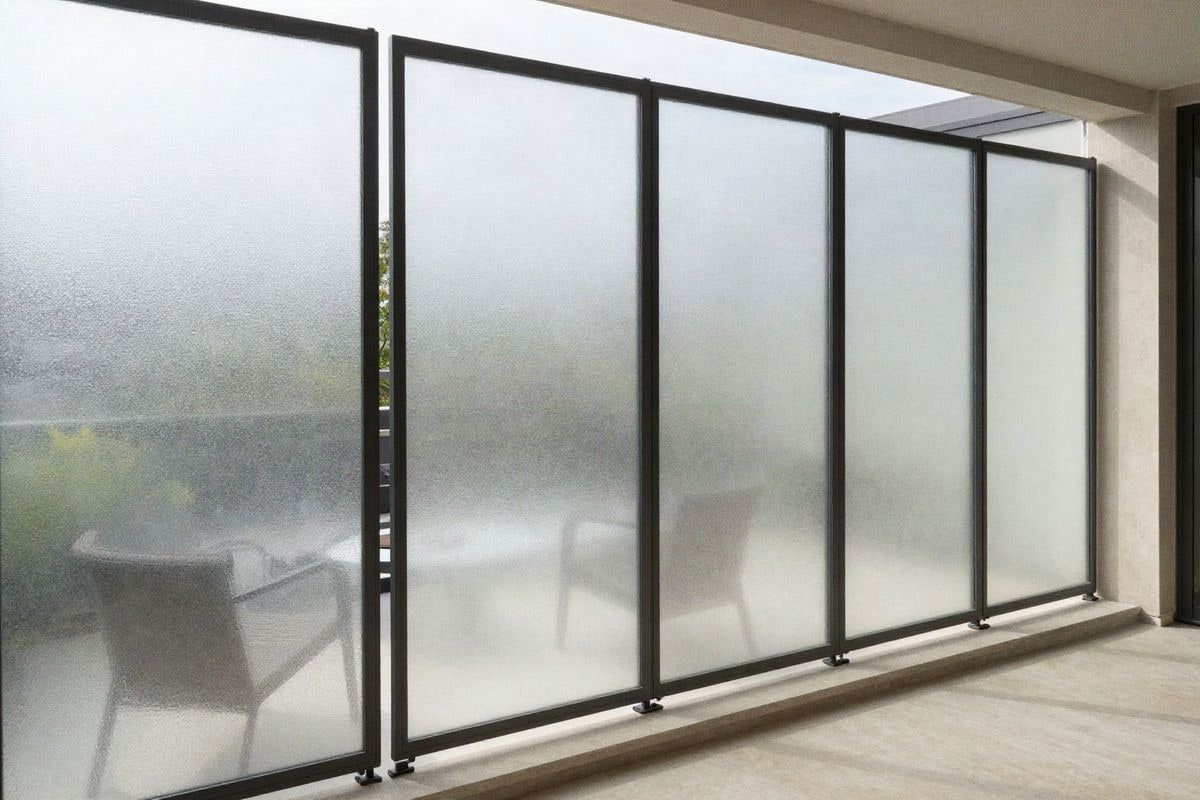
One thing we are seeing more and more and find fascinating: using translucent glass or frosted safety glass. It guarantees total privacy, lets in all the light, and provides a clean and modern finish. The only downside is that it requires frequent cleaning to maintain transparency, and it doesn’t insulate from noise like a solid fence does. Perfect if your priority is light and your neighbour isn’t working with a jackhammer.
Before installing anything, check the local regulations in your neighbourhood or community. Some spaces have height restrictions, prohibited materials, or minimum distances from property lines. Failing to do this is frustrating: work done and a pesky neighbour reporting you. Better to spend an afternoon at the town hall than lose your investment.
Maintenance varies greatly depending on the material. Wood: annual inspection, oil or varnish every 2-3 years, repair of damaged slats. Aluminium: practically nothing, maybe a clean. Bamboo: annual oiling, pest shortcuts. Climbing plants: seasonal pruning, fertiliser in spring. Glass: frequent cleaning. Choose considering not only the initial result but whether you are someone who enjoys taking care of things or if you prefer install-and-forget.
Privacy without light is not privacy; it’s isolation. Light is life in a garden: without it, even the prettiest space becomes a place you don’t want to be. That’s why the solutions we’ve discussed work: they respect that need for brightness while providing the intimacy your well-being requires. Choose the one that best fits your context, your preferred material, and how much energy you want to invest in maintenance. Because a beautiful garden is one where you truly enjoy spending time, without worries of spies on the neighbour's rooftop.

You may also like