At Casa y Deco, we love helping you make the most of your garden, and one of those great allies that transforms any outdoor space is the shed. If you have plants to protect, tools without a fixed place, or simply want to create a functional corner, the decision is not trivial at all. We have realised that choosing between wood, metal, or resin is more than just an aesthetic whim: each material has its own rules, advantages, and traps that you need to know before investing.
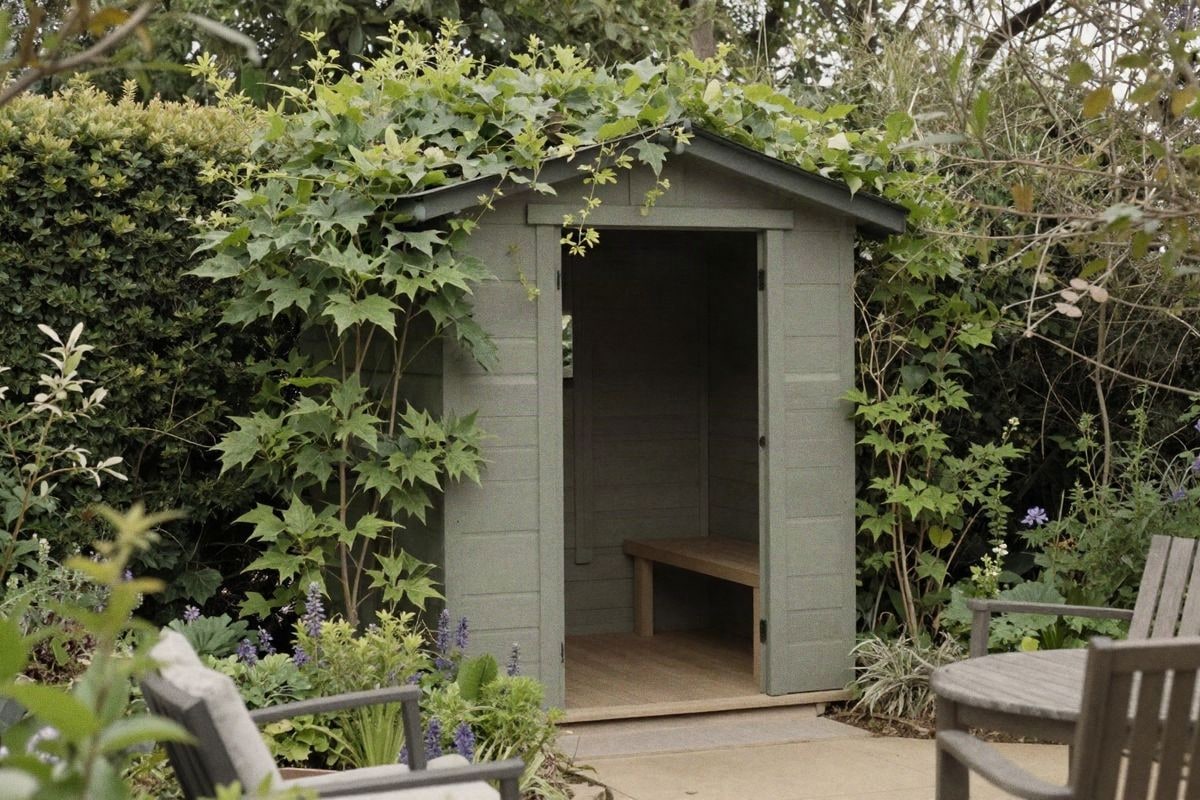
Wood remains the undisputed queen of the garden, and it's easy to understand why. It offers warmth, natural visual integration, and a result that simply looks beautiful in any context. A wooden shed of about 2.5 x 2 meters (a standard size that works well in most gardens without being overwhelming) creates a decorative element that adds character. The problem is that wood requires constant maintenance: every 2-3 years it needs treatment against pests and moisture, and if you live in an area with a lot of rain, the investment in conservation is serious.
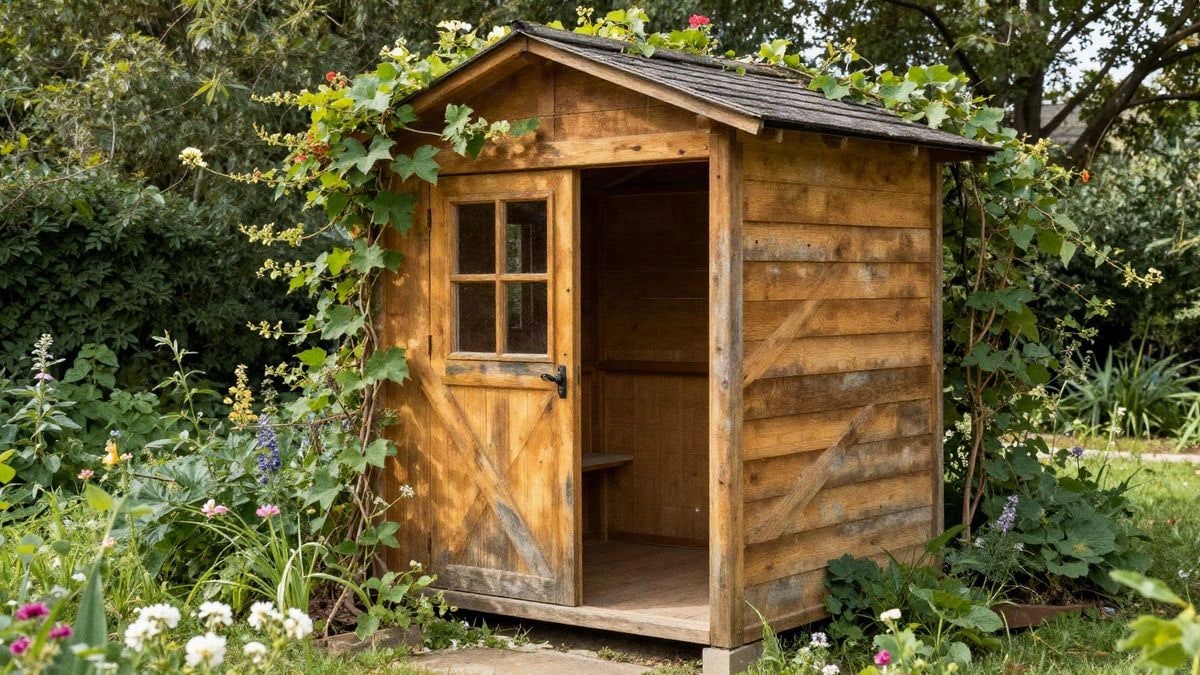
I must confess that this cost me an unpleasant surprise: I had a wooden shed that I didn't treat properly, and in two winters the structure began to show cracks and deformities. The repair cost was almost equivalent to the original price. Still, if you are willing to take care of it, wood in natural colours (light oak, honey pine, or even silver grey if you let it age) combines wonderfully with climbing plants like clematis or virgin vine, creating that English garden atmosphere we all desire.
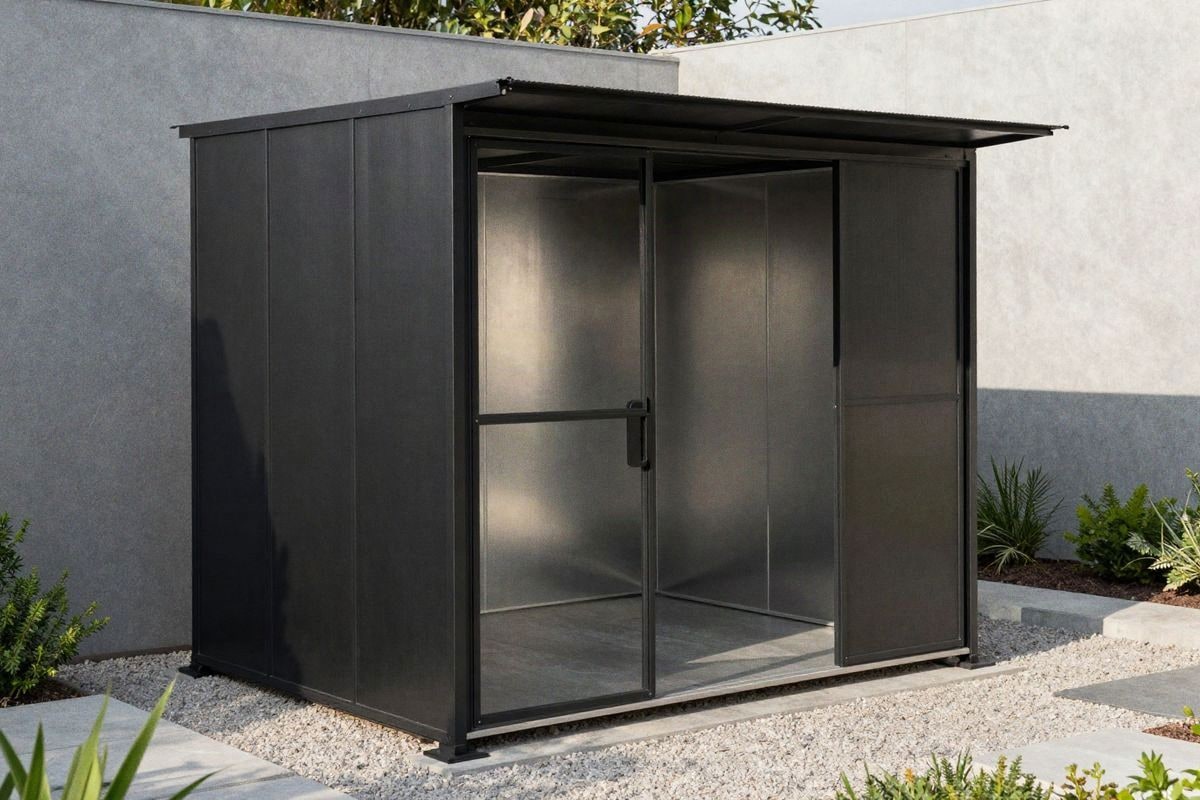
Metal, especially galvanised steel or iron, is the choice for those who want no surprises. These sheds are practically indestructible and require minimal maintenance: an annual inspection and perhaps a coat of paint every 5-7 years if you notice worn areas. For modern gardens or those with industrial touches, an anthracite grey or matte black metal shed works wonderfully, especially if it has clean lines and takes advantage of the maximum possible height (look for models 2.2 to 2.5 meters high) to maximise interior space without dominating visually.
What you do need to know: metal in very cold climates can be uncomfortable (the interior freezes, losing functionality as a plant storage), and in areas with a lot of sun, the sheet can heat up excessively in summer, something to consider if you store seeds or heat-sensitive plants. The recommended size for metal sheds is between 2 x 1.5 and 3 x 2 meters, depending on how much available space you have and how many tools you need to store.
Resin: the modern, easy, comfortable option (with nuances)
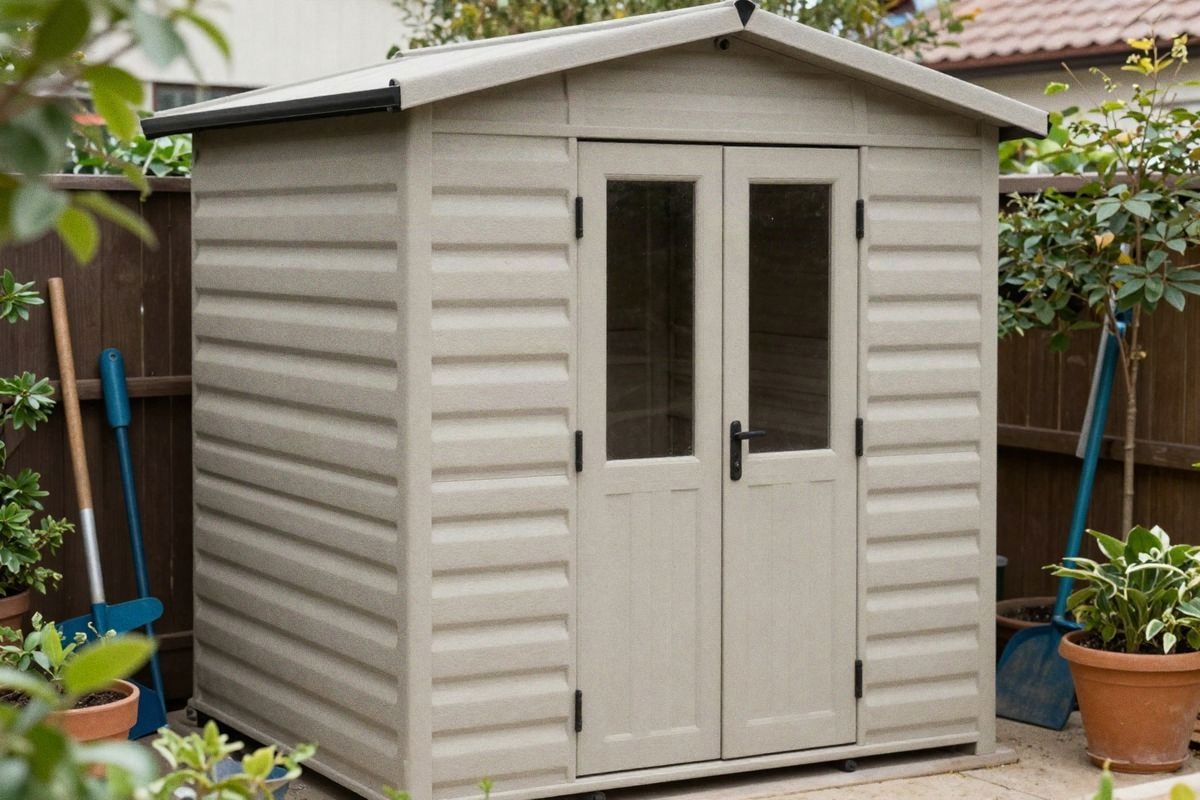
Resin or reinforced plastic is the newest alternative and has revolutionised the market for those who simply want a hassle-free solution. It doesn't splinter, doesn't rust, and requires no treatment beyond washing with water and soap occasionally. They weigh less than wood or metal, making installation much simpler (many can be placed without deep foundations, just with anchors to the ground).
The dilemma is purely aesthetic: I confess that the first models seemed too plastic, too synthetic to me. But in recent years, the industry has improved tremendously. Now there are resins in textures that credibly imitate wood (beige tones, storm grey, chestnut) or matte finishes that absorb light better than shiny ones. For a tight budget or a small garden (under 100 square meters), a resin shed of 1.8 x 1.2 meters is absolutely practical and durable.
Resin has a lifespan of 10-15 years without significant degradation, and the colour may fade slightly, but it does not crack or weaken structurally like wood. If you live in an area with very intense UV (Mediterranean, southern Spain), choose models with integrated UV protection. Here the trade-off is clear: you lose decorative character but gain peace of mind and pure functionality.
Size, placement, and how not to go wrong
Once you decide on the material, the most common mistake is underestimating the necessary size. Plan thinking of double what you think you will need: you always end up storing more. A garden of 50-80 square meters works well with sheds of at least 2 x 1.5 meters; if you have more space, 2.5 x 2 is the golden standard. Place the shed in an area that receives a bit of shade (especially important with metal and resin), never in direct sun exposure for 8 hours a day: the interior becomes an oven that accelerates the degradation of tools and plants.
The orientation of the door matters more than it seems. If you can, open towards the north or northwest to avoid direct sunlight every time you open it. In terms of visual depth, place the shed on one side of the garden or at the back, never in the centre unless it is so small (less than 1.5 meters) that it functions as a standalone decorative element. If you partially camouflage it with hedges or plants, you gain landscape cohesion without sacrificing functionality.
Colour, finish, and how to integrate it into your garden
In wood, natural tones (grey larch, light cedar, dark pine) age gracefully. If you prefer to paint, greys (pearl grey, slate grey), sage greens, and terracotta tones work with almost any garden. Avoid bright reds or intense yellows, which shout rather than belong. If you have a garden with a warm palette (ochres, terracotta, crimson), wood with a honey tone or metal in antique bronze creates harmony.
With metal, black and grey are safe; if you want something more personal, try copper or forest green tones (look for matte finishes, not shiny ones, which simply reflect poorly). Resin imitates natural tones well, so choose versions in grey or beige that do not demand attention. Regardless of the material, the real trick to ensure a shed does not clash is to complement it with neighbouring elements: a nearby bench of the same material or colour, plants around that embrace it, perhaps an attached pergola that connects it with the rest of the garden.
A final thought: durability and price do not always go hand in hand. Quality wood (professionally treated) is expensive and requires maintenance investment. Brand-name metal has a high initial price but low ownership cost. Resin is cheap but visibly ages. Knowing this allows you to decide not just what is

You may also like