At Casa y Deco, we love wooden Venetian blinds: that retro vibe that never ages, the warmth they bring to any window, the way they play with natural light. But I confess that we have often seen living rooms where blinds that promised to be eternal end up warped, with bent slats or that don’t close properly. It’s not black magic: it’s simply that wood requires specific care, and we have learned the secrets to keep them immaculate for years.
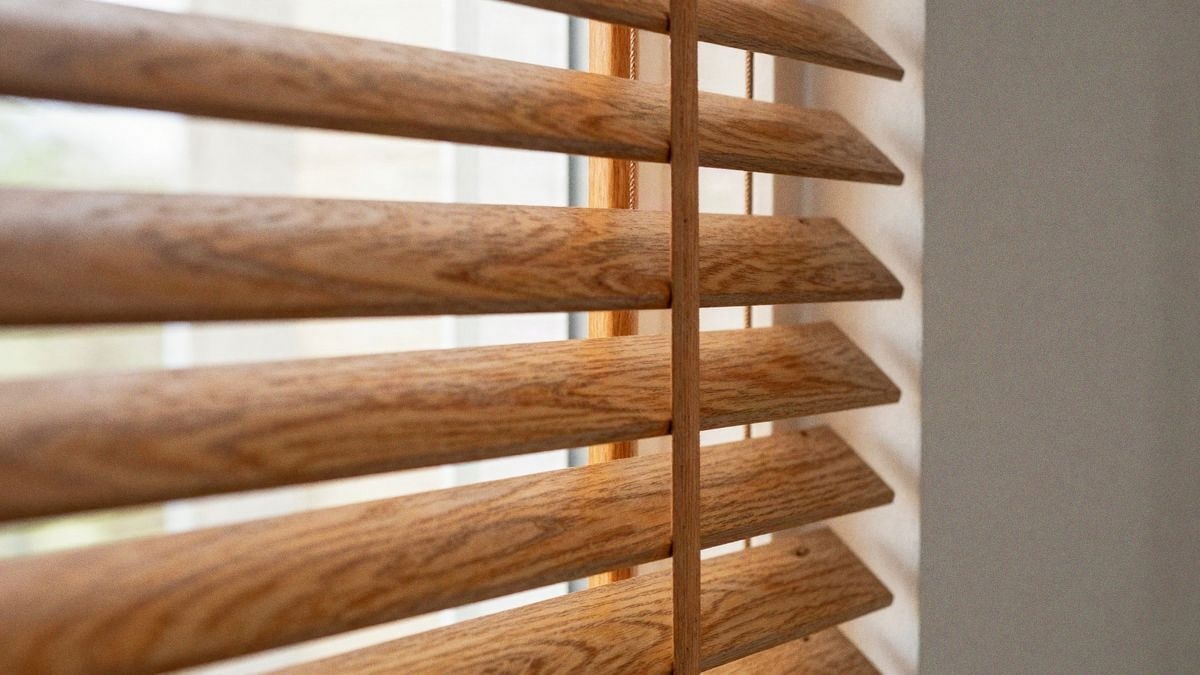
Wooden Venetian blinds are much more demanding than their aluminium or PVC counterparts, but the reward in character and elegance is worth every minute of care. The key is to understand that wood breathes, expands, and contracts with changes in humidity and temperature, and that these microscopic movements are what end up warping the slats if we don’t know how to prevent them. Here we will tell you everything we have discovered about this topic, step by step.
Understand Why Wooden Blinds Warp
Before you get started, you need to know what causes a blind to warp. Wood is a living material: it constantly absorbs and releases moisture depending on the season and environment. When it rains and there is high humidity, the wood swells; when the dry heat of summer arrives or we turn on the heating in winter, the wood contracts. These variations are not uniform across the slat, so some sides move more than others, creating that annoying twisting effect.
Moreover, UV rays also degrade the wood fibers, especially if the blind is directly exposed to the sun. The side facing the window weakens and becomes more fragile, while the other side remains firmer, further contributing to deformation. That’s why it’s so important to act preventively from day one: it’s not a problem that can be fixed later; it’s one that should be avoided from the start.
Regular Cleaning: The First Step to Avoid Problems
A dirty blind is a blind that suffers more. Dust and dirt trap moisture against the wood, creating a perfect environment for it to swell unevenly. That’s why constant cleaning is not just an aesthetic issue, but a conservation one. Every two weeks, spend ten minutes wiping a dry or slightly damp microfiber cloth with distilled water between the slats.
The trick that personally saved my blinds was to wipe the cloth in the direction of the slat, not perpendicular. This way, moisture does not seep between the layers of wood but runs towards the ends where it dissipates more easily. Never use harsh chemicals: forget about multi-purpose cleaners. Distilled water with a few drops of white vinegar is enough if you need to degrease them, but most of the time, the dry cloth is your best ally.
Humidity Control: The Most Important Factor
If I could choose a single factor to keep your blinds straight, it would be this: maintain the relative humidity in your home between 45 and 55 percent. It sounds like lab science, but it’s very simple in practice: a digital hygrometer costs just a few euros and will tell you exactly what’s happening in your living room.
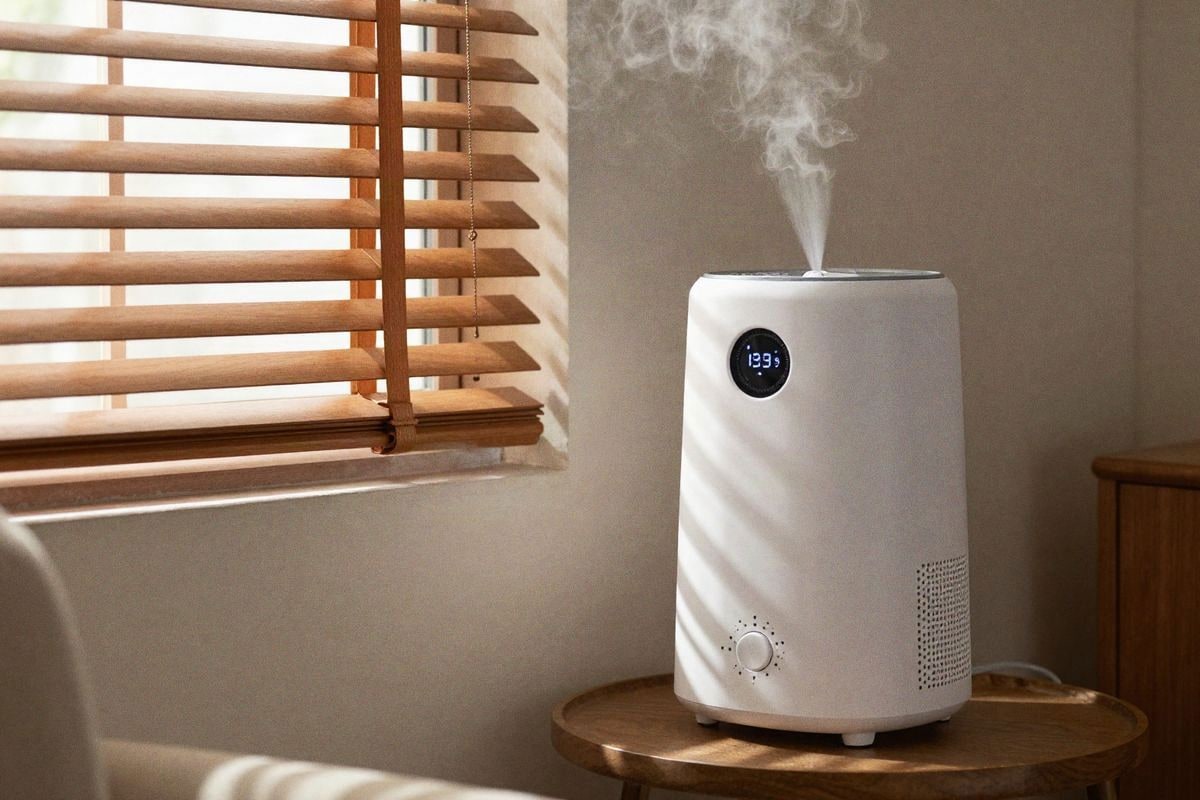
In winter, when heating dries out the air, the wood loses water and contracts. In summer, when you open all the windows and it rains, the opposite happens. The solution is to avoid sudden changes. In the cold months, a small humidifier in the room with the blinds is a worthwhile investment. In summer, close the windows during heavy rains and ventilate when the air is drier. Maintaining balance is keeping your blinds straight.
I confess this sounds obsessive, but believe me: a warped blind is a problem without return. Once the slat loses its shape, it’s almost impossible to restore its perfect geometry. It’s much easier to prevent it from reaching that point.
Protection Against UV Rays
Sun rays are beautiful but destructive. If your window receives direct sunlight for several hours a day, you have a potential problem. The best solution is a UV protective glass or a window film that filters ultraviolet rays. It’s not expensive, installs in minutes, and dramatically extends the life of the wood.

If that’s not feasible, then the blind itself becomes your guardian: a sensible measure is to keep it closed or partially closed during the most intense sun hours, especially in summer. Not only will you protect the wood, but you’ll also enjoy a bonus: less heat enters the room. A wooden slat that doesn’t receive direct sunlight ages much better and warps less.
Preventive Maintenance Every Six Months
In addition to regular cleaning, every six months, dedicate an afternoon to deeper maintenance. Remove the blind if possible (many have a click system that releases them easily) and clean them horizontally on a flat surface. This way, you can see both sides of the slats and detect any signs of incipient deformation.
Then, apply a specific protective oil for interior wood. We’re not talking about pure linseed oil, which can darken the wood: there are specific treatments for blinds that nourish the fibers without changing the colour. Once or twice a year is enough to keep the wood flexible and resilient. The oil penetrates the fibers and helps the wood retain its elasticity, reducing the likelihood of warping.
Mechanical Adjustments and Cords
Sometimes the problem is not the wood, but the mechanisms. Regularly check that the cords are taut and that the blind raises and lowers evenly. If you notice that one side rises faster than the other, it’s a sign of uneven tension, which ends up deforming the slats. Many blinds have small adjustment screws on the sides precisely to balance this tension.
If the cords are worn, don’t hesitate to replace them. It’s a simple repair that any installer can do, and it’s much cheaper than replacing the entire blind. New cords restore balance and uniform movement, which in turn protects the wood from future warping.
The Correct Resting Position
Here’s a tip that few know: the position in which you leave the blind when not in use matters. Ideally, when you close the blind, the slats should be completely closed and horizontal, without any tilt. If you leave it partially closed with a tilt, the weight of the upper part presses unevenly on the lower slats, causing constant stress.
At night, close it completely. During the day, if you need privacy, choose between completely closed or completely open, rolled up or gathered upwards. Avoid leaving it in intermediate positions for hours. This is especially important in rooms or living areas where the blind remains in the same position for weeks on end.
Recommended Materials and Types of Wood
If you’re thinking of buying new blinds, choose woods that naturally resist humidity better: oak, mahogany, or tropical woods have better properties than common pine. They are more expensive, but they last for decades without warping. If you have a tight budget, look for blinds that come with a quality protective varnish treatment, preferably matte (glossy varnishes tend to crack over time and lose their protective function).
The thickness of the slat also influences: a 50-millimetre slat is more resistant to warping than a 35-millimetre one. If your budget allows, it’s a difference you will notice in durability. And although we are not convinced by artificially dyed woods, if your decor calls for them, make sure the dye is of professional quality: cheap dyes degrade faster and can exacerbate deformation issues.
When It’s Too Late: Palliative Solutions
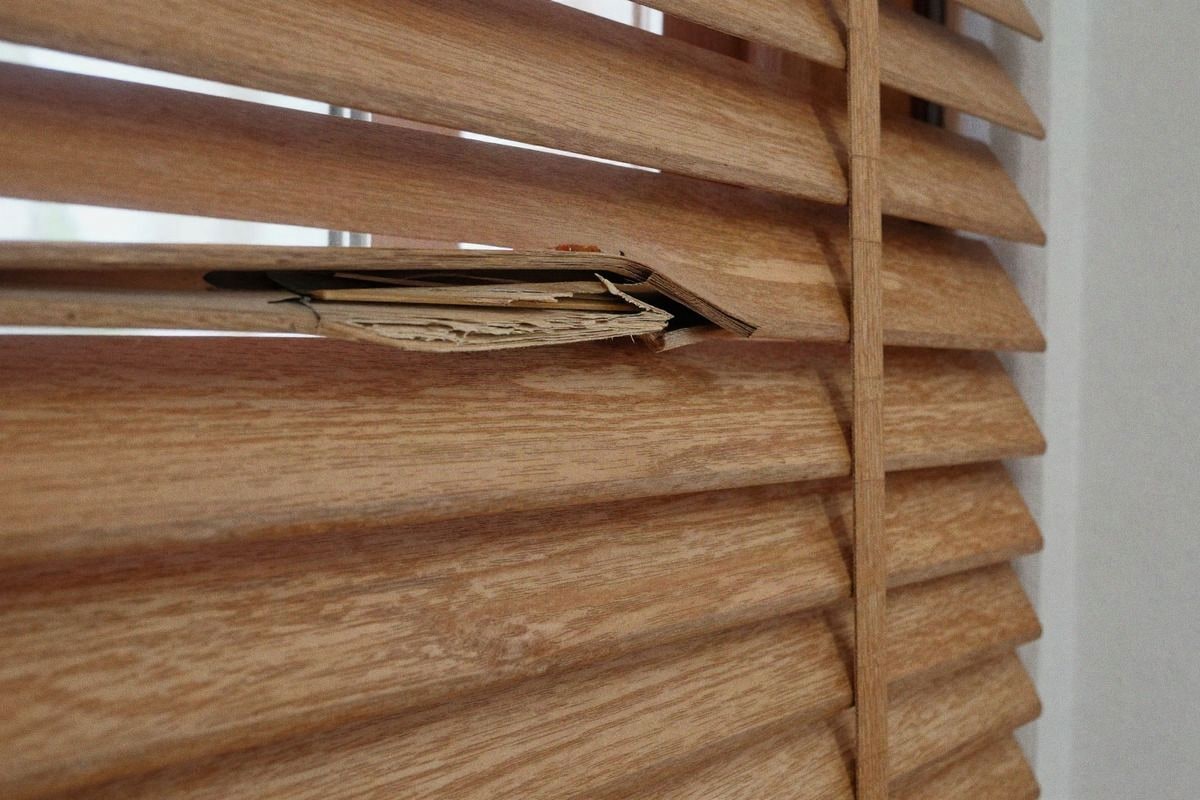
If you already have a blind that is starting to warp, not all is lost. A professional can sometimes adjust the problematic slats or replace them individually. It’s not ideal, but it’s much cheaper than a new blind. Some specialized workshops work with hot steam and presses to restore the shape of slightly deformed slats, with surprising results.
The best defence is prevention, but if the damage is already there, at least you know there are options. The important thing is to act quickly: a slightly bent slat can be rescued; a completely twisted one that has been like that for months is more difficult. If after trying home solutions things don’t improve, a call to the installer or carpenter is your best path.
Wooden Venetian blinds deserve that care. They are pieces that age beautifully, giving character to any window and can last a lifetime if treated well. Now that you know the secrets, enjoy that filtered light and warmth that only wood can bring to a living room, with the peace of mind that your blinds will be perfect for many more years.

You may also like