At Casa y Deco, we love floating parquet. No wonder: it’s practical, installs without renovations, fits any budget, and transforms a space in seconds. But there’s one question we all ask when choosing: how long will it really last before needing replacement? The answer isn’t as simple as a round number, but we’ll explain it honestly.
The first thing we need to clarify is that the durability of floating parquet depends on very specific factors: the traffic it receives, the type of maintenance, the quality of the product, and, of course, how you treat it day to day. A floating parquet in a living room of a house where two calm people live is not the same as one in an open kitchen with small children and pets. Context is everything.
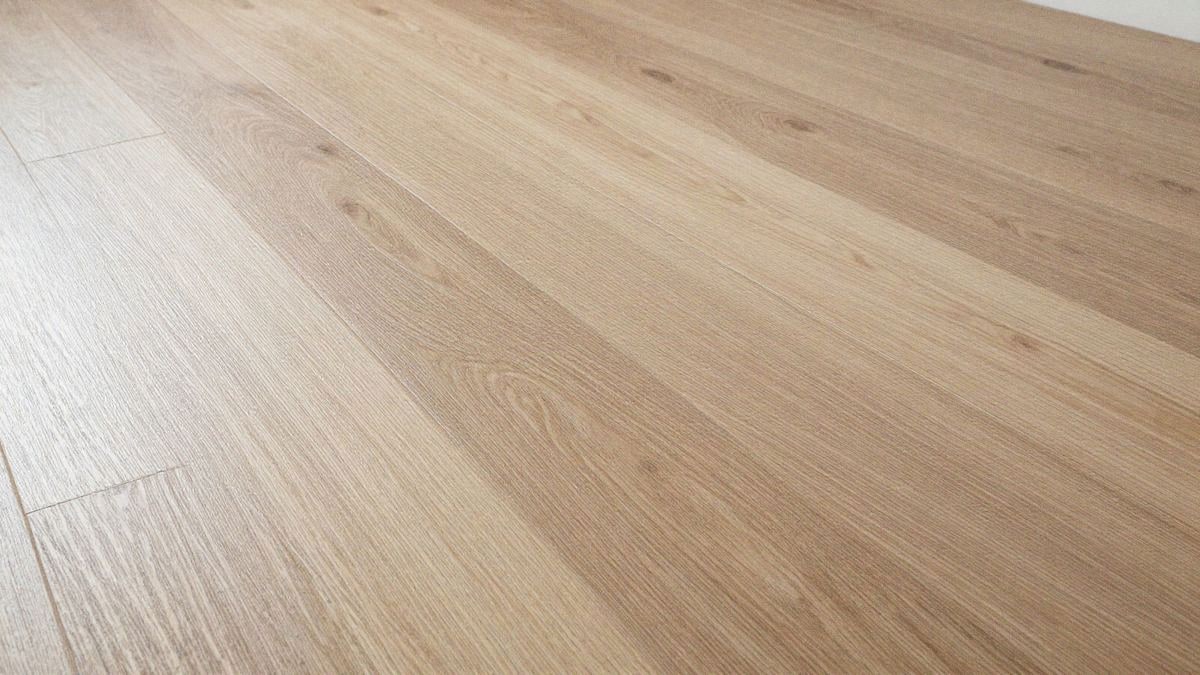
In general, a medium-high quality floating parquet can last between 15 and 25 years without issues. Yes, you read that right: two decades or more. However, this doesn’t mean it crumbles after 15 years; it means that’s the period during which it maintains its optimal performance without visible wear. Some last longer, others less. We know of cases where after 20 years it still looks impeccable, and others where after 10 you can already see signs of fatigue.
The wear layer is what truly determines its lifespan. That upper layer you see is what protects the wood from scratches, moisture, and impacts. Manufacturers measure it in millimetres (usually between 0.5 and 3 mm) and in layers of protection. The thicker and more layers it has, the longer the parquet will last. Now, I confess that we’re not always willing to spend double on a layer that’s 50% thicker, and that’s something hard to admit when choosing the cheapest option in the store.
Traffic is the silent enemy of parquet. A living room with constant foot traffic, where everyone comes and goes for 20 years, ages the flooring very differently than a secondary room that you step into twice a week. In high-traffic areas, you can expect floating parquet to last between 10 and 15 years under optimal conditions. In low-traffic areas, it can easily reach 20 or 25.
Now we need to talk about moisture, the factor that honestly keeps decorators awake at night. Floating parquet, although floating, is not waterproof: it’s made of wood (or wood veneer), and wood absorbs water. If your living room is next to a kitchen without a clear separation, or in a coastal area, or you simply live in a very humid climate, durability decreases significantly. Moisture causes it to warp, gaps to appear between the pieces, and dark stains that are impossible to remove.
Maintenance is what truly extends the life of floating parquet. We’re not talking about anything complicated: frequent sweeping, a damp cloth (but well wrung) each week, and no harsh products. Avoid wax-type cleaners that leave a slippery layer; use specific parquet detergents that hydrate without soaking it. This saved my living room: I switched from a clumsy mop to the method of a well-wrung damp cloth, and honestly, the parquet looked shinier without new scratches every month.
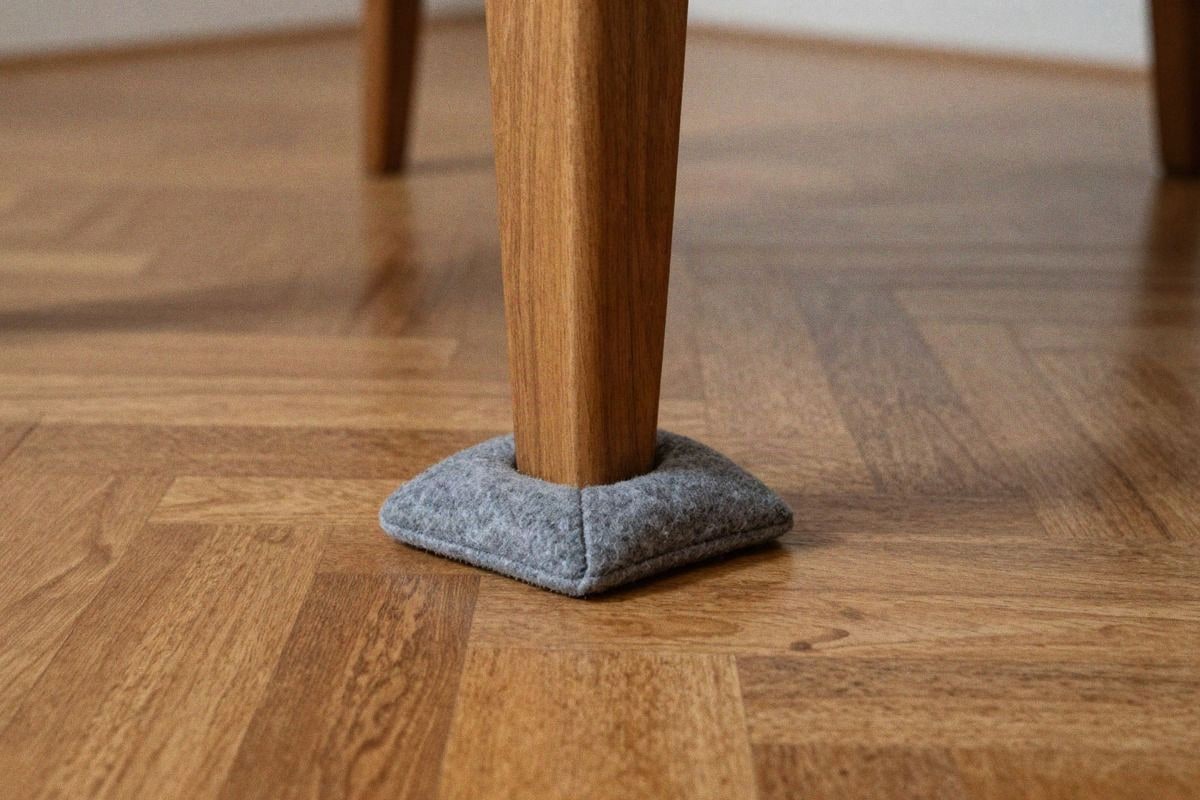
Furniture leg protectors are your best ally. A chair dragged three times a day for 15 years leaves deep scars on any parquet. Use felt or silicone pads under all legs: it costs little, hurts your wallet less than you think, and the parquet will thank you. The same goes for heavy furniture you install at the beginning: place a protector under them and don’t move them every week.
Installation also matters more than it seems. Poorly installed floating parquet, with joints that don’t close well or without respecting expansion gaps, ages faster. Expansion is crucial: wood expands and contracts with moisture and temperature, and if you don’t leave space (typically 8-15 mm from the walls), the parquet starts to warp. A good installer ensures that the parquet will last for many more years. Don’t skimp on this.
There are areas where floating parquet simply shouldn’t be. The direct kitchen, if you cook a lot and splash water constantly, is a risk area. The bathroom, we don’t recommend at all: constant moisture is its number one enemy. Changing from parquet to ceramic in bathrooms isn’t uncommon, and we often see that after 7-10 years the parquet needs replacing due to the environment. Use floating parquet in living rooms, bedrooms, hallways: spaces where moisture can be controlled.
When you say you’re going to change the parquet, it’s not always because it’s completely broken. Sometimes it’s because after 12-15 years it starts to look tired, with visible scratches, areas where the wear layer is worn down, and the original shine has disappeared. Some then choose sanding and varnishing (which lasts a few more years), but in many modern homes, it simply feels right to switch to a new colour, a new texture, to follow trends. That’s totally valid.
The quality of the manufacturer matters. We won’t mention brands (that’s not our style), but we will tell you that premium range floating parquet visibly lasts longer than the basic one. Investing in a brand with a 15-20 year warranty gives you peace of mind and, in the end, you end up spending less than buying discount store parquet three times. Compare warranties, not just prices.
If you want to maximise durability, note this: a wear layer of at least 2 mm, a traffic class of AC4 or higher, and a good maintenance programme are the magic triad. With that, 20 years is a very realistic expectation. Some even reach 25 without serious issues.
In the end, floating parquet is a smart investment if you look at it long-term. It’s not a disposable floor: with respect and care, it can accompany you for more than two decades. And when the time comes to change it, at least it will have fulfilled its mission with flying colours. At Casa y Deco, we believe that’s exactly what a good purchase deserves.

You may also like