At Casa y Deco, we love finding solutions that address those little big problems at home, and dryers for small terraces are just that: a lifesaver when space is tight but wet clothes keep piling up. I confess that for years I struggled with piles of damp clothes on my three-square-metre balcony until I discovered that it’s not about giving up on air-drying clothes, but doing it intelligently.
Small terraces deserve furniture and accessories that work double duty: taking up little space when not in use and functioning at maximum capacity when needed. Foldable dryers are exactly that, one of those seemingly minor investments that completely transform the daily experience of anyone living in a small apartment. They not only gain efficiency but also create that sense of order and control that we all seek in our corners.
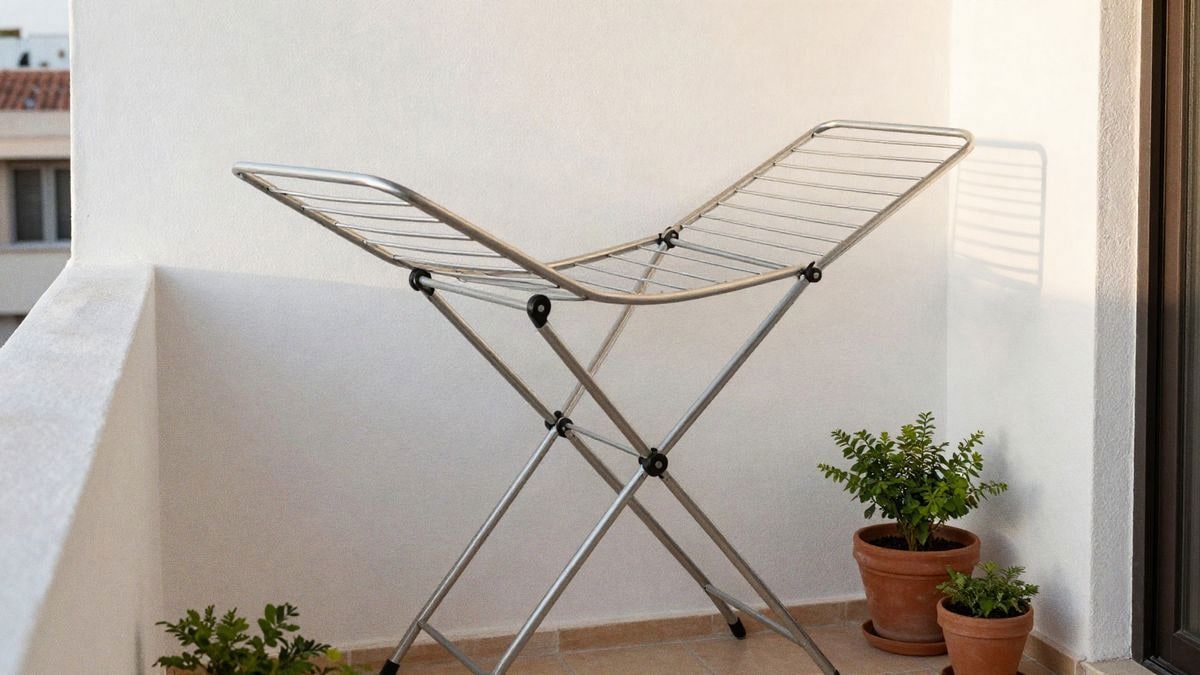
The fundamental difference between a traditional dryer and a foldable one is the ability to disappear when its mission is complete. While a fixed dryer takes up diagonal space all year round—even when you don’t need it—foldable ones can be stored in a corner, behind a door, or hung on the wall. Some fold in on themselves until they are the size of an ironing board; others close like an umbrella. This flexibility is pure gold for those living in limited square metres.
Dimensions matter more than you think. Most foldable dryers measure between 40 and 60 centimetres when deployed, allowing you to hang between 10 and 20 items without the space feeling cramped. When closed, they barely exceed 10 or 15 centimetres in width. Before buying one, draw the available space on your terrace on the ground and check that you can open it fully without it touching the railing or the pots. It’s not the most romantic thing, but it works.
There are several types of foldable dryers, each with its advantages depending on your terrace and routine. Metal structures with stainless steel bars are the classics, sturdy and durable; those made of wood combined with steel have a warmer touch, although they require more maintenance; and lightweight aluminium ones are ideal if you really need to minimise weight and space. My personal favourite is the double-body type, which grows in depth as well as height because they multiply the available bars without taking up more floor space.
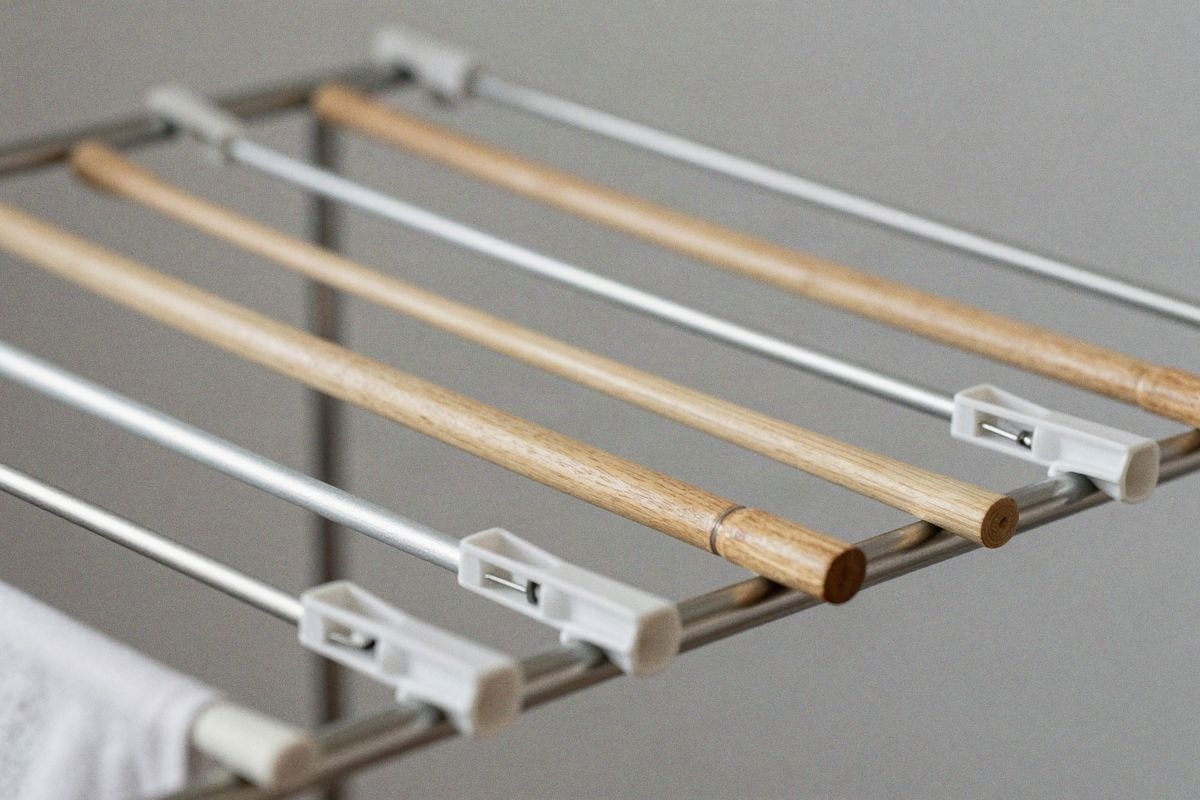
The material of the bars is where the difference in quality is noticeable. Stainless steel dryers age better, especially on terraces near the sea or exposed to high humidity. Galvanised steel is more economical but ends up rusting over the years. If your terrace is very exposed to the sun, look for a finish that doesn’t get too hot—I’ve seen people burn their fingers when picking up clothes from a dryer in direct sunlight at noon, which is not pleasant.
Now, the location of the dryer on your terrace is almost as important as the model you choose. Ideally, it should be in a corner that receives sun (but not scorching sun all day), has good air circulation, and is not in the line of strong winds that sweep through the city. If your terrace is so small that you have no options, look for a very compact model that folds like an accordion, taking up little space in any orientation.
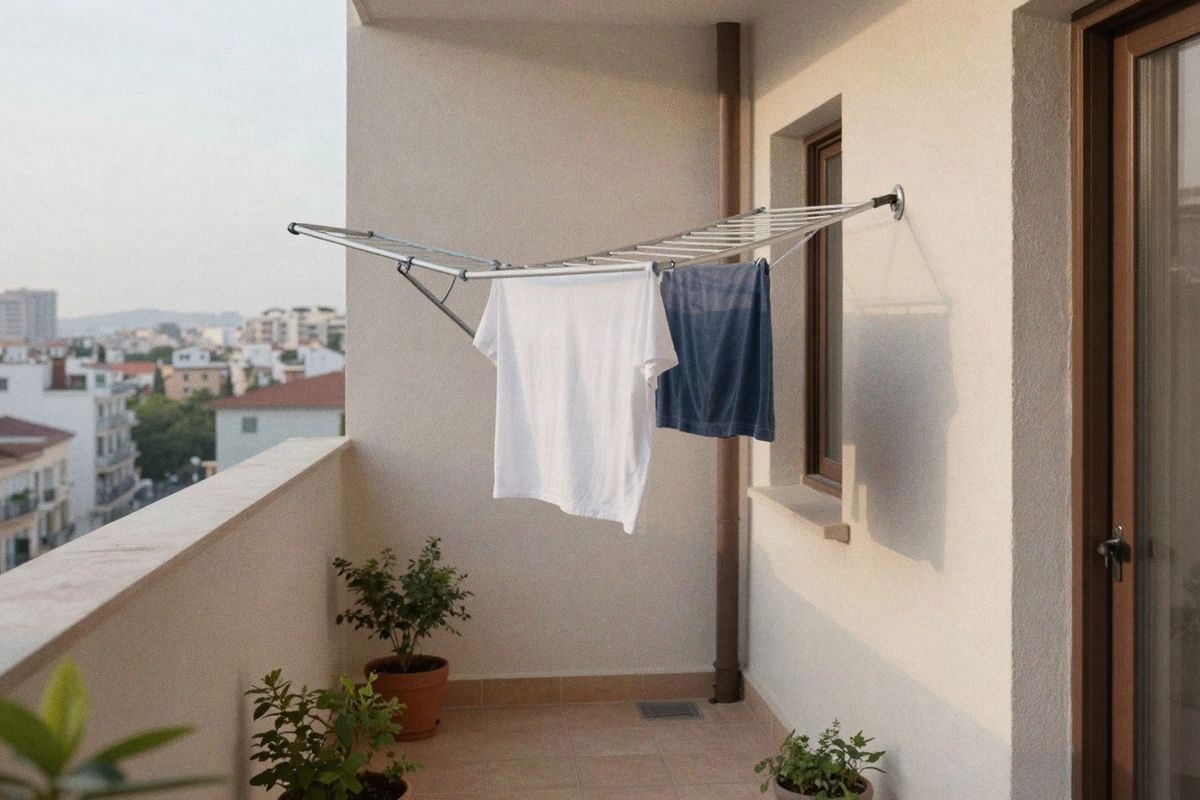
There’s a trick that works especially well on small terraces: hang the foldable dryer from the vertical wall instead of resting it on the ground. There are wall-mounted dryer models that unfold from the wall like a fan. They occupy the same depth space but free up square metres from the floor, which is crucial when your terrace is more like a balcony. Just make sure you have a wall with enough strength—not just any partition will do.
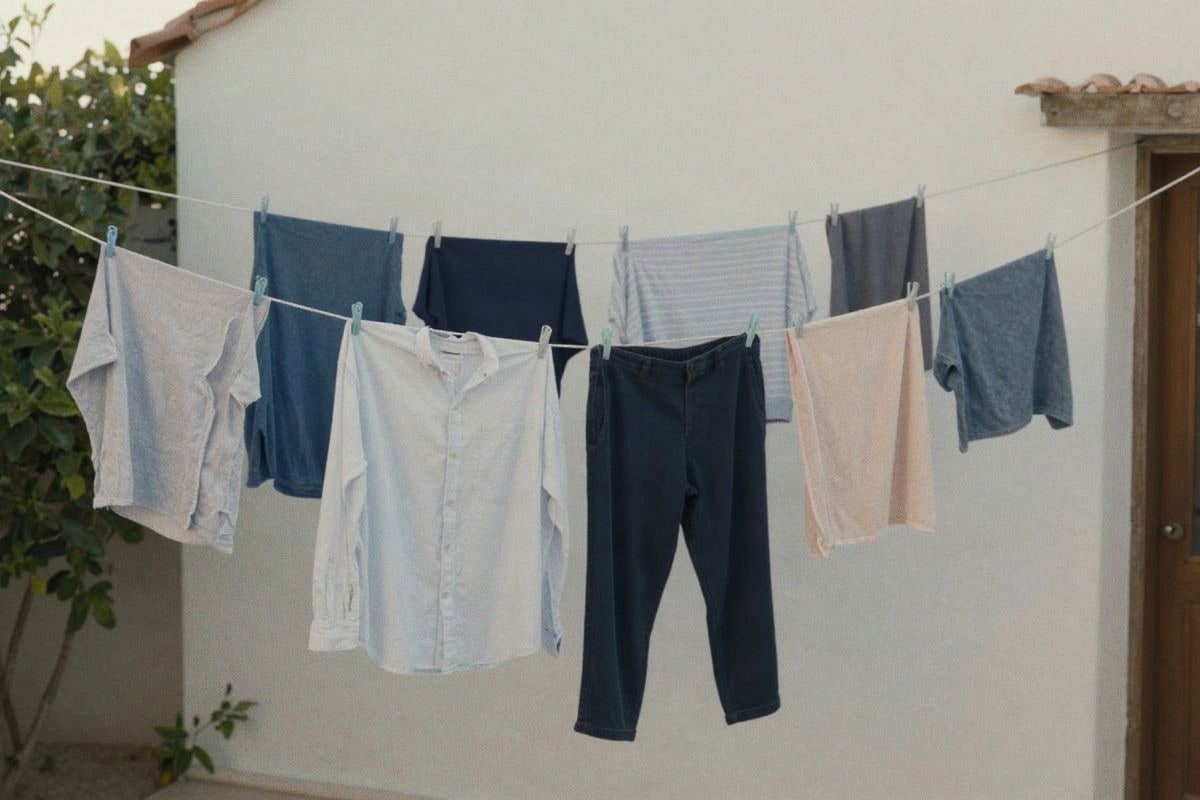
The drying speed depends on several factors: the material of the clothes, the time of year, and the weather, but also on how you arrange the items. Spacing out the clothes is essential: if you hang everything squashed together, the inner parts take twice as long to dry. On a foldable dryer, alternate t-shirts with towels, long trousers with blouses, so that air circulates well. In summer, a lightweight item dries in 2-3 hours; in winter, you need a full day. Towels and sheets are the champions of slowness, so reserve the dryer for these the night before washing them.
Maintaining the dryer is simple if you treat it well. After using it, let it dry completely before folding it, especially if it has rained or if you live in a very humid climate. A dry cloth wiped over the bars every month or two works well, and if you notice signs of rust, a bit of white vinegar will remove them. Wooden models need a natural treatment each season to prevent the wood from drying out.
The colour is perhaps the least important aspect, but if your terrace has a specific decor, look for a dryer that doesn’t clash. Iron grey, moss green, or natural wood tones work better than very bright colours that look like gadgets. If your terrace is very visible from the street or a communal garden, a dryer in warm tones always adds more warmth than a futuristic silver one.
Another thing we learned at Casa y Deco is that foldable dryers are not just for clothes. During the times you don’t use them for drying, they serve as decorative towel racks, supports for blankets in winter, or even for drying wet plants after watering. The versatility gives you more value for your money. Some models even come with integrated clip bags, where you can store the pegs when you don’t need them.
If your terrace receives frequent rain, keep in mind that you need to store the wet dryer or at least drain it well. Invest in a dry and accessible storage place—a corner under an eave, a cupboard next to the access door, or a sturdy storage box. Don’t leave the dryer exposed in winter or during heavy rain, because even though it’s durable, it will age faster and the folding mechanisms may get stuck.
The budget varies greatly: from basic aluminium models for less than 30 euros to designer dryers made of certified wood for over 100. The price-durability ratio is usually good in the mid-range, so it’s not necessary to spend a fortune. Be wary of very cheap ones with finishes that look fragile; a dryer that breaks after a month is not a bargain.
In the end, choosing a foldable dryer for your small terrace is about choosing practicality without sacrificing aesthetics. It’s an object that disappears, saves space, works when you need it, and transforms those moments of hanging clothes into something less cumbersome. If there’s one thing we’ve seen at Casa y Deco, it’s that well-chosen small details make a huge difference in how we live our daily lives. A three-square-metre terrace with a well-placed foldable dryer is more functional than any mansion with storage issues.

You may also like