At Casa y Deco, we love discovering solutions that transform small spaces into functional and beautiful kitchens. One thing that modern interior design has taught us is that size is no excuse to forgo comfort, and compact dishwashers are the proof. Those tight spaces of less than six square metres deserve smart appliances that don’t take up half the kitchen and that also perform their function perfectly.
When faced with a small kitchen, every centimetre counts. Compact dishwashers are around 45 centimetres wide (compared to 60 for standard models) and can wash between 6 and 8 complete sets, which is more than enough for one or two people. The real magic is that they adapt to spaces where a conventional model simply wouldn’t fit, either on the countertop or underneath it. I confess that for years I thought they were impractical, until I visited a kitchen where one of these little devices was the MVP of the space.
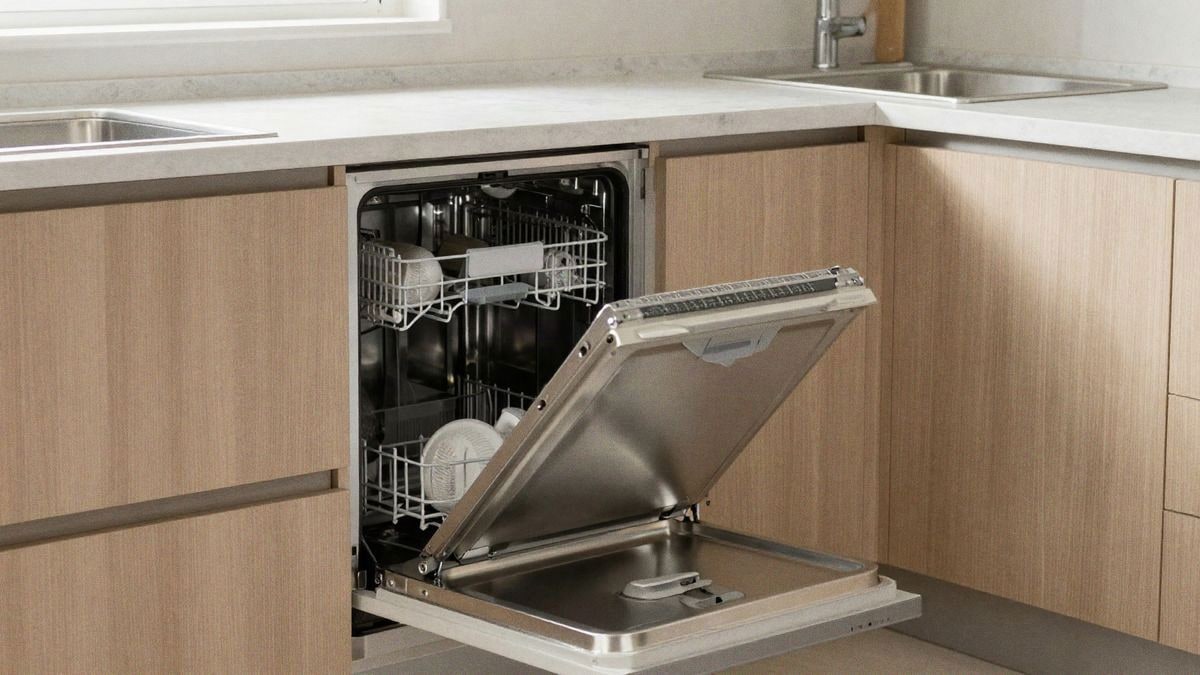
The first thing you need to do is measure precisely where you want to install it. It’s not just the width; the depth and height are also critical. A built-in compact dishwasher measures approximately 45 x 67 x 82 centimetres (width x depth x height), although there are variations depending on the brand. Before making any purchase, sketch out the appliances you already have, the sink, and the furniture, to see where it fits without creating a bottleneck. The kitchen must remain navigable; if opening the dishwasher door collides with the fridge, we have a problem.
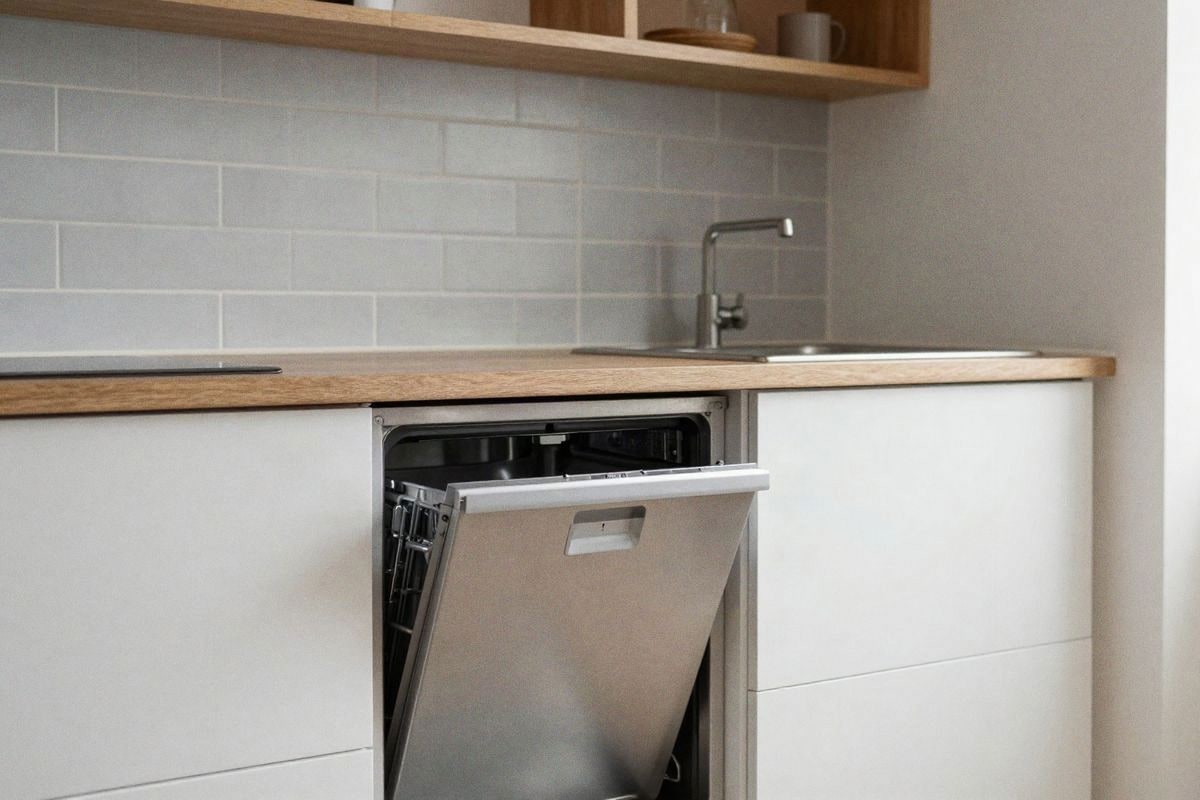
There are two main types of installation. Freestanding models are those that you simply place in their space and connect; perfect if you’re renting or don’t want renovations. Integrated models, on the other hand, blend into a custom cabinet with a door that coordinates with the rest of the kitchen. If your kitchen is very small and design is important, integration makes the space look more organised and spacious, because you don’t see the appliance as a standalone element. Visually, it gains a lot.
Now, where should you place it exactly? If you already have a sink, the most logical thing is to install it next to it, taking advantage of the existing water and drainage connections. This reduces renovation costs and complications. In truly tiny kitchens, some opt to place it in the corner, although care must be taken with doors that open in the same direction. I confess that I’m not convinced by those placements that create traffic conflicts; I’d rather sacrifice a few plates than have a kitchen where you can’t move freely.
The material of the inner tub is fundamental for durability. Models with stainless steel tubs are more resistant and last longer than those with reinforced plastic, although they also cost more. Steel withstands the impacts of plates better, doesn’t discolour, and if there’s one thing we’ve learned at Casa y Deco, it’s that small investments in the interior quality of appliances pay off after five years. The steel tub also helps reduce noise during the wash cycle, which is important in spaces where the kitchen and living room are almost adjacent.
Washing programs vary by model, but the basics are essential: an intensive cycle for pots, pans, and casseroles; a normal cycle for everyday dishes; and a delicate cycle for glasses and cups. Look for at least three or four different programs, because washing ceramic plates is not the same as washing fine glassware. Some modern models include a quick 30-minute program that is great for when you need clean dishes as soon as possible. There are also eco programs that consume less water and energy; perfect if sustainability matters to you.
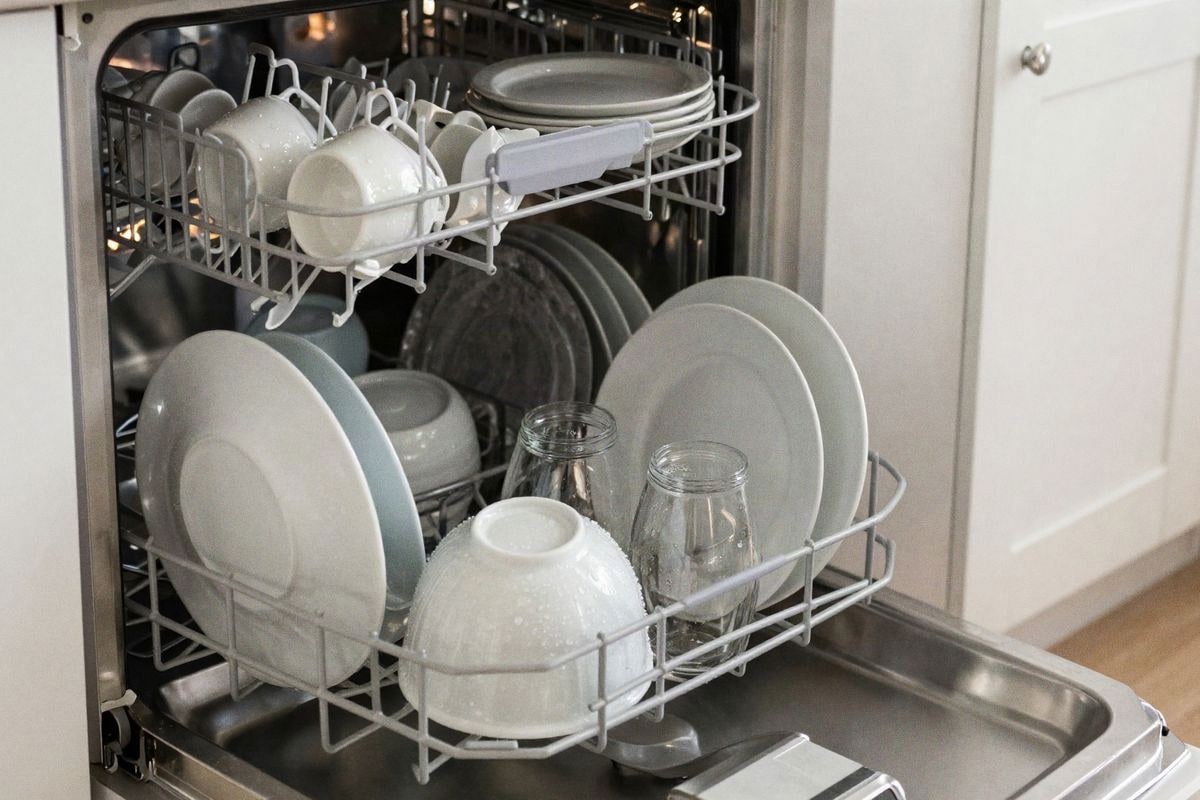
The loading capacity is where compact models have an advantage over countertop ones. Dishwashers with three drawers or two trays can hold more plates than you might imagine if you distribute them well. Place large plates horizontally in the bottom tray, glasses and cups in the top hanging from the supports, and cutlery in the cutlery basket. Don’t try to force items in; if you can’t close the door without pushing hard, something isn’t right. Air must circulate inside for the drying system to work properly.
The energy consumption of a compact dishwasher is lower than that of a standard one simply because it washes fewer dishes. Look for models rated A++ or A+++ if you want to reduce your electricity bill. Typical consumption ranges from 190 to 240 kWh annually for moderate domestic use, comparable to leaving an LED bulb on for a couple of hours a day. It’s not a significant expense, but it is something to consider if your budget is tight.
Noise is another metric to watch. The quietest models operate at 42-45 decibels, which is practically imperceptible. The loudest reach 50 decibels, like a normal conversation. If your kitchen is connected to the living room without physical separation, opt for a quiet model; the difference in comfort is noticeable. You don’t want to be watching a series with the dishwasher sounding like a helicopter in the background.
As for the exterior design, you have options. Stainless steel finishes remain classic and work in almost any modern kitchen. White fronts are versatile and make small spaces feel brighter. If your kitchen has a warmer style, there are models with fronts in beige or light grey tones that integrate well. The goal is for the dishwasher not to be a visual intruder, but to feel like just another piece of furniture in your kitchen.
Installation is an aspect that many underestimate. If it’s freestanding, you’ll need a cold water connection, drainage, and nearby sockets. Most compact models work with cold water, which simplifies connections. It’s essential that the drainage is well secured and without tight bends that create siphons; otherwise, dirty water can back up. If you’re not handy, hiring an installer is money well spent; poor installation can ruin furniture and walls.
Consumables are cheap and accessible. Cleaning tablets for dishwashers from well-known brands are available in any supermarket. They also sell specific salt for descaling the machine internally, something you should do every three to four months if you have hard water in your area. Salt is not optional; if you don’t use it, you’ll soon see limescale deposits on the spray arms and washing efficiency will drop. It’s a minimal investment that extends the appliance’s lifespan.
There is a very common mistake: not loading the dishwasher correctly. Many people put the plates in any old way, without thinking that the water must reach all surfaces. Plates should face the centre of the tray, slightly tilted so that the water hits them; glasses should be inverted on the supports, and cutlery mixed in the basket to avoid sticking together. A correct load can improve cleaning by up to 40% compared to a chaotic load.
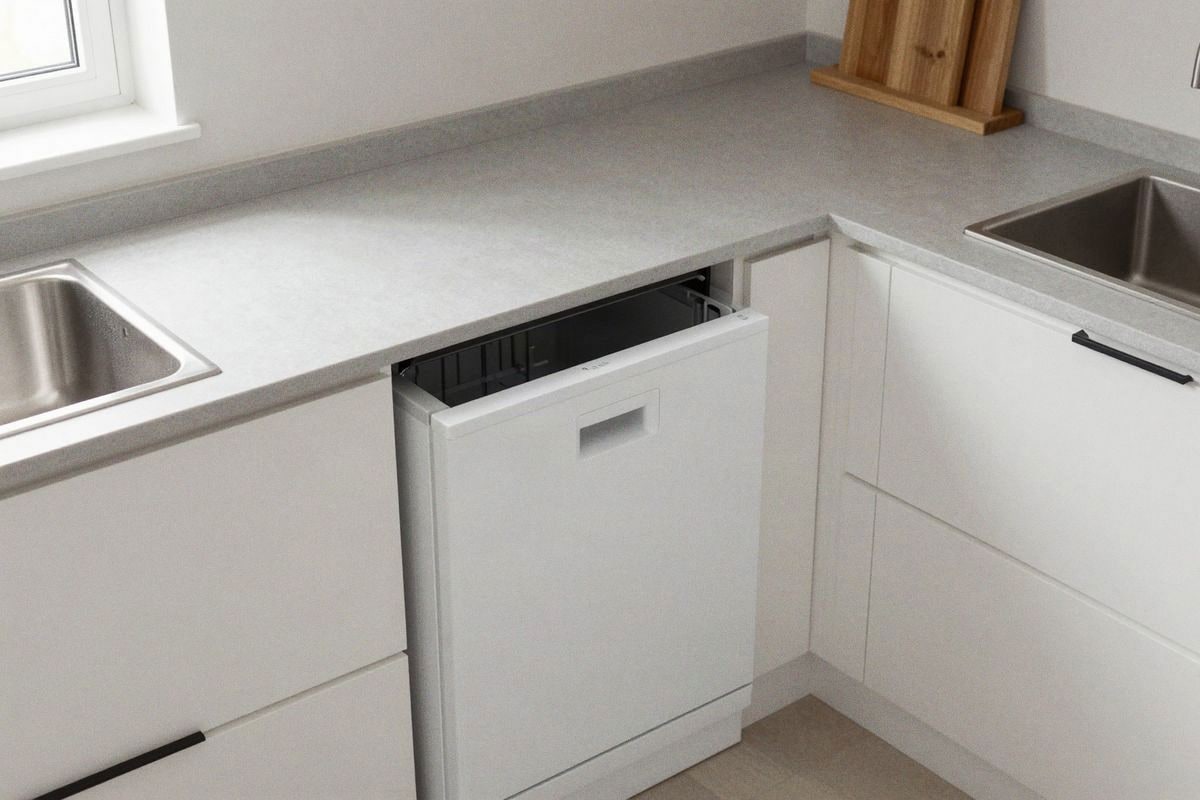
For kitchens smaller than six square metres, we consider a compact dishwasher to be the smart solution. You don’t forgo comfort, you don’t lose important storage space, and you gain in hygiene and time. The initial expense pays off in a couple of years with savings on water and daily convenience. If there’s one thing we’ve learned at Casa y Deco, it’s that the best interior designs are those that solve real problems without sacrificing aesthetics. Compact dishwashers do exactly that: they are functional, discreet, and if chosen well, last for years providing invaluable service.

You may also like