At Casa y Deco, we love a well-prepared, cozy, and comfortable sofa, but I confess that for years we made the most common mistake of all: overcrowding our resting pieces with more cushions than we actually needed. It was an interior designer visiting our showroom who pointed this out to us with that phrase that changed our perspective: "fewer cushions, more sofa." And since then, we have learned that this is one of the most frequently asked questions among our readers and followers.
The reality is that there is no universal rule that defines the exact number of ideal cushions, as it depends on many factors: the size of the sofa, the style of decoration, how you use it day to day, and, of course, your personal taste. However, interior designers do have clear criteria that work in most cases, and those are what we will break down today.
The Minimalist Approach: Less is More
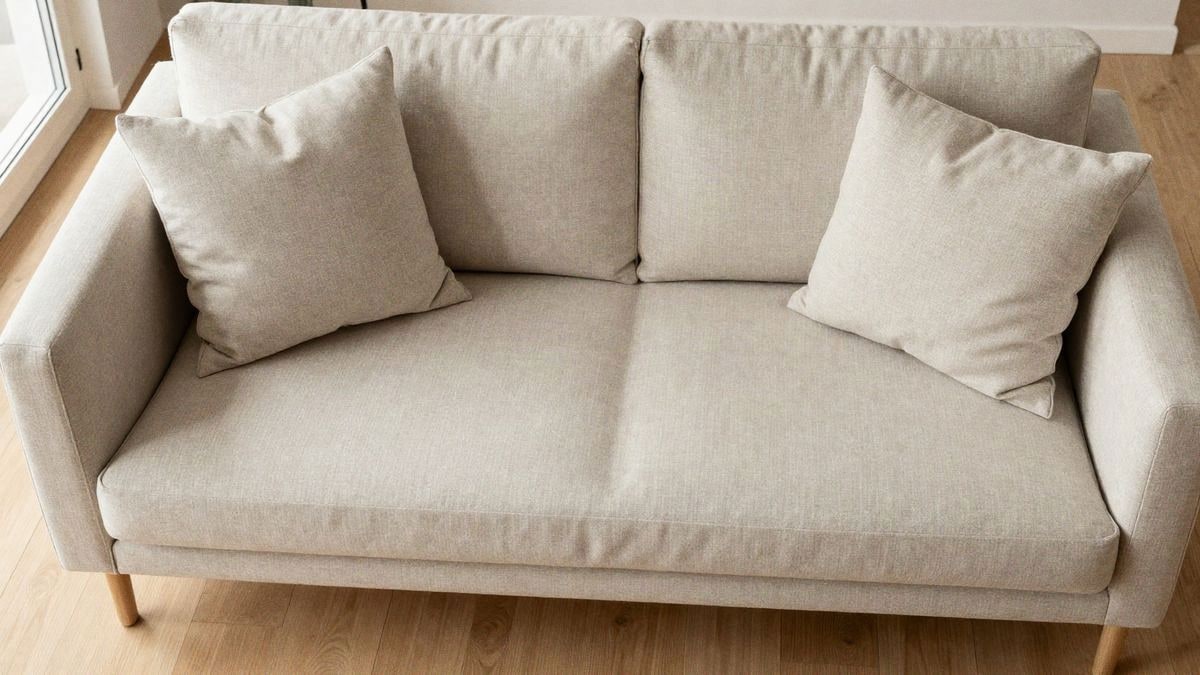
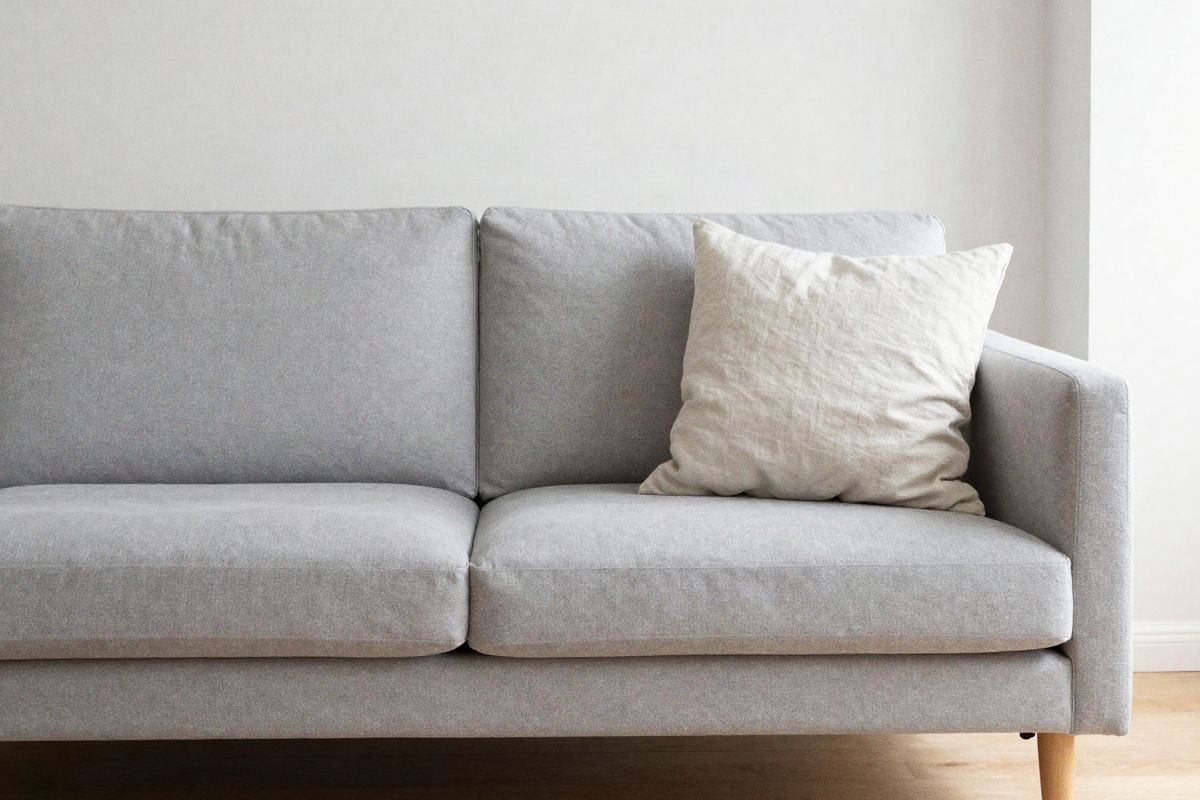
The minimalist trend has come to stay, and with it, a more rational way of understanding cushions has also arrived. Minimalist interior designers opt for one or two large cushions that occupy the center of the sofa and match the main upholstery. This approach works especially well in small spaces or when the sofa is the absolute protagonist of the resting area.
A two-seater sofa will barely need one large square cushion, while a three or four-seater can have two cushions of the same size or one at each end. This distribution keeps the sofa functional and avoids that "textile wardrobe" effect that occurs when you accumulate too many accessories. Additionally, psychologically, it is much more pleasant to see the backrest and the natural shape of the furniture.
The Proportion Rule: Sofa vs. Cushions
There is a basic rule that we have seen work in hundreds of projects: cushions should never occupy more than one-third of the usable surface of the sofa. If you have a three-meter sofa, for example, you can calculate that the actual sitting space is approximately two and a half meters, and your cushions should not exceed eighty centimeters in total width.
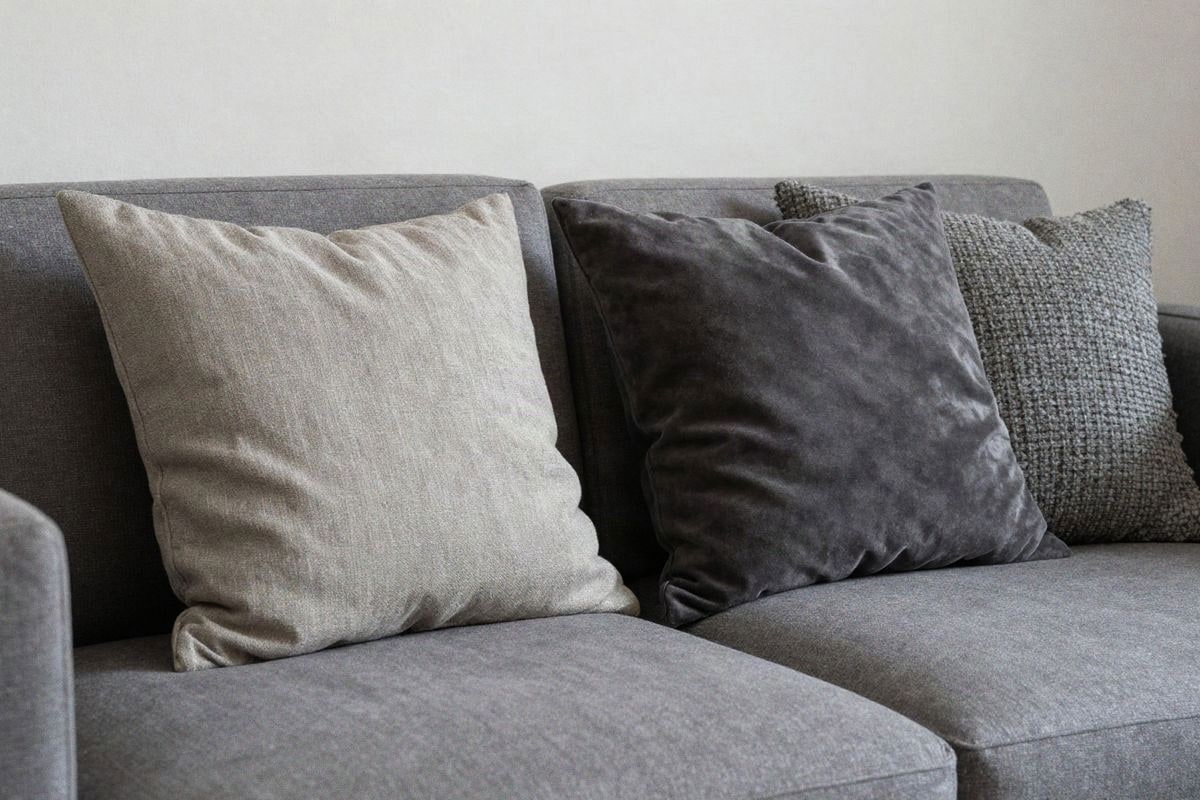
For a medium-sized sofa (200 centimeters), interior designers recommend between two and four cushions at most. For a larger one (250 centimeters or more), you can go up to five or six, but always making sure the majority of the available surface is clear. The idea is that someone can sit comfortably without having to move anything first.
Strategic Shapes and Sizes
Not all cushions have to be the same, and this is where creativity comes into play. Mixing sizes creates a more dynamic and professional composition. A trick that works very well is to place two large square cushions at the ends (ideal for back support) and one smaller or elongated one in the center, or none if you prefer to see the central upholstery.
Long rectangular cushions are also a smart option if you want to cover more surface without taking up much volume. They measure about 60 centimeters long by 30 wide, and they give a sense of spaciousness while maintaining functionality. I confess that I recently gave them a chance in a project, and the result was much more elegant than I expected.
Lifestyle Determines Quantity
Do you have small children or pets? Then the cushions should be minimal and practical. In these cases, one or two cushions made of durable fabric is recommended. I’ll be honest: cushions are magnets for stains, mess, and intense use in busy homes.
If your sofa is mainly for receiving guests and enjoying it as a design piece, then you can allow yourself more creativity. Four or five well-selected cushions can create a beautiful visual composition in an elegant and calm living room. The difference lies in how you use the space and what your real priorities are.
Colours and Textures: The Aspect of Selection
It’s not just about quantity, but about ensuring that the cushions you choose are visually necessary. A coherent palette makes even three cushions look like an intentional choice. If your sofa is grey, some cushions in dark graphite with one in off-white will create balance without overwhelming.
Interior designers also recommend alternating textures: a smooth cushion with another in velvet, linen, or textured cotton. This adds visual depth without the need to accumulate quantity. A cushion in merino wool, another in linen, and one more in navy velvet on a beige sofa, for example, is a combo that works wonderfully.
Strategic Distribution on the Sofa
Where to place the cushions is as important as how many to put. Experts suggest always placing them supported on the corners or sides, never randomly scattered in the center. This creates a sense of order and purpose. If you have two large cushions, one on each end is ideal. If there are three, two on the sides and one small slightly displaced in the center.
Cylindrical cushions or the so-called "bolster" work very well on the arms of the sofa if yours has that capability. They are a smart way to add functionality without detracting from the visibility of the furniture. A 70-centimeter bolster in natural linen on a dark-coloured sofa provides that sophisticated touch without excess.
The Visual Effect in Different Decorative Styles
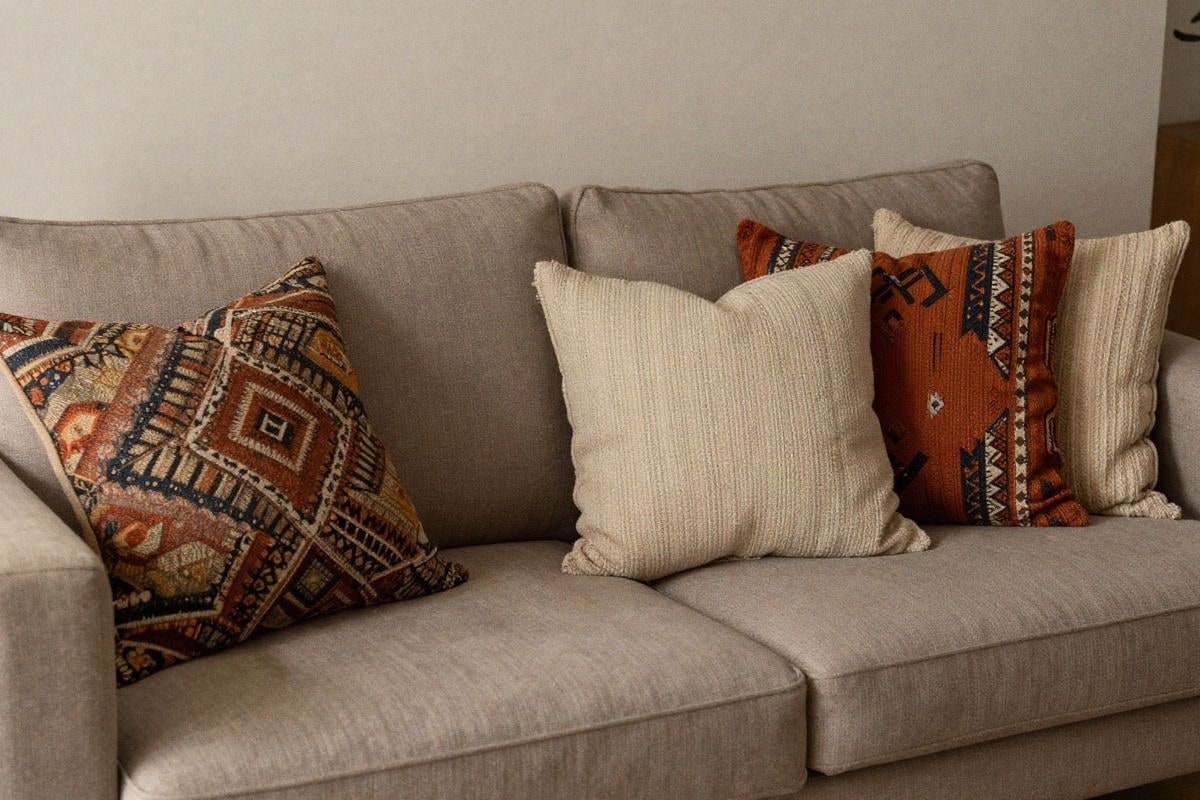
In a minimalist Nordic style, the recommendation is clear: one or two cushions in neutral tones. On the other hand, if your home follows a bohemian or eclectic line, you can allow yourself more visual freedom with five or six cushions of varied patterns and textures. The overall decorative style of your home should be the main guide.
For classic or traditional styles, interior designers advise between three and four cushions with clean geometric shapes and noble materials like velvet or silk. In contrast, the industrial style allows for just two cushions in thick fabric or leather. The idea is that the cushions respect and complement the personality of the entire space.
Maintenance and Practicality: The Real Factor
The fewer cushions, the easier it is to keep the sofa clean and tidy. I’m not telling you anything new: each cushion is a space where dust accumulates, gets into the folds, and requires constant adjustments. If you opt for a moderate amount, you will spend less time reorganising every morning.
Professional interior designers would also tell you that each cushion must justify itself. If you don’t take it out at least once a week to adjust it, fluff it, or take it to wash, it’s probably unnecessary. That’s a good test: do you really use the cushion? If the answer is no, take it out of the equation.
The conclusion we have drawn at Casa y Deco after working with hundreds of spaces is that between two and four cushions is the golden number for most sofas. This range provides comfort, keeps the aesthetic clean, facilitates the actual use of the furniture, and allows the upholstery to breathe. Always remember: a beautiful sofa is one that invites you to sit down, not one that invites you to move cushions first.

You may also like