At Casa y Deco, we love when a piece of furniture does double duty: being beautiful AND practical. The upholstered bench for the foot of the bed is exactly that. Since we started paying attention to these little details, we have discovered that behind this element that seems purely decorative lies a whole functionality that completely justifies its presence in the bedroom.
If there's one thing we've learned, it's that in decoration nothing is just aesthetic, even if it seems that way at first glance. The bench at the foot of the bed has roots in classic interior design, but nowadays its purpose goes far beyond simply looking good. Let's see what really lies behind this piece of furniture that more and more people are adding to their bedrooms.
The Practical Function That No One Mentions
Let's start with the reality: a bench at the foot of the bed is incredibly functional. It serves as the perfect storage space for those morning and night items you need to have on hand but don’t want to leave on the bedside table. I confess that this changed my life when my bedside tables were small: we had the clothes for the next day, bags with what we were going to put in the washing machine, even spare blankets when we had guests.
Moreover, it’s the ideal place to leave clothes before folding them or for a temporary guest bed. If you have teenage children (and suffer from what some call the "invisible chair syndrome" in the room), the bench is an elegant solution that actually encourages people not to throw clothes anywhere: that is a little psychological decorating trick that works.
The Visual Impact: Much More Than Just Furniture
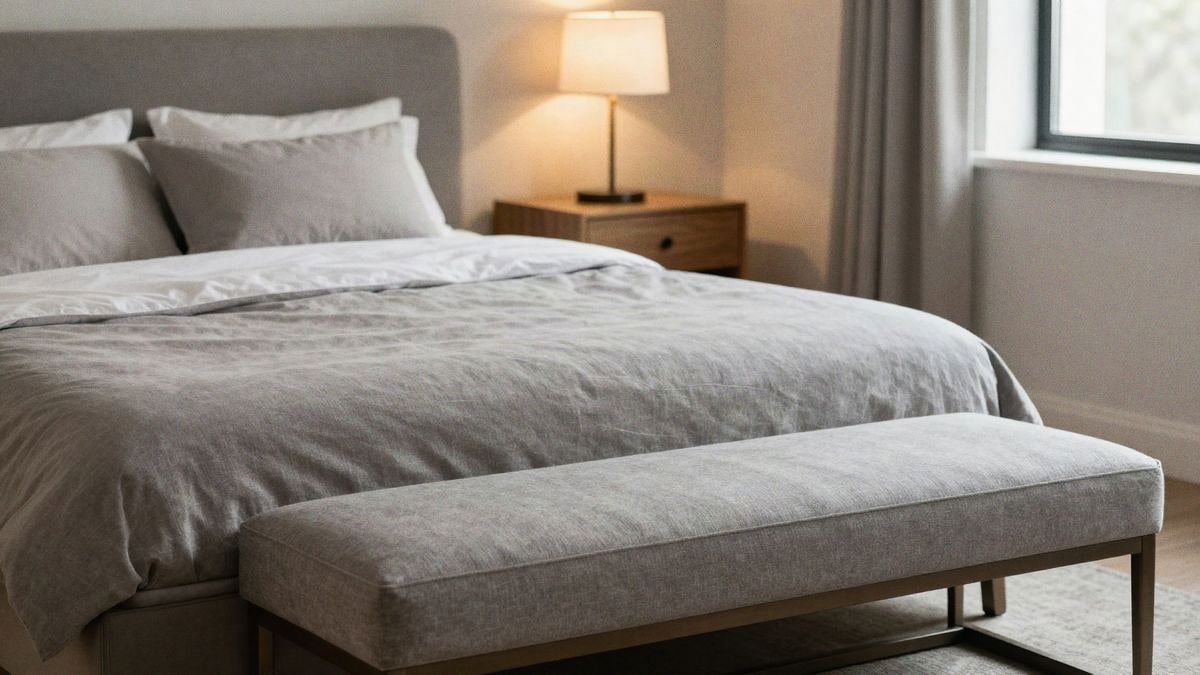
Here comes what we all see first: the aesthetics matter, and a lot. A well-chosen bench completely defines the look of the entire lower area of the bed. If your bedroom has a modern minimalist style, a bench with straight lines in a neutral tone like medium grey or warm beige (recommended width: between 120 and 150 centimetres) perfectly closes the space. For a more classic or romantic bedroom, a tufted bench with details in the seams and in cream or soft blue tones is practically mandatory.
What we love at Casa y Deco is how a well-chosen bench creates visual balance. The bed is the dominant element, but the bench prevents the lower area from looking empty or abandoned. It’s like closing a picture: visually, the bedroom feels more complete and thought-out.
Materials and Textiles: What Matters for Durability
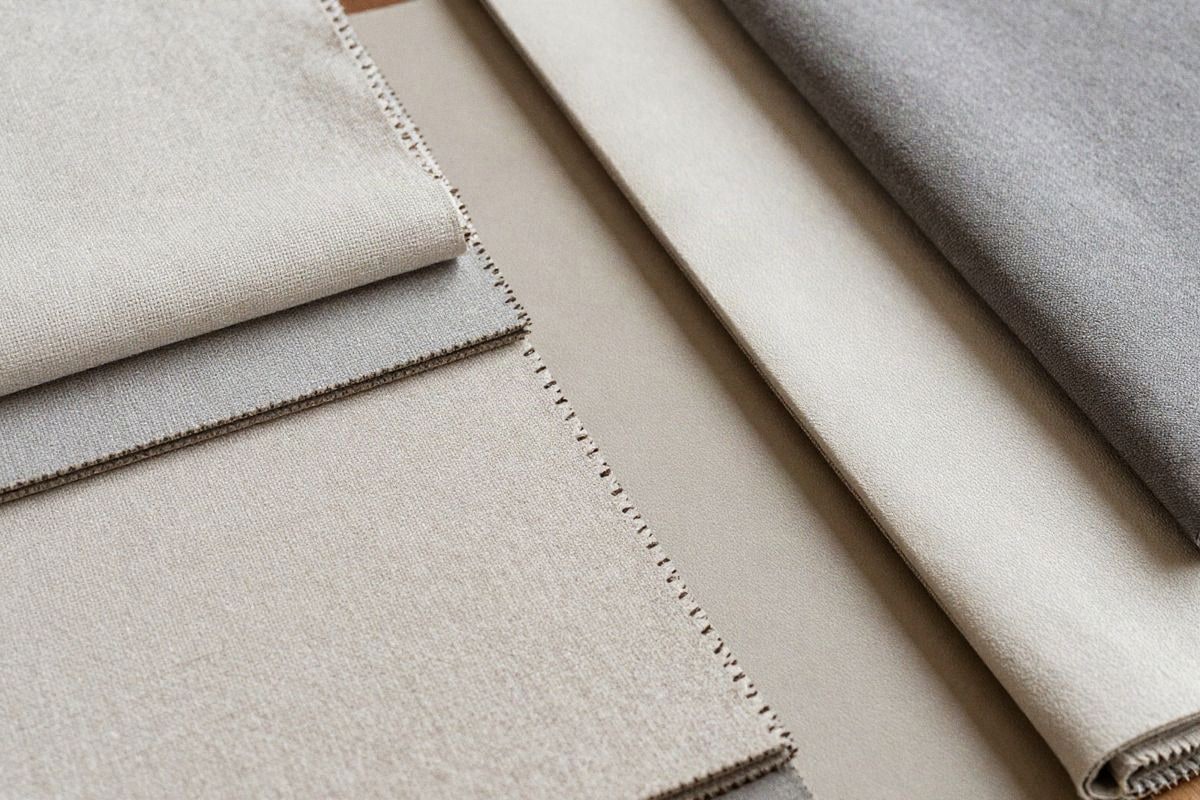
The upholstery is key. Not all materials work the same in a bench at the foot of the bed because here there is real use, not just visual. The most durable and practical textiles are sturdy cotton, pure linen, or cotton-polyester blends in balanced proportions. We advise against very delicate silks or velvets in this location: clothes, people sitting, constant movements... everything conspires against overly sensitive fabrics.
Synthetic or genuine leather works well if you want something easier to clean, but I confess that leather in the bedroom always feels a bit cold to me. It depends on your climate and personal taste. What’s important is that the filling is medium to high density (minimum 20-25 kg/m³) so that the bench maintains its shape after months of constant use.
Height and Proportion: The Numbers That Work
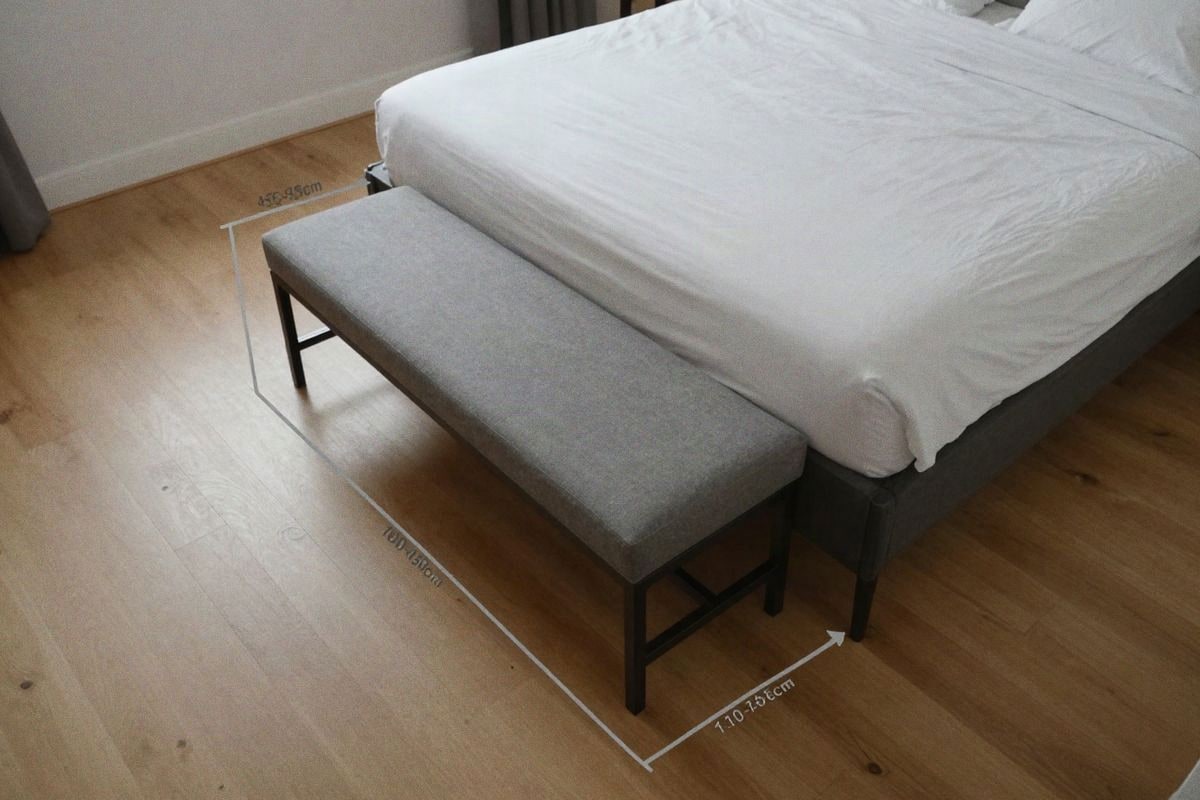
This is where most people make mistakes: the height of the bench should be between 45 and 55 centimetres from the floor. Why? Because ideally, it should be slightly lower than the mattress (which typically is between 50 and 60 centimetres) to maintain visual harmony. If the bench is higher than the bed, the entire composition falls apart, visually speaking.
Regarding depth, 15 to 20 centimetres is the safe range. Less and it becomes too narrow to be practical; more and it starts to invade the circulation space of the bedroom. In small bedrooms, this measurement is critical: the bench should not obstruct passage or make the room feel claustrophobic.
Colour Combinations That Work
The basic rule is to repeat a colour that already exists in the room. If your bedding is in shades of grey and blue, a bench in dark grey or navy blue completes the colour circle. If you prefer to contrast, a neutral beige or cream works with almost everything and maintains that balance without competing with the bed's prominence.
We avoid very saturated or vibrant tones on the bench: we leave those colours for cushions or decorative details that are easier to change if you get tired of them. An upholstered bench is a long-term investment, so classic tones like grey, camel, warm beige, or navy blue are your safe allies.
Integrated Storage: Bonus Points
Some benches come with flip-top or internal compartments for storage. This is the option we especially recommend for bedrooms with little space or for those who need to maximise every square metre. It perfectly accommodates seasonal clothes, blankets, extra pillows, or those items you use once a year but need to store somewhere.
If you choose a bench with storage, make sure the opening mechanism is smooth and durable. Quality hinges and pneumatic closures make the difference between a piece of furniture that lasts for years and one that starts to squeak or not close properly in the first year.
The Psychology of Space in the Bedroom
A bedroom without a bench at the foot of the bed can feel incomplete, even if we don’t consciously acknowledge it. It’s one of those elements that when it’s not there, we don’t notice its absence, but when we add it, the bedroom gains serenity and a sense of being "finished". Psychologically, a well-organised and decorated space invites more rest.
Moreover, that "transition" area created by the bench between the floor and the bed has an almost ceremonial effect: it’s the place where you literally prepare for rest or where you return to reality upon waking. It’s not a small thing if you think about it.
Specific Styles: Find Your Bench
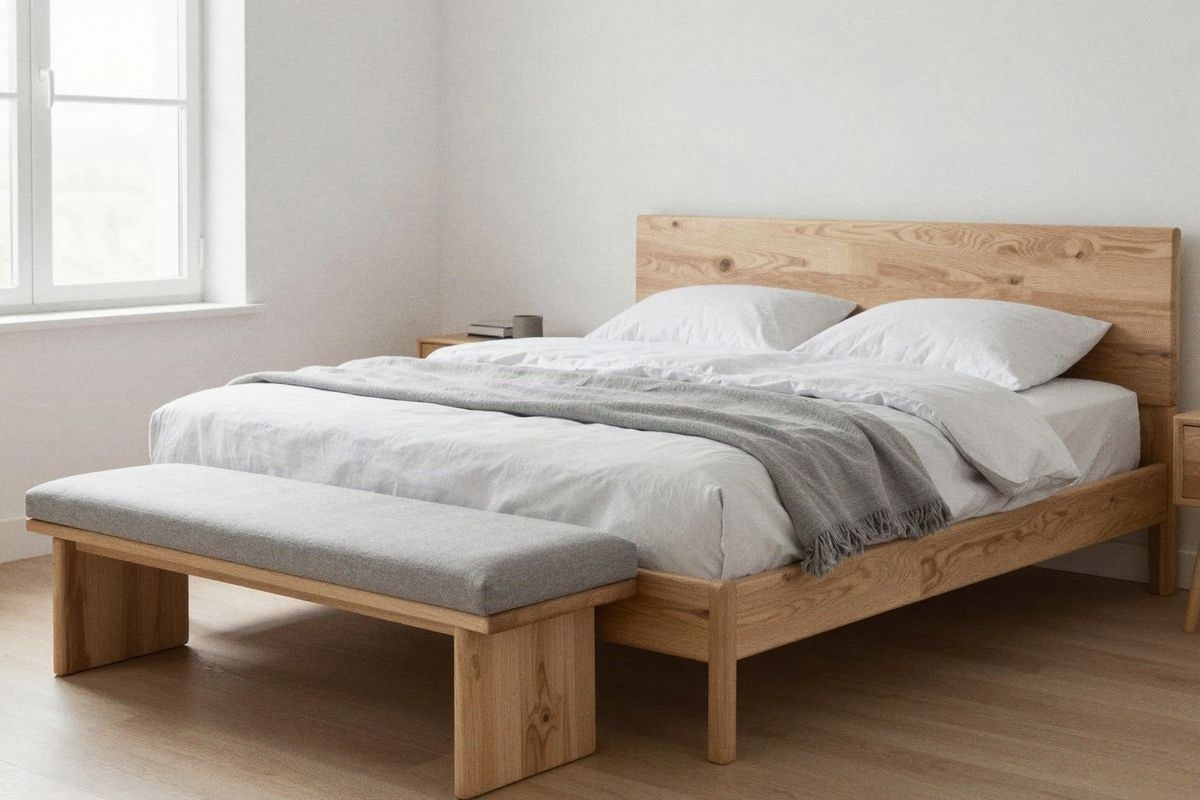
If your bedroom is Nordic or Scandinavian, look for benches in light tones, natural woods combined with upholstery in light grey or off-white, straight lines, and total functionality. For an industrial bedroom, benches with iron or steel frames combined with leather or canvas work wonderfully. If your style is classic or French, opt for tufted designs, decorative edges, and soft tones like cream, pale blue, or dusty pink.
In bohemian or ethnic bedrooms, benches with hand-woven textures, tassel appliqués, or macramé details are the perfect option. And if you’re going for Japanese minimalism, a low bench, with not overly visible legs, in natural tones like beige or grey is exactly what you need.
The Price of Awareness: Don’t Spend More Than Necessary
Here we’re going to be honest: you don’t need to spend a fortune on a bench. The function is simple, care is easy if you choose materials wisely, and aesthetically there’s no special magic that justifies exorbitant prices. What does matter is investing in a good wooden structure (pine, birch, or similar) and quality filling.
Avoid the very cheap ones that sink in the middle after six months. Also avoid the excessively expensive ones when similar offers exist at a fairer price. The middle ground is where the sense lies: a well-made bench in terms of price-quality lasts comfortably 5-7 years, which is a decent return.
In conclusion, that bench at the foot of your bed is not a frivolity of decoration, although it may seem so. It is functional, it is beautiful, and it is a small luxury that truly fulfills its mission: to improve your bedroom both aesthetically and practically. The next time you enter a furniture store, don’t overlook it. Try it, feel the upholstery, sit for a moment, and visualise how it would look in your room. We bet that once you have it, you won’t know how you lived without it.

You may also like