If there's one thing we've learned at Casa y Deco, it's that having pets and carpets isn't always incompatible, even if it sounds like a marriage destined for failure. I confess that for years I refrained from putting carpets in my living room because of my dog, until I discovered that the problem wasn't the carpet itself, but the material. Now I understand that choosing the right carpet can be the difference between living surrounded by fluff or enjoying a beautiful and functional home, even with our furry companions running around everywhere.
Traditional carpets, especially those made of pure wool or long, abundant fibres, are like magnets for hair. Every pass of our dog or cat leaves them turned into a nest of filaments that are impossible to remove with a conventional vacuum cleaner. The problem is that hair gets tangled in the fibres, and no matter how much you vacuum, there's always something left. The key is to choose materials with short, dense, and smooth textures that don't trap hair like a curly or furry fibre would. That's why in this guide we want to tell you exactly which types of carpets work best when living with animals.
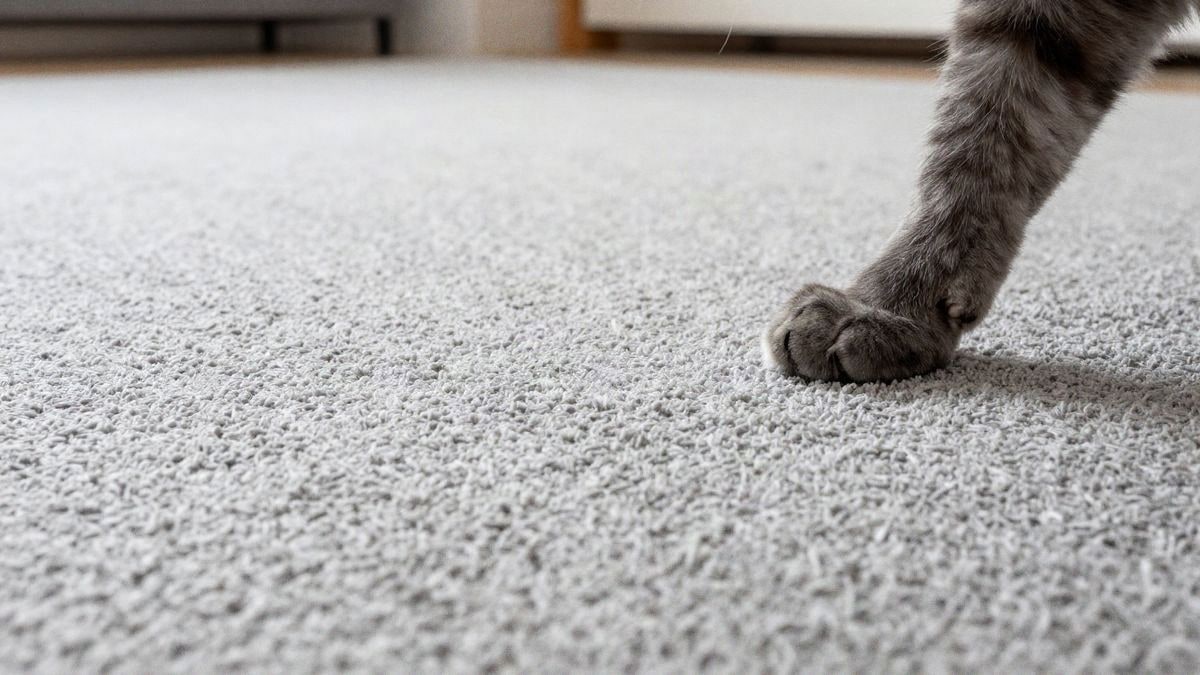
Materials That Repel Pet Hair
Polypropylene is probably your best ally. This synthetic material has smooth, short fibres that do not trap hair. Additionally, it is incredibly resistant to stains from urine, mud, and everything your pets might bring in from outside. It is washable, durable, and the fur from our pets simply slides off the surface. I confess that I initially thought a polypropylene carpet would sound a bit unrefined, but I've seen designs and colours so beautiful that it has nothing to envy from other more expensive options.
Nylon is another excellent option, although a bit more delicate than polypropylene. It has a softer texture and also resists hair quite well. The main difference is that nylon tends to be a bit more expensive and requires slightly more demanding care. Still, if you're looking for something that combines durability with a more luxurious feel underfoot, Frieze-type nylon—with short, curly fibres—works surprisingly well with pets.
Natural short hair fibres, such as sisal or jute, are also interesting options. These materials have a rough and dense texture that does not significantly retain hair. They are eco-friendly, aesthetic, and add warmth to any space. However, keep in mind that they are more porous, so if your pet has accidents, absorption can be an issue. To mitigate this, many are sold with water-repellent treatment.
Microfiber is another hidden gem. It consists of very fine and dense fibres that create a compact surface where hair simply does not adhere. Additionally, it is inherently stain-resistant and very easy to clean. Styles like "microsuede" are becoming increasingly popular in homes with pets because they offer a pleasant tactile experience without sacrificing functionality.
Design Features That Make a Difference
The weight and density of the fabric are fundamental. A dense carpet—measured in grams per square metre—traps less hair than a loose and fluffy one. Look for carpets with densities over 1000 grams per square metre. The tighter the weave, the fewer opportunities hair has to get tangled. Furthermore, a dense carpet is more resistant to tearing and the constant trampling of claws.
The type of pile also matters a lot. Low or flat pile carpets are your winning option when you have pets. A pile height of between 8 and 12 millimetres is ideal: low enough not to trap hair, but high enough to provide comfort. Berber carpets, with their uncut loop texture, work especially well because hair easily slides over the compact loops.
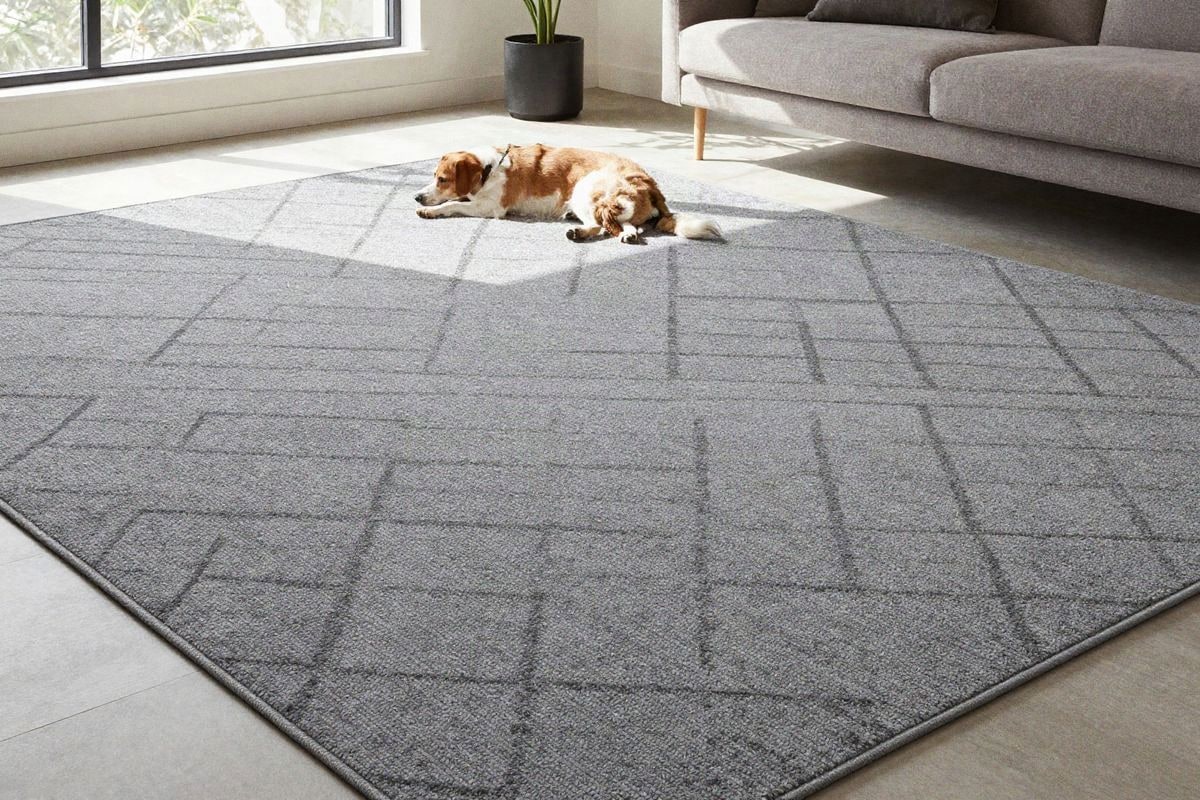
Colour and pattern also play a practical role. We are not convinced by plain light colours when there are pets in the house, because hair shows up a lot. Grey, brown, black tones, or patterns with small motifs camouflage dirt and hair that may remain visible between vacuuming. This saved my living room: I changed from a light beige carpet to a grey one with a mottled pattern, and it completely changed my relationship with cleaning.
Sizes and Strategic Placement
Consider the size of the carpet in relation to the high-traffic areas of your pet. A small carpet in your dog's resting area may be easier to maintain than a large one. If you have multiple pets, it might be better to use several medium-sized carpets in different areas than one large one that covers the entire space. This also allows you to remove one for cleaning while using the others.
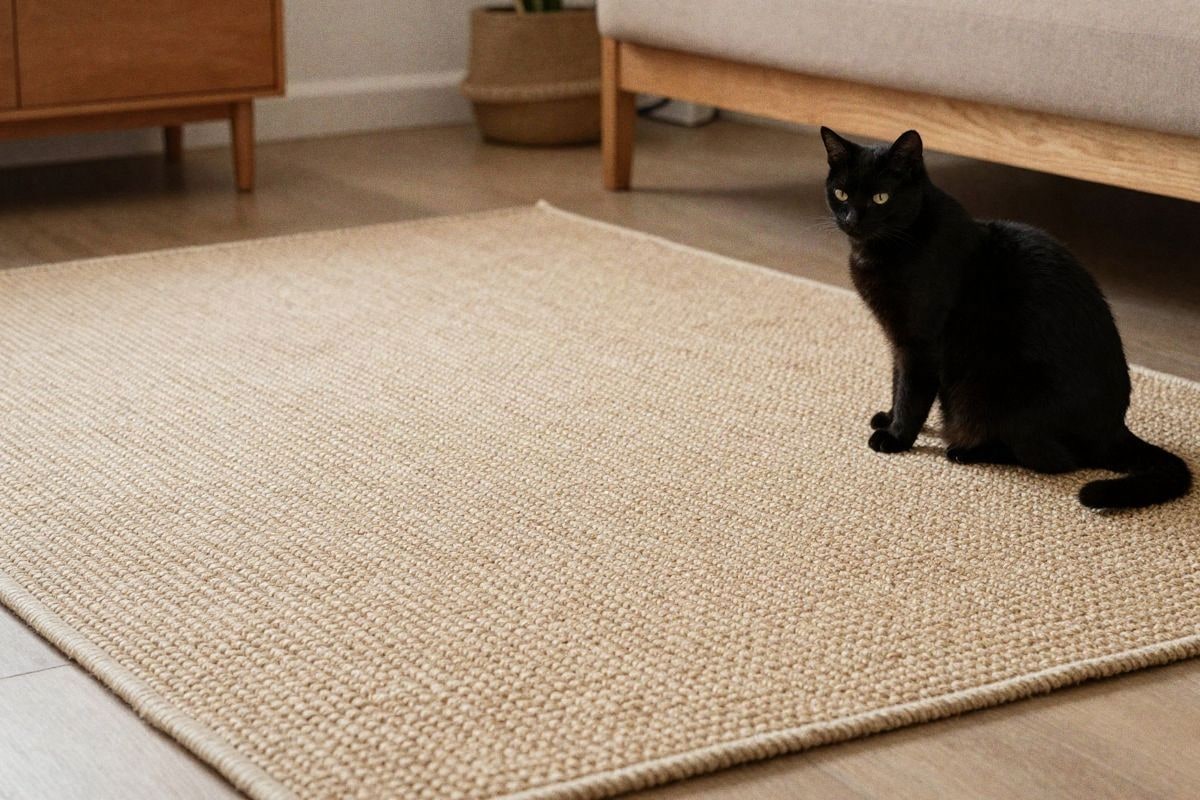
Think about carpets that you can move and wash with some ease. Dimensions of 120 x 180 centimetres or 150 x 200 centimetres are manageable for putting in the washing machine or taking to be cleaned. Very large carpets become complicated to maintain when there are pets, so sometimes it’s better strategy to use smaller pieces distributed throughout the space.
Maintenance and Practical Care
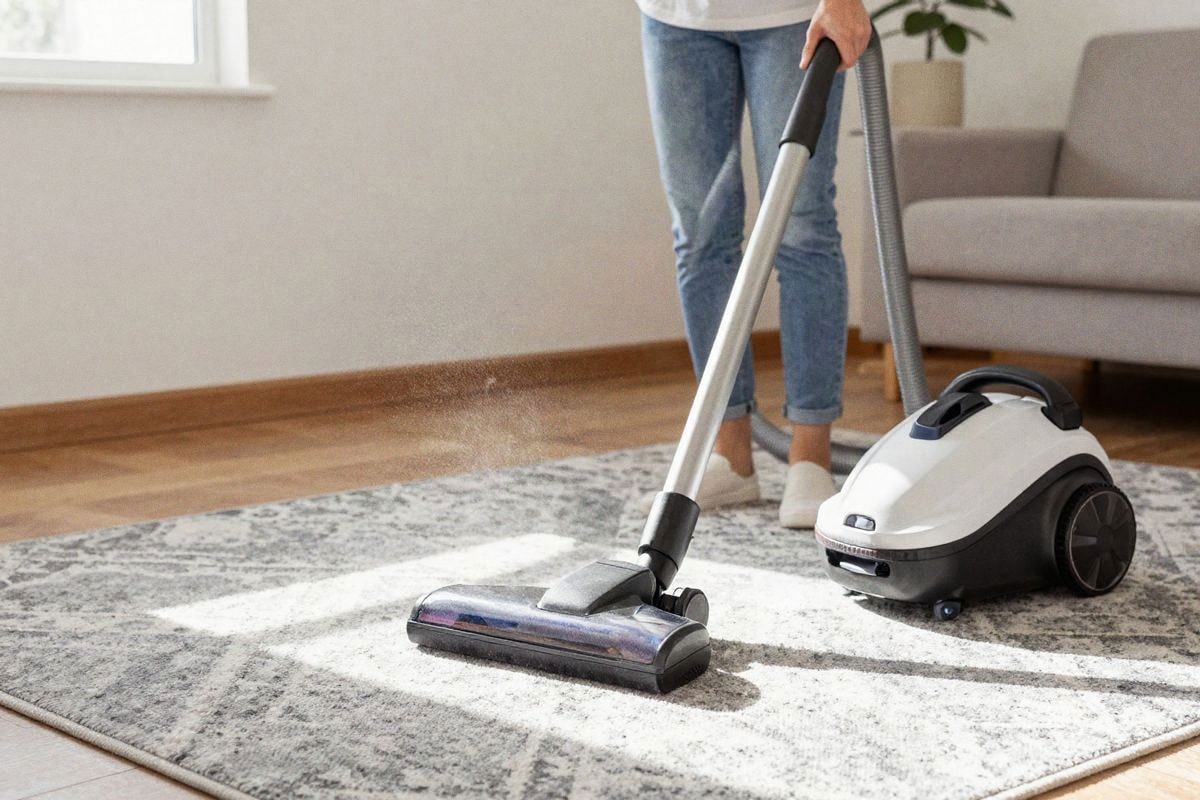
The best material in the world needs basic care to maintain its appearance. Vacuuming two or three times a week is essential in homes with pets. Use a vacuum cleaner with a HEPA filter that captures small particles well. Vacuums with pet-specific technology work especially well because they have brushes designed to lift hair more efficiently.
Regular brushing of your pets dramatically reduces the amount of hair that falls onto the carpet. If you brush your dog or cat every two or three days, you will see how the hair on the carpet decreases considerably. It’s a small time investment that has a huge impact on the cleanliness of your home.
For deeper cleans, consider a portable carpet cleaner, especially models that use hot water. Water-repellent protective treatments can be applied every year or every eighteen months to reinforce the carpet's resistance. Some synthetic materials already come with this treatment incorporated, but it’s worth checking when purchasing.
Choosing a carpet that withstands life with pets does not mean giving up aesthetics or comfort. It simply means being smart with your choices of materials and design. The options we've discussed here—polypropylene, nylon, microfiber, sisal, and treated jute—all work exceptionally well when living with dogs or cats. The important thing is to combine a good material with low pile, high density, strategic colours, and consistent basic maintenance. This way, your carpet will remain beautiful, functional, and practical for years, without your beloved pets' hair being a constant problem.

You may also like