If there’s one thing we’ve learned at Casa y Deco, it’s that revamping a room doesn’t require knocking down walls or breaking the bank. Sometimes, with determination and a bit of strategy, you can completely transform the space where you rest or work. Today, we’ll show you how to do it in three effective steps, without needing to be a carpenter or having a blockbuster budget.
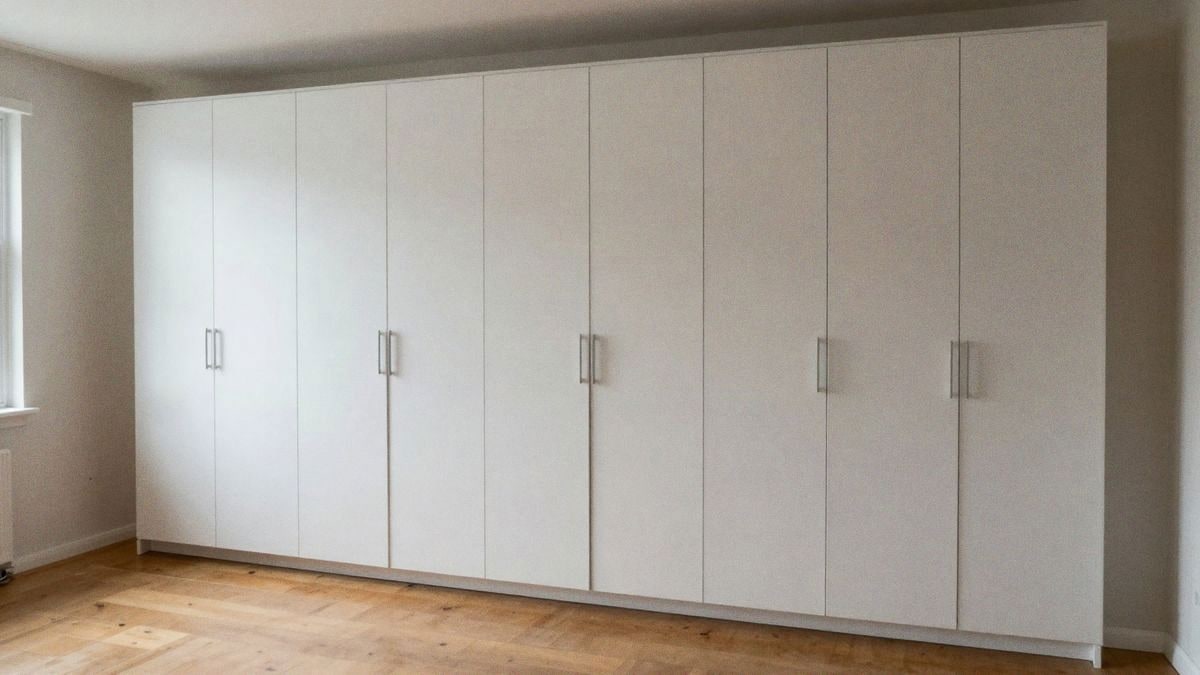
Let’s start with something obvious that almost no one does well: truly observe what you have. Spend an afternoon photographing your room from different angles, with natural and artificial light. This helps you see what works and what doesn’t, without the emotional noise of being inside the space. You’ll often discover that the sofa is completely off-centre, that the wardrobe’s shadow eats up half the light, or that the furniture layout creates a corridor you don’t need.
Step 1: Lighting and Colour, Your Best Allies
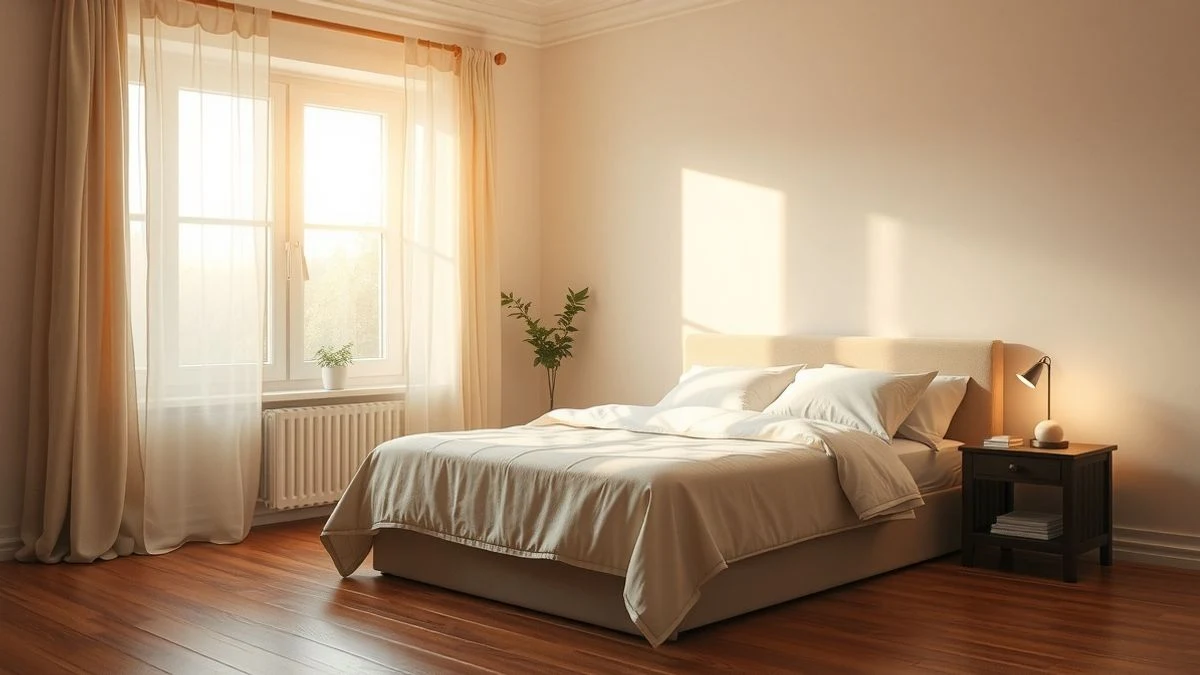
Here comes what has generated the most change in my own projects: lighting is 80% of the renovation. This is no exaggeration. A perfectly decorated room with mediocre light feels depressing; a simple room with well-thought-out lighting transforms into a refuge.
The first step is to assess the sources of natural light. If your window receives direct light all morning, you might need a curtain that filters without darkening: a white linen or medium-weight fabric blind completely changes the quality of light. If light is scarce, forget about heavy dark velvets and opt for textures that reflect light: thick cotton, linen, or even an overlay of tulle.
Now, artificial light is where the battle is won. You need at least three types of lighting in a room: general (so it’s not dark), ambient (to create a sense of warmth), and task lighting. I confess that for years I made the mistake of relying solely on a central 60-watt ceiling light. Now I have a small bedside lamp with warm light (around 2700K), a small downlight recessed in a corner to illuminate the reading area, and an LED strip behind the headboard that you don’t see but changes everything.
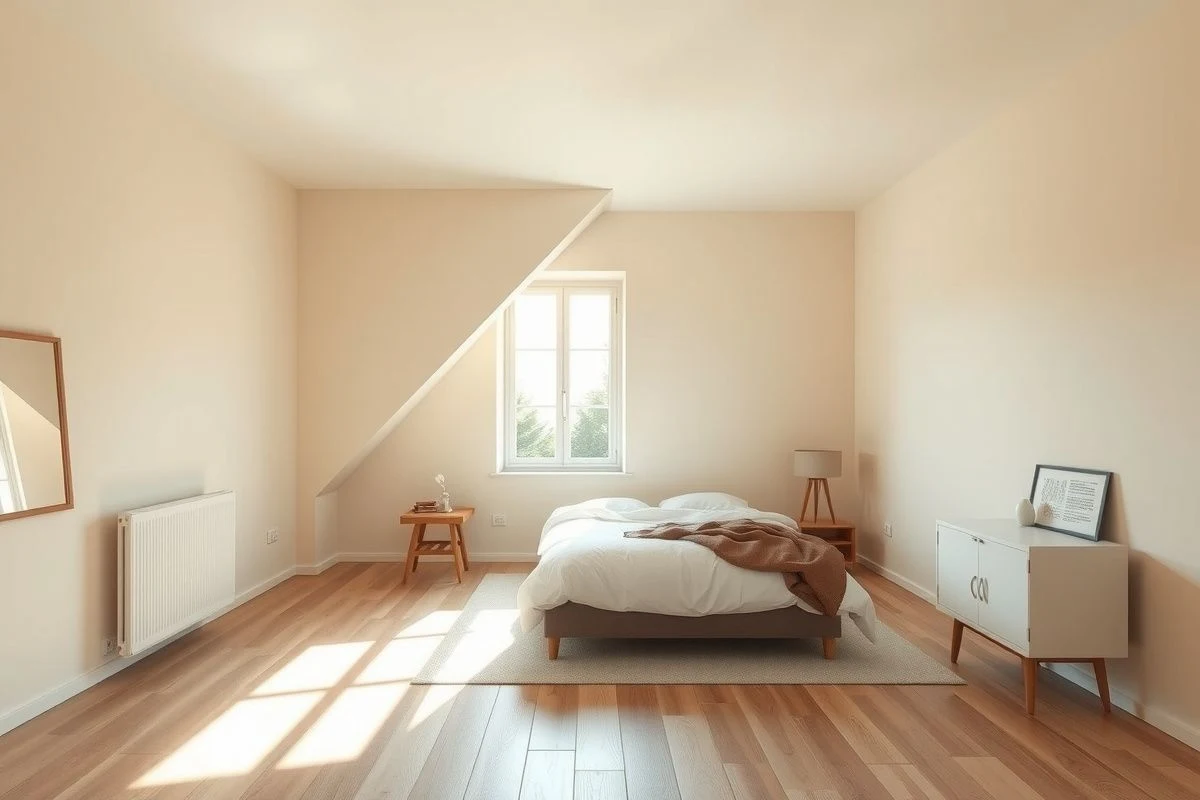
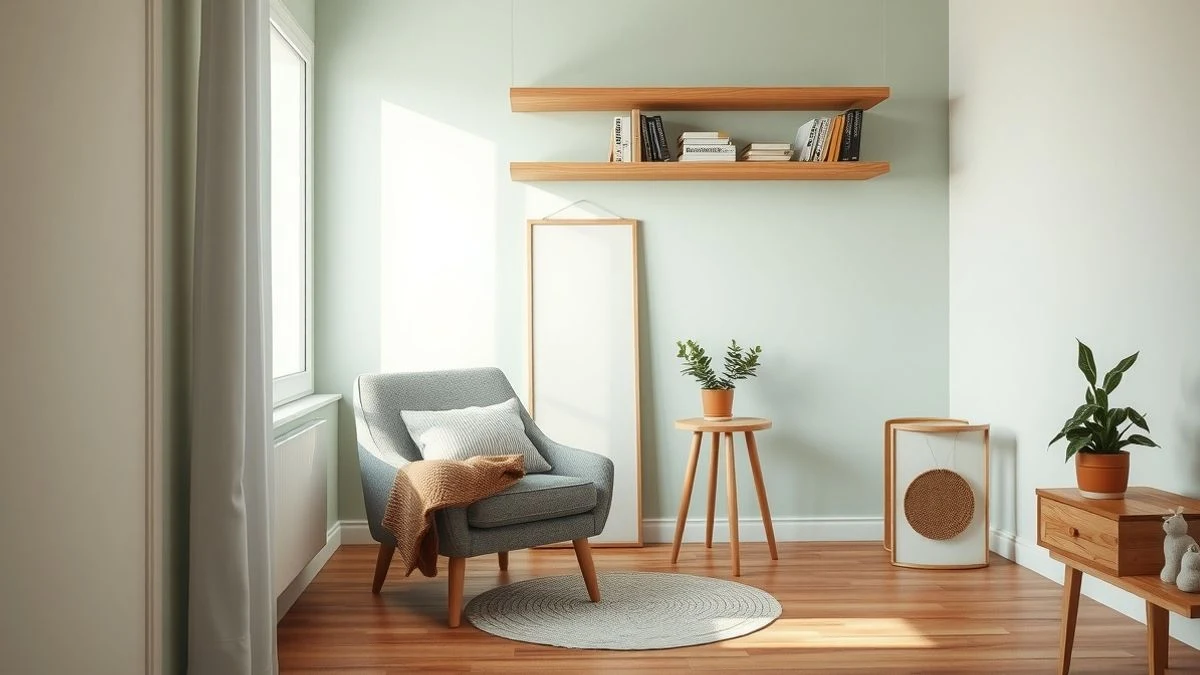
As for colour: you don’t need to paint if you don’t want to. Use textiles, removable wallpapers, or fabric panels to introduce colour. If your room is small (less than 12 square metres), keep the walls neutral and play with colours in the headboard, curtains, and textiles. Warm tones —beige, cream, soft terracotta— make natural light feel cozier. Cool tones —pale blue, sage green— work better in very bright rooms facing north.
Step 2: Smart Furniture Redistribution
This is the step that generates the most satisfaction because it costs no money and the impact is huge. Before moving anything, measure your room with a tape measure: length, width, height of doors and windows. Then take graph paper, a scale of 1:50 (each centimetre of the paper represents 50 of the room), and draw the layout with the current furniture.
The typical temptation is to push the headboard against the longest wall and line everything up. I confess that this saved my living room three years ago: diagonal placement. If your room allows it (at least 2.5 metres between the headboard and the opposite wall), place the bed slightly diagonally, with the headboard in a corner. This allows for better visual airflow, makes the space feel larger, and surprisingly, helps the room flow better.
For the furniture, respect the 60-70 centimetre rule: that’s the minimum distance you need to open a wardrobe, pass between furniture, or sit in a chair without feeling cramped. If your room is 3 by 4 metres, this means not everyone can fit. Prioritise the essentials: where you sleep, where you get dressed, where you possibly work. The rest is luxury.
Step 3: Textiles, Finishes, and the Details That Make a Difference
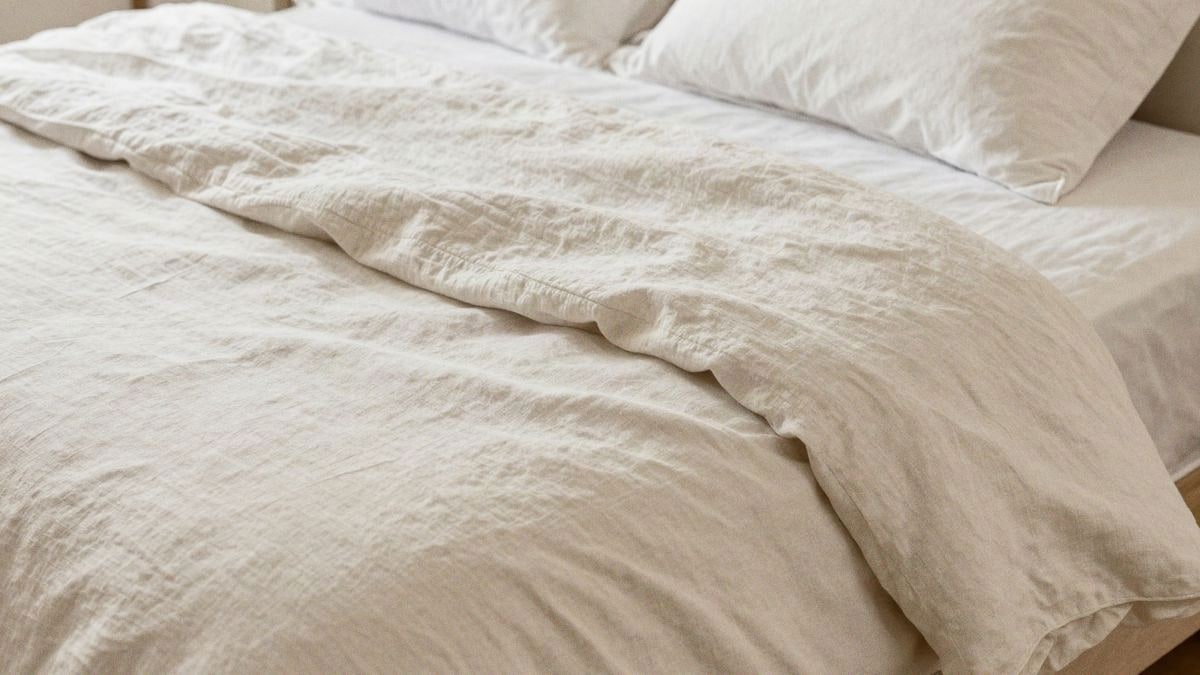
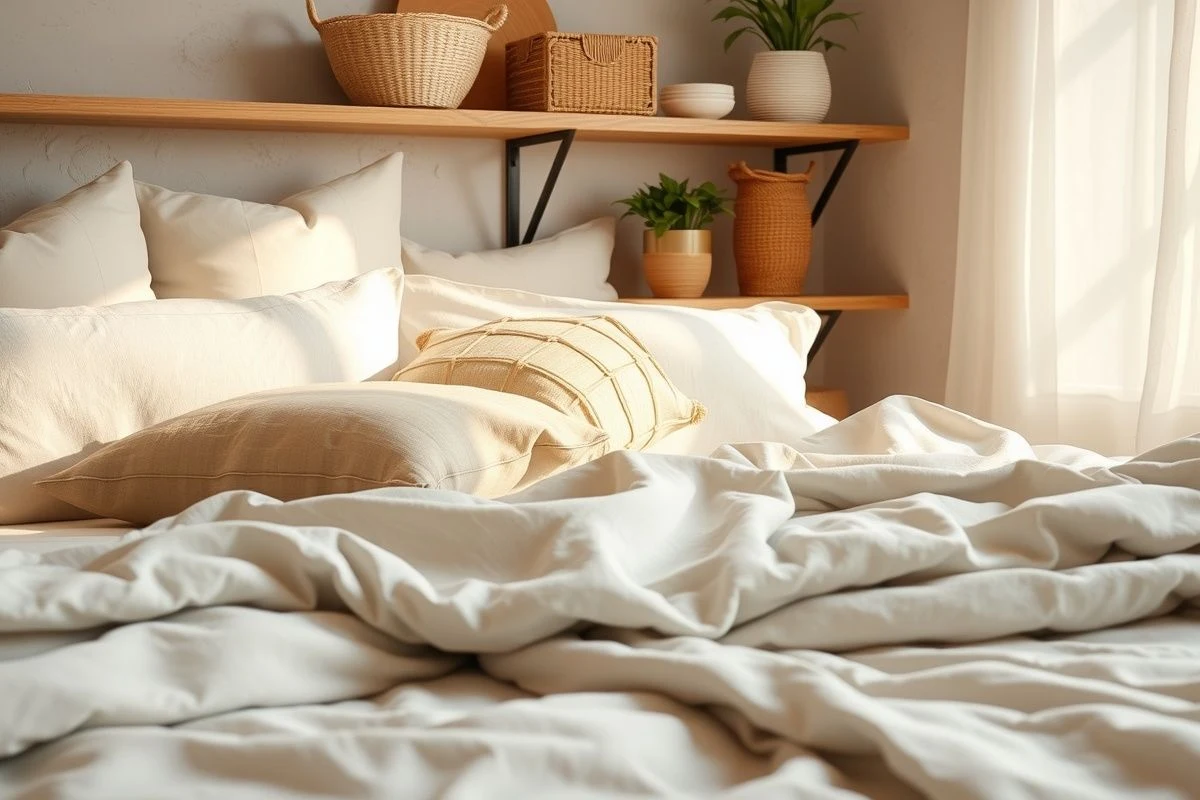
This is where the magic happens. Textiles are what truly transform a room without costing a fortune. A change of sheets, curtains, and cushions can cost 80-150 euros and make it seem like you’ve done a complete renovation. The combination of textures is key: smooth cotton for the sheets, linen for the curtains (which allows light to filter), a chunky knit throw on the bed, and cushions in linen or canvas to last for years.
In terms of colours, think of palettes of two or three tones at most. For example: white or cream as a base (walls, main bedding), a secondary tone in the curtains (soft blue, grey-green), and an accent in decorative cushions or a throw (a soft mustard, a very pale rust). Avoid mixing more than three colour palettes, especially in small spaces: your brain gets restless and the room stops being relaxing.
We’re not keen on radiators or visible sockets if there’s no remedy. But here are three tricks: a fabric cover for the radiator (there are very affordable kits), an upholstered headboard that hides sockets and cables, or simply fabric channels over the cables. They may seem like silly details, but they make the difference between an organised room and one that feels chaotic.
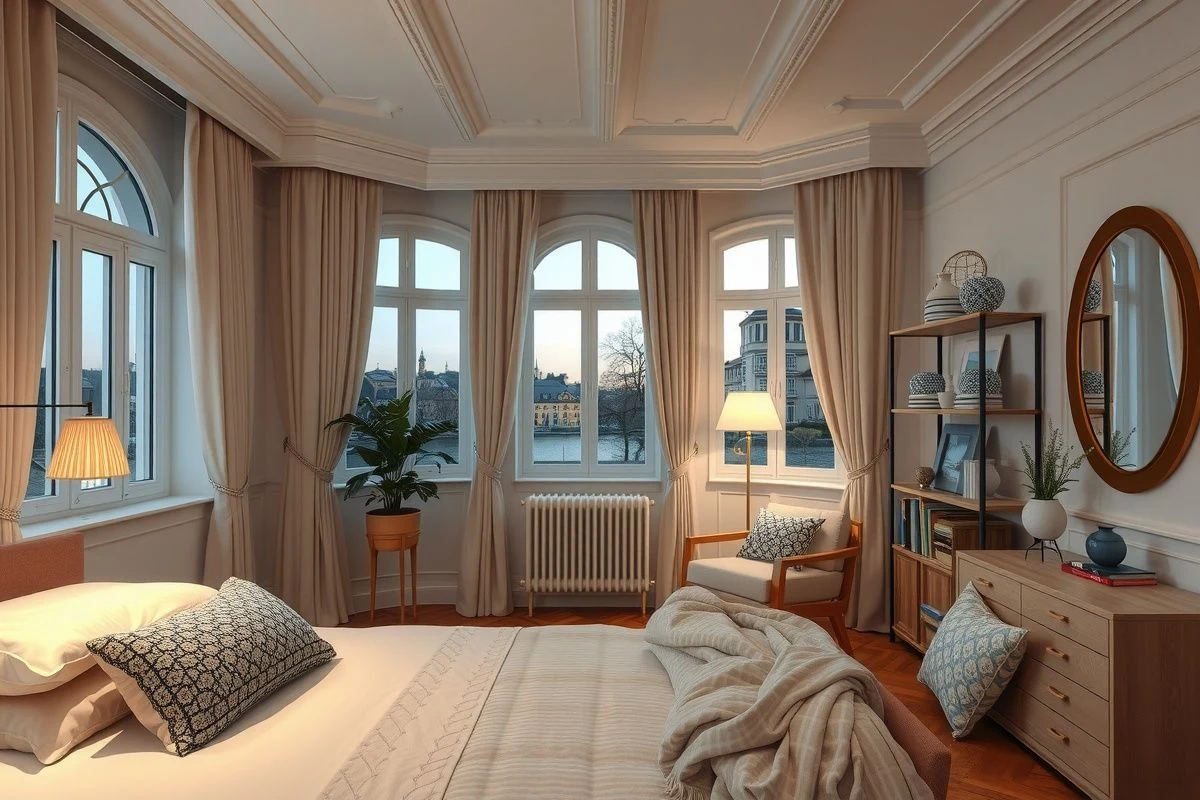
Add warm elements that are functional: an open shelf with woven baskets (they store chaos and add texture), a large mirror that multiplies the light, a robust plant in a corner (a pothos in a concrete pot works), a silent wall clock. No clutter for the sake of clutter. Each element should contribute light, texture, utility, or beauty. Preferably two of those four.
Real renovation doesn’t come from trends or spending a lot. It comes from understanding your space, respecting it, and being mindful with every decision. These three steps —lighting and colour, furniture redistribution, textiles and details— are the pillars we use at Casa y Deco every time we enter a room that needs to breathe again. Now it’s your turn.

You may also like