At Casa y Deco, we love tackling seemingly impossible decorating challenges, and one of the most common is making a bedroom without windows or with very little natural light feel cosy, bright, and functional. If there's one thing we've learned after years of helping to solve these dilemmas, it's that well-planned artificial lighting can completely transform a space, even when nature hasn't blessed us with large windows.
The absence of natural light in a bedroom is not a project failure: it’s an opportunity to be creative with lighting. What often fails here is the typical isolated ceiling bulb that casts strange shadows and makes the space feel flat. We’ll show you how to avoid that and create an atmosphere that invites rest without sacrificing brightness when you need it.
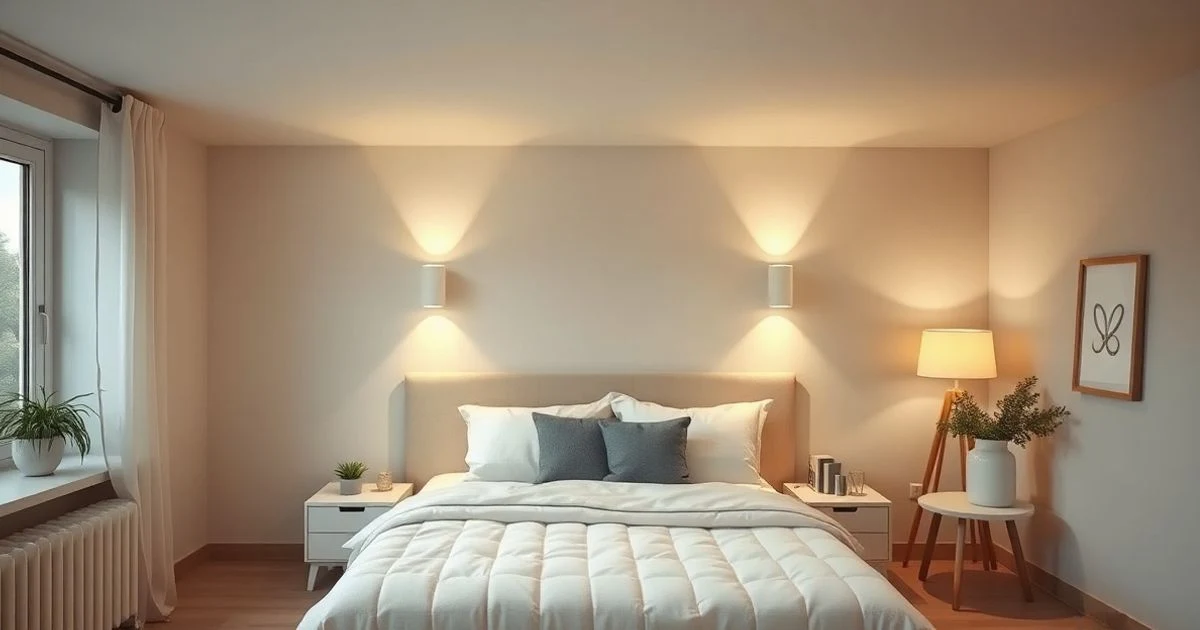
The first step is to understand that one single light source is not enough. A bedroom without windows needs a layered lighting strategy: general light to see the entire room well, functional light in specific areas (the bedside table, the desk if there is one), and ambient light for those moments of relaxation. It’s like building with layers, but with light instead of paint.
Let’s start with general lighting. Most bedrooms rely on a central ceiling fixture that, honestly, we’re not convinced by at all because they create those unflattering shadows. It’s better to opt for more distributed ceiling fixtures: two wall sconces on either side of the bed, a recessed LED panel in the ceiling, or even strategically placed downlights. If the budget is limited, a good frosted white ceiling fixture is a starting point, but always think about combining it with other sources.
The colour temperature is crucial when we don’t have natural light. 4000K (neutral white) is perfect for daytime tasks: it wakes you up, allows you to apply makeup correctly if needed, and makes the space feel larger. But for the night, when the bedroom should invite rest, 3000K or even 2700K (warm white) are your allies. I confess I discovered this when I almost electrocuted myself trying to install smart lights in my first flat: being able to change the colour temperature according to the time of day is a gift.
Wall sconces on either side of the bed are essential in a bedroom without natural light. They not only serve a practical function (reading in bed, sleep control), but they also break the visual monotony of the ceiling. Choose sconces with shades that direct light downwards and towards the walls, avoiding glare. A height of 60-70 cm above the mattress is standard and works well in most cases.
If there’s a desk or vanity in the bedroom, a desk lamp with an adjustable arm is a must. It allows you to direct light exactly where you need it, and it takes up little space. Models with adjustable brightness are especially useful because you can lower the intensity at night if you need some light without fully waking up.
LED lights also deserve a separate paragraph. They are efficient, last for years, and do not generate heat, which is important in a closed bedroom. Square or rectangular recessed LED panels create a sense of spaciousness because the light seems to come from the ceiling itself. If your budget doesn’t stretch that far, an adhesive LED strip hidden in a cornice or upper moulding yields surprisingly good results.
Now, we cannot forget ambient light. This is what allows you to create that restful atmosphere a bedroom needs. Small bedside lamps, indirect lights behind the headboard, or even a floor lamp in the corner with light directed towards the wall work wonderfully. The idea is to have light in the space, but not directly glaring into your eyes.
Mirrors are secret allies in dark bedrooms. A large mirror placed strategically amplifies artificial light, bouncing it from one wall to another. This is especially useful if you have a small window (even if it has no view) because any light that comes in multiplies. Place the mirror perpendicular to the main direction of the artificial light to maximise this effect.
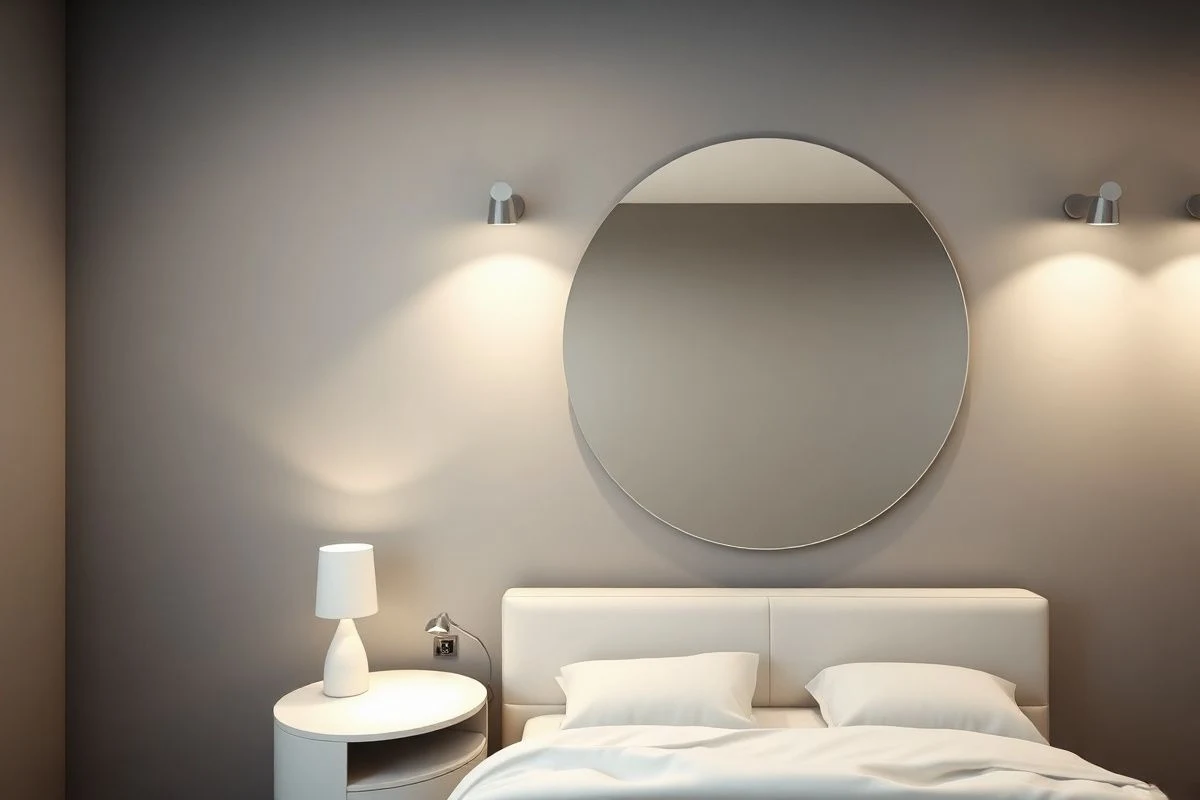
The colour of the walls also influences more than you think. Light and neutral tones (off-whites, soft greys, beiges) reflect artificial light better than dark tones, making the space seem brighter without needing more fixtures. If you want colour, opt for pastel or light earth tones that are friendly to light.
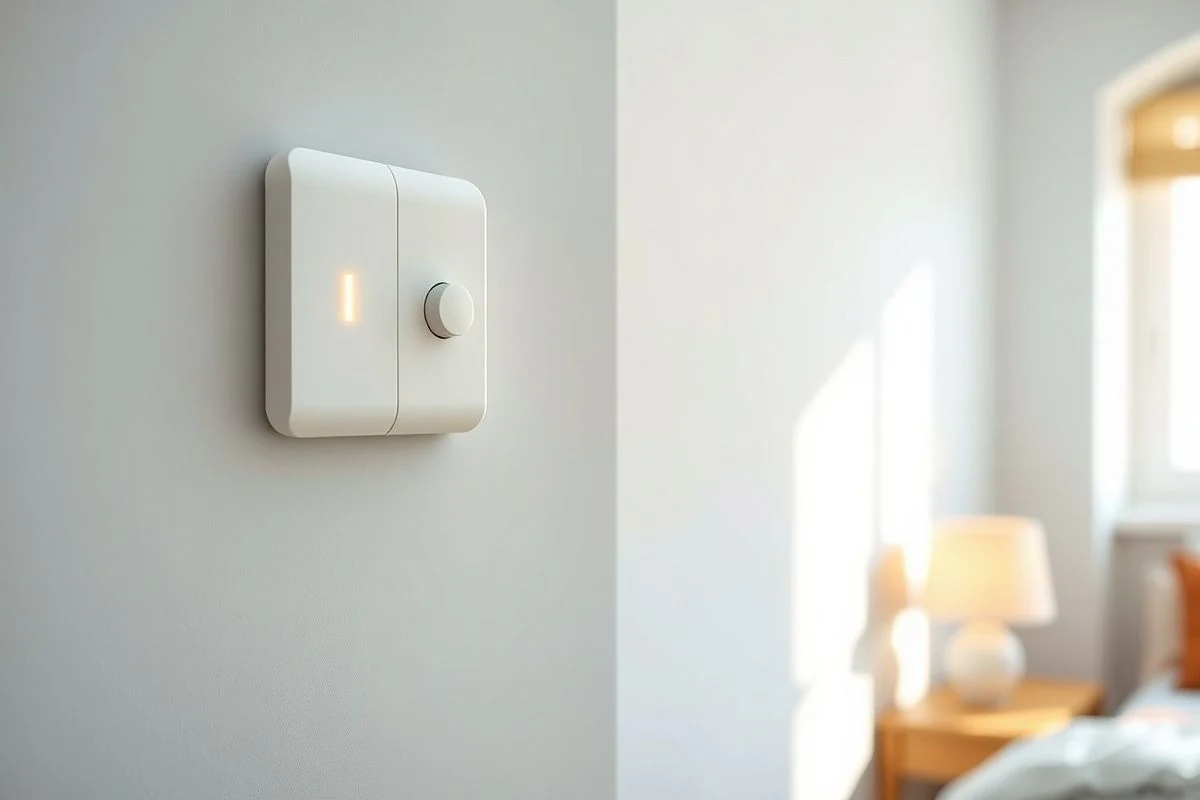
Don’t forget the controls. Dimmers on the main lights are almost a luxury here: they allow you to lower the intensity when you want ambience and raise it when you need clarity. If you’re going to change the bedroom, ask the electrician to install at least one dimmer in the general lighting.
Finally, the solution for a limited budget: if you can’t renovate, opt for good quality floor lamps, adhesive wall sconces, self-adhesive LED panels, and smart lights that you can control from your phone. The final result may surprise you, and without breaking the wall.
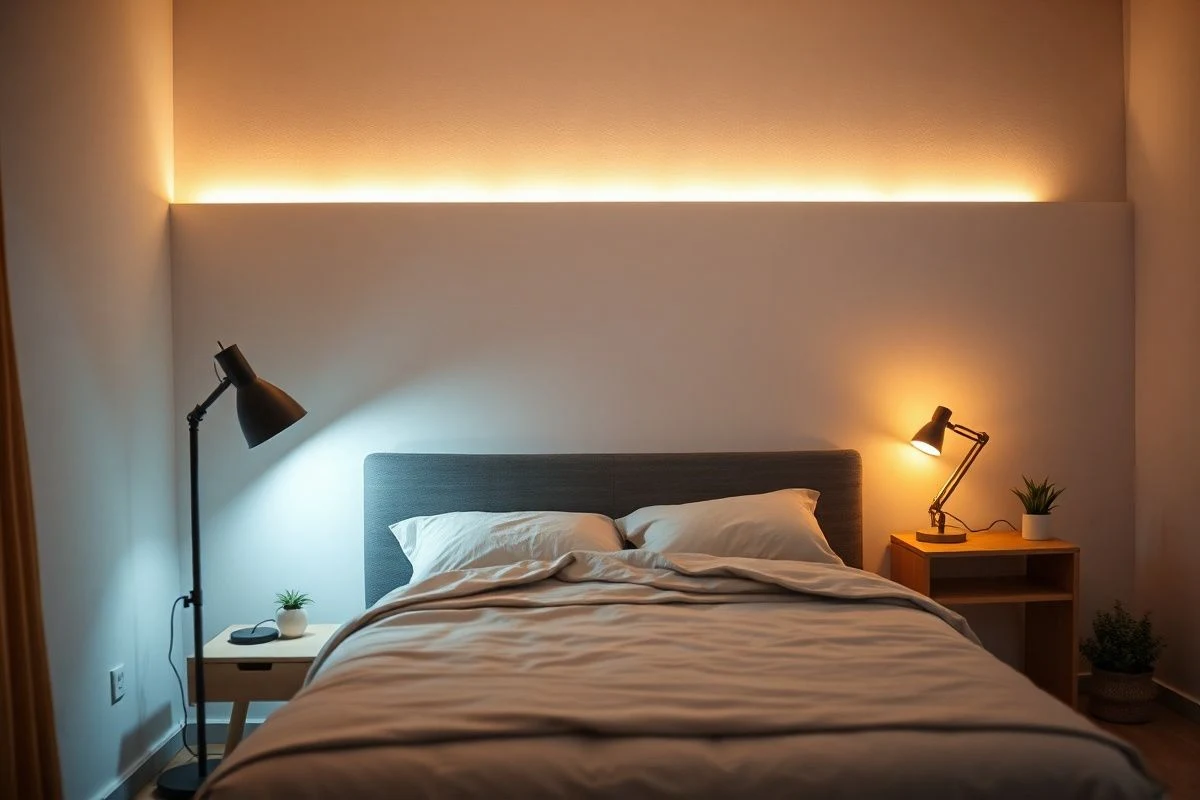
A bedroom without natural light requires planning, but the result is worth it. With these strategies, you’ll achieve a space that is bright when you need it and cosy when you want to rest. Because in the end, the best lighting is the one that adapts to you and your rhythms, not the one that architecture’s whims impose on you.

You may also like