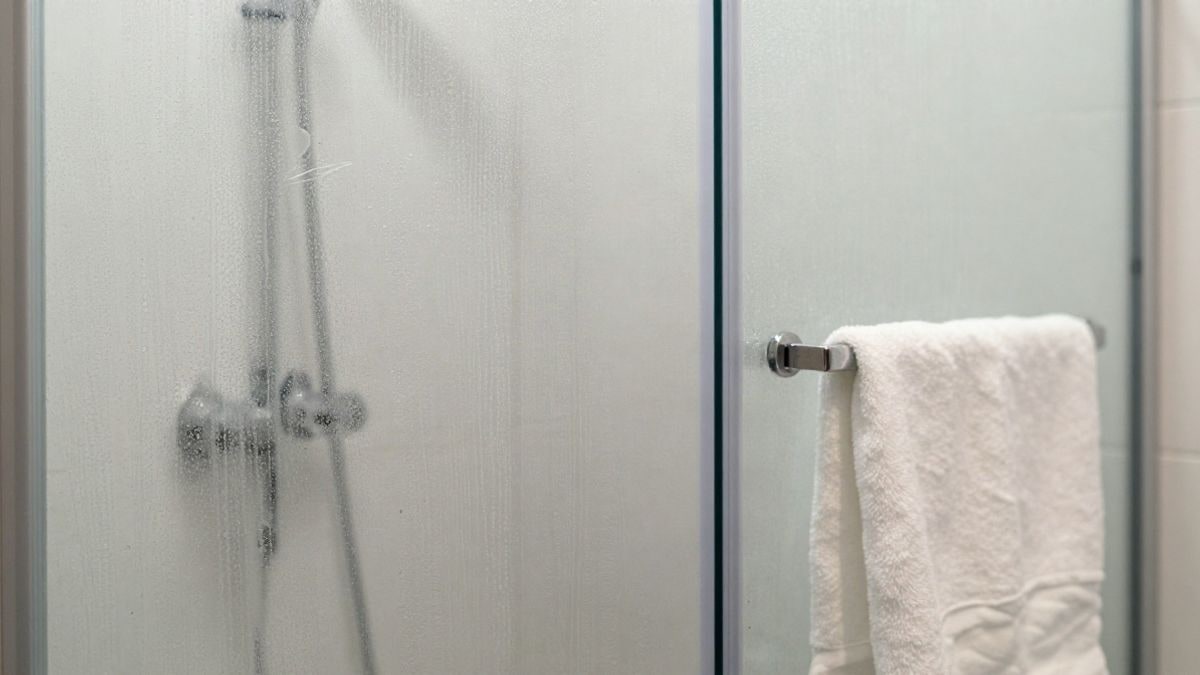
At Casa y Deco, we know that limescale on shower screens is one of those little household dilemmas that appears almost without us noticing. Those whitish stains that blur the glass are not just an aesthetic problem: if we don't treat them carefully, they can adhere more and more and become difficult to remove. The good news is that how to remove limescale from shower screens does not require harsh products or much effort, just consistency and the right remedies.
Limescale appears because the water that falls on the glass contains dissolved minerals. When the droplets dry, they leave a residue that gradually adheres to the surface. Over time, these deposits become more resistant. That's why it's important to act in the early stages and, above all, maintain a routine that prevents them from accumulating again. It's not about doing a deep clean every week, but rather accompanying the care of the shower screen with simple gestures that make a difference.
Proven and Safe Home Remedies
White vinegar is probably the most reliable ally for this job. Its natural acidity dissolves limescale without the need to scrub hard, which is essential to avoid scratching tempered glass. The most effective way is to prepare a mixture of vinegar and water in equal parts in a spray bottle. Apply the solution to the stains, let it sit for a few minutes, and then wipe it away with a soft cloth or a non-abrasive sponge. If you want to avoid the characteristic smell of vinegar (I confess that it doesn't bother me, but I know some people hate it), you can add a few drops of lemon juice to the mixture.
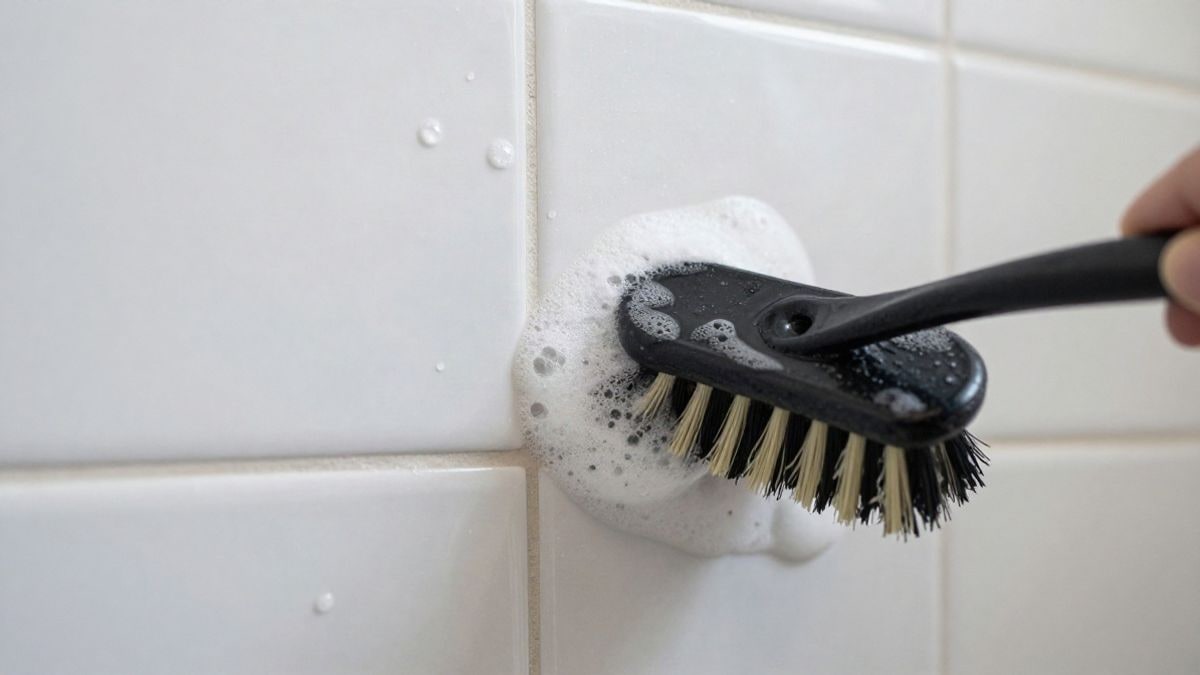
Baking soda is another classic that works especially well when limescale is more embedded. The ideal is to make a paste with water, apply it gently to the glass, and let it sit for a few minutes before gently scrubbing. The key is not to apply too much force: baking soda acts as a mild abrasive, but if you press too hard, you could end up scratching the surface.
Lemon is surprisingly effective because it contains citric acid, which naturally dissolves limescale. You can gently rub half a lemon over the stains and let its juice act for a few minutes. To enhance the action, some sprinkle a little fine salt over the lemon before scrubbing: the salt adds a slight abrasive effect that facilitates removal without damaging the glass.
Toothpaste is a lesser-known but really useful trick. Look for a white toothpaste, without dyes or gels, because white formulas are loaded with cleaning agents specifically designed to remove stains. The process is similar to that of baking soda: apply the paste to a soft brush or a damp sponge, scrub the affected areas without pressing too hard, and rinse with plenty of water.
Some swear by aluminium foil, an unconventional method but surprisingly effective for heavily embedded deposits. When it comes into contact with water, it triggers a chemical reaction that helps dissolve limescale, while its texture provides a slight abrasive effect. Use it carefully on delicate surfaces and always test it first in a small area.
What You Should Never Do
This is where our most important advice comes in: protect the glass of your shower screen as if it were a treasure. Metal or very abrasive sponges are mortal enemies of tempered glass. Also, do not use harsh chemical products with hard particles, nor mix products without knowing how they interact with each other. Always scrub gently: it's not about attacking the stains, but accompanying them towards their disappearance.
Also avoid cleaners that are not designed for tempered glass. Although it may seem like very basic advice, many multi-purpose products on the market contain substances that can compromise the integrity of the chemical treatment that protects the glass.
Prevention: The Real Trick
If there's one thing we've learned at Casa y Deco, it's that prevention always takes less effort than repair. After each shower, run a squeegee or a clean cloth over the glass to dry the droplets. This simple gesture prevents new stains from forming and exponentially reduces limescale accumulation. Drying the shower screen after each use is the best time investment you can make to keep it sparkling.
Don't forget to regularly clean the seals and tracks of the shower screen as well. The tracks easily accumulate dirt and mould, and if the water doesn't drain well, you'll end up with more complex problems. Occasionally, do a deep clean of the entire bathroom, including the shower screen, even if you don't see apparent stains. This keeps the space hygienic and extends the life of the shower screen.
If you've already applied any of these home methods and the limescale still resists, there is the option of a specific cleaner like KH-7 Bathroom Disinfectant, a product formulated precisely for tough stains without containing bleach. Spray it, let it sit for a few minutes, and clean with a damp cloth.
In the end, how to remove limescale from shower screens is less a battle than a constant dialogue with your bathroom. When we care for materials with respect, everything lasts better. It's not about cleaning more, but about caring better, understanding that each surface responds when we treat it with attention. With these simple and accessible methods, your shower screen will shine like the first day.

You may also like