At Casa y Deco, we love solving those decorating challenges that seem impossible at first glance, and one of our favourites is the snug entrance. That entry area where there's hardly any room but where you need to store coats, bags, and accessories. If your entrance is more of a hallway or a tiny entryway, wall coat racks are your best ally: they take up zero floor space and transform the wall into your most functional storage system.
I confess that years ago I would stuff hangers into unreachable wardrobes or stack them in dark corners. Then I discovered that a well-utilised wall is more efficient than any piece of furniture, especially when working with limited metres. A wall coat rack not only holds what you need daily but also defines the space and gives it character from the very first step.
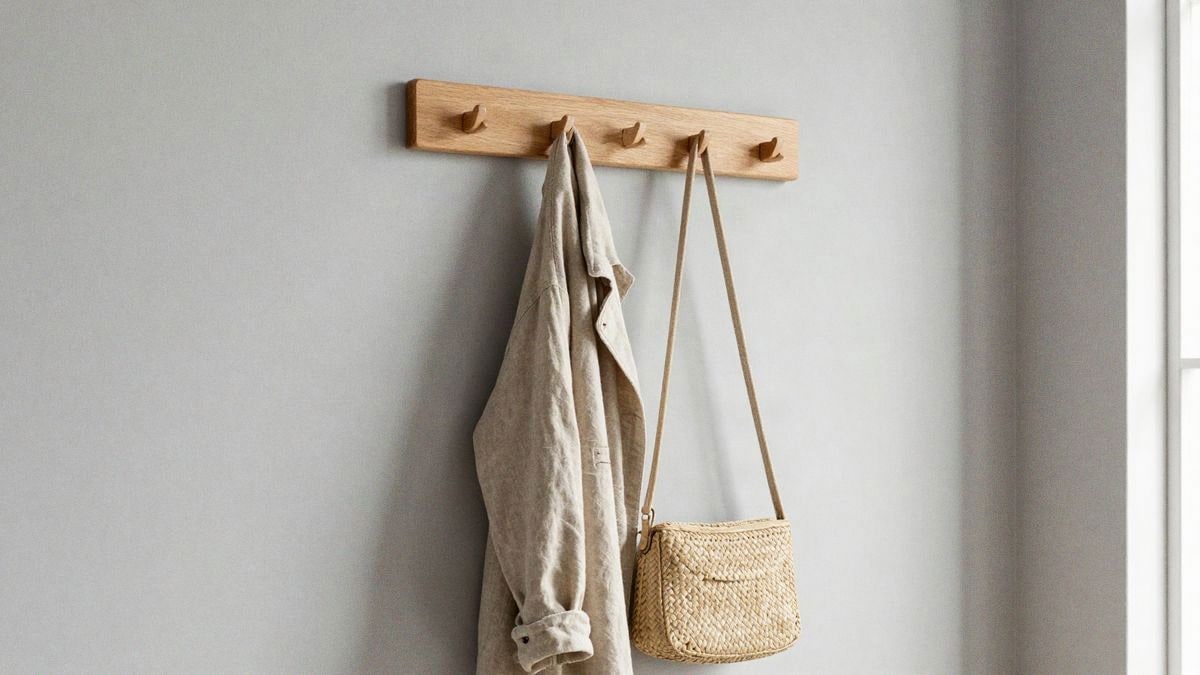
The first thing you need to be clear about is how many items you actually hang daily. It’s not about installing a wall of hooks as if it were a full wardrobe, but about being strategic. The coats of the current season, the bags you use regularly, the keys. Everything else belongs elsewhere. This prevents your entrance from looking like a chaotic coat rack and keeps the area visually clean.
The material of the coat rack makes a huge difference in how the space feels. Solid wood, metal, ceramics, or even natural textiles create completely different atmospheres. If your entrance leans towards warmth, choose a coat rack of light or dark wood according to your tones. If you’re looking for something more contemporary and clean, black or chrome metal coat racks work wonderfully. The important thing is that they converse with the rest of your entry: it shouldn’t look like an isolated element but part of the whole.
Here comes a tip that changed how I think about small entrances: distribute the coat racks at different heights instead of in a straight line. One coat rack at 160 centimetres for coats and bags, another at 120 centimetres for light accessories or children’s backpacks, perhaps a third at 100 centimetres for frequently hung items. This creates a more interesting visual composition and makes the most of all the vertical space. Plus, each family member can have their reference height without everything crowding into the same line.
The combination of textures adds visual depth to a tiny space. A wooden coat rack next to a metal one, or a ceramic one with rope details, generates interest without overloading. They don’t need to be exactly the same. In fact, small and different coat racks work better in compact entries than a single large and bulky one.
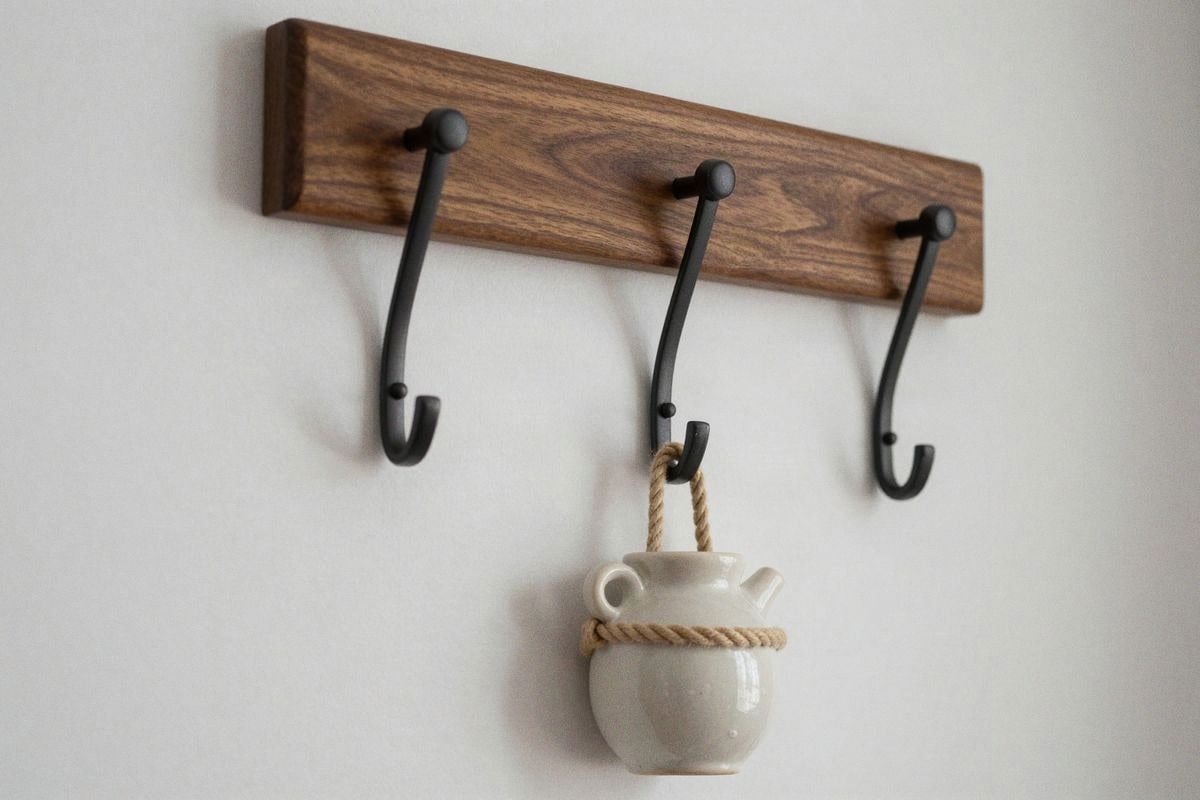
Think of the colour of your wall as a starting point. If you have white or very neutral walls, a walnut wood or rusted metal coat rack adds warmth without dominating. If the wall already has colour—beige, grey, soft blue—choose a coat rack that converses: it doesn’t have to be identical, but it should belong to the same colour family. We do not recommend contrasting extremes in small spaces; it sounds risky but in practice, it ends up feeling claustrophobic.
The space behind a coat rack is also real: if you place a coat rack 5 centimetres from the wall, thick coats will occupy almost 20 centimetres in depth. In ultra-small entrances, choose very thin coat racks or those with short arms that don’t protrude too much. Simple hook-type coat racks take up less space than those with clover legs or classic three-arm designs.
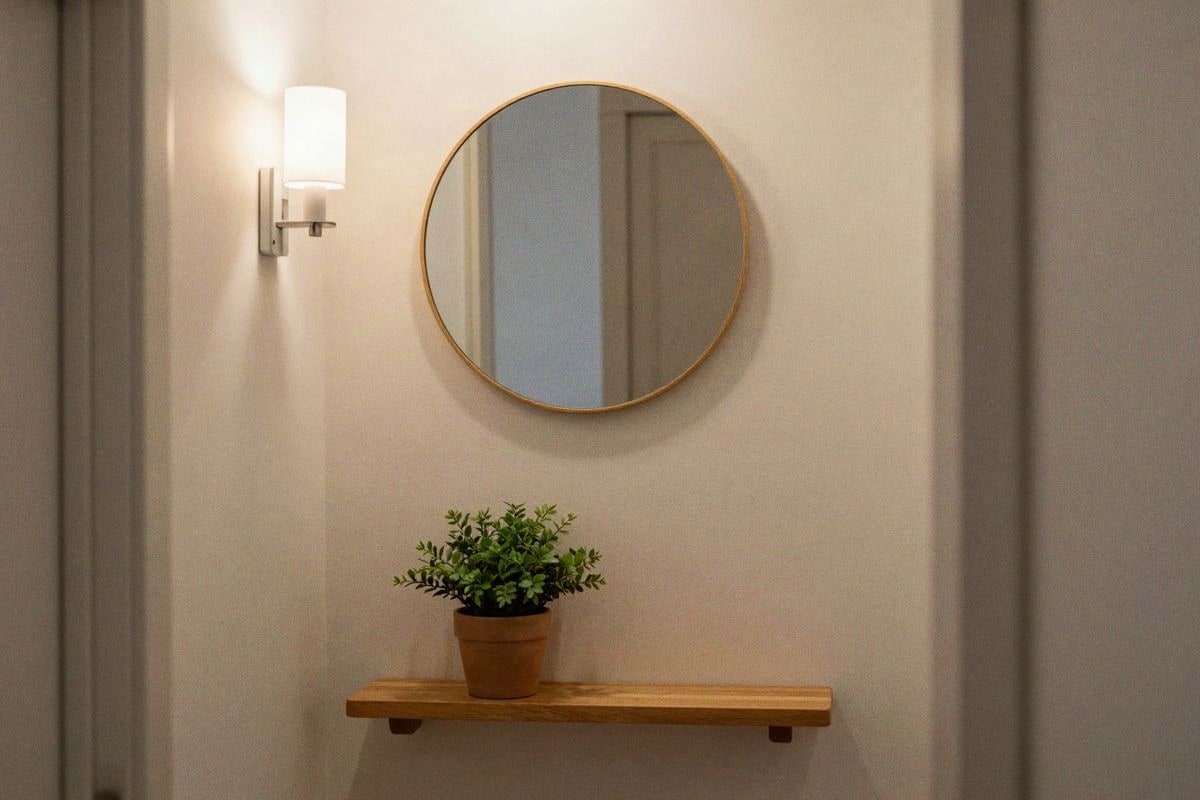
Lighting makes all the difference. A dark entrance makes any coat rack seem like just another element of chaos. A spotlight over the coat rack—this can be a sconce, a track light, or even recessed lighting—turns it into a focal point and dignifies it. Plus, it enhances functionality: you can see better what’s hanging where, and the space gains visual amplitude. Light never fails in small entrances.
Not everything has to be functional: a small mirror above or beside the coat rack expands the space and reflects natural light, making the entrance feel more open. Some coat racks even incorporate a mirror integrated into the design. I confess this trick has saved several clients' entrances who felt claustrophobic until we added a mirror. The change is almost magical.
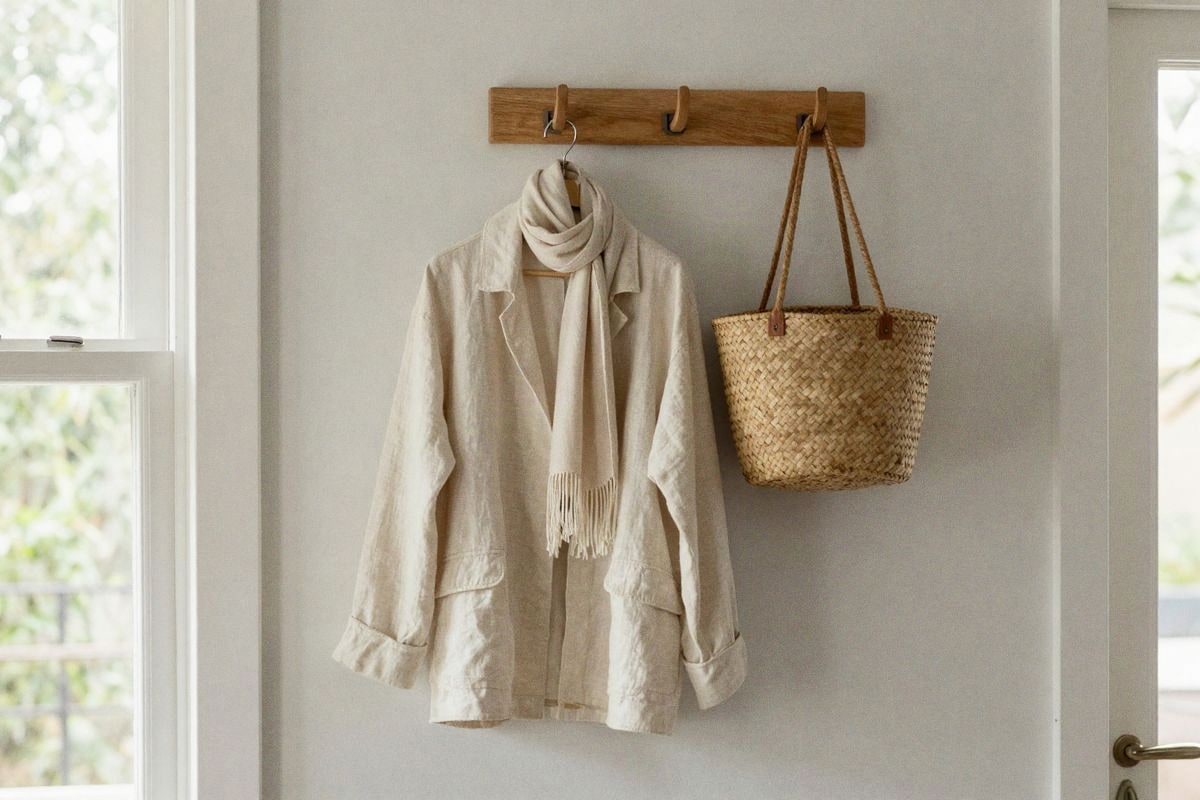
The seasons of the year are your strategic friends. In winter, your coat rack holds thick coats; in summer, light scarves or small bags. By rotating what you hang according to the season, it never looks cluttered and you make better use of the space. It’s a system that respects the natural rhythm of daily life.
Add small decorative elements without excess: a discreet hanging plant, a basket under the coat rack for keys or gloves, a ceramic object. But do it with moderation. An entrance without space is not a place to accumulate. Each object should justify its presence and contribute either to function or beauty—ideally both.
Finally, proper installation is critical. Wall coat racks must be anchored to structural elements: specific plugs for your wall type, screws of the right size. A coat rack that wobbles due to poor installation is not only dangerous but ruins the entire proposal. If you’re not handy, delegate it to someone who knows. It’s worth doing it right from the start. In Decoration and Interior Design, technical details determine whether your solution works year after year or ends up being a failure.

You may also like