At Casa y Deco, we know that the hallway is one of those spaces that suffers the most in any home. Between coats, bags, keys, and of course, shoes, everything tends to accumulate in that first square metre of the entrance. The shoe cabinet then becomes an essential ally, but there is one problem that almost no one considers before buying it: how many pairs can it really hold in that cabinet you fell in love with at the store?
The answer is not as simple as it sounds. It depends on numerous factors ranging from the exact dimensions of the cabinet to your own way of storing shoes. I confess that I once fell into the trap of buying a shoe cabinet that, according to the technical sheet, could hold "up to 12 pairs." Well, when I got it home, only 8 fit comfortably because I put in my knee-high boots and the whole system fell apart. So today we are going to learn how to calculate it properly.
The Measurements That Really Matter
First of all, let’s forget those magic numbers that come on the box. What really counts is the usable interior space, not the height or width of the structure. An 80-centimetre wide shoe cabinet can have very different capacity depending on its depth and the number of shelves.
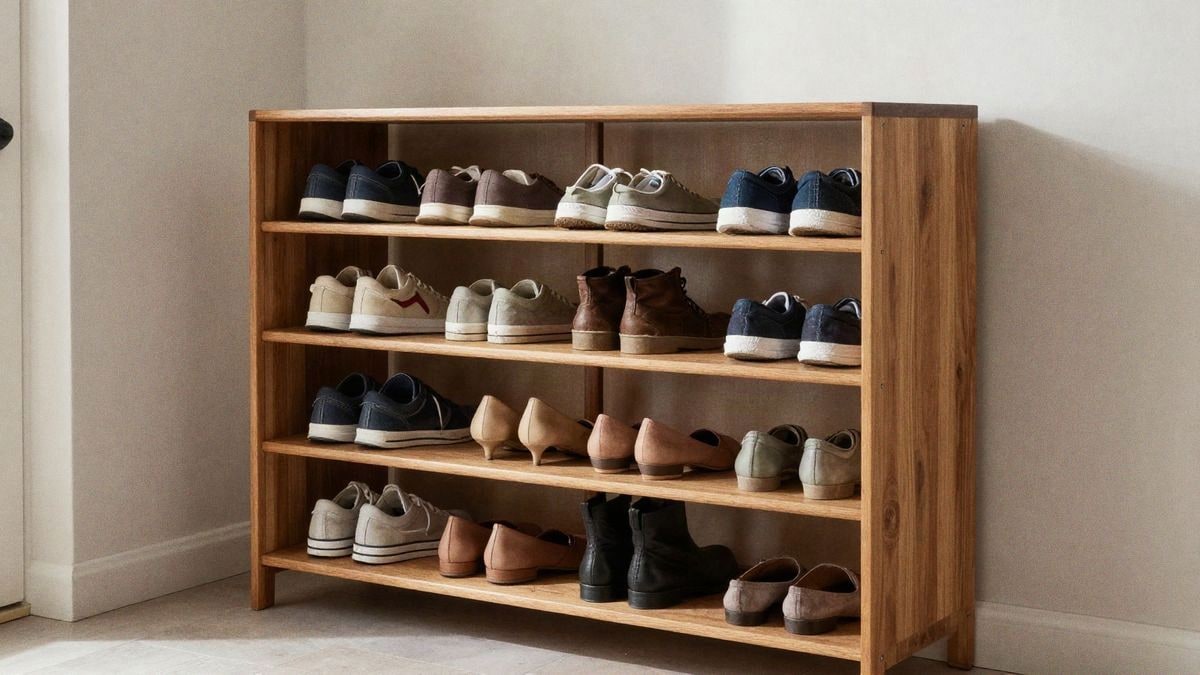
A standard entry shoe cabinet, the kind most of us buy for a medium hallway, measures around 80-90 centimetres wide, 30-35 deep, and 60-80 high. Within that, if it has four internal shelves (the most common), each offers approximately 35 centimetres of usable depth. This is where the shoe factor comes into play: a size 40 shoe takes up about 12 centimetres in length and almost 10 in width when lying down. If you stand it up, it takes up more vertical space but less horizontal.
The trick that saved me was utilising the depth with two rows of shoes: you place one towards the back and another towards you. This doubles the capacity without increasing the footprint of the cabinet. Of course, this only works if the minimum depth is 30 centimetres; if it’s less, things get complicated.
Types of Shoe Cabinets and Their True Capacity
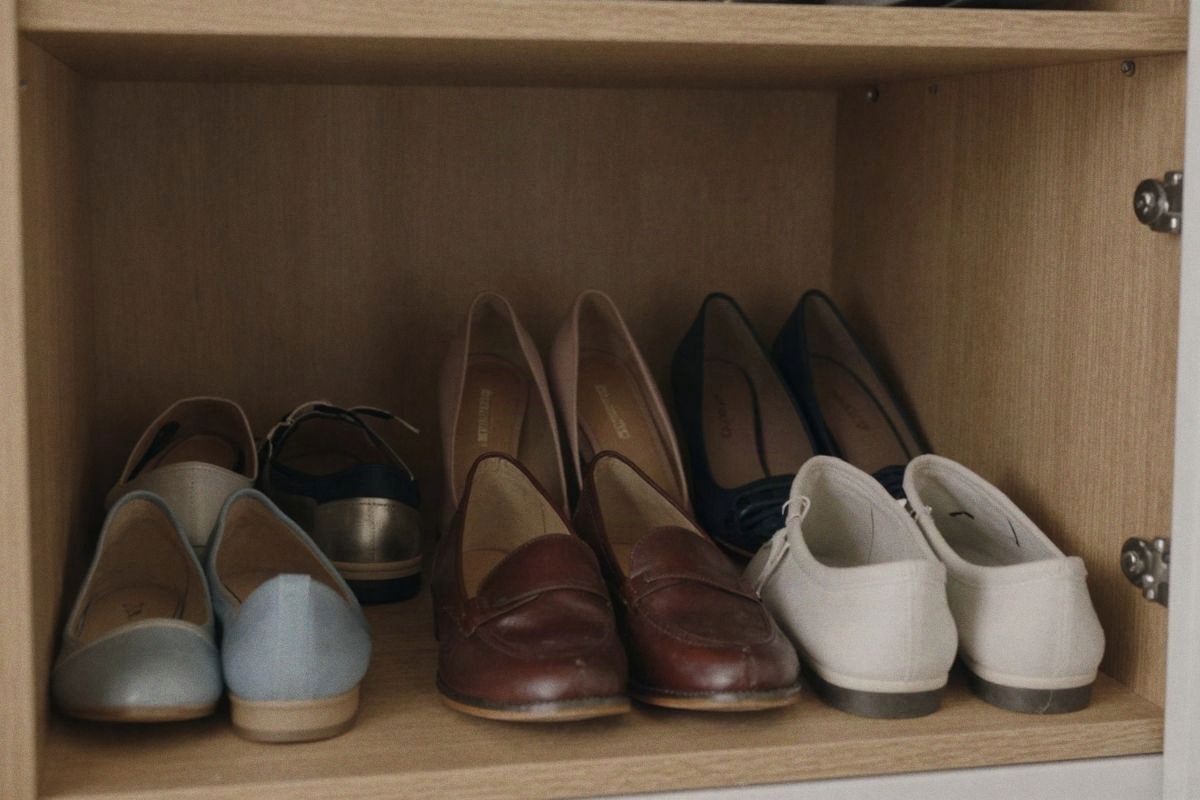
Not all shoe cabinets are the same, and each system has its real limitations. Foam or soft fabric shoe cabinets, those that close with a curtain, are pretty but misleading: visually they take up little space, but the capacity is ridiculous, almost 4-6 pairs maximum. Solid wood or MDF shoe cabinets with fixed shelves are much more honest: you know exactly how many rows of shoes fit on each level.
A shoe cabinet with 4 shelves of those dimensions I mentioned can comfortably hold between 10 and 16 pairs, but with nuances. If you use dividers or small interior baskets, the capacity decreases because you lose space in the organisation. If you opt for a modular system with tilting or removable doors, the calculations change: they usually have less depth but better access, and can hold about 8-12 pairs without problems.
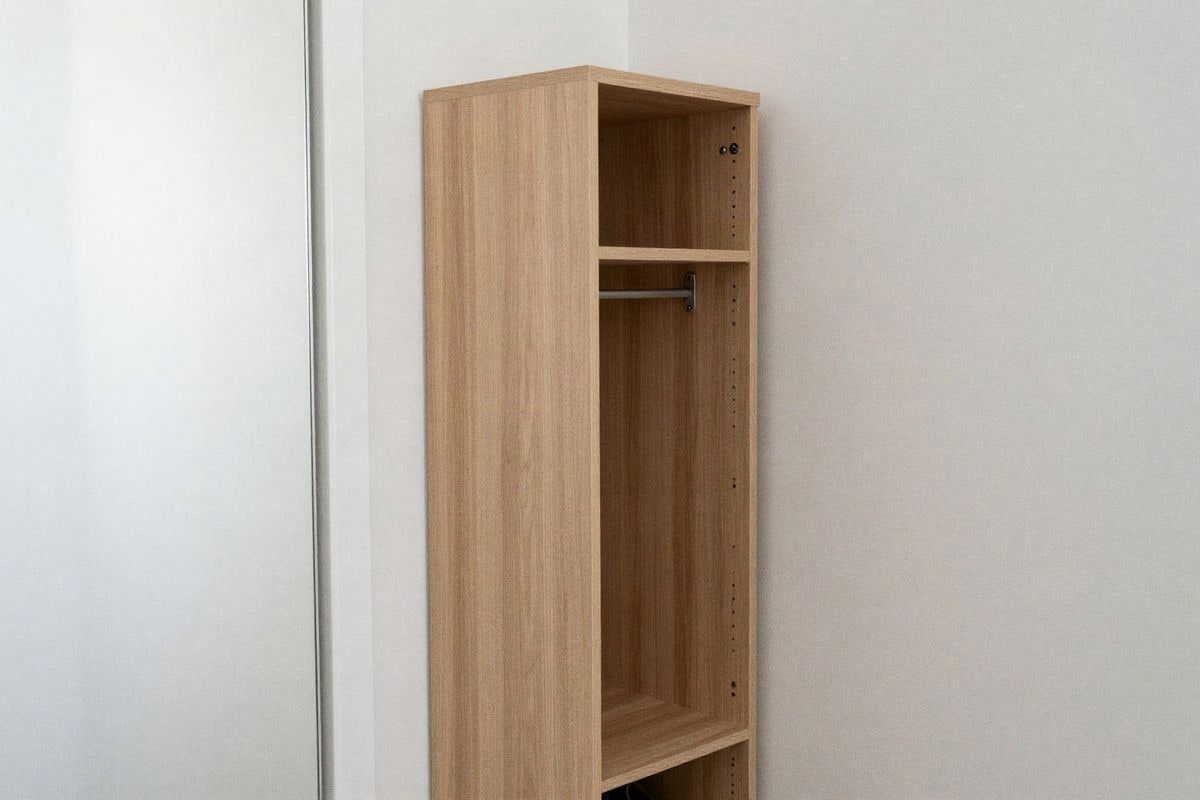
Vertical shoe cabinets (tall and narrow, about 30 centimetres wide) are ideal for small hallways but their capacity is limited: between 4 and 8 pairs at most. In contrast, a wide and low shoe cabinet (for example, 120 centimetres wide and 50 high) can reach 20-24 pairs, although at this point we are no longer talking about a cabinet, but almost a storage bench. And the truth is that we are not convinced by very tall shoe cabinets in small hallways; they leave little visual space and weigh heavily visually in the room.
The Footwear Factor
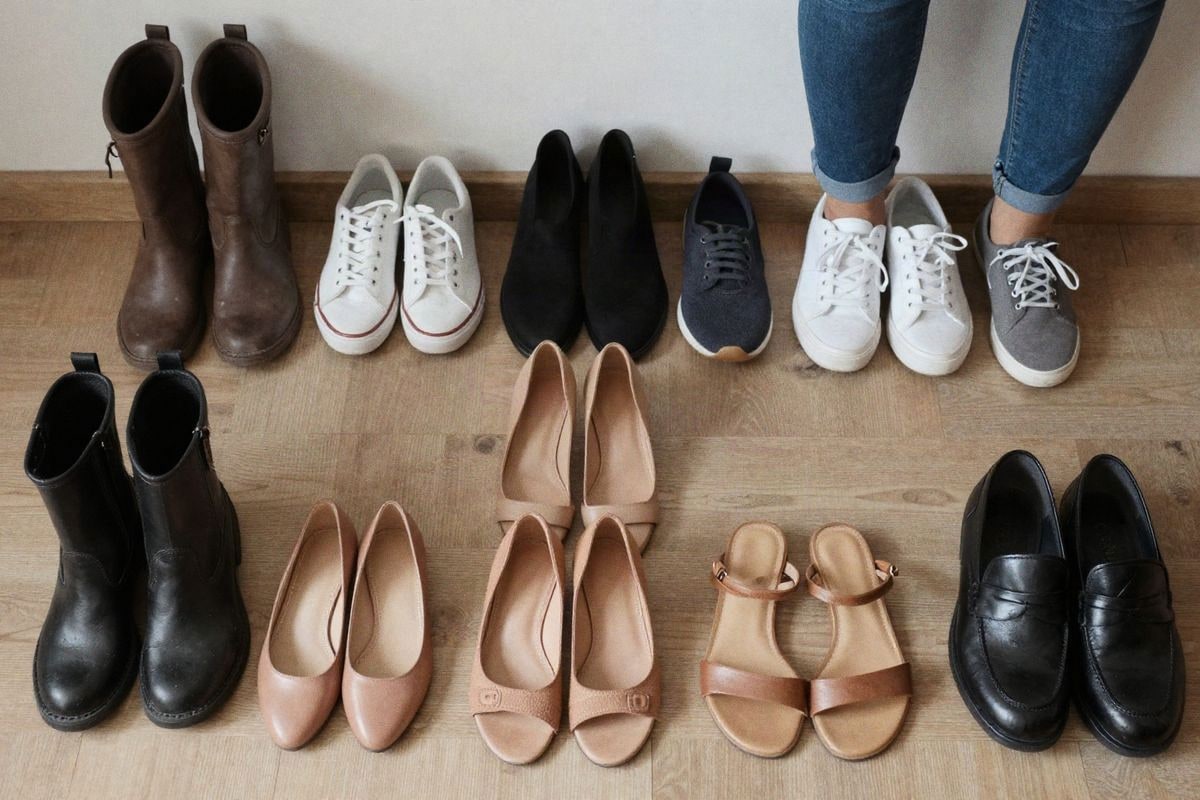
Here lies the key that no one considers. Your shoe collection is not all the same, and that really determines how many can fit. Trainers, ballet flats, and stilettos occupy very different spaces.
A pair of medium-sized trainers consumes about 12 by 10 centimetres; knee-high boots can take up double the height if you stand them up. Ankle boots take up little width but quite a bit of depth. Stilettos, if stored normally (without boxes), barely consume depth space, but if you use original boxes, you double the volume they need. This is why technical sheets lie shamelessly: they calculate considering only flat and medium shoes, without taking into account the reality of most homes.
Our advice: before buying, take an honest inventory of your footwear. How many boots, how many heels, how many trainers. This way, you multiply the space you really need. If you have many winter boots, reduce the capacity calculation by 25-30%.
Smart Space Distribution
The way you organise the shoes inside the cabinet is what makes the difference between a good purchase and a disaster. The two-row front system I mentioned earlier is the most efficient for canvas or smooth leather shoes. Delicate shoes, such as heels or summer sandals, occupy space better if you use small dividers or even low transparent plastic boxes.
A trick that works well is to place winter shoes (boots, thick ankle boots) on the lower shelves, where the weight is better distributed. Daily and summer shoes, which are lighter, go on the middle and upper shelves. This way, moreover, those you use the most are at a comfortable height. And the occasional ones, those shoes you take out four times a year, fit perfectly in corners or boxes in less accessible nooks.
The width of the shelves also matters. If it is 80 effective centimetres, two shoes can fit well in a row, leaving small margins to avoid tearing the areas. If it is less, it’s better to place only one or two pairs inclined, which takes up less space.
Practical Materials and Finishes
Besides capacity, the material of the shoe cabinet influences how much you can actually store without it deforming. A quality MDF shoe cabinet can hold much more weight than one made of thin pressed wood. Solid wood shelves can easily support 15-20 kilos distributed; thin board shelves can barely hold 10-12 kilos.
This is relevant because if you store heavy shoes (thick suede boots, hiking boots, solid leather shoes), the shelves can sag over time. We have seen cabinets that after two years look like a wave. So if your collection is heavy, invest in a shoe cabinet with a reinforced structure or with glass shelves, which are practically indestructible, although they take up more visual space.
Finishes also matter for keeping shoes in good condition. A shoe cabinet with a soft fabric-lined interior protects delicate footwear better than one with exposed MDF, where they tend to get marked or torn on the sides. It’s not a luxury; it’s pure functionality.
Recommended Dimensions According to Available Space
For a hallway of less than 1.5 square metres, a shoe cabinet of 60-70 centimetres wide and 30 deep is the maximum sensible option. It can hold about 6-10 pairs without making the entrance look like a storage room. For hallways of 1.5 to 3 square metres, a standard shoe cabinet of 80-90 centimetres wide is perfect: 12-16 pairs comfortably. If you have a generous hallway, over 3 square metres, you can afford a cabinet of 100-120 centimetres wide that can hold 18-24 pairs, although honestly that’s already more than most use on a daily basis.
Remember that visual space matters just as much as actual capacity. A shoe cabinet that takes up too much volume, even if it can hold all your footwear, overwhelms the hallway. It’s better to buy one that holds 70% of your daily collection and store the occasional shoes elsewhere (under the bed, in boxes in the wardrobe) than to completely fill a large cabinet that makes the entire entrance feel small.
At Casa y Deco, we always advocate the idea that the furniture should serve your life, not the other way around. So the exact number of pairs that fit is less important than the number of pairs you actually need at hand every day. Do that calculation, add a couple of extras for occasions, and you have your true ideal capacity.

You may also like