At Casa y Deco, we love when a piece of furniture works overtime. Not because we are obsessed with efficiency (well, maybe a little), but because the best spaces are those where every object makes sense and, if it also serves two or three functions, we gain comfort without sacrificing aesthetics. Multifunctional furniture is the perfect answer for anyone living in a small flat, or simply wanting to truly optimise every corner without filling the house with unnecessary clutter.
But here comes the crux of the matter: not all multifunctional furniture is worth it. Many are those gadgets that promise to solve your life and end up taking up space without convincing anyone, or worse, they are so fragile that they need repairs within a month of use. That’s why today we want to tell you which ones are worth the investment, how to choose them without making mistakes, and where to place them in your home.
The Golden Rule: It Should Perform Its Functions Well, Not Have Many
The first thing we are clear about after years of seeing interiors is that the number of functions is not what matters. A sofa bed that barely opens, a coffee table that doesn’t store anything well because it’s full of fragile mechanisms, or a bed with 47 secret compartments that just take up dead space: that’s not multifunctionality, it’s disaster in disguise. What really matters is a piece of furniture that performs a maximum of two functions well, with quality materials that withstand the test of time.
Think about the real needs of your home. If you live in 45 square metres, a sofa bed makes sense. If your bedroom is small and you need a workspace, a bed with a fold-down desk that folds away neatly also makes sense. But if you’re looking for a piece of furniture just because “it sounds good,” believe me when I say you’ll end up using only one of its functions and the mechanisms will rust from sheer embarrassment.
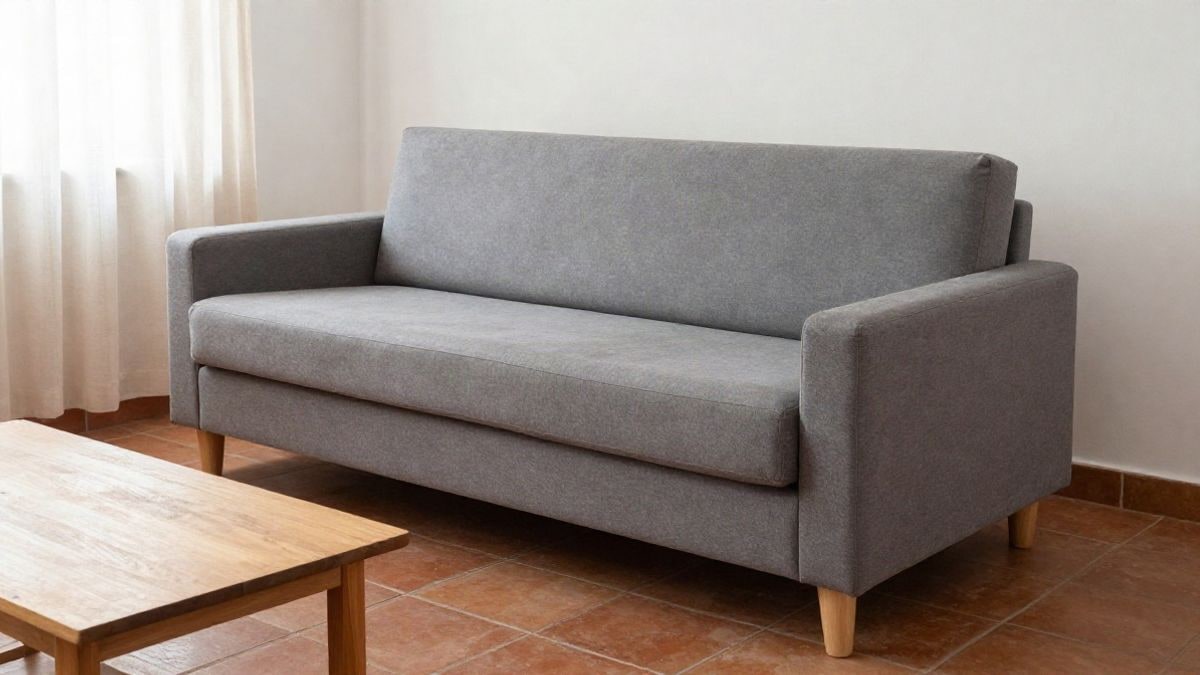
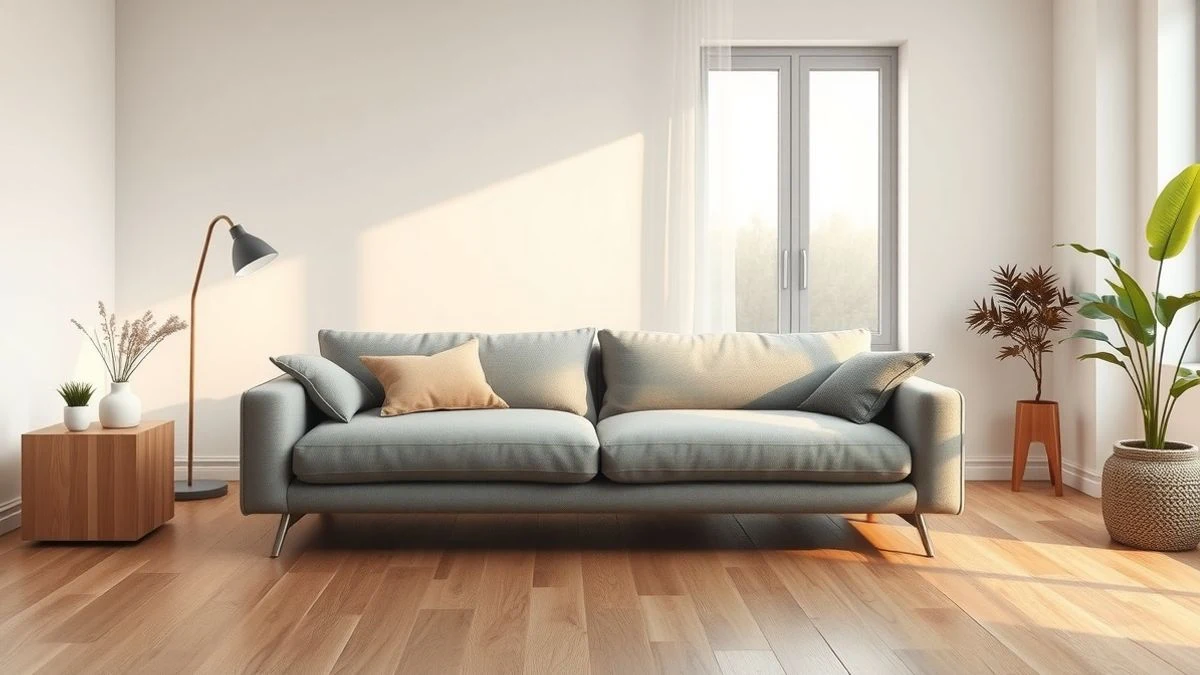
The Sofa Bed: The Classic That Works If You Choose Well
I confess that for years I thought sofa beds were the death of comfort. Hard as a board, uncomfortable to sleep on, impossible to open without the help of three people. But then I discovered sofa beds with quality systems: spring bases, decent density foam mattresses (between 25 and 30 kg/m³), and mechanisms that open without superhuman effort. That completely changed my perspective.
If you’re looking for a sofa bed that’s truly worth it, make sure the mattress measures at least 140 centimetres wide when extended — anything smaller is like sleeping on a snowboard. Side-opening systems are more comfortable than those that open forward: they require less space in front and are more intuitive. And the upholstery: choose durable fabrics like high-density linen or quality microfiber, not those synthetic fabrics that shine and look like office furniture.
The fair price hovers around 500-800 euros for decent models. Below that, you start to find unpleasant surprises when you try to sleep. Above that, you’re paying for design and brand more than real product improvement.
Storage Coffee Tables: More Subtle Than They Seem
This is where many people get lost. You see a beautiful coffee table with an integrated rattan basket, or with a solid wood lower shelf, and you think: perfect, I’ll store the remotes, magazines, everything discreetly. Sounds great. The reality is that if your living room is small, a piece of furniture with too much visual bulk is still too much bulk, even if it’s “well utilised.”
The coffee tables that truly work in compact living rooms are those with visible legs — this allows the view to pass underneath and doesn’t visually cut the space. Look for models that are 80-100 centimetres long by 50-60 deep. Smaller ones quickly feel outdated, larger ones dominate the room. Materials that age well: solid wood painted in slate grey, or marble with a metal base. Avoid at all costs wood veneers next to plastic compartments: they clash and don’t last long.
A trick: if the table has a lower shelf, use it to store only what you truly need at hand. Old magazines don’t count. The decor books you love do. This keeps the aesthetic clear without looking like a disguised cupboard.
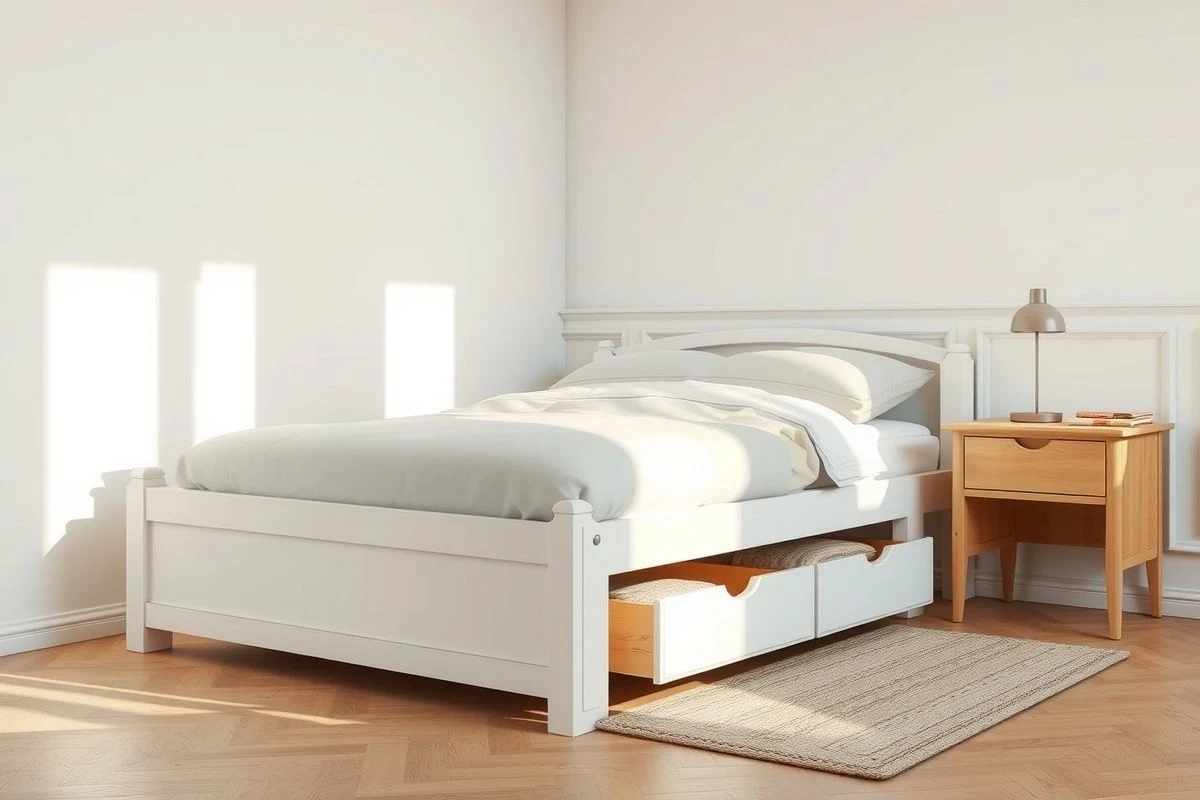
Beds with Storage: The Case Where the Extra Function Makes Sense
In small bedrooms, a bed with drawers underneath is almost mandatory. It’s not luxury: it’s survival. A 10 square metre bedroom needs every gram of usable space, and if the bed frame has four or six deep drawers of 40-50 centimetres, you’ve just created extra wardrobe space without taking up an extra centimetre of wall.
The crucial thing here is that those drawers must run smoothly. No squeaky models or ones that need to be yanked open. Look for quality metal guides — serious furniture brands include them, it’s not a luxury. Drawers of varying depths are ideal: some for flat textiles (sheets, towels), others deeper for winter clothing. Organise with cardboard boxes inside: it keeps everything tidy and is easy to rearrange when you need to change the layout.
Measure well before buying. If your bedroom is 2.5 metres wide and the bed frame takes up 1.4 metres, you have 55 centimetres free on each side. That’s just enough for a comfortable passage. A very bulky storage bed would ruin the proportions and the room would feel claustrophobic, even if it technically fits.
Desks with Integrated Shelves: The Perfect Balance
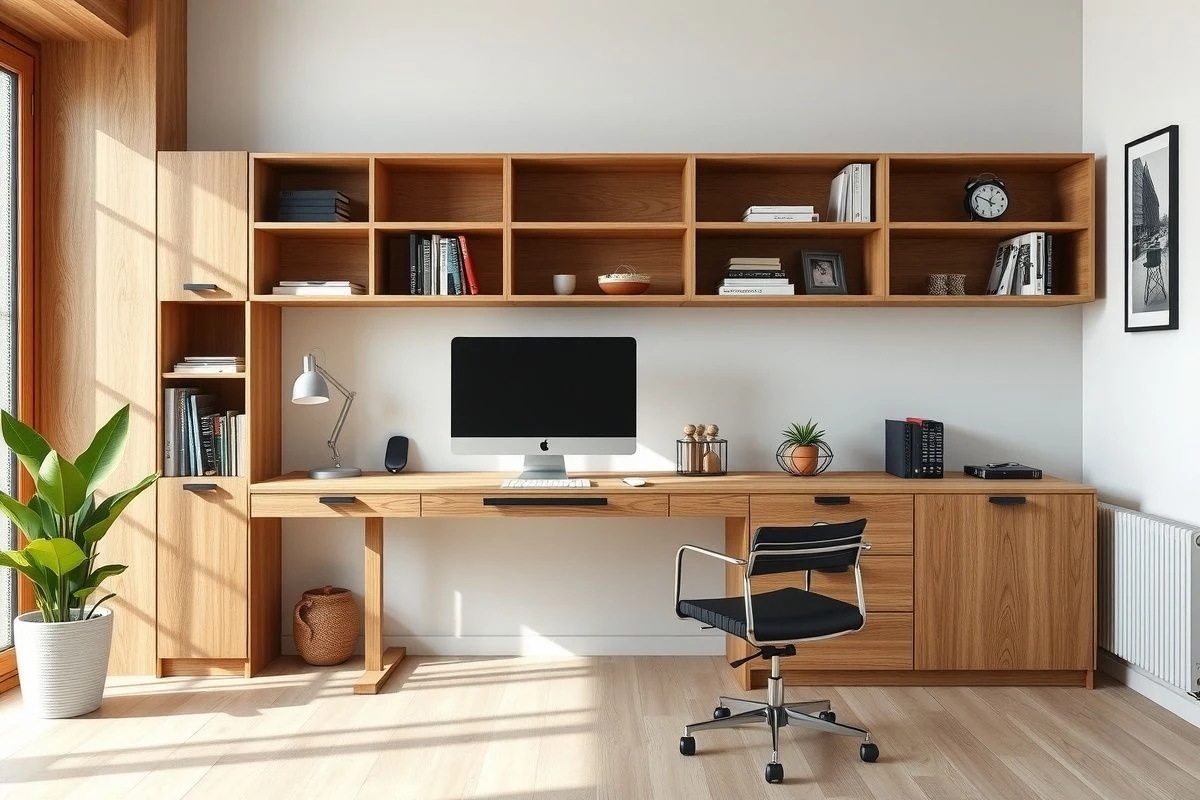
If your bedroom or living room is also your office, this is your category. A desk with shelves above is the best friend of anyone needing a work area without the space losing scale. The important thing is that the compartments don’t hang over the area where you write: you need direct natural light on the desk, without shadows from the shelves.
Modular models of 120-140 centimetres long are versatile. Ensure the desk height is exactly 74-75 centimetres (that’s the comfortable standard for working), and that the upper shelves don’t drop more than 30-40 centimetres. The shelf should hold documents, books, small lightweight plants, never heavy items like audiovisual systems. Visual distribution is key: alternate decorative objects (a plant, a framed photo) with negative space. This prevents it from looking like a storage room.
The desk colour should be neutral or match the rest of the bedroom. Pale grey, off-white, light oak, or dark walnut work in almost any context. Natural wood tones age better than saturated colour veneers.
Entry Consoles with Integrated Mirrors: Small but Effective
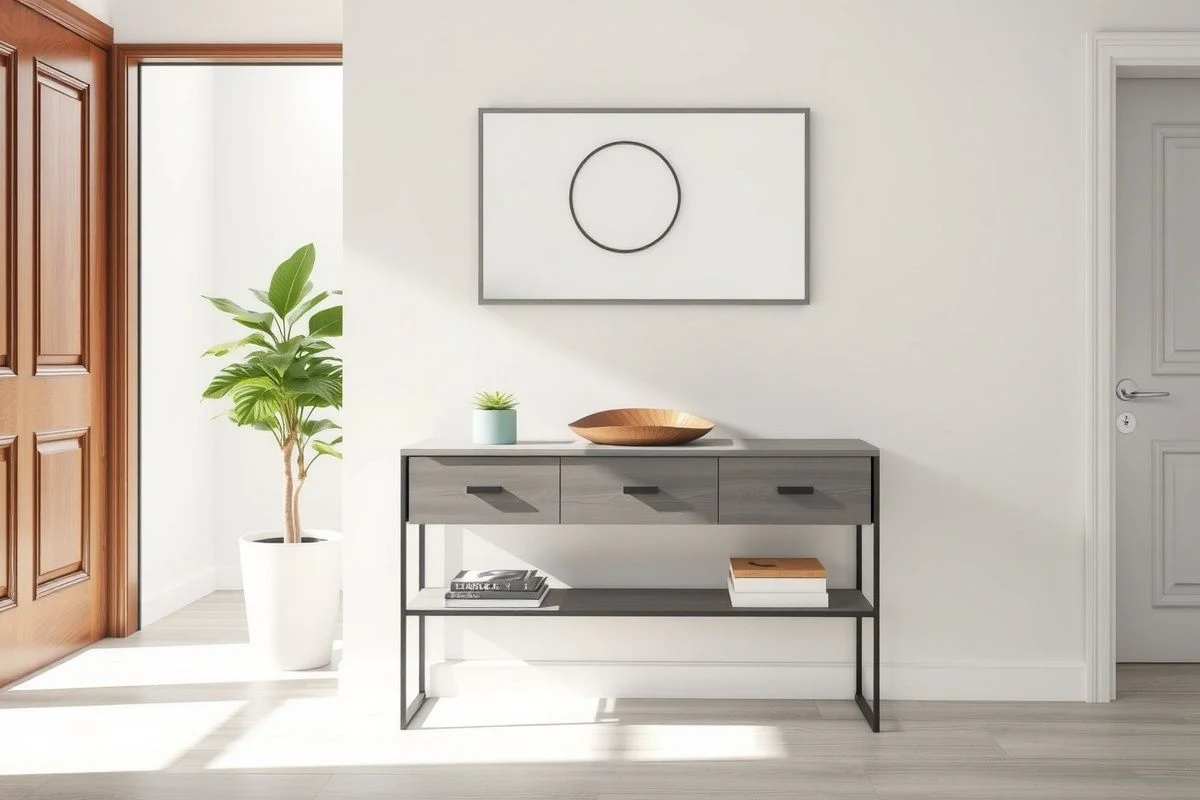
This is the category where the fewest mistakes are made because the concept is simple. A console with a mirror is just the sum of two classic pieces of furniture in one: a low piece for leaving keys, bags, miscellaneous items, and a mirror above. It’s nothing revolutionary, but it works because it solves two real needs without taking up more space than a single piece of furniture.
The ideal measurements: 90-120 centimetres wide, 35-40 deep (no more, as it invades the hallway), and the mirror should reach at least 180 centimetres in height. If the entryway is dark, choose a metal frame or frameless mirror: it reflects more light. If it’s sunny, a soft wood frame warms the space without overwhelming it. The storage underneath can be drawers, doors, or a combination: choose based on what you store most frequently. Items you need to grab daily (keys) should be in easily accessible drawers; documents or occasional items should be in closed compartments.
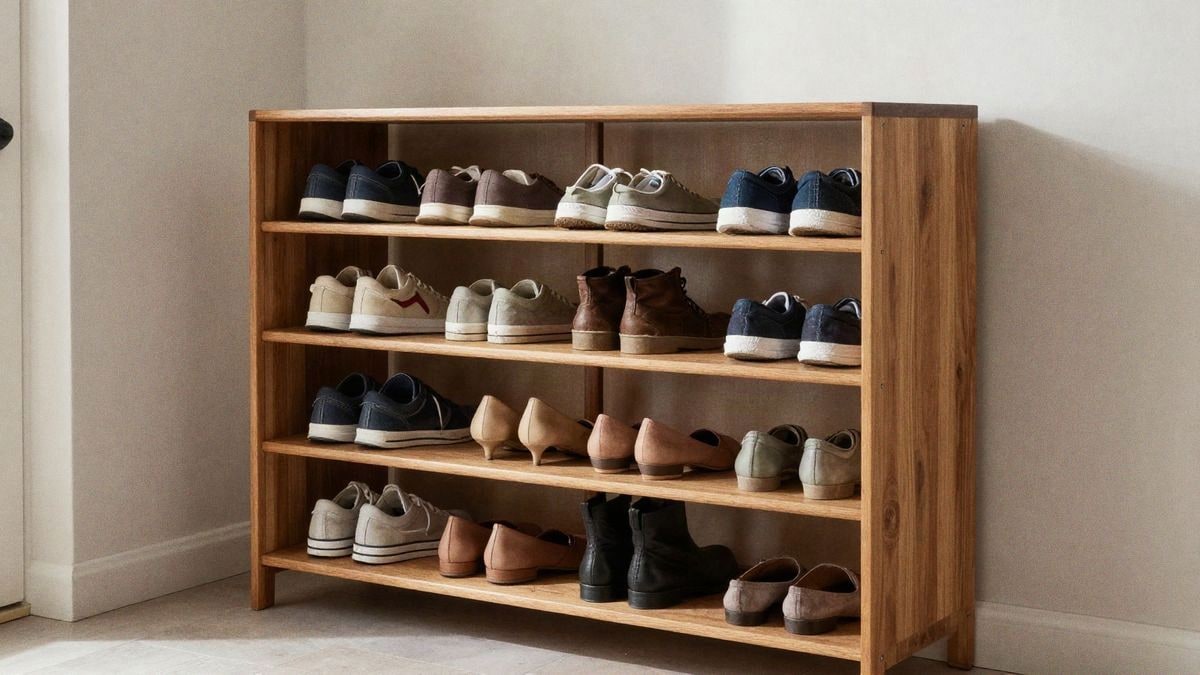
Shelves with Integrated Benches: Where Theory Falls Short
Here we want to be honest: a shelf with a bench below looks great on Pinterest. Reality: the bench takes up space that could be better used, weighs a lot, and that lower shelf isn’t deep enough to sit comfortably if it also needs to store things. If you have little space, it’s better to have a standalone bench that you can move where needed, and normal shelves above.
The exception is if you have a wide hallway (more than 1.5 metres) or a generous entryway. There, an integrated system makes visual sense. But measure twice: the bench should not be deeper than 40 centimetres, the shelf must be sturdy (at least 18 millimetres thick if it’s going to hold books), and the supports must be very well fixed to the wall. Multifunctional furniture that fails is almost always due to poor installation, not design.
The Money That Is Truly Worth Investing
We’ve seen cases of all kinds. People who spent 200 euros on a fragile sofa bed and ended up sleeping on a regular sofa because the multifunctional one was a nightmare. And people who invested 700 euros in a decent sofa bed five years ago and are still comfortable. The rule is simple: invest in what you will use daily. If it’s a multifunctional piece of furniture that you’ll open every night, it deserves a budget. If it’s something you’ll use twice a year, save.
The materials that justify investing: quality springs or foam in sofas, metal mechanisms in openings, solid wood or real veneers in storage furniture, quality guides in drawers. What does NOT justify price: excessively complex designs that you’ll never use, brands that charge just for the logo, functions that sound good but you know you’ll never need.
At Casa y Deco, we learned that the multifunctional furniture that remains in a home years later are those that solve a real problem with elegance and durability. They are not the most complex or the most expensive: they are the ones you understand at first glance, that you use without thinking, and that age well. Those are the ones that are truly worth it.

You may also like