At Casa y Deco, we love discussing how to create beautiful spaces without breaking the bank, and the baby's room is the perfect example: we want it to be a cozy, safe place with personality, but the reality is that little ones grow quickly and their needs change constantly. Spending a fortune on decor that will last two years is not the way to go. The good news is that with creativity, a bit of ingenuity, and smart decisions about where to invest, we can achieve a room that enchants the whole family without straining the budget.
The first thing we learn when decorating baby rooms is that the base should be functional and neutral. This means choosing walls in soft tones like white, beige, light grey, or even a pale green, which will serve as a canvas for years. Thus, when the baby grows and their tastes change, we can update the decor with textiles and accessories without having to rethink the entire space. A quality paint can cost less than most furniture pieces, and the result is transformative.
Neutral walls allow us to play with decor through elements that you can change guilt-free: removable wallpaper, vinyls, and textiles. If you like the idea of a patterned wall, peel-and-stick wallpaper is your ally: it costs between a third and half of what repainting would, and it disappears without a trace when you want to change it. I confess that I initially thought vinyls were a bit cheesy, but well-chosen ones (a subtly drawn woodland, minimalist geometric shapes) can add character without being loud. You can find them at very accessible prices and change them when you get bored.
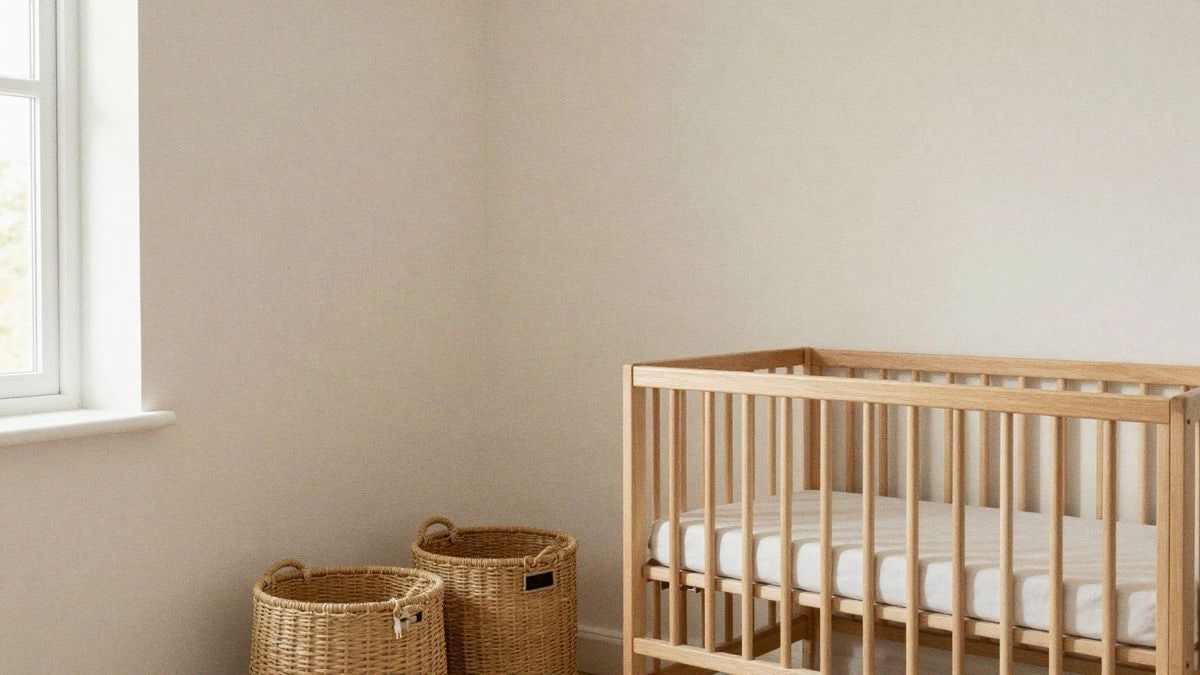
Furniture is where we can be smarter with the budget. A convertible crib that transforms into a toddler bed is an investment that truly pays off: you will use the same piece for 5 to 8 years instead of changing it three times. The same applies to a basic, functional dresser; choose a simple model without too many frills that you can later relocate to another bedroom. If you don't have the budget for a new crib, a small used one in good condition is perfectly safe if you check that it meets current child safety standards.
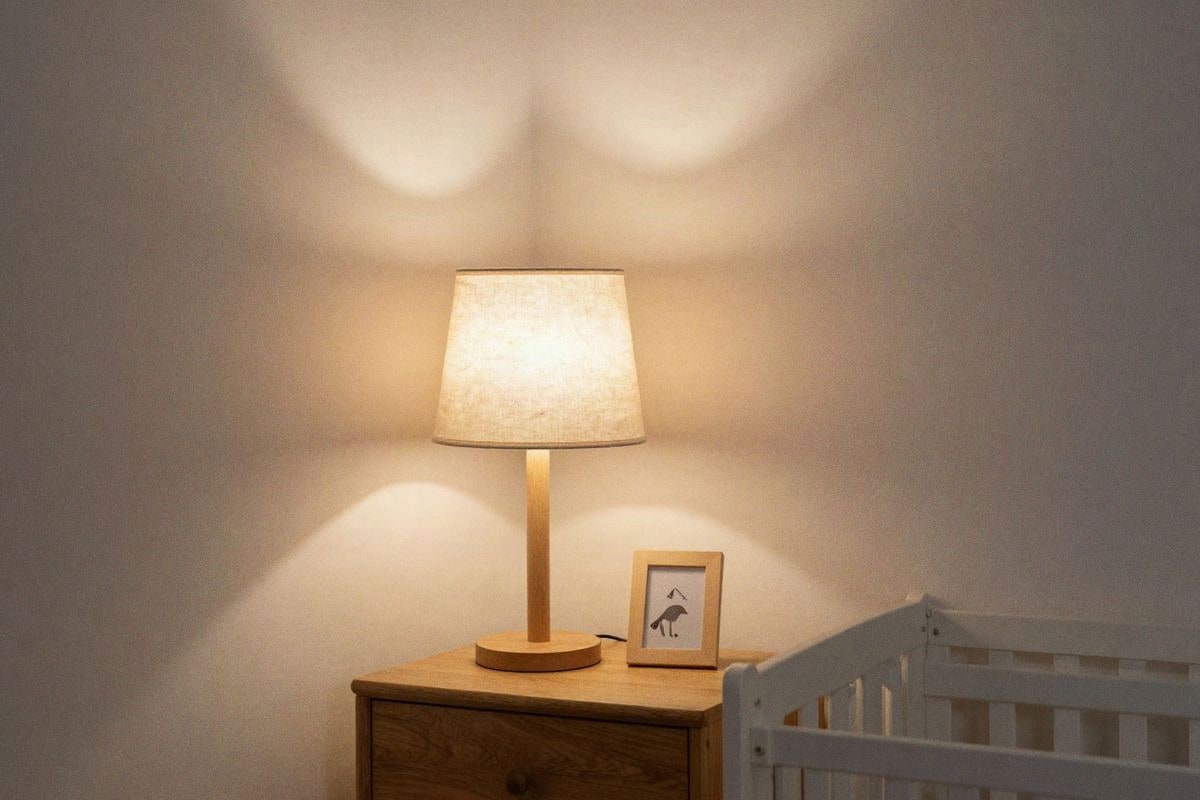
Soft lighting is essential but doesn’t need to be expensive. A simple ceiling lamp does the job, and if you add a small desk lamp or a dimmable wall light for breastfeeding, you have everything covered without spending a fortune. Modern, minimalist sconces are cheaper than they used to be, and a neutral fabric shade on the bedside table costs little but greatly enhances the warmth of the space.
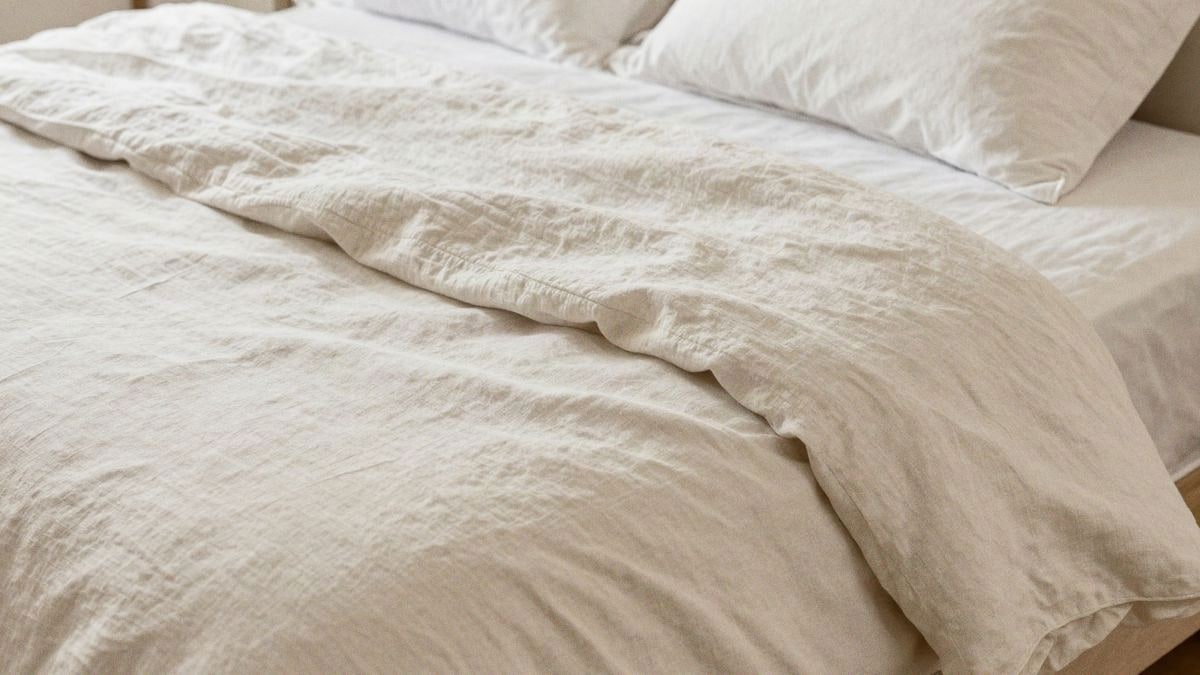
Textiles—sheets, blankets, cushions—are where you can afford to be more generous because you see them daily and they deserve to be of quality. Choose organic cotton if your budget allows; it lasts longer through washes and is more comfortable for the baby's skin. But you don’t need luxury brand bedding; basic options from big stores offer good value for money. A couple of woven blankets in neutral tones, a couple of soft cushions, and you have enough to make the room look cozy.
Here comes a tip that never fails: make use of what you already have. Do you have a shelf from another room that you no longer use? Bring it to the baby's room to store books and stuffed animals. A bedside table that you no longer need? Perfect as a raised changing table if you equip it with a firm cushion on top (with protection, of course). Creative reuse is not only economical, it is also sustainable and adds character to a space that could otherwise feel too new and sterile.
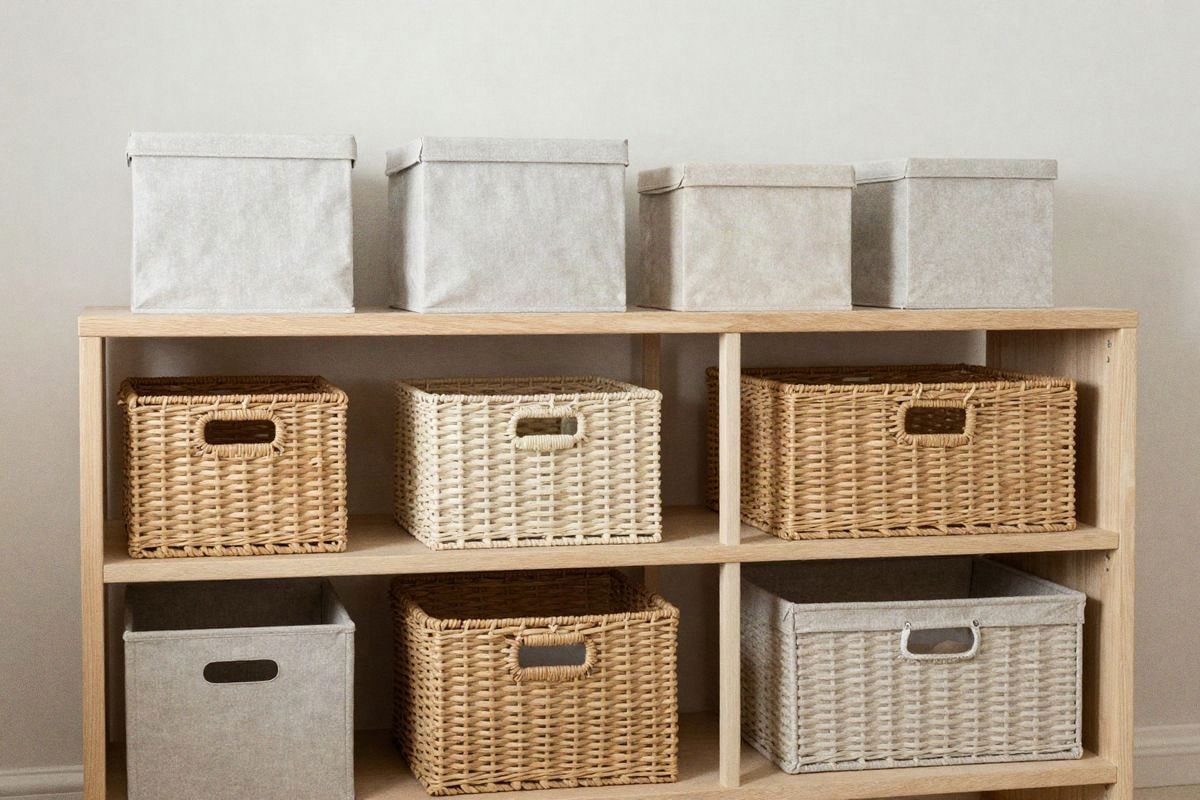
Smart storage is your great ally to keep your sanity and organisation intact. Fabric boxes or wicker baskets in neutral tones store diapers, changes of clothes, and toys in a way that looks tidy. These pieces are accessible, functional, and age well: you will continue to use them when the room transforms into a child's bedroom. Floating shelves save money compared to bulky wardrobes and create a more open space feel.
With plants, something similar happens: you don’t need exotic or expensive species. A pothos or a small fiddle leaf fig in a corner freshens up the environment without requiring much care or investment. Experts recommend non-toxic plants in case the baby grows and feels tempted to explore them. Basic ceramic pots can be found very cheaply, and placing a plant in the corner of a dresser or by the window completely changes the vibe of the room.
Hanging decor is also accessible: a simple mobile, a neutral dreamcatcher, or a couple of framed illustrations create a focal point without emptying your wallet. Prints and small paintings can be found at ridiculous prices, and as for the mobile, a wooden one with geometric shapes is more timeless and economical than those that play music and have coloured lights. It serves the sensory function without being an unnecessary expense.
If you want to add detail and personality without spending, opt for low-cost DIY. A wall with a fabric garland, painted cardboard names or letters, or even a wall of family photos frames the space in a very emotional and almost free way. I know mothers who have done incredible things with chalkboard paint in a corner, cotton fabric sewn as a canopy, or even curtains made from old sheets. The result is unique, and your wallet will thank you.
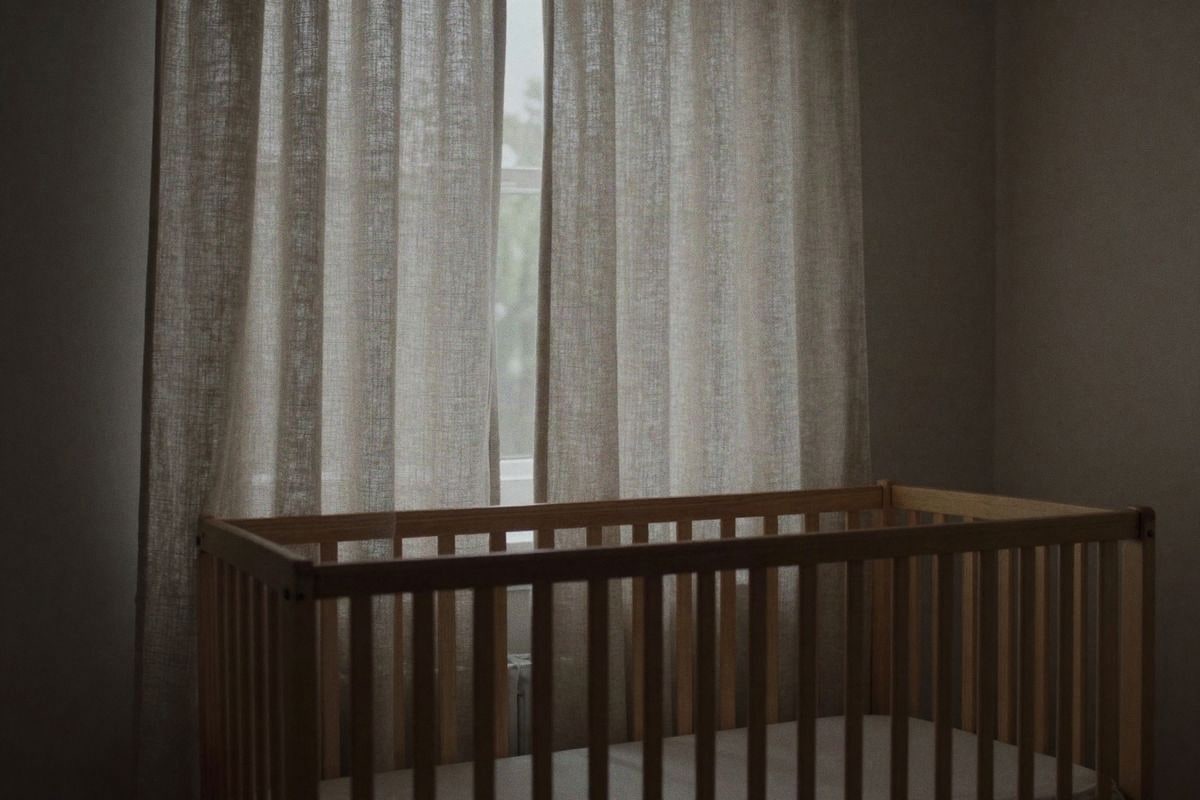
One point that is sometimes overlooked: ventilation and natural light. A light-coloured linen or cotton curtain that can be fully opened during the day is not a luxury, it’s a necessity. Look for economical options; even a couple of fabric panels sewn to metal rods are sufficient. Air circulation and natural light make a room more pleasant, and in turn, your electricity bill will be lower.
Plan your budget by priorities: baby safety first (crib, mattress, clean and safe textiles), then functionality (storage, adequate lighting), and finally aesthetics. When you distribute it this way, you will see that beautiful decor comes naturally and without spending a fortune. Budget decor stores have surprising options, and honestly, many pieces you find there age well and offer better value for money than you might imagine.
Remember that a beautiful baby room doesn’t need to be expensive. What truly matters is that it is safe, cozy, and reflects the love you put into every detail. With the right decisions, you can create a space that not only works now but evolves with you without needing to start from scratch. A neutral room, quality textiles, versatile furniture, and decor that you can easily change: that is the formula for saving money decorating without sacrificing beauty.

You may also like