At Casa y Deco, we love solving design and installation dilemmas that everyone faces at some point, and the issue of climate control systems in small homes is one of the most common. When you have an apartment of less than 80 square metres, every decision counts because space leaves no room for mistakes or improvised solutions. We are talking about ducted air conditioning versus splits, two options that seem antagonistic but deserve an honest and detailed analysis.
Let’s start with the obvious: in small spaces, the dilemma is not just technical, but also aesthetic and budgetary. It’s not the same to install ducts in a home where a false ceiling is viable than in an industrial loft with exposed beams. The initial outlay and the visual impact generated by each option are also different. We have seen it all: from apartments where ducts integrate perfectly to others where splits stand out like a sore thumb that no decoration can hide.
The ducted system consists of a single exterior unit connected to a network of pipes that distribute cold air throughout the home via discreet diffusers in ceilings or walls. The result is uniform and almost invisible climate control. When it works well, it is the dream of any decorator: air conditioning without seeing it. But here comes the catch: installation requires construction work, affects the usable height of the rooms (you lose between 20 and 30 centimetres of ceiling), and is only viable if your home has the structure and plans to allow it. In old apartments with ceilings of 2.40 metres or less, reducing that height guarantees a feeling of oppression.
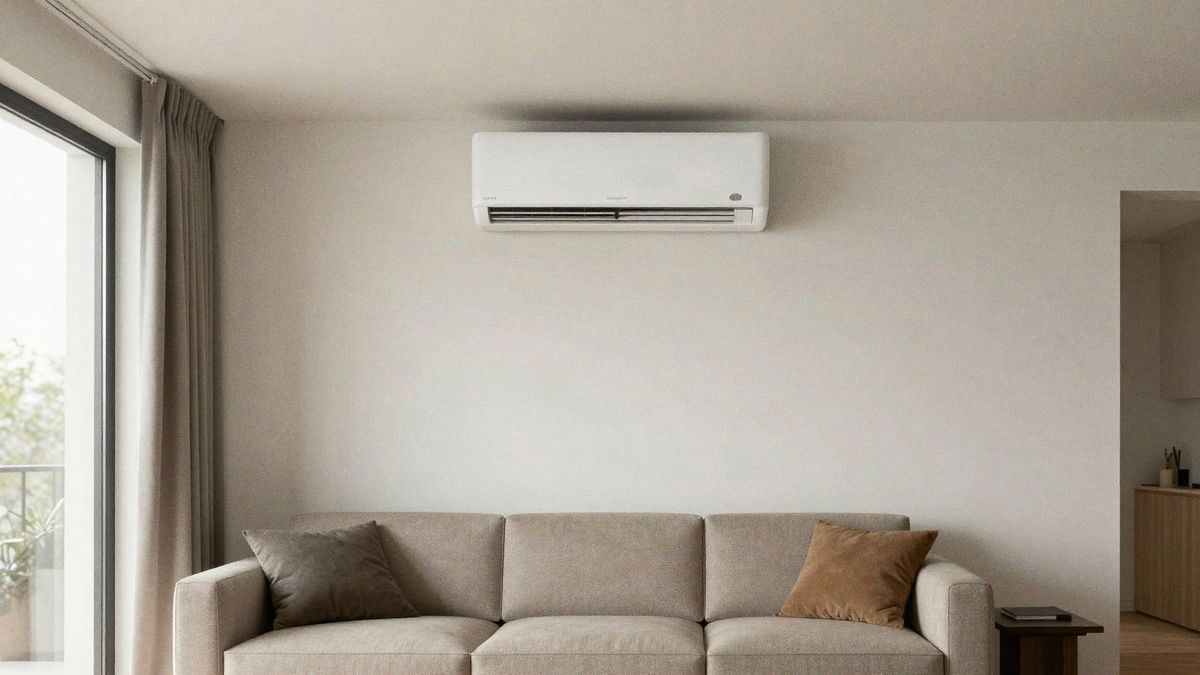
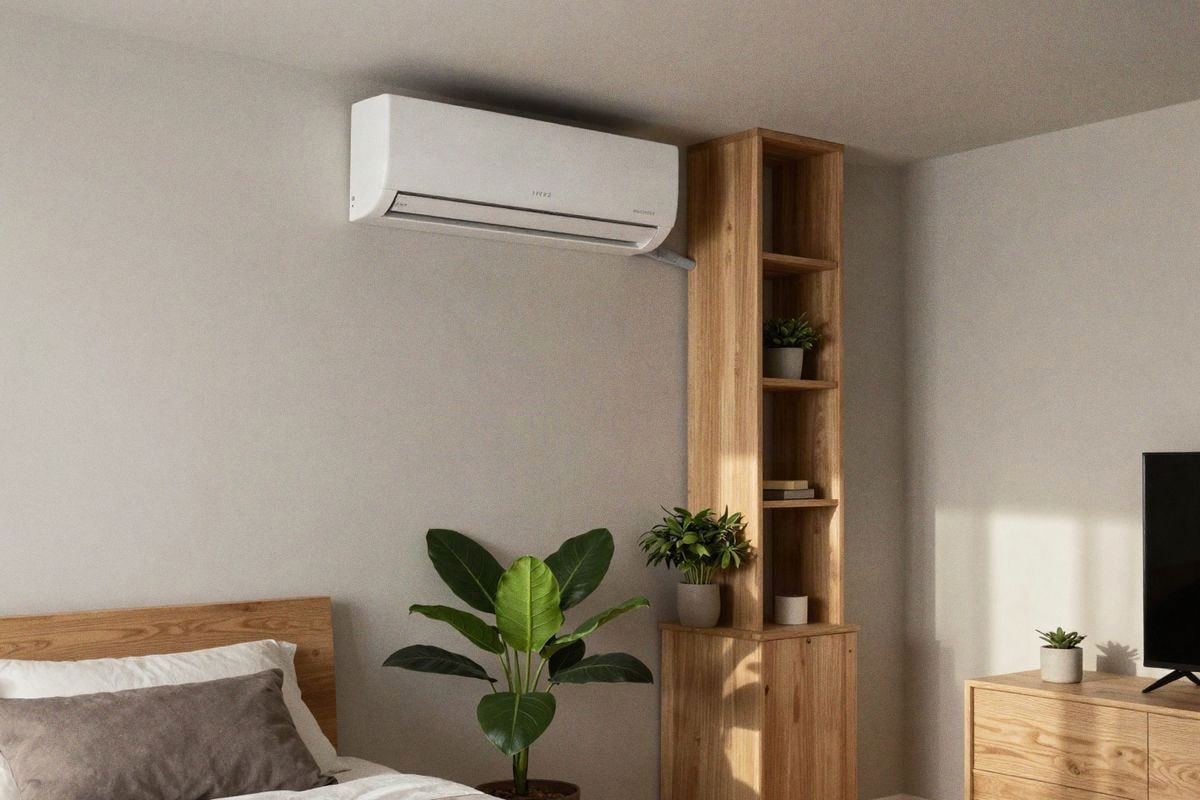
Splits, on the other hand, work in a completely different way. They are compact indoor units that hang from the wall, connected to an exterior machine via refrigerant pipes. They are quicker to install, require no major construction work, and are reversible (you can dismantle them if you move out or change your mind). The downside is visual: that white, grey, or black box on your wall is an object that is there, present, and although modern models have improved a lot, it does not disappear.
I confess that a few years ago I had to choose for my own 45-square-metre living room and made the mistake of obsessing only over aesthetics, without properly considering the airflow. I installed a single split in the bedroom thinking it would be enough, and the living room felt like a sauna while I slept with icy air. The lesson was clear: in small homes, climate distribution is more critical than in large houses because there are no buffer zones.
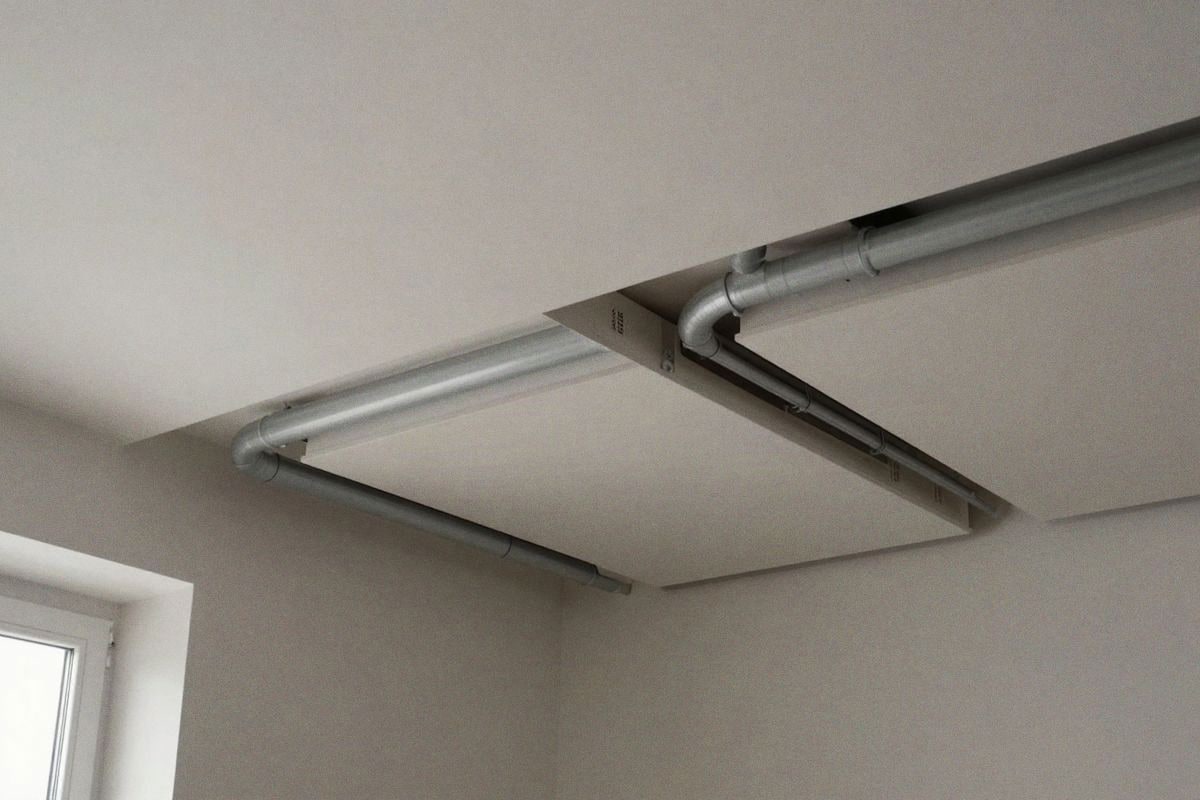
Let’s talk budget straightforwardly. A ducted system in a small apartment (60-80 square metres) starts from 2,500 to 4,500 euros installed, with extra costs for construction, structural review, and possible redecorating of false ceilings. A quality split costs around 1,200 to 2,000 euros installed. If you need two splits to adequately cover the home (one in the living room-kitchen, another in the bedrooms), we are talking about 2,500 to 4,000 euros. The figures are similar, but the type of expenditure is different: ducts require investment in construction; splits, in equipment.
Ducts: When It Makes Sense
If your apartment is undergoing a complete renovation or you plan to stay in it for many years, ducts are worth it. The comfort of not having visible units, the uniform temperature distribution, the space-saving on walls: all of it counts. Moreover, you can climate control the entire home without visible exterior units on the facade (only the condenser unit on the terrace or roof). For a small 65-square-metre L-shaped apartment, with an integrated living room-kitchen and two bedrooms, a ducted system hidden in a 25-centimetre false ceiling is entirely feasible.
The real challenge is the prior planning. You need clear architectural plans, identify where the ducts will run without interfering with water pipes or electrical installations, and have a minimum usable height of 2.60 metres before the false ceiling. Anything less than that and the room loses character. I have seen apartments where owners removed the false ceiling years later because they felt like they were in a bunker.
Splits: The Most Practical and Flexible Option
For most small homes, especially if they are rented or if renovations are limited, splits are the most sensible solution. Clean installation in a day, they do not require structural work, and the aesthetic impact is manageable if you choose the model and placement wisely. Modern splits come in white, graphite grey, and even taupe grey, much less invasive than a decade ago.
The key is to place them strategically. In a linear distribution apartment (a hallway with rooms on one side), one split in the living room and another in the main bedroom cover almost everything. In a 30-square-metre open-plan living room-kitchen, a single medium-capacity split (3,000 frigorías) is sufficient. Forget about 2,000 frigorías splits in small homes: they struggle to work at maximum capacity and consume more energy. Better to have one powerful unit on low mode than two mediocre ones at full blast.
Another practical detail: place the splits out of the direct line of sight from the main living areas. If your sofa faces the wall where the split would go, consider putting it on the side wall or in the bedroom first. The human mind has a radar for technical objects in the visual field, so slightly hiding it with a low-profile shelf, a translucent curtain, or even tall plants can completely change the perception.
The Noise Factor That No One Mentions
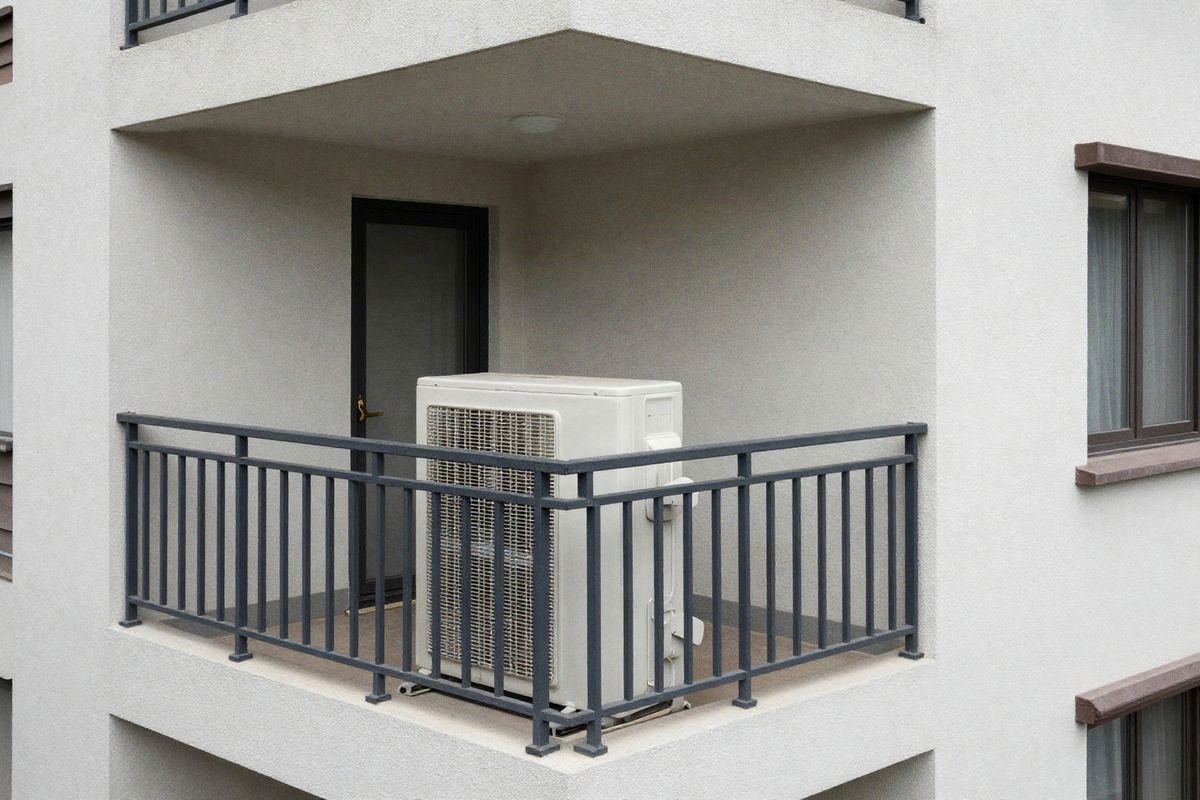
In small spaces, the noise from climate control is more noticeable and annoying. Ducts distribute and dampen it; splits operate with an external compressor that generates vibration. Premium models are practically silent (20-25 decibels), but mid-range ones can hover around 35-40 decibels at maximum mode, which is equivalent to a normal conversation. If your bedroom is less than 2 metres from an exterior window where the condenser unit of a split will go, considering the location carefully is essential.
Ducts generate noise at the diffusers (between 25 and 30 decibels) and transmit vibrations through the pipes if they are not well insulated. A common mistake in cheap installations is not lining the ducts with rock wool of at least 25 millimetres thick, which significantly increases noise. If you choose ducts, insist on decent acoustic insulation from the installer; the savings here are the worst you can make.
Let’s also talk about energy efficiency, which is even more relevant in small apartments because you pay for every extra kilowatt. Modern inverter splits, which modulate power according to demand, consume 20-30 percent less than fixed-speed ones. Ducted systems can also have inverters, but the cost is higher. For a small home in Madrid, Barcelona, or Seville, where air conditioning runs for many months of the year, the difference in bills is noticeable: up to 40-50 euros monthly.
A silent advantage of ducts worth mentioning: reversibility. A good ducted system also heats in winter with the heat pump, meaning it replaces radiators or electric heating. In a small apartment where heating costs are a wall of euros every winter, that compensates a lot. Splits also heat, but a single unit in the living room does not heat the rest of the rooms well without leaving them freezing or costing a fortune.
Our conclusion at Casa y Deco is pragmatic: choose ducts if you are doing a complete renovation, the ceiling height allows it, and you plan to stay for years. Choose splits if you need speed, don’t want construction work, are renting, or have a tight budget. In homes of 50-75 square metres, most of our readers choose mid-high range splits (with good energy efficiency) in two strategic locations, and they live happily. It’s not the perfect solution from a luxury magazine, but it’s what works in the reality of day-to-day life.

You may also like