One thing we have learned at Casa y Deco is that outdoor furniture deserves the same attention as indoor furniture, especially when winter arrives. It’s not just a matter of locking them away until spring: many of them can perfectly withstand drops in temperature, humidity, and frost if we choose wisely from the start and give them the right care.
The good news is that you don’t have to wait for the warm season to enjoy your terrace or garden. There are materials and designs specifically created to endure the cold months without deteriorating, without rust, cracks, or deformations. What changes is how you select them and how you protect them once installed. I confess that for years I put everything in storage, but then I discovered that it was unnecessary: I was simply choosing poorly from the beginning.
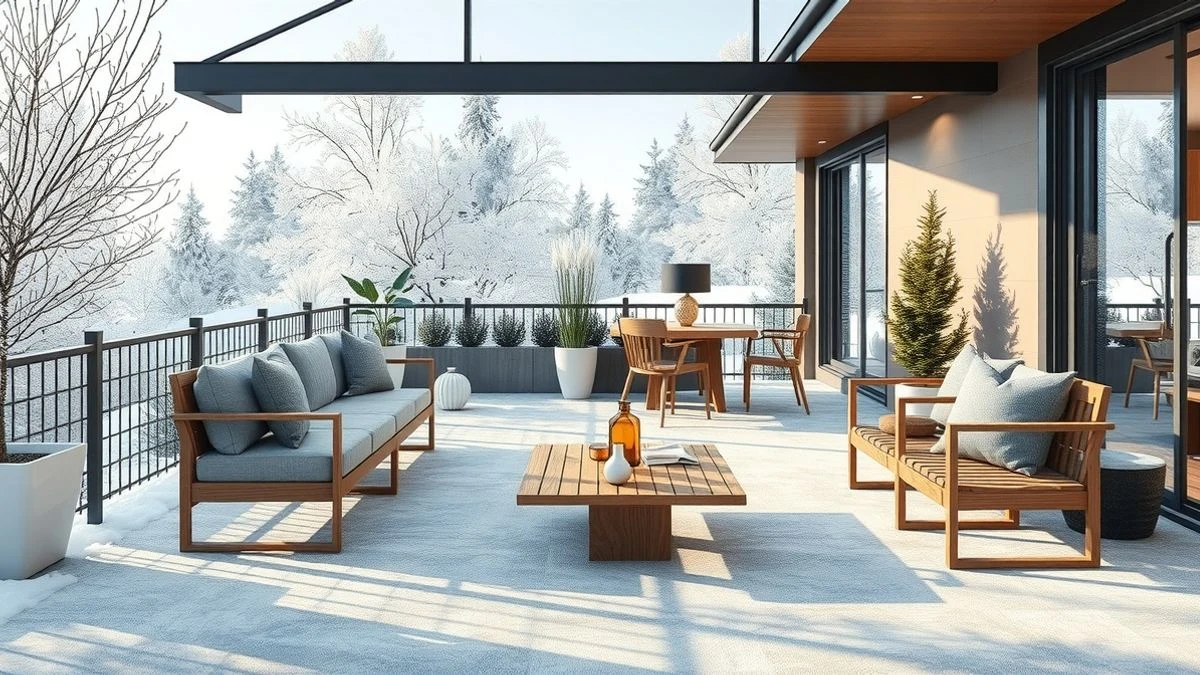
The Materials That Truly Withstand Winter
Stainless steel is your first ally against cold and humidity. It doesn’t rust, doesn’t fade with frost, and maintains its appearance for years and years. That polished or satin steel you see on designer terraces is no coincidence: it’s pure durability. A bench or a small table made of stainless steel can spend the entire winter outdoors without being affected. The only care required is to occasionally clean it with a damp cloth to prevent dirt buildup, but nothing more.
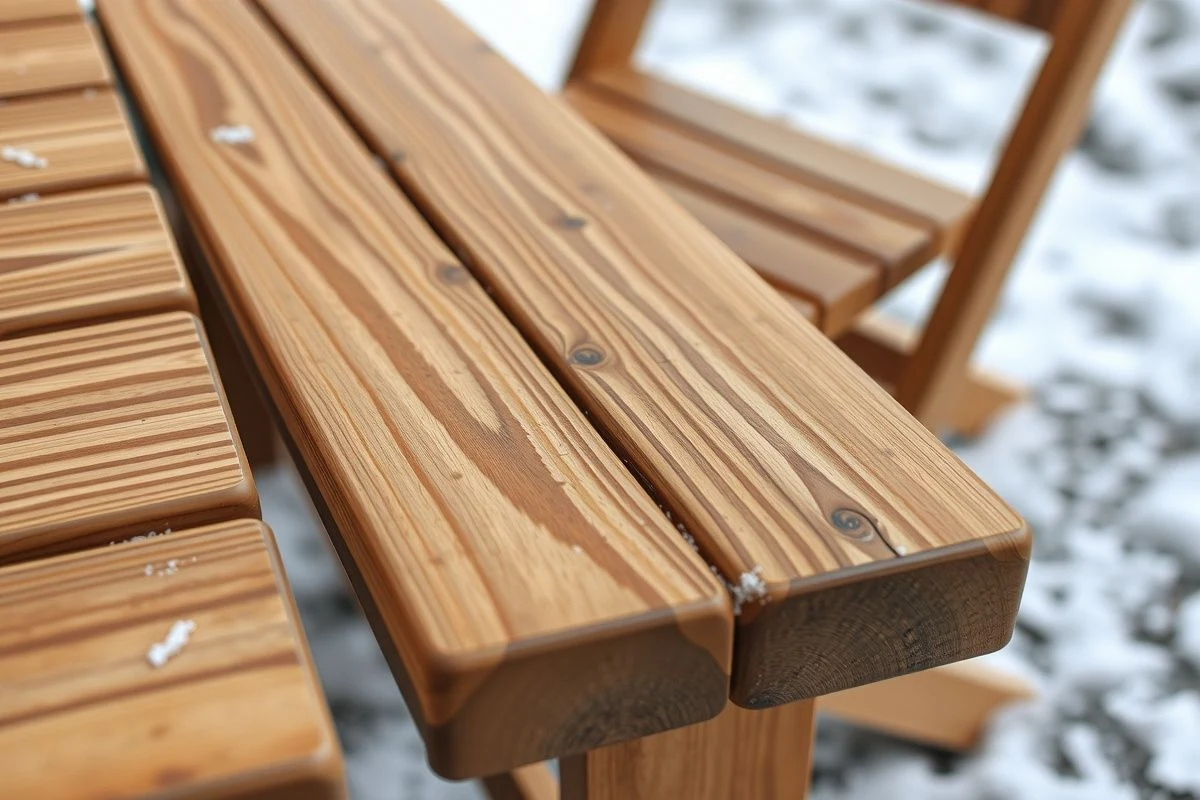
Treated wood is another interesting option, as long as it is properly impregnated with oils or varnishes specifically for outdoor use. Woods like teak, cumaru, or ipé have very high densities that make them naturally resistant to the elements. However, not all woods are the same. A basic treated pine board will crack in winter; a teak board will last for decades. If you opt for wood, invest in quality from the start: it’s more expensive, but it saves you from having to replace furniture every two years.
Concrete and natural stone are options for those seeking permanence and rustic character. An exposed concrete bench, polished or not, will withstand any winter unscathed. Slate or limestone tables are also safe, although they require some maintenance to prevent mold in very humid areas. I confess that I love these materials for their honesty: they don’t pretend to be anything else, they simply last.
What to Avoid: Materials That Suffer in the Cold
Standard plastic, that milky white stuff you see in big box stores, becomes brittle in low temperatures. We are not convinced at all by those unreinforced resin furniture: after the first winter, the arms crack, and the armrests break if you lean on them carelessly. Another matter is high-density polyethylene or quality composites, which do resist better, but that’s not standard plastic.
Untreated iron, which looks nice in summer, can rust quickly if exposed to continuous rain and cold. Unless it is galvanized (treated with a protective layer of zinc) or painted with good quality marine enamel, you shouldn’t take the risk. A wrought iron sofa without protection is an investment doomed to ruin within a few months.
Low-quality textiles also don’t hold up well. Standard canvases rot, cheap synthetic fillings absorb moisture and start to smell bad. If you want upholstered furniture, make sure they use marine acrylics or treated technical canvases against mold. And if it rains a lot where you live, consider additional waterproof covers for the cushions.
Cushions and Textiles: The Most Vulnerable Part
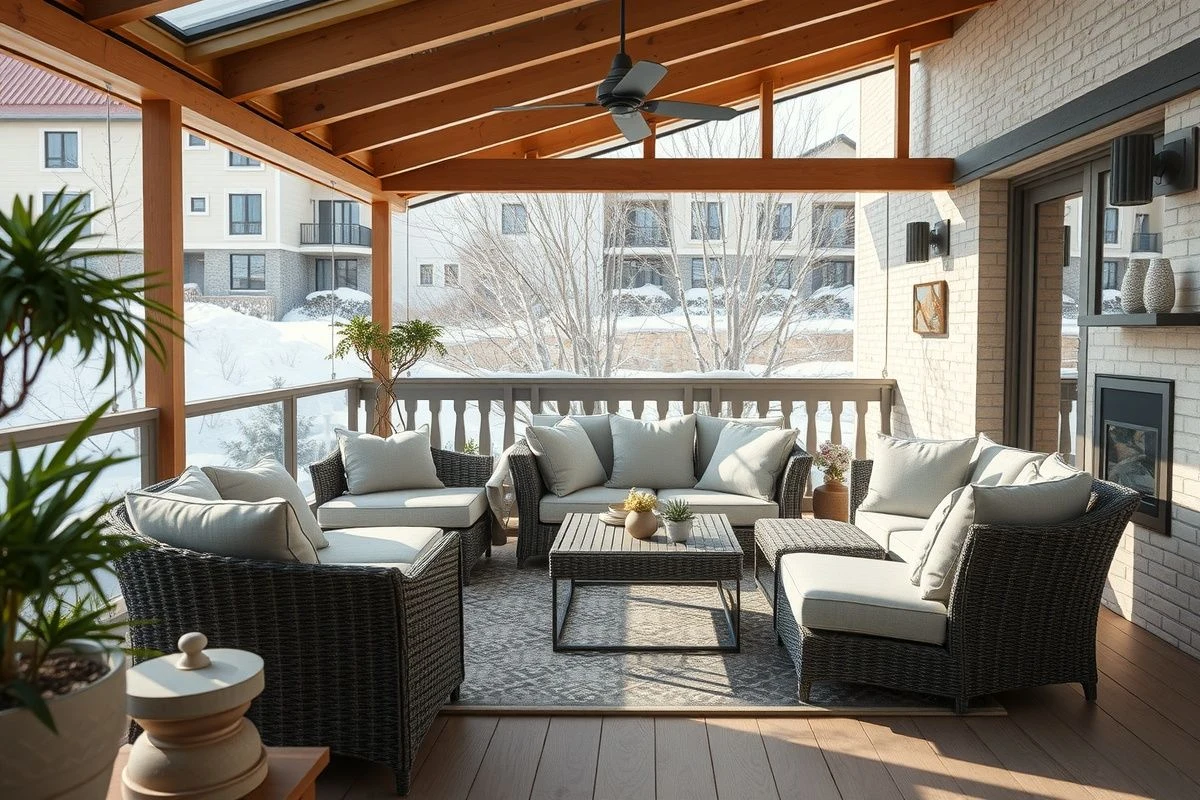
Cushions are often the weak point of any outdoor furniture. Even if the sofa is made of teak, the textiles can be ruined by a rainy winter. Acrylic canvases are the most resistant: they dry quickly, don’t retain moisture, and resist mold. Look for the Sunbrella code or a similar one that guarantees marine and UV resistance simultaneously. The fillings also matter: marine quality polyester is better than cotton or feathers, which absorb too much water.
Storing the cushions in winter is more practical than leaving them outside, even if the frame holds up. That’s where you need to make the effort. A terrace trunk or a well-ventilated airtight plastic box is sufficient. If you buy additional waterproof covers (there are versions that fit perfectly to any size), you can leave the cushions outside without risks. That’s what we do: we protect them with covers, and winter passes without drama.
Basic Maintenance to Get Through Winter
Even if the material is resistant, a little maintenance greatly extends the life of the furniture. Clean regularly, especially after heavy rains. A soft brush and water with neutral soap is all you need. Don’t use abrasive or chlorinated cleaners: they damage even stainless steel over time.
For woods, apply a protective oil every 6-8 months, especially in autumn, before the frost arrives. This oil creates a hydrophobic barrier that prevents water from penetrating the fibers. It’s the difference between wood that cracks and wood that ages gracefully. It’s not complicated: with a wide brush, it doesn’t take long.
If there is a lot of snow or ice in your area, occasionally remove it from flat surfaces. The accumulated weight can deform furniture less robust than you expect. For furniture with wheels, lock them or store them in a protected place if the snow is going to be severe: continuous movement due to freezing and thawing stresses the joints.
Extra Protections: Covers and Shelters
Special covers for outdoor furniture are a smart investment if you live in a very harsh climate. They are not pretty, but they effectively protect during the months of inactivity. Look for covers made of reinforced polyester or good quality canvas (no less than 300 g/m²), that breathe a little to prevent moisture buildup under the cover.
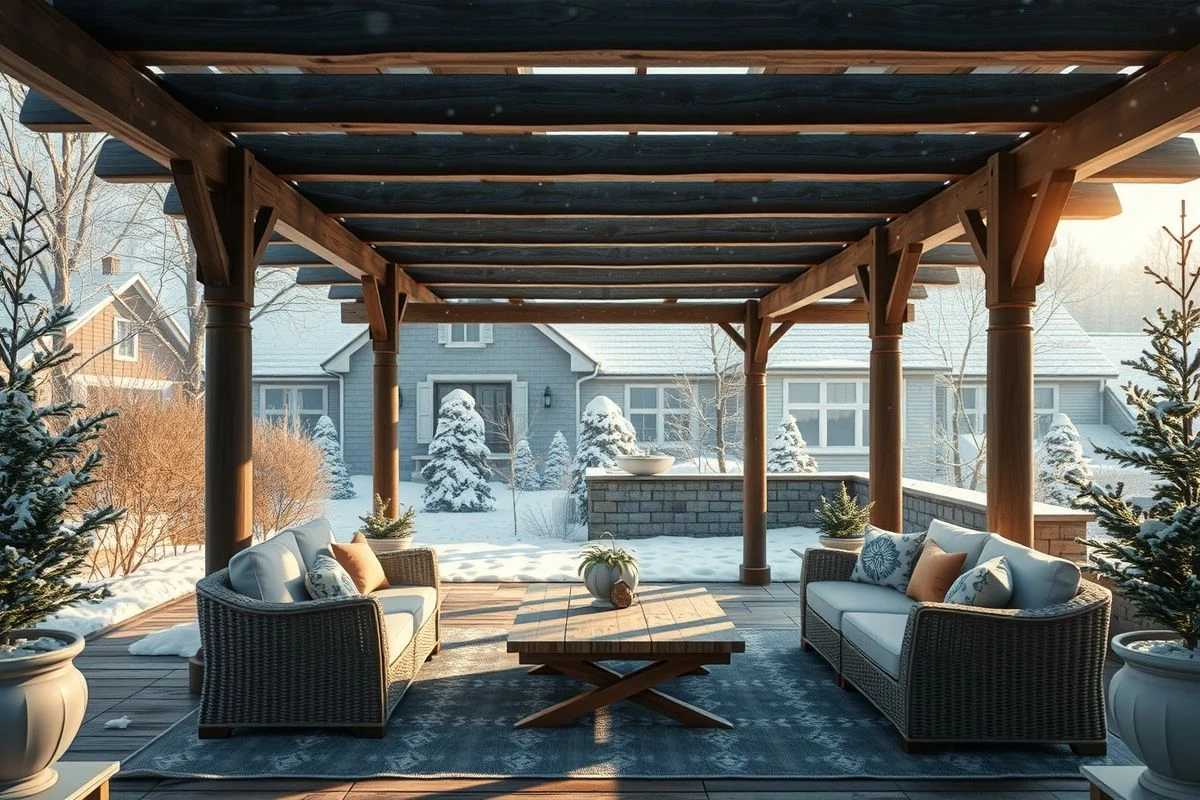
If your terrace is covered by an awning or a pergola, you already have a great advantage. Furniture under shelter withstands infinitely better because they don’t receive direct rain or are constantly exposed to temperature changes. If you don’t have protection, consider installing a large winter umbrella, even without a fixed awning. It’s less costly than you think.
Choosing Wisely from the Start Saves Money
The best strategy is to invest in furniture designed to resist from the beginning. A stainless steel bench costs more than a plastic one, it’s true. But that bench lasts you 20 years; the plastic one, two or three. In the long run, it’s cheaper, and they age with much more elegance. Quality furniture acquires patina over time: they become more beautiful, not the other way around.
If you have a limited budget, opt for sturdy structures (stainless steel, quality wood) and complement with textiles that you do store in winter. It’s better to have a teak sofa with cushions that you remove every October than a complete plastic sofa that deforms after the first cold snap. The investment ratio changes, but the result is superior.
At Casa y Deco, we believe that a terrace in winter can be just as cozy as in summer, as long as the furniture you choose has character and durability. It’s not luxury: it’s simply about choosing wisely, caring for what you have, and enjoying your outdoor space all year round. Because winter on the terrace, under a blanket, with a hot cup, is different from anything else.

You may also like