At Casa y Deco, we love solving those decorating dilemmas that seem impossible, and one of the most common is how to light a living room when the ceiling height is limited. If your flat has that characteristic low ceiling of old buildings or simply lacks generous vertical space, we understand you: it’s frustrating to want a beautiful ceiling lamp only to find that any option steals visual space or, worse still, that you literally have to duck to pass under it.
The good news is that there are elegant and practical solutions that allow you to have ceiling lighting without sacrificing height or style. It’s not about settling for the first thing you find, but understanding what features to look for in a lamp so that it truly works in your space. I confess that I spent years avoiding ceiling lamps in my own living room until I discovered some tricks that we are going to share with you now.
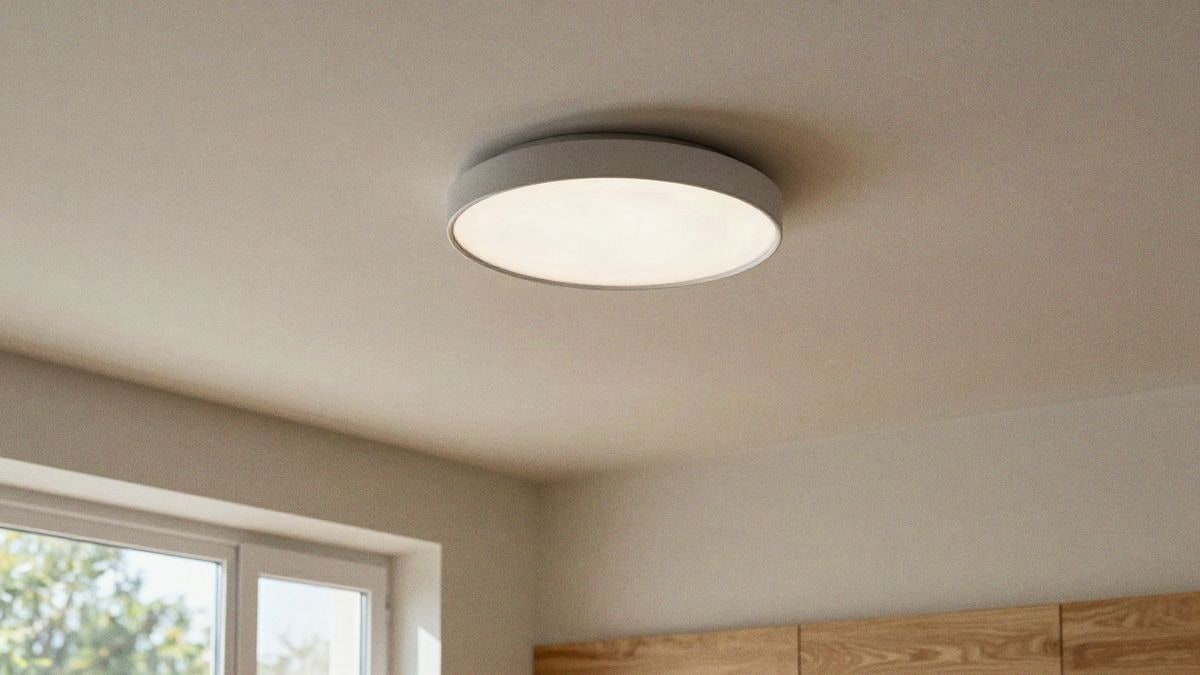
The most important factor is the total height of the mounted lamp. A low ceiling lamp is not just a pretty design: it’s a combination of structure and proportions that minimizes intrusion into the airspace. The best options range from 15 to 25 centimetres from the ceiling to the lowest point of the fixture, although this depends on your personal height and the feeling you want to create in the room.
Flush mount lamps are your natural allies in this case. They adhere almost to the ceiling, take up very little space, and offer a clean and modern solution. A flush mount of between 40 and 60 centimetres in diameter illuminates a medium-sized living room without needing anything to hang in the air. If you have a ceiling height of between 2.4 and 2.6 metres, which is the most common in Spanish homes, this is practically what you need.
Styles that Work in Low Living Rooms
Minimalism is your best friend here. Lamps with straight lines and simple geometric shapes convey height by not visually breaking the line of the ceiling. A square or rectangular flush mount made of wood or black metal integrates almost invisibly, allowing the view to flow freely through the room.
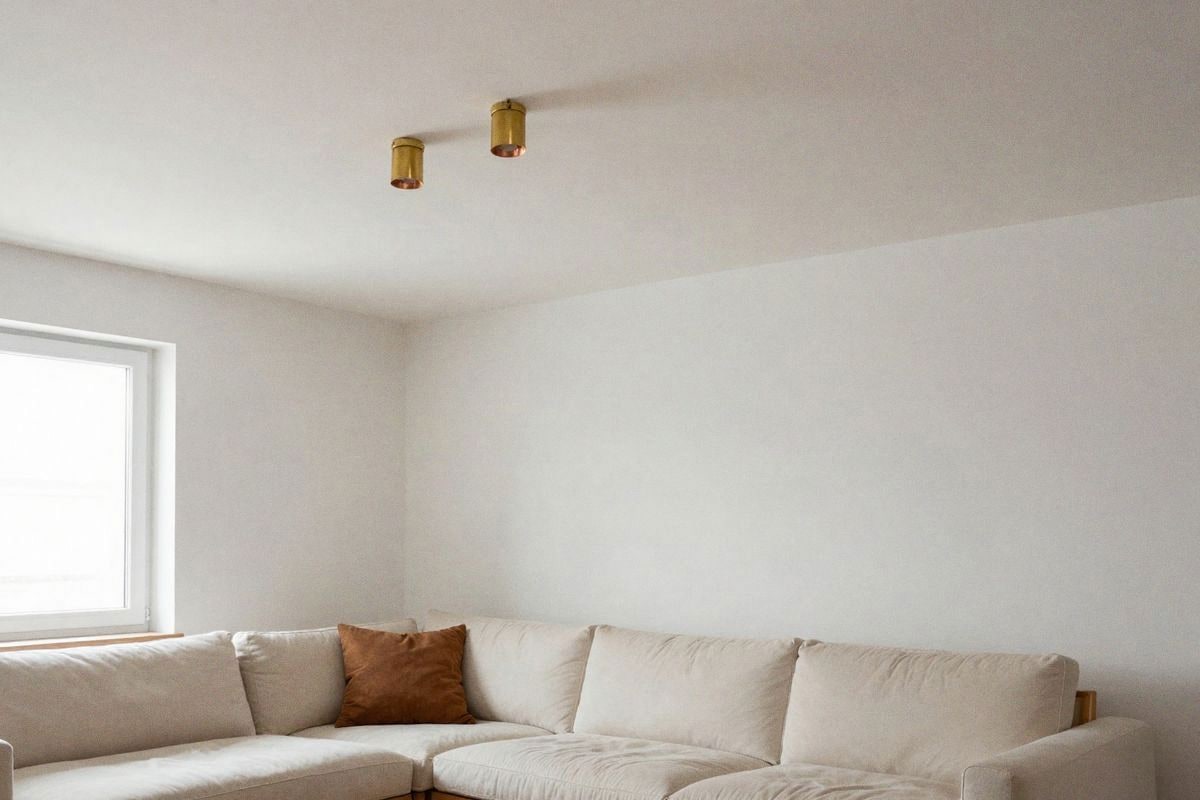
If you prefer a warmer touch, ceiling lamps with brass or copper finishes work wonderfully, especially in living rooms with Nordic or Scandinavian decor. Polished metal reflects light diffusely, creating a sense of spaciousness. Avoid overly ornate designs with many hangings or crystals: they take up unnecessary visual space and can make the ceiling seem even lower.
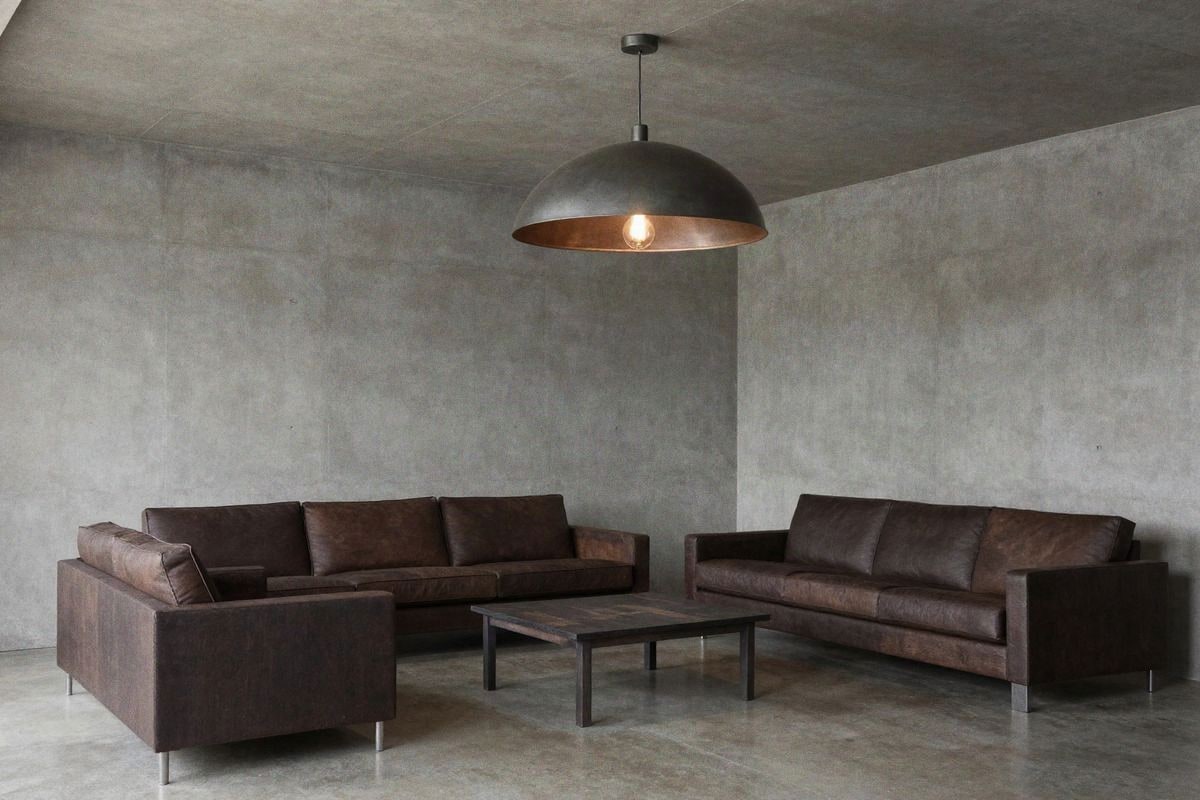
Industrial and mid-century styles offer excellent options because they prioritise functionality over ostentation. Look for lamps with flat or semi-circular shades instead of full spheres. A flat shade that illuminates downwards makes better use of space and prevents the bulk of the fixture from taking up more than necessary.
I confess that we are not convinced by excessively decorative designs for low ceilings: those chandeliers with multiple arms, hanging crystals, or very pronounced shapes can become claustrophobic. Save the fantasy for other elements in the living room: wall sconces, floor lamps, or table lamps.
The Right Material and Lighting
Choose materials that naturally reflect light: matte metal, white or translucent glass, and light wood. Silver or chrome metal reflects light in a cold but effective way, expanding the sense of space. If your living room is small, this is pure gold; if it also has little natural light, it’s practically essential.
As for technology, neutral white LED bulbs (between 4,000 and 5,000 kelvins) are your smartest option. They not only consume less energy but also provide a light quality that doesn’t heat the environment like old halogens. This is important because visual heat makes low spaces feel more stuffy. Additionally, a good quality LED lasts for years, so the initial investment pays off quickly.
Consider also a dimmer switch if it’s compatible with your lamp. In a low living room, being able to adjust the light intensity according to the time of day and your emotional needs is invaluable. Soft light at night, full intensity when you’re working from the sofa.
Alternative Solutions That Work
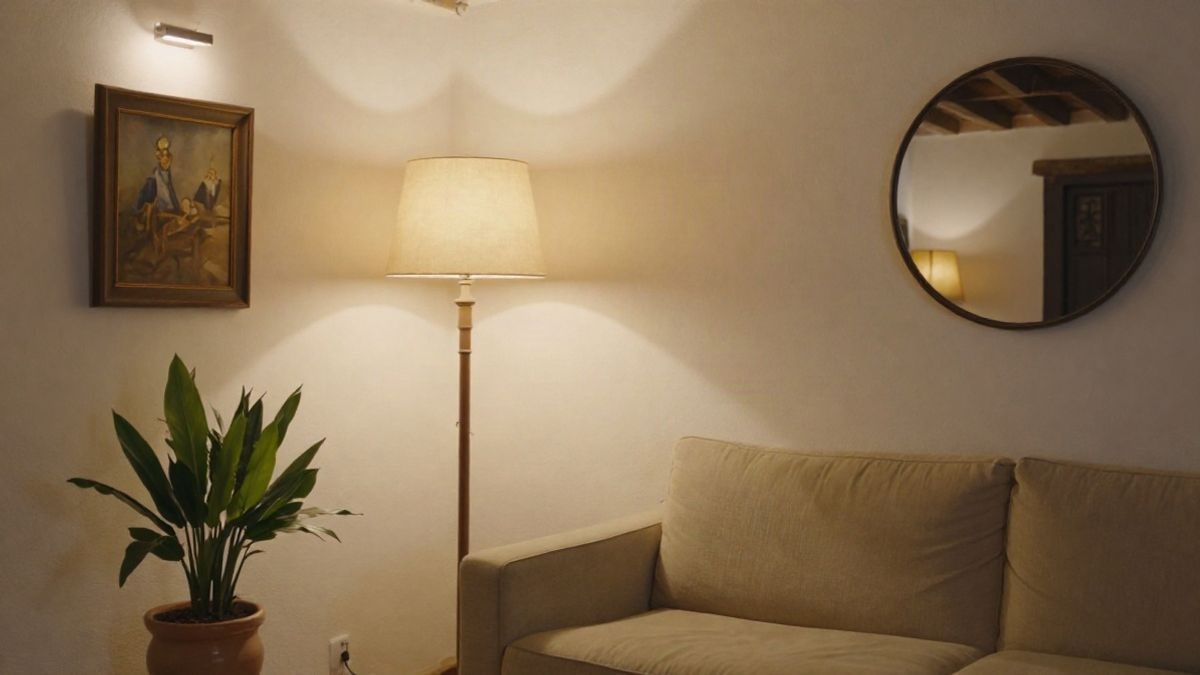
If flush mounts don’t convince you aesthetically, consider a combination of indirect lighting and localized light points. A hidden LED strip in the ceiling moulding creates ambient light that expands the space without taking up volume. Complement this with floor lamps in the corners or a table lamp on the side table, and you’ll have a professional lighting effect without the invasive ceiling lamp.
Modern compact hanging lamps also work if you choose wisely. Look for pendants with a short drop (maximum 30 centimetres) and a narrow shade. A cylindrical pendant in steel or another matte material that goes unnoticed can be the perfect solution if you need that design touch that flush mounts sometimes don’t offer.
The lamp's location matters more than you think. Centre the light point right in the middle of the living room if possible, or shift it slightly towards the resting area. Avoid placing it in a tucked-away corner: this causes uncomfortable shadows and makes the space feel more disconnected.
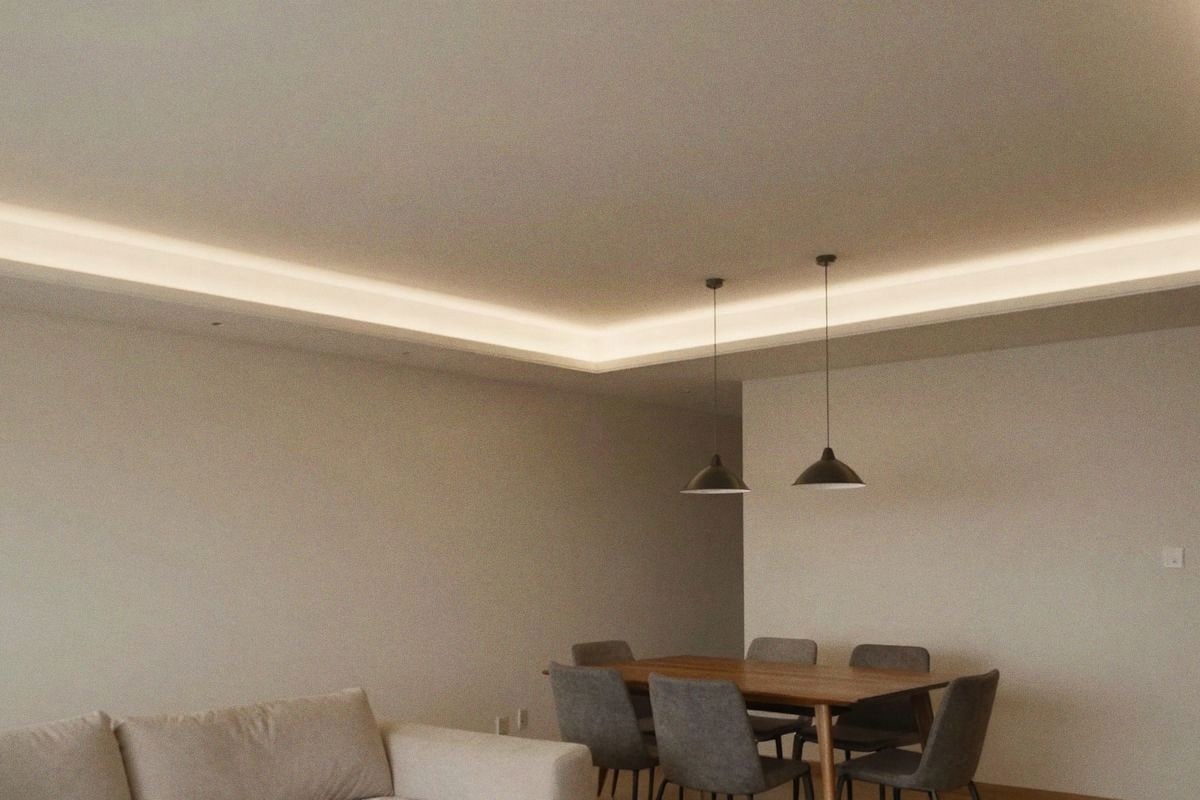
If you have an open-plan living-dining room with a low ceiling, consider two smaller flush mounts instead of one large one. Two lights of 35 centimetres in diameter create more visual width than a single one of 50 centimetres, and the light distribution is more balanced.
After helping so many friends with this problem, the truth is that the best lamp for a low ceiling is one that doesn’t look like a lamp but simply illuminates. If when you look at your living room you don’t notice the presence of the fixture because it integrates into the ceiling, you’ve got it right. The ultimate goal is for you to enjoy quality light without your living room feeling like the ceiling is closing in on you. With these specific tips on measurements, materials, and styles, we are sure you will find the option that transforms your space.

You may also like