At Casa y Deco, we love when a piece of furniture serves a dual purpose: it should be beautiful AND useful. Electric fireplaces have been treading that line for years, and I confess that for a long time I was convinced they were purely theatrical. But after researching how they really work and testing them in different spaces, I’ve discovered that the reality is much more nuanced than it seems.
The question we all ask is legitimate: do these fireplaces provide real heat or are they just a pretty decorative element? The answer is that they can be both, but it depends on the model and what we really expect from them. We won’t find the power of a gas stove or radiator heating, but they are not a total deception either. What is true is that the market is full of very different options, and choosing well makes the difference between having a success or a regret in the living room.
Let’s start with the basics: how these fireplaces generate heat. The most common models use electric resistors that heat the air directly, similar to what a conventional electric radiator does. The typical power ranges from 750 to 2000 watts, which means that they can heat small to medium spaces functionally, although they will never be sufficient as a primary heating system for an entire flat. Some more sophisticated models include improved hot air distribution technology, with fans that push that heat into the room.
What many don’t know is that the consumption of an electric fireplace is quite similar to that of any other high-power appliance. A 1500-watt unit connected for 8 hours a day will raise your electricity bill, so it’s not the most economical solution in the world. Still, if you use it strategically — turned on only during the hours you actually spend in that space — the impact is more controllable.
Types of Electric Fireplaces: Each for a Different Purpose
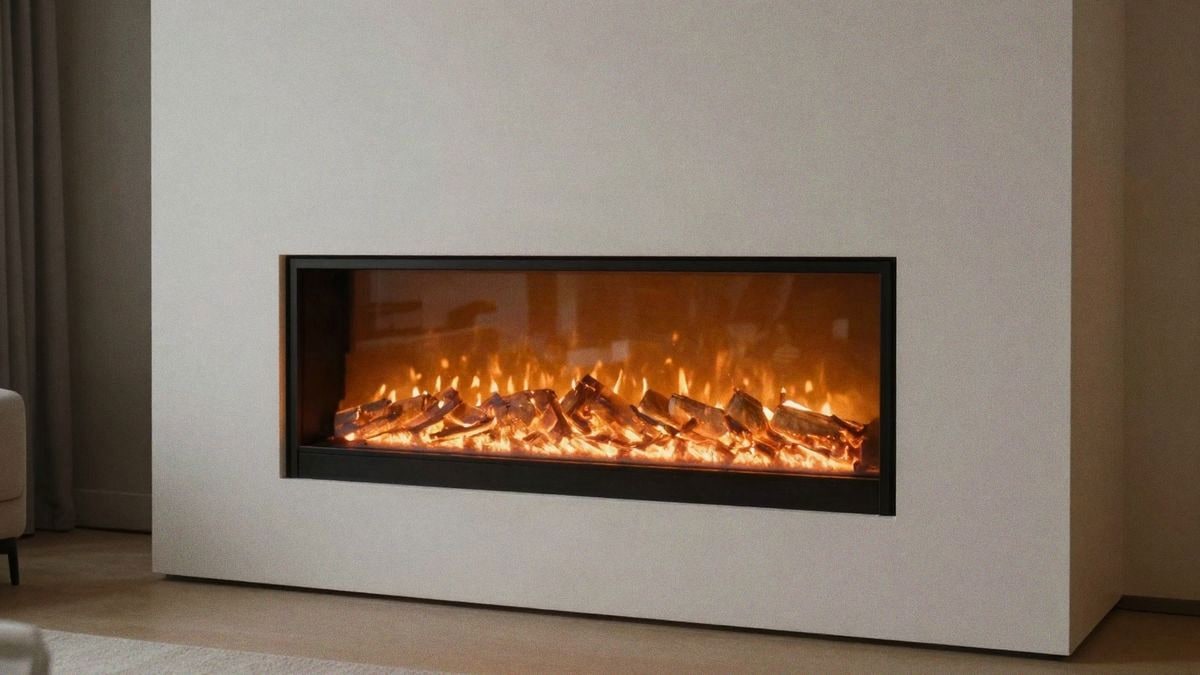
This is where the confusion becomes denser. In the market, we find three main categories. Wall or furniture-mounted fireplaces generate the most debate: they usually have a screen that simulates fire using LEDs, with little or no significant heat generation. They are almost purely design, and it’s good to know that. They look incredibly modern, take up little space, and create ambiance in a corner, but don’t expect them to heat anything serious.
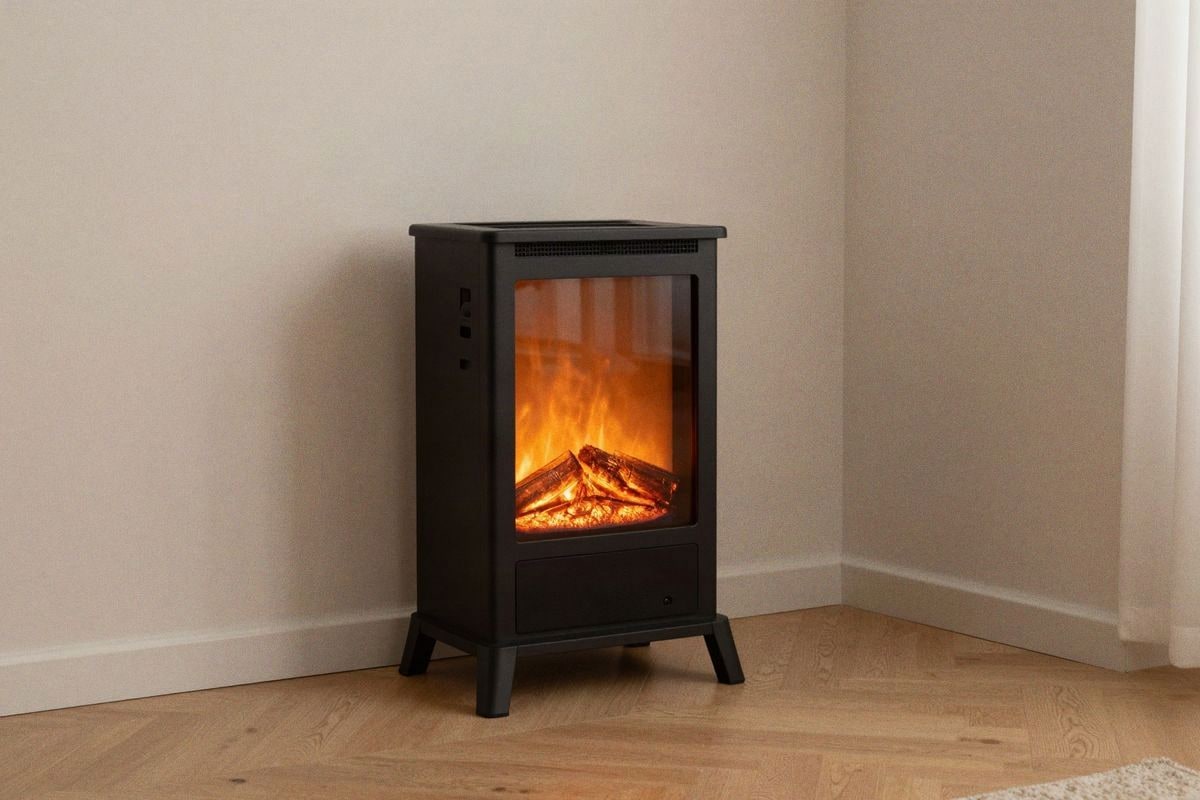
Then there are electric stoves disguised as fireplaces, which have a bulkier body and where the heating system is more powerful. These do provide real and functional heat: they can keep a room at a pleasant temperature, although you have to accept that the fire effect is less convincing or simply doesn’t exist. They are more honest in their hybrid nature.
The third category is gel or ethanol fireplaces, which burn real fuel and generate genuine heat, but those are no longer electric, so we’ll leave them out of this analysis. Although I’ll mention: they take up space, need ventilation, and constant maintenance that not all homes can accommodate.
If you’re looking for an electric fireplace that actually heats a bedroom or a small living room, look for powers of at least 1500 watts, with a hot air fan and preferably a thermostat. These models do work. Decorative screens with integrated LED fire are a bonus, but they are not the main thing. At Casa y Deco, we prefer to be honest: if what you want is primarily decorative, buy the prettiest model even if its thermal function is minimal. That’s fine. But if you need it functional, prioritise power and technical features over aesthetics.
Where to Install Them is an Art
I’ve seen electric fireplaces placed in locations that are a disaster of inefficiency. The location determines how much heat you will actually feel in the environment. If you place it on top of a piece of furniture in a corner surrounded by obstacles, much of the heat will be lost. The ideal is to leave it with free space around it, preferably on a central wall of the room and without anything blocking the air outlet.
In bedrooms, an electric fireplace placed on the wall opposite the bed generates more of a feeling of warmth because the warm air reaches directly to the space where you are. In open living rooms, the story is different: the heat disperses much more, and you would need greater power or several units to notice a real temperature change. That’s why they work better in closed and smaller spaces — up to about 20 or 25 square meters with some comfort.
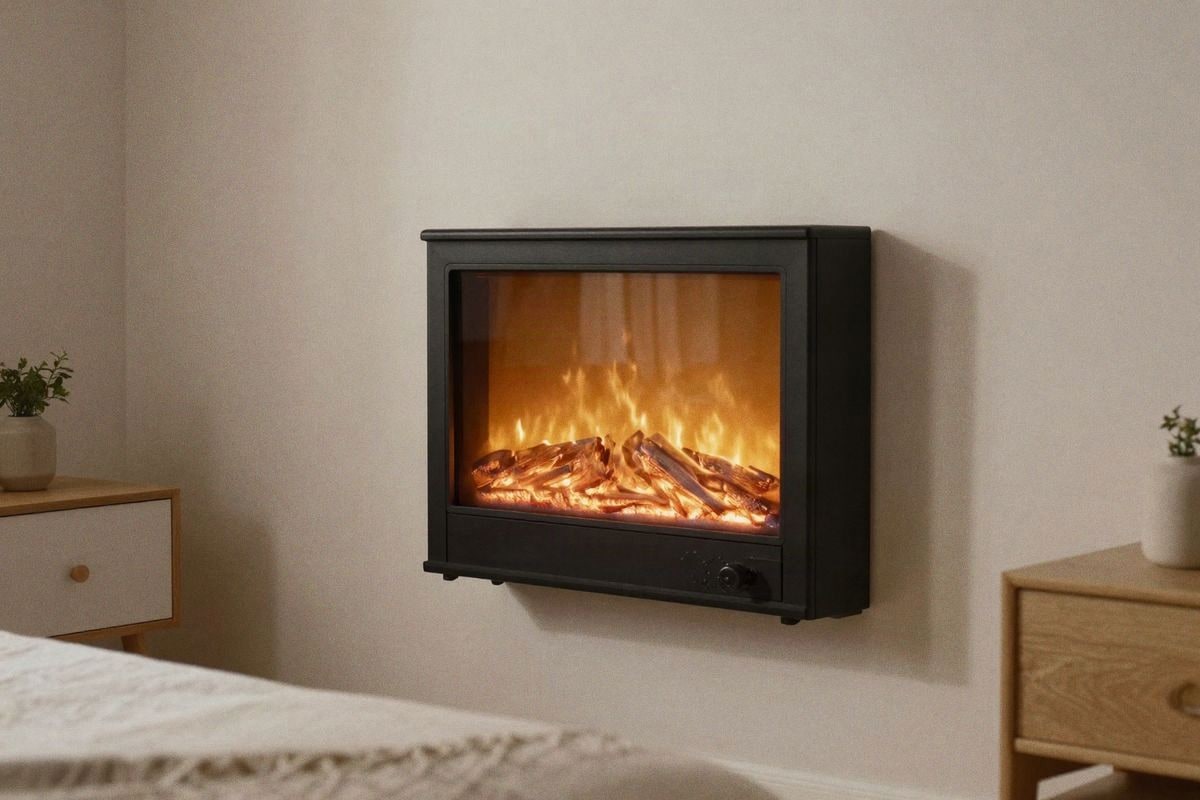
Also, don’t make the classic mistake of placing it in front of a window or in a draft. It’s like trying to heat the street: the heat it generates escapes before you can enjoy it. And remember that, although it may seem obvious, a fireplace with a heating system needs to be connected to a safe power outlet and not share sockets with other high-consumption devices.
The Decorative Factor: Because It Does Matter
Let’s be honest: many people buy electric fireplaces mainly for their appearance. A convincing fire effect can completely transform the atmosphere of a living room, especially in winter when you turn on the low lights and that illusion of flames dances on the wall. It’s psychological; it’s warm in an emotional sense even though the real warmth is limited, and that has value.
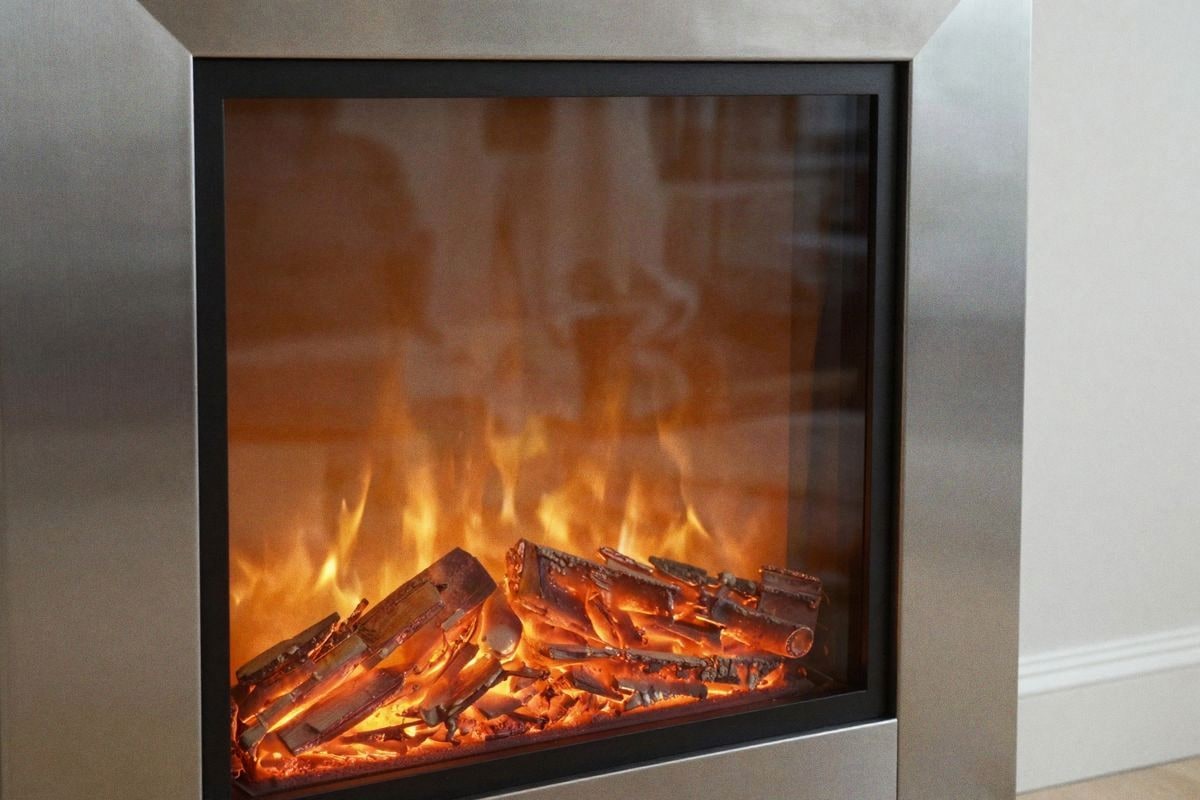
Modern designs range from minimalist steel and glass structures to versions that imitate traditional brick fireplaces. There are wall-mounted models that look floating, others embedded in TV furniture that integrate perfectly into the living room decor. If your goal is primarily decorative, there are options that work as wall art: LED screens without heating, minimal consumption, and that add that touch of elegance to a bedroom or reading nook.
I confess that an electric fireplace saved the austere look of a small living room for me. I didn’t expect heating — I have central heating — but that visual fire effect worked as a focal point and broke the monotony. However, that’s a conscious use: I bought it knowing exactly what I expected from it.
Consumption, Budget, and Final Decision
One last practical consideration: the electrical consumption is real and needs to be accounted for. If you turn on a 1500-watt fireplace for 4 hours every night, we’re talking about 180 kilowatt-hours a month just for that. Depending on your rate, that can be between 25 and 50 euros in additional monthly costs, which is not negligible in the household budget. Some more efficient models with programmable thermostats reduce that consumption because they turn off automatically when they reach the desired temperature.
The initial investment also varies greatly. Primarily decorative fireplaces cost around 200 to 300 euros. Models with real heating and good finishes range from 400 to 800 euros. And if you’re looking for something premium with integrated architectural design, they can exceed 1000. Before buying, be honest with yourself: do I really need it to heat, or is it primarily an aesthetic element? That answer determines how much you should spend and what model to look for.
After all we’ve seen, the conclusion is that electric fireplaces are neither completely real nor completely decorative. They are an intermediate point that works well if you have clear expectations. If you’re looking to replace a stove or your main heating, it’s not the solution. But if you want an element that combines some thermal functionality with a genuine visual impact in your home, and you place it strategically in a small or medium space, then it is worth considering.

You may also like