At Casa y Deco, we love that people take a moment to think about the worktop, as it is the surface that gets touched the most, the one that gets stained the most, and the one that is almost always decided at the last minute. If you are looking for kitchen worktops: types and prices, here is what really matters: what materials exist, how much each usually costs, and what to look for before signing a quote. I confess that it took me weeks to choose mine and I changed my mind twice, so I share my experience with its successes and mistakes.
The Most Common Materials Today
High-pressure laminate, known as HPL, is the workhorse of many renovations. It has an enormous variety of colours and designs, resists stains well and dry heat up to about 180 degrees, and is the most economical option on the list. However, over the years it can get marked with deep scratches and is not always easy to repair, so it is advisable not to cut directly on the surface.
Compact is a much denser laminate, made from layers of kraft paper impregnated with acrylic resins. Its low porosity makes it very convenient in high-use kitchens, and its usual thickness of 10 mm gives it a modern and clean appearance. If the worktop is very long, the joints between sheets may be more noticeable, and in case of severe damage, repair is complicated.
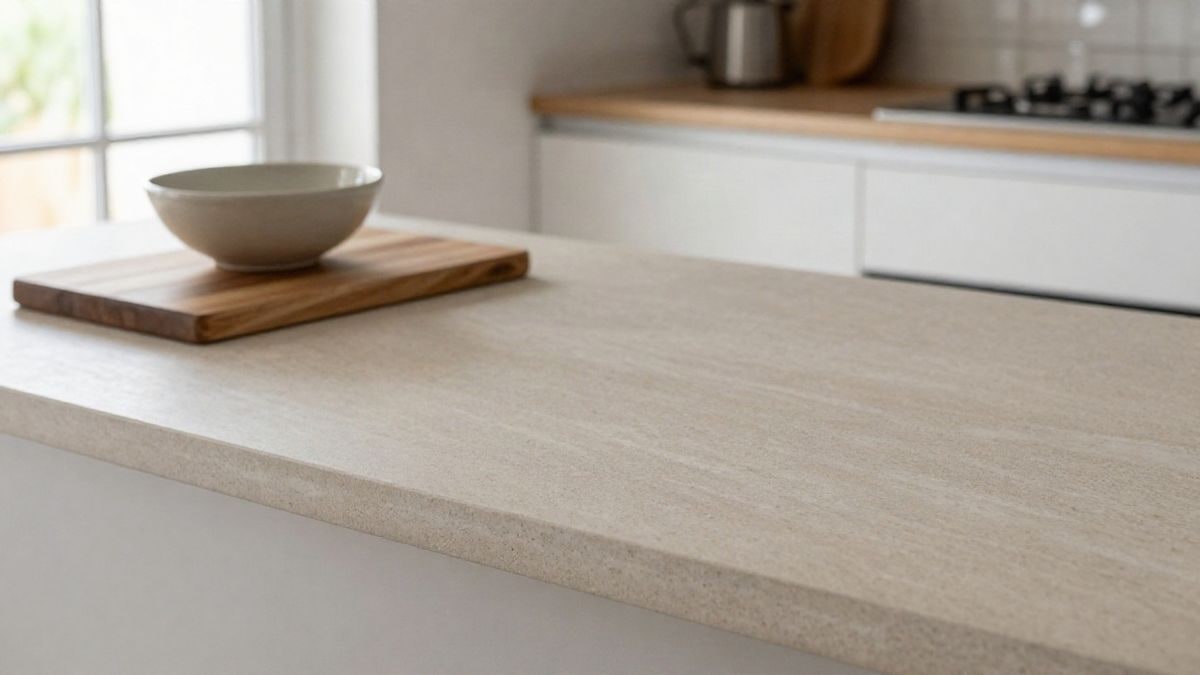
Porcelain and compact quartz are the ones that most resemble stone without being entirely so. Porcelain realistically imitates marble and granite, and resists heat and stains very well. Its installation is delicate, so it is advisable to leave it in professional hands. Compact quartz mixes natural quartz with resins, offers a wide range of colours and textures, and is very durable, but some manufacturers require periodic sealing, so read the fine print of the warranty before deciding.
Then there are natural stone and wood. Granite and marble have a beauty that no manufacturer can fully replicate, as each slab is different. They are porous, so they need to be sealed regularly to prevent wine or oil from leaving marks, and marble suffers from the acids in lemon or vinegar. Solid or veneered wood worktops, in oak, ash or walnut, bring warmth and age beautifully, although they require maintenance oil and care with stagnant water near the sink. I fell in love with a dark granite in a kitchen we visited for a report, but I admit it took me two days to remove a coffee stain I wasn't expecting.
How Much Each Type of Worktop Costs
Talking about prices is complicated, as they depend on the area, thickness, colour, whether the piece is custom-made, and whether it includes edges or upstands. Nevertheless, as a guideline, laminate and compact usually fall at the lower end of the market, while porcelain, quartz, and natural stone quickly become more expensive. As a rough reference per linear metre installed, an HPL laminate can range from 150 to 300 euros, a 10 mm compact from 250 to 450 euros, and porcelain, compact quartz or granite from 400 to 800 euros, depending on the range and complexity of the installation.
This price is rarely final. You have to add measurement, transport, and installation, which sometimes are already included in the quote, as well as special edges, wall veneers, or skirting boards, which are usually charged separately. Some companies include a 10-year warranty in the quote, but others do not, so compare carefully. What almost never includes are electrical and plumbing works. If you are going to install an induction hob or a new sink, ask for that section separately to avoid surprises.
Measurements, Upstand and Edge: The Details That Are Forgotten
The classic advice to measure twice and cut once exists for a reason. The usual depth of a kitchen worktop is around 60 centimetres, although in some cases it can be adjusted between 40 and 65 centimetres per linear metre. If you have an island, you need to measure length and width, and it is advisable to note the distances to walls, corners, and appliances, because a millimetre of error in a stone slab cannot be fixed.
The upstand, that piece that rises up the wall behind the worktop, usually has a height of about 5 centimetres in most manufacturers. It is easy to clean and prevents water and grease from getting behind the unit. As for the edge, the border can be straight, bevelled, or rounded. The straight edge is the most economical and modern, the bevelled gives a more classic look, and the rounded is friendlier if you have small children. We are not convinced to choose only by the pattern in the catalogue: feel it with your hand in the store and think about how it will feel every day.
How to Choose According to Your Kitchen and Cooking Style
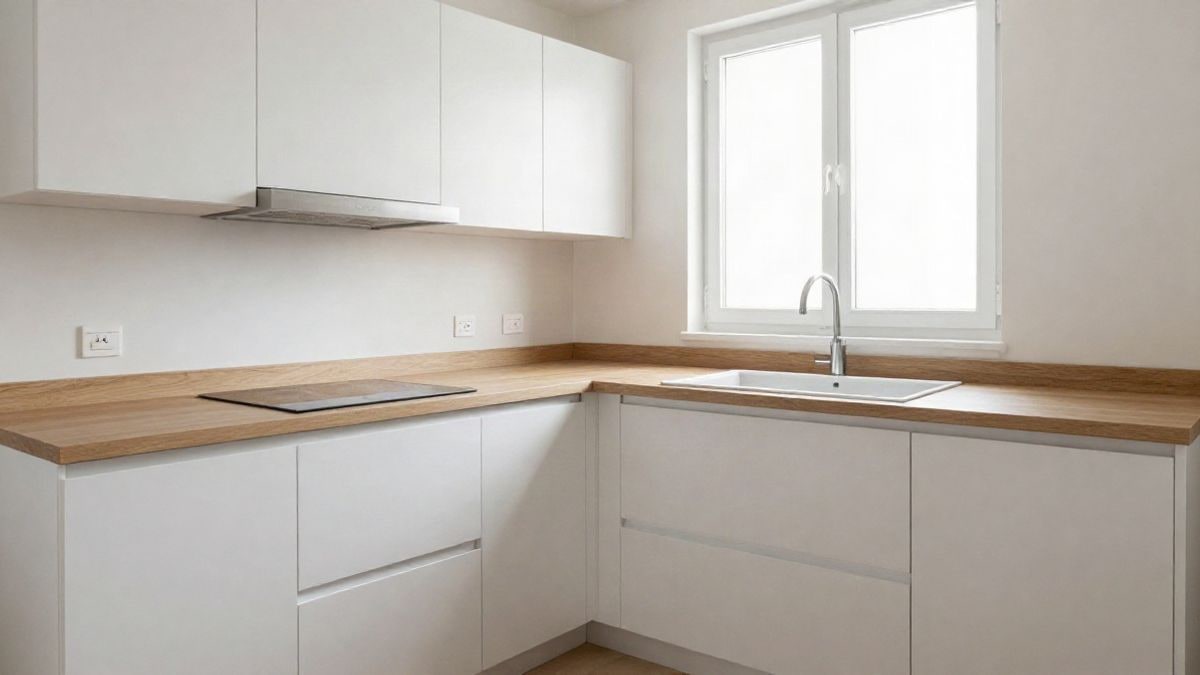
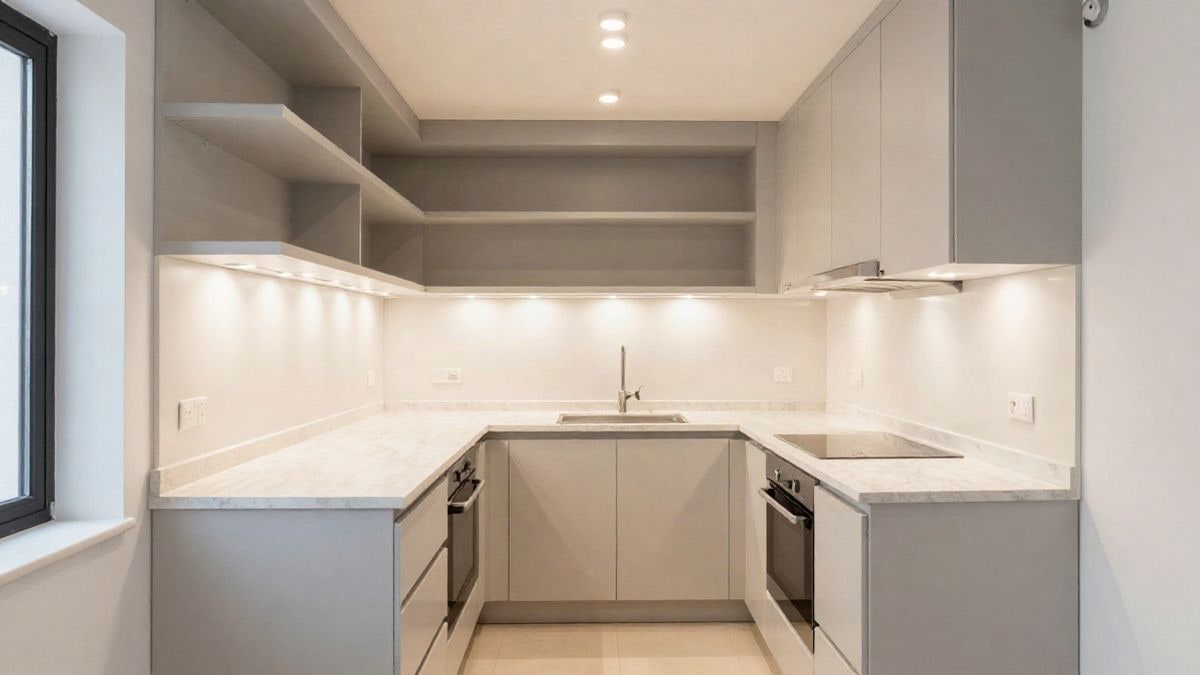
The style of the kitchen weighs heavily in the decision. In modern kitchens, uniform surfaces of compact or porcelain in solid colours usually work very well. In rustic kitchens, laminate that imitates wood or stone gives the desired look without blowing the budget, and natural wood fits wonderfully if you seek a warm touch. For minimalist styles, quartz or compact in a solid colour, with a thin thickness, keeps the kitchen clean and tidy.
The colour also greatly changes the atmosphere. Light tones, such as white or beige, provide brightness and spaciousness, but one must be realistic: in a kitchen that is used daily, bright whites show every drop of water. Dark colours, such as black or grey, add depth and contrast, although they also show dust and limescale marks. If your kitchen is heavily used, a medium tone or a matte finish usually forgives much more.
Before closing the quote, ask yourself how much time you want to dedicate to its care. If the answer is little, laminate, compact, or porcelain are very forgiving options. If you like natural stone or wood, assume that you will have to seal or oil it periodically, and that this is part of the real price. Always ask for the quote in writing, with the final measurements and details of what it includes, because that is the fine print that most often slips into renovations.

You may also like