Knowing how to clean the oven with baking soda saves time and products. We tell you the paste that works, how long to leave it on, and what mistakes to avoid.
At Casa y Deco, we acknowledge that the oven is the last appliance we want to approach after the holidays. After weeks of roasts, gratins, and trays with more grease than we like to admit, the task feels daunting just to think about. We admit that for years we tried everything, and the solution that has convinced us the most is the simplest: knowing how to clean the oven with baking soda, without aggressive sprays and with results that are noticeable from the first try.
First, a Bit of Steam
Before touching anything, it's advisable to soften the dirt. We place an oven-safe tray at the bottom, fill it with hot water, and turn the oven on to medium temperature for about 10 to 15 minutes. The steam softens the embedded grease, making it much easier to remove later. However, we turn off the oven and wait for it to cool down before putting our hands in, because experience has taught us that a burn on the forearm is not glamorous at all.
The Baking Soda Paste, Step by Step
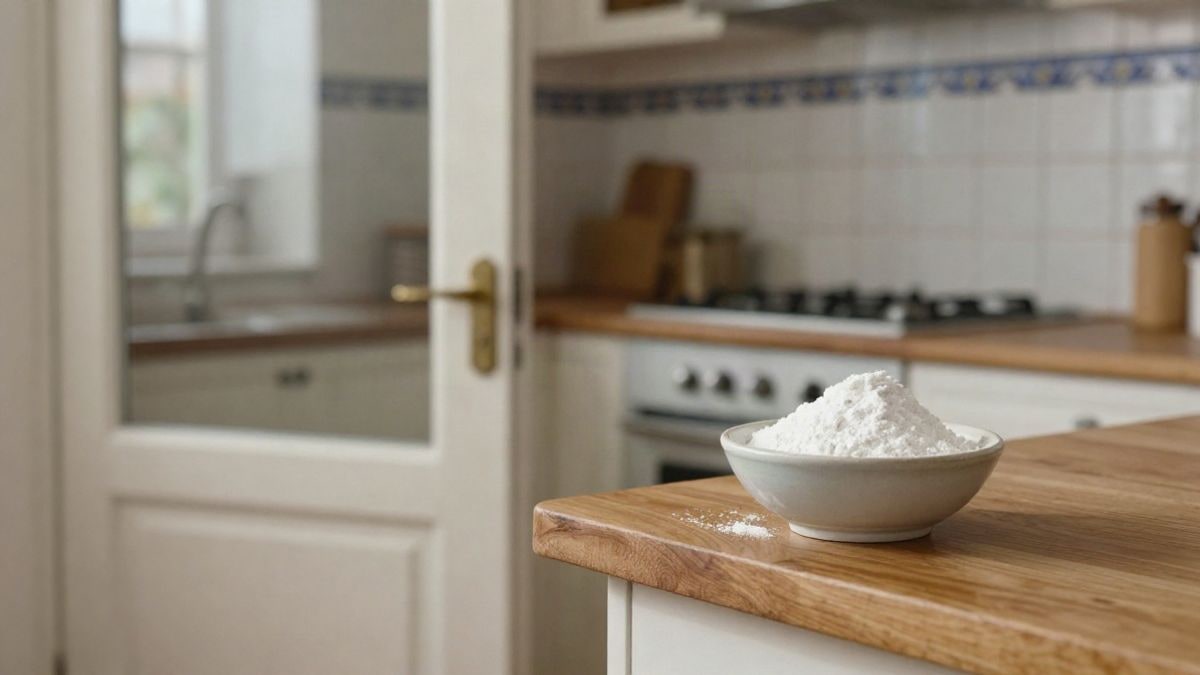
Baking soda acts as a gentle descaler. It doesn't scratch the enamel and doesn't leave strong odors. To prepare the paste, we mix about three tablespoons of baking soda with water, gradually, until we achieve a thick texture, similar to a spreadable cream. If it's too runny, it will slide down the walls; if it's too dry, it won't stick to the grease. We struggled with this point for a couple of tries, so don't worry if it comes out watery the first time.
Once ready, the process is simple:
- With the oven warm, but not hot, we spread the paste with a spatula or an old toothbrush over the walls, bottom, and door, avoiding the heating elements and sensors.
- We let the paste sit for 30 to 45 minutes. If the layer of grease is very thick, we leave it a bit longer.
- We remove the paste with a damp cloth, wiping several times and rinsing the cloth often to avoid smearing.
- If there are any residues left, we repeat the operation only in that area. Baking soda won't damage the oven, so you can insist without fear.
The Trays and Racks, Separately
The racks and trays should not be cleaned inside the oven. We place them in the sink with very hot water and a splash of neutral soap, and let them soak for a good while. The grease almost comes off by itself, saving us from aggressive scrubbing pads that end up scratching any surface. For the stubborn stains, we apply the same baking soda paste and scrub with a soft sponge. And one tip we've confirmed through experience: dry everything well before putting it back, because any water left between the guides can oxidize the metal over time.
Vinegar, Yes, But at Another Time
Many people mix baking soda and vinegar in the same step, and the result is visually impressive, but it doesn't always work for the dirt. When they react, both bubble and neutralize each other, losing much of their effectiveness. What works best for us is to separate them: first the baking soda paste and, once the oven is clean, a spray of diluted white vinegar on the walls to remove residual odors. It's a good maintenance step after cooking something particularly aromatic, like baked fish.
Common Mistakes (and How to Avoid Them)
We admit that in our first year we used steel wool on the glass door and ended up with scratches that still stare at us from the living room. Don't repeat that. The glass and enamel require a soft sponge and patience. Here are the most common mistakes we've seen in our own kitchens:
- Applying the paste with the oven hot, as the heat dries it out and the dirt sticks.
- Using metal scrubbing pads on the enamel or glass.
- Leaving the paste on longer than recommended and forgetting to remove it.
And one last thing: if your oven has a pyrolysis function or a catalytic enamel, check the manual before using any abrasive. Some manufacturers advise against certain products, and in those cases, it's best to follow their instructions to the letter.
Keeping It Clean to Avoid Repeating This Every Month
What has changed our cooking habits the most is routine. Wiping the inside with a damp cloth while the oven is still warm, removing any debris that falls during cooking, and placing baking paper or foil under dishes that release grease. With this, the oven remains presentable, and deep cleaning is spaced out considerably. If you cook often, doing this once a week seems like a good balance between effort and result.
To finish, an important detail: do not apply vinegar or baking soda with the oven on. The intense heat dries out the products and can leave a stain that is hard to remove later. If you do it with the oven off and warm, everything goes better. And any leftover baking soda, save it for the sink or fridge, which also appreciate a helping hand.

You may also like