At Casa y Deco, we love how a well-made terrarium becomes a living sculpture that breathes on the shelf. It’s not static decoration, but a small ecosystem that grows, changes, and, if we take good care of it, will never disappoint us. The secret isn’t complicated, but you must respect some basic principles that make the difference between a terrarium that thrives for years and one that turns into a swamp of fungi in three weeks.
I confess that my first terrarium was a disaster. I put in plants, sealed the glass tightly, and waited for nature to work its magic. The only thing it did was silently rot. I later learned that drainage is the foundation of everything: without it, water accumulates, humidity becomes suffocating, and fungi take control. Once you understand that, the terrarium stops being a mystery.
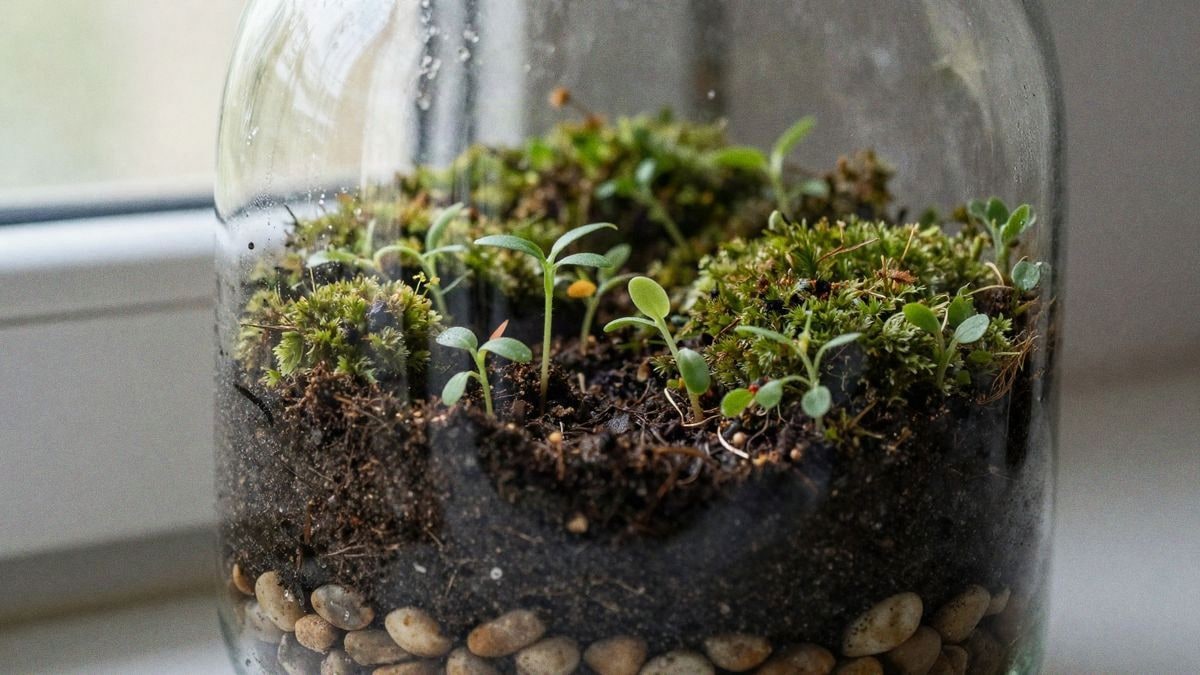
The first step is to choose the right container. Any glass jar with a lid works, but not all closed jars are the same. You need visibility from various angles for the terrarium to look nice from wherever you view it. Tall, cylindrical jars are classics, but square, rectangular, or even old spice jars are also acceptable. The important thing is that the glass is thick enough to withstand condensation without soaking, and that the lid closes well but isn’t a submarine hatch.
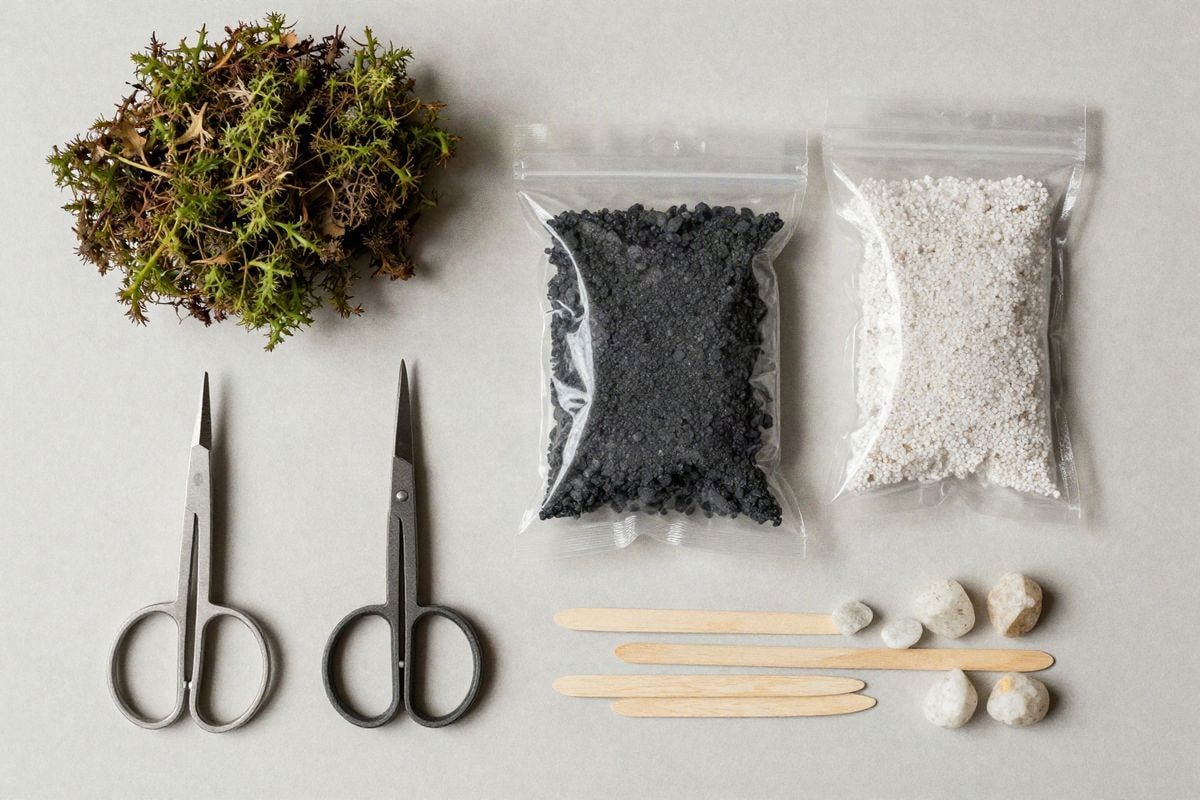
Drainage starts from the bottom of the container. Place a layer of activated charcoal about 2 centimeters thick: it’s the terrarium’s bodyguard, absorbing excess moisture and preventing fungi from forming. It’s sold in small bags at nurseries and gardening stores. On top of the charcoal, add a layer of gravel or small stones, approximately another 2 centimeters. This allows the drained water not to come into direct contact with the charcoal.
Next comes the soil, and this is where many go wrong. Don’t use regular garden soil: it’s too compact, retains too much water, and brings weed seeds. Use a light mix of cactus soil or orchid soil, adding perlite or vermiculite. This combination is porous, allows air to pass through, and drains well without the plant dying of thirst. Put about 5 centimeters of this mix over the gravel. Don’t pack it down too much: you want it to be fluffy.
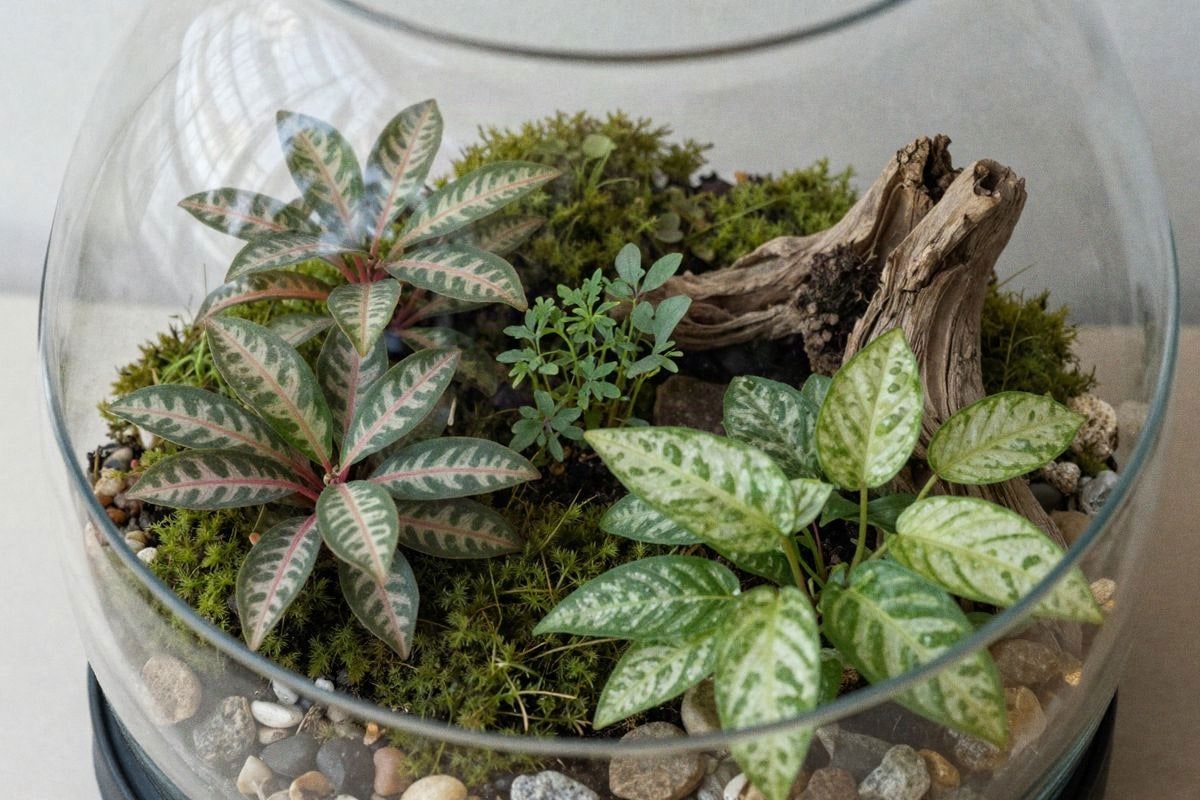
The bottom third of the terrarium is done. Now it’s time to choose the plants, and here the size of the container is key. In a small terrarium (less than 30 centimeters tall), opt for miniature plants: fittonia, syngonium, moss, selaginella, or small succulents like echeveria. In larger terrariums, you can afford something more generous: a young pothos, a dracaena, or even a small ficus lyrata. The rule is that your plants shouldn’t occupy more than a third of the interior space when they are fully grown.
Plant carefully, leaving space between each specimen. Don’t create a crowded garden, as it’s hard to breathe and difficult to maintain. The less dead space, the faster it saturates with humidity. Create a slight slope or elevation if you want to add relief: this is advantageous because it allows water to flow naturally to the lower areas. Lightly press the soil around the roots, but don’t compact it like cement.
Lighting is invisible in the setup but crucial for success. Terrariums need indirect light, 2 to 4 hours a day is sufficient. A window that receives morning light without direct sun is perfect. If you place it next to a radiator or under very intense artificial light, the plant suffers. Don’t close it in a dark shelf hoping it will thrive: it needs some light, even if not much.
Watering is the moment of truth. This is where a sealed terrarium functions differently from a normal pot. In a sealed terrarium, the water that the plants transpire condenses on the glass and falls back down: it’s almost a closed cycle. That’s why you water much less, perhaps once a month or even less in winter. The best way is to water lightly, wait to see if the terrarium maintains condensation during the day, and adjust as needed. If after watering you notice constant droplets on the ceiling and everything is soaked, leave it without watering for another week.
Here comes the detail that not everyone knows: if your terrarium is completely closed and you see white fungi or dark spots, open the lid during the day. Leave it open for one or two hours every morning. This eliminates excess moisture and allows fresh air to circulate. It’s a very effective preventive measure. If fungi are already established, remove the affected plant, clean the glass with a dry cloth, and keep the terrarium open until you see the situation improve.
Succulents and cacti need special treatment if you put them in a terrarium: they are natural enemies of the humid environment. If you want succulents, consider an open or semi-closed terrarium, something like a low bowl without a lid or a low-walled glass cup. Use an even more generous drainage mix — coarse sand, perlite, and a bit of soil — and water even less, practically nothing in winter. They don’t have to live in a tropical jungle, so respect their arid nature.
Maintaining a terrarium isn’t complicated, but it requires a bit of observation. Check monthly for pests or fungi, remove dead leaves immediately, and prune when you see something growing too much and crushing its neighbours. A well-made terrarium lasts for years. We’ve seen terrariums that function for five or six years with almost no care. It’s curious, but when everything is in balance, it almost takes care of itself.
The decoration inside the terrarium is where many have fun. You can add real moss around the bases, small river stones, miniature logs, or even small ceramic figures if that’s your style. Don’t fill every corner: visual chaos tires more than it captivates. A beautiful terrarium has empty spaces, plants that breathe, and a visual balance that looks serene. What I like to do is add green moss around because it becomes more lush with humidity, giving an authentic jungle look.
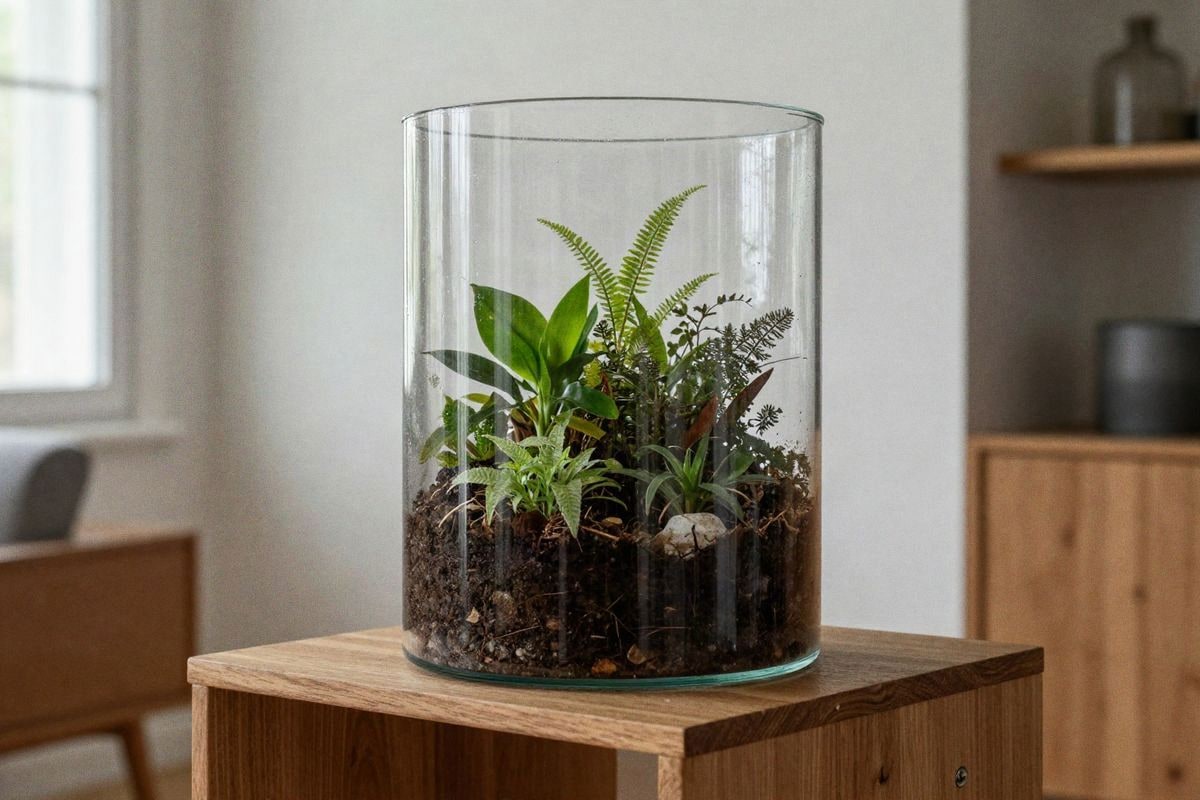
If we’ve learned anything in the world of decoration, it’s that small living details, like terrariums, are what transform a neutral space into one with personality. A terrarium doesn’t need luxury maintenance, but it does need respect. Respect the drainage, humidity, light, and space, and your terrarium will be that piece that visitors will ask how you managed to keep so beautiful.

You may also like