At Casa y Deco, we love Nordic style at home, but we also know it can easily go awry: a too-cold white living room, a rug that doesn’t fit, or a grey sofa that looks like it belongs in a waiting room. That’s why we’ve prepared this guide, with specific measurements, colours, and materials, to help your home gain warmth without losing the calm that defines this style.
The Nordic style at home originates in the northern countries of Europe, where winters are long, days shorten to almost disappear, and people spend countless hours inside their homes. This is where almost everything that defines it comes from: simplicity, functionality, and an obsession with making the most of every ray of light. Scandinavia is not exactly famous for its endless summers, so their homes are designed to shine from within.
Light is Key, and Curtains Can Wait
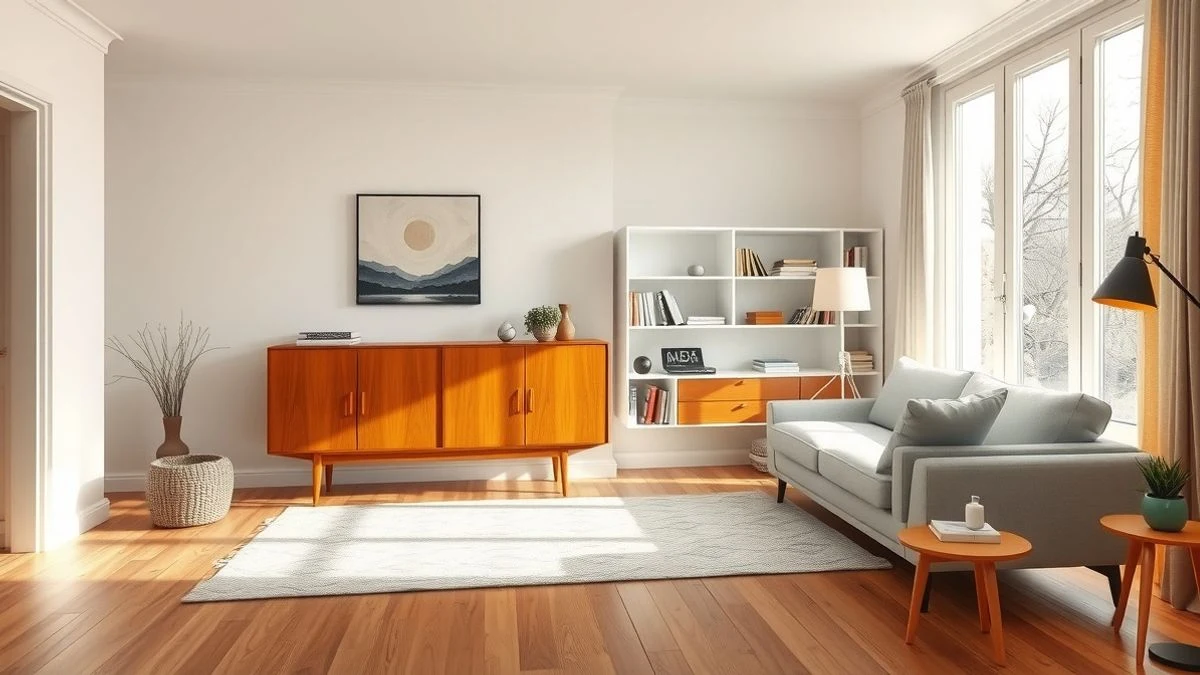
If you take away only one idea, let it be this: natural light is the starting point. Walls in off-white, sand, or very light grey reflect brightness and make a small room seem larger. In our experience, painting a 15 square metre living room in matte white, with a slightly warm finish, changes the atmosphere more than any expensive lamp.
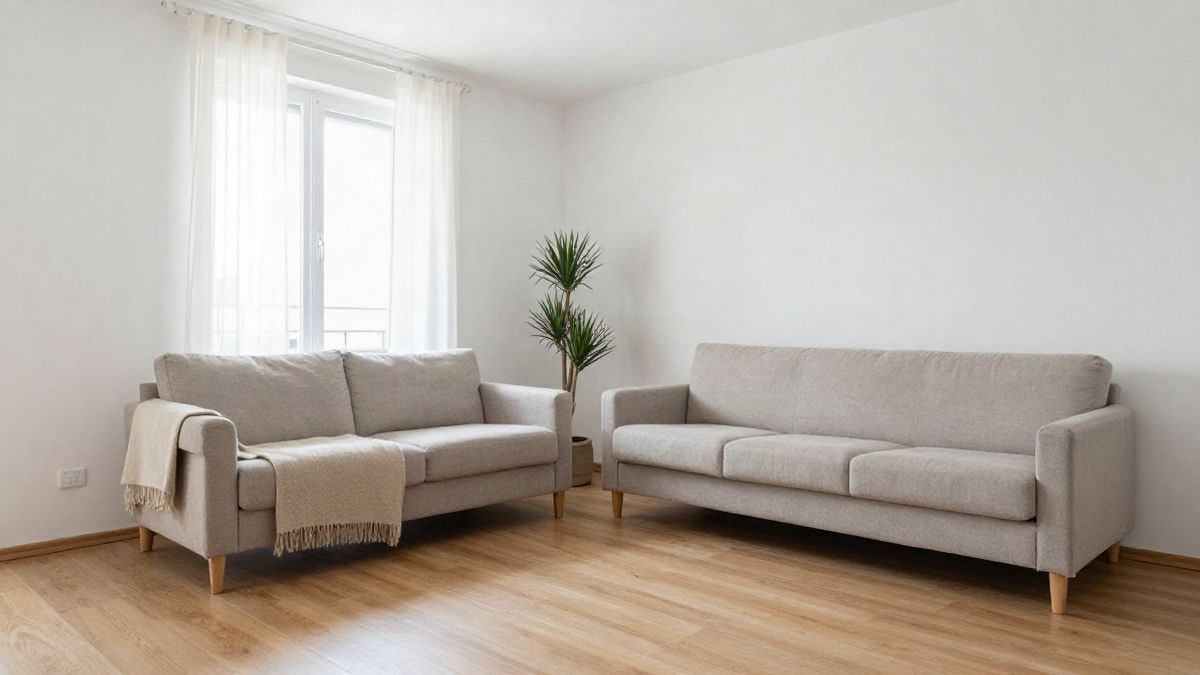
Another recommendation that some find hard to swallow is to keep windows as clear as possible. Heavy curtains are the enemy of Nordic brightness, so opt for very light linen sheers or, if your neighbour across the way is watching too closely, for translucent blinds that filter light without darkening the room. I confess it took me years to accept that one can live without thick curtains, but today I wouldn’t go back.
As for lighting, combine warm general lighting, around 2700 kelvin, with floor or table lamps placed in various spots. Avoid the typical central ceiling light as the only source of illumination: in the north, the play of soft shadows is highly valued, and candles, which are almost a ritual, complete the scene in the evenings.
Natural Textures: Wool, Linen, and Light Wood
Since the base is light, visual interest must come from textures, and this is where most of the magic happens. A sofa in bouclé wool, a washed linen cushion, and a chunky knit throw add more character than any striking painting. The materials that are most commonly found in this style are aged leather, wool, cotton, linen, and light-toned woods, such as oak, birch, or oil-treated pine.
The wood must feel genuine. If the floor is natural oak, the rest of the furniture can maintain that line without needing to imitate anything. What doesn’t work is mixing five different woods in the same living room, as the result is chaos that has nothing to do with Nordic style. Better to stick with two similar tones and that’s it. A wool rug of about 120 centimetres under the coffee table organizes the area and adds warmth.
Be careful with leather: a cognac brown armchair on a white base looks beautiful, but if you surround it with four other tones, it overwhelms the space. We usually use it as a unique standout piece.
Simple and Functional Furniture
Nordic furniture is characterized by straight lines, clean shapes, and utility. If a piece of furniture doesn’t serve a specific purpose, it’s unnecessary. That’s why low armchairs with thin legs, simple side tables, and open shelves where every object has its place are abundant. Soft curves also have their place, but always in moderation.
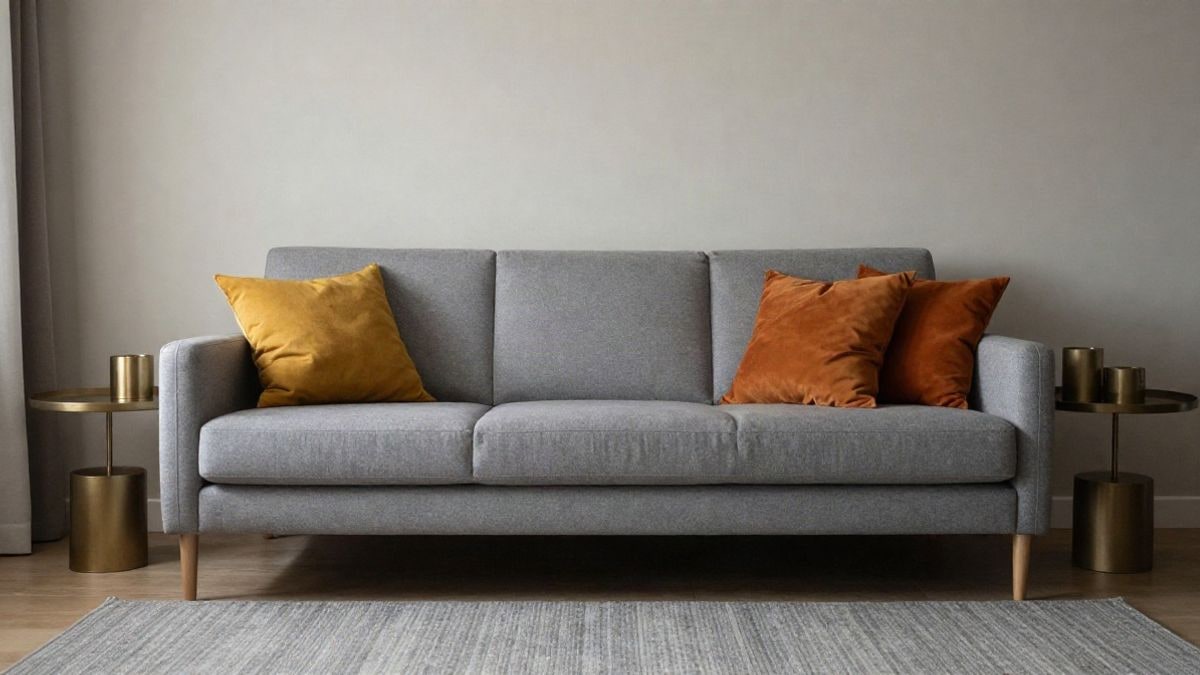
A good way to start is to first choose a timeless sofa in a neutral tone, and then add pieces with personality in small doses. Any decorator will tell you that the costly mistake is getting the sofa wrong, not the lamp. Moreover, Nordic style is very versatile: it combines well with rustic, classic, vintage, or industrial styles without clashing, as long as you keep the base light and avoid overloading on decorations.
And a personal anecdote: in our editorial office, there was an eternal debate about whether a solid wood dining table of 180 centimetres was too large for a 70 square metre flat. The table won. Now we live with it and don’t regret it, even if we have to move the chairs around like in a choreography.
Plants, Greenery, and Soulful Decoration
Although northern Europe has dark winters, Nordic homes love greenery. The idea is to connect the interior with the exterior, and for that, tall and slender plants work wonders. Ficus, dracaena, and monstera are classics that bring life without overwhelming. Place them near the window, where they receive indirect light, and choose simple ceramic pots in earthy tones or white.
If you don’t have good light or tend to forget to water, there’s an alternative: floral or tropical motifs in cushions, paintings, or wall reliefs. They don’t take up physical space and convey warmth to the coldest corners. We really like to combine them with a real plant, even if it’s small.
Finally, handmade elements make a difference. Artisan ceramics, natural fibre baskets, carved wooden objects, and, of course, candles. In Nordic countries, lighting a candle is almost a ritual to ward off the winter darkness, and it works wonderfully in a Spanish living room on rainy weekends. Just remember, no overly intense scents: the style calls for olfactory silence, not a perfume from a shopping mall.
Order and Colours: Less is More
The main colours are white, light grey, beige, and sand, with some accents in sage green, bluish grey, or terracotta. Simple geometric patterns, like fine stripes or small checks on cushions and rugs, bring order. Avoid very saturated colours on large surfaces and reserve intense colour for a single detail per room.
Order is the final piece of the puzzle. A Nordic living room isn’t an empty living room, but it is uncluttered. Store what you don’t use in baskets, low cabinets, or closed shelves, and leave visible only what you truly love. That is, at its core, the most useful lesson from this style: to live with fewer things, but with the ones that matter.
If you start with one room, begin with the living room, as that’s where the change is most noticeable. Paint the wall if necessary, replace curtains with sheers, add a wool rug and a warm lamp. With that, you’ve already done a large part of the work. The rest will come with time, as the space begins to resemble you.

You may also like