At Casa y Deco, we love to rescue those spaces that everyone ignores, and narrow entrances are a classic. That corridor where barely two people can fit, with walls that seem to want to hug each other, is one of the most common challenges our readers face. The good news is that with some clever tricks and smart decisions, you can transform a claustrophobic entrance into a welcoming space that invites you to enter your home with enthusiasm.
The first thing we need to understand is that a narrow entrance is not a problem of square metres, but of perception. It’s not about knocking down walls (even though we sometimes think about it), but about using light, colour, and layout to trick the eye and make the space breathe. I confess that when I started working with this type of entrance, I made the mistake of saturating them with small furniture thinking they took up less space. Quite the opposite: what you need is intelligent minimalism.
The Magic of Lighting
Lighting is your number one ally in narrow spaces. A dark entrance always seems smaller and stuffier, so clarity is essential. If you have a window, let it breathe: do away with heavy curtains or, if you need them for privacy, opt for white or light grey linen blinds that let the light through. Avoid velvet or opaque fabrics in narrow spaces at all costs.
For artificial lighting, upward-facing lights create a sense of height that makes the corridor feel less confined. A wall light above the mirror (if there is one) or a small recessed light in the ceiling every metre and a half helps keep the space evenly lit. Downlights also work well because they don’t take up visual space. Avoid floor lamps or chandeliers: they take up room and reduce airiness.
Mirrors: The Lifelong Trick, Done Right
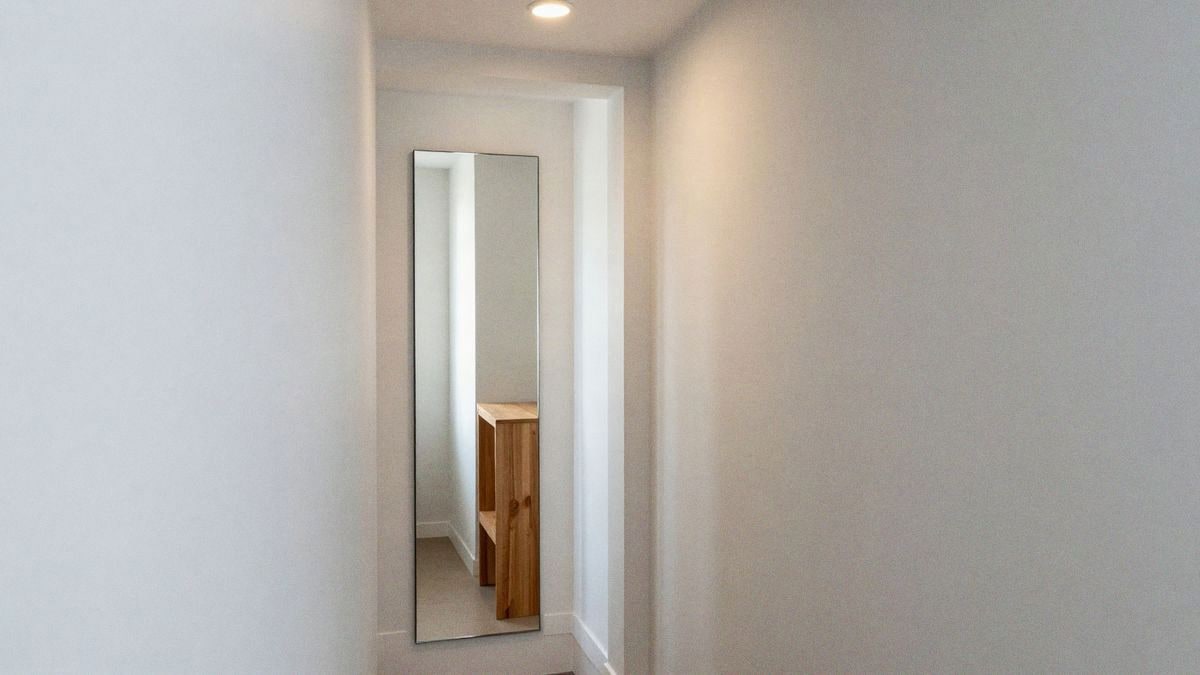
Mirrors amplify light and create visual depth, but here’s the secret: they need to be strategically placed. Don’t put one mirror directly in front of another (it creates a dizzying effect), nor one directly perpendicular to the corridor, as it creates a tunnel effect. Ideally, use a medium-sized mirror (between 60 and 90 centimetres wide) positioned to reflect natural light or a clear area of your entrance.
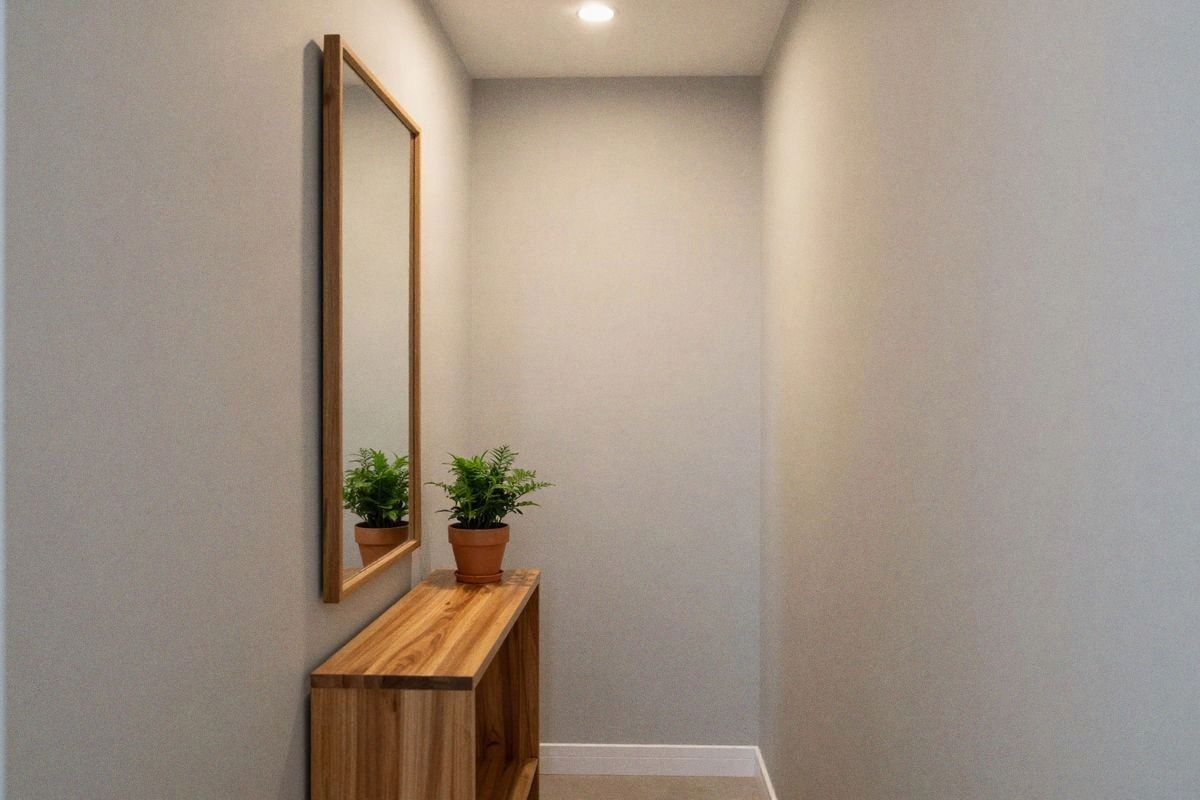
If you have little wall space, a narrow vertical mirror (about 40 centimetres wide by one and a half metres high) visually expands without overwhelming. Mirrors with wooden or wrought iron frames are more interesting than bare ones and add warmth. Avoid very dark frames in narrow spaces: they turn the mirror into a heavy visual point that contradicts what we are looking for.
Colour: Strategy to Gain Centimetres
This is where many go wrong. Painting a narrow entrance entirely white sounds logical, but it often ends up looking sterile and cold. My advice is to use an off-white or very light beige on the walls, but allow yourself a bit more personality in the details. A soft colour like dove grey, cream, or off-white (with a touch of warmth) works better than pure white because it continues to expand the space without feeling clinical.
If you want something with more character, choose a colour for the back wall (the furthest one): soft blues, mint greens, or warm greys can work. This creates a kind of

You may also like