At Casa y Deco, we love the idea of a reading nook in the bedroom. It’s not just a functional space to unwind before sleep, but it transforms those square metres that often remain idle into a cosy area with personality. If there’s one thing we’ve learned, it’s that small spaces require much more ingenuity than a large living room, but that doesn’t mean you have to give up having that calm retreat you deserve.
The first step is choosing a strategic location. Corners by windows are ideal because they take advantage of natural light, which is the perfect ally for any reader. If your window has a deep enough sill, you can even forgo a chair and create a seat right there with cushions. I confess this saved the bedroom in my previous flat: it was barely 12 square metres, and the sill became my personal refuge. Corners also work well, especially if you place a structure that utilises vertical space, like shelves that reach up to the ceiling.
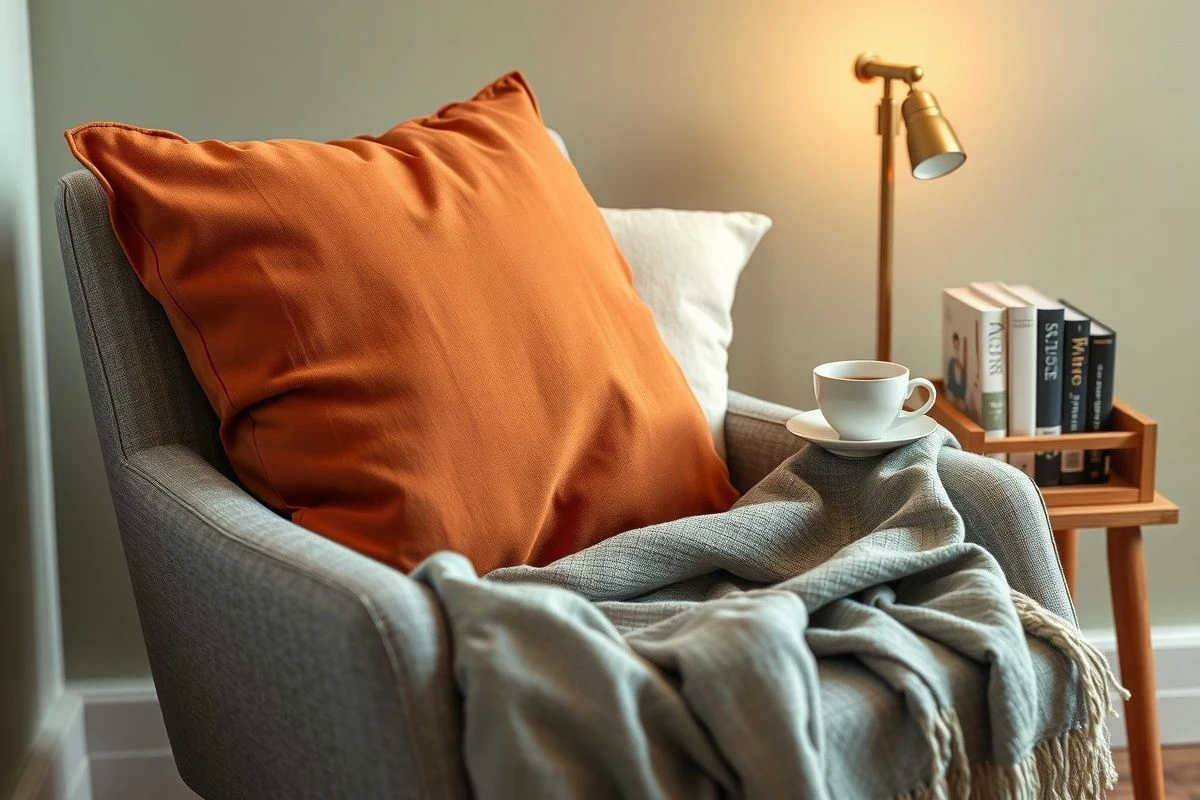
Lighting deserves a separate paragraph because it’s crucial. In addition to natural light, you need a dedicated light source that doesn’t disturb the rest of the room if someone is sleeping. A floor lamp or wall lamp with an articulated arm is perfect for reading without turning on the main bedroom light. Lamps that combine warm bulbs of 40-60W (between 2700K and 3000K) create that relaxing atmosphere we seek. Avoid fluorescents at all costs: they strain the eyes and break the cosy atmosphere we want to build.
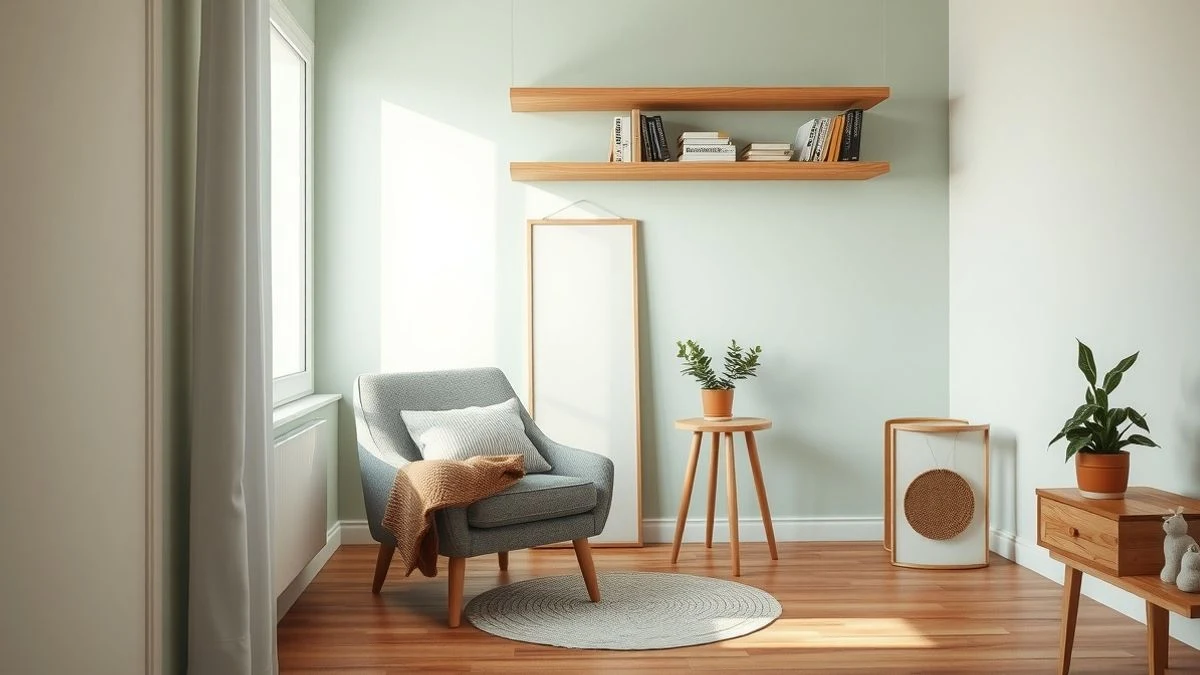
As for furniture, it all depends on how many centimetres you have available. If the space is less than 1.5 metres wide, a narrow single chair works better than an armchair. Scandinavian design chairs, with legs that lift the seat off the floor, give a sense of visual lightness in small spaces. If you measure between 1.5 and 2 metres, a compact armchair or even a small chaise longue fits perfectly. Look for back heights between 60 and 80 centimetres: enough to support your head without visually occupying too much space.
Textiles are what truly transform a solitary chair into a cosy nook. A good lumbar cushion, a soft blanket draped over the arm, and perhaps one or two decorative cushions transform the area. Warm tones like terracotta, cream, taupe grey, or dark wood work especially well in bedrooms because they maintain that sense of calm we seek before sleeping. If your bedroom is very small, avoid complicated patterns in textiles: solid colours and soft textures visually elongate the space.
Book storage is another challenge in small spaces. Floating shelves on the wall behind the chair don’t compete for floor space and add functionality without sacrificing spaciousness. Two or three shelves with a depth of 20 to 25 centimetres are sufficient for paperback and hardcover books. Another smart option is a small wooden or metal cart with wheels: you can tuck it under the chair when not needed and pull it out to serve as a side table when you’re reading.
A side table to leave your cup of tea, glass of water, or reading lamp is almost essential. Look for an auxiliary table no more than 40 centimetres wide and about 30-35 deep. Round tables occupy less visual space than square ones. If you’re on a tight budget, a wooden tray on a low stool serves the function with more style than a traditional piece of furniture.
The colour of the walls deserves attention. Unless your bedroom is very bright, painting the entire background wall would be too much. A smarter option is to paint only the upper third or create a coloured panel using wallpaper in that section. Soft greens, pale blues, and warm greys are ideal for reading spaces because they visually calm. If painting isn’t an option, a removable vinyl sheet or a hanging tapestry works just as well without permanent commitments.
Ventilation and temperature also matter. A reading nook where it’s too hot or there’s stale air doesn’t invite you to stay. If the nook is in a corner without cross ventilation, a small humidifier or simply opening the window for a few minutes each morning keeps the air fresh. In winter, a small aroma diffuser with essential oils relaxes and completes the sensory experience of the space.
I confess we’re not convinced by reading nooks that are overly decorated with knick-knacks. Less is more, especially in small bedrooms. Keep the space clear: only the books you’re currently reading, the lamp, the table, and the bedding. This way, you avoid the nook looking cluttered and shift the focus to the actual comfort of the spot.
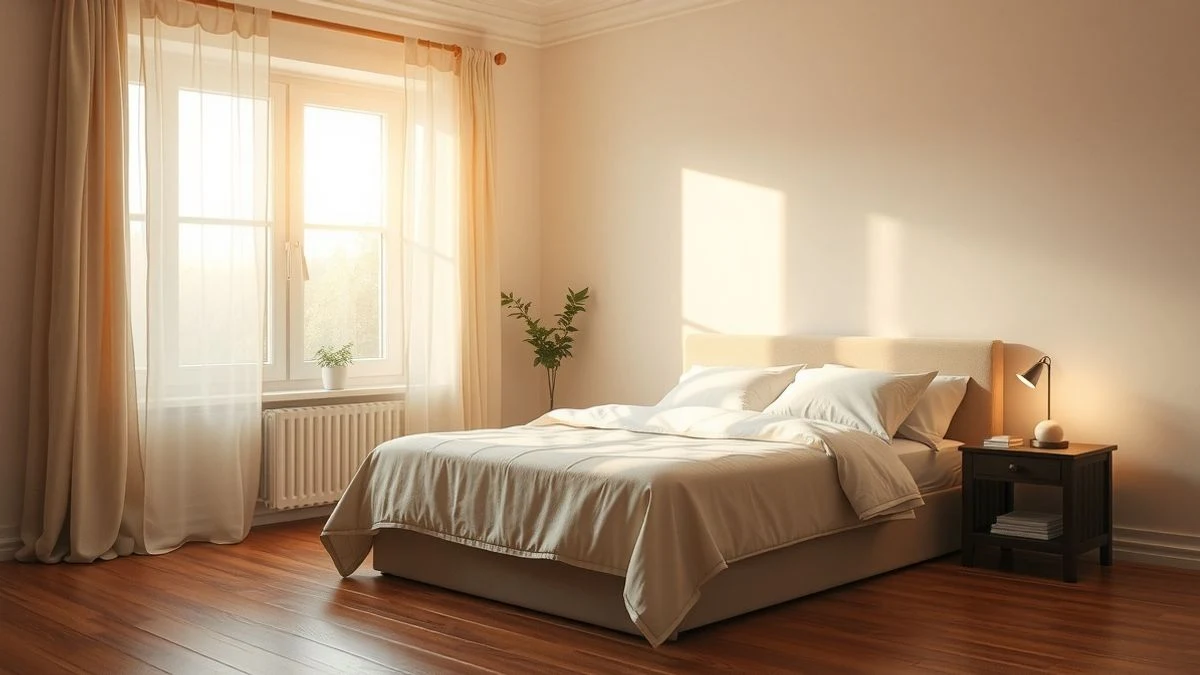
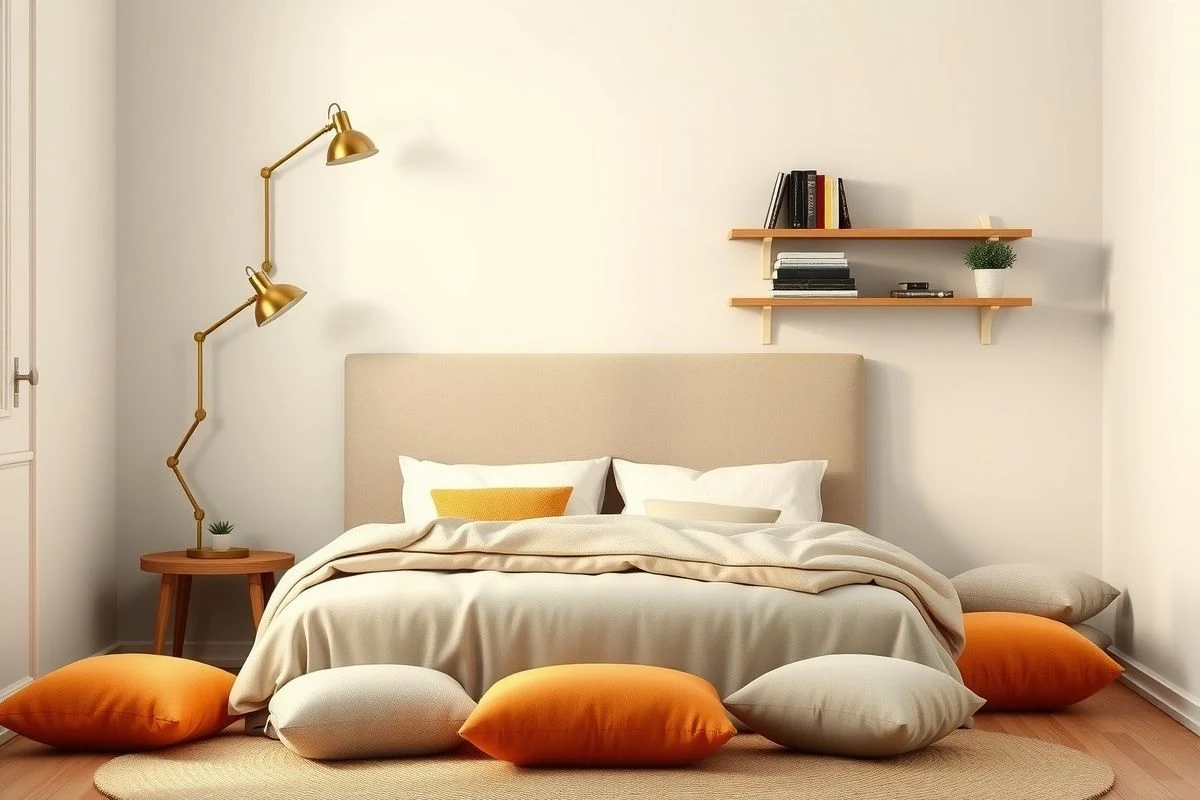
If your bedroom is very small and there’s no possible nook, consider the bed as the centre of the reading nook. A tall padded headboard with enough pillows, lighting on both sides, and books on a small wall shelf create an integrated mini-nook. Beds with storage under the mattress free up space that you can dedicate to this comfort zone.
Small plants add freshness without taking up real space. A pothos in a 15-centimetre pot, a pothos on a shelf, or even dried eucalyptus in a tall vase add life. Low-maintenance plants like zamioculca or philodendron are perfect for bedrooms because they don’t need constant attention or frequent watering that complicates your routine.
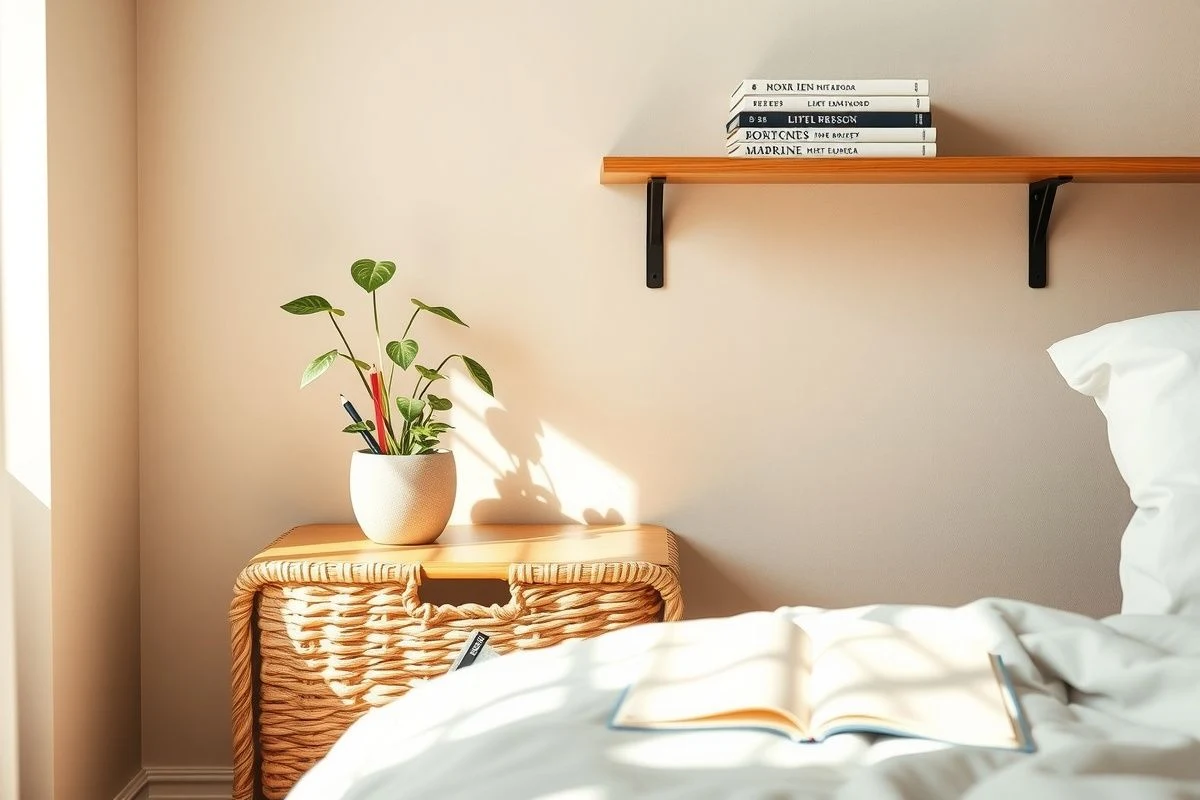
Organisation should be simple. Books stacked horizontally take up less visual height than vertical ones. If you have few books, a small stool with a wicker basket underneath serves as both a table and storage simultaneously. Pencils, bookmarks, and glasses live better in a small ceramic jar on the table than scattered around the bedroom.
Finally, personalise according to your actual habits. If you read during the day, proximity to the window is vital. If you do it at night, the reading lamp is the star. If you often fall asleep while reading, a cervical cushion is your best investment. The perfect reading nook is the one you actually use, not the one that looks prettiest on Instagram. Experience suggests: take time to try it out before investing money in decor.

You may also like